Artwork
Mr Hume se passant la fantaisie ...
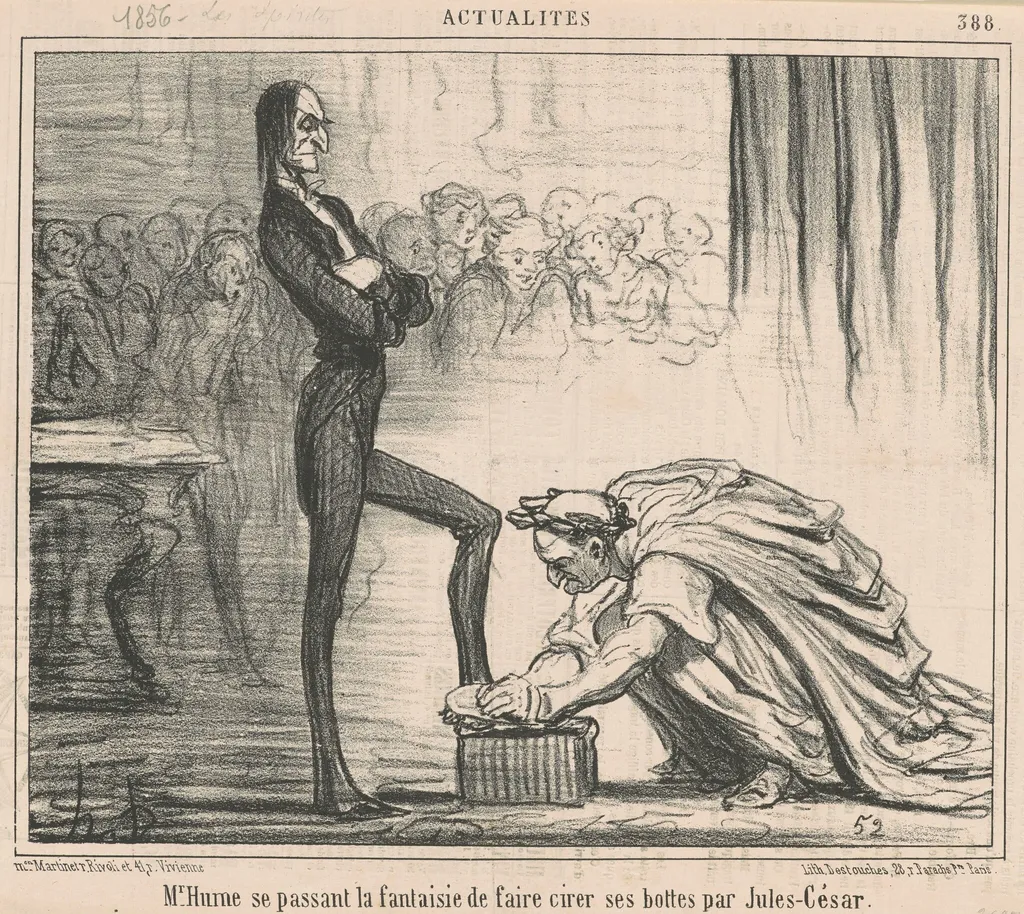
Mr Hume se passant la fantaisie ... is an ink print by the Impressionist artist Honoré Daumier. It dates from 1857 and is held in the collection of the National Gallery of Art.
About this work
Overview
The scene unfolds before a group of onlookers, suggesting a public spectacle.
This lithograph by Honoré Daumier depicts a satirical moment between two figures: a tall, formally dressed man and a kneeling individual crowned with a laurel wreath. The scene unfolds before a group of onlookers, suggesting a public spectacle. Daumier uses the medium’s capacity for sharp line and tonal contrast to amplify the absurdity of the interaction, turning a fleeting gesture into a commentary on social performance.
Subject & Meaning
The kneeling figure, adorned with a laurel wreath, evokes imagery of Roman emperors, while the standing man’s composed demeanor suggests aristocratic detachment. The act of passing a fanciful gesture—perhaps a token of favor—becomes a metaphor for the performative nature of power. Daumier exposes how flattery and status are maintained through ritualized, often ridiculous, social exchanges.
Technique & Style
Daumier employs lithography to achieve rapid, expressive lines and bold contrasts, characteristic of his journalistic approach. The figures are rendered with economical strokes, yet their postures and expressions convey clear narrative. The crowd behind them is suggested rather than detailed, using smudged tones to imply mass observation without individualizing each face, reinforcing the theme of collective complicity.
History & Provenance
Created during the 1840s, this print emerged from Daumier’s prolific output for satirical journals like La Caricature and Le Charivari. It was likely published as a standalone image, circulating among urban readers familiar with the political and social tensions of July Monarchy France. Its exact provenance remains undocumented, but it aligns with his broader body of work critiquing bourgeois and institutional pretensions.
Context
In mid-19th century France, public life was saturated with displays of rank and deference. Daumier’s work responded to a society where titles and appearances often masked underlying power imbalances. By invoking classical imagery in a contemporary setting, he highlighted the continuity of hierarchical absurdities, inviting viewers to recognize the theatricality of their own social rituals.
Legacy
Daumier’s lithographs, including this one, helped redefine printmaking as a vehicle for social critique. His influence extended to later generations of caricaturists and realist artists who sought to capture the contradictions of modern life. Though not widely exhibited in his lifetime, these works gained recognition for their unflinching observation and enduring relevance to discussions of power and performance.
Artist & collection
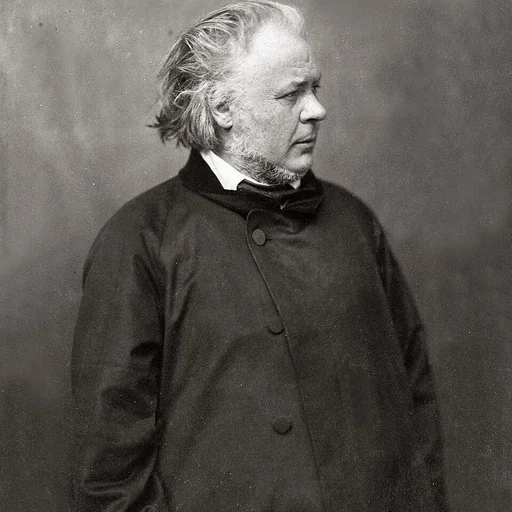
Artist
Honoré-Victorin Daumier was a French painter, sculptor, and printmaker, whose many works offer commentary on the social and political life in France, from the Revolution of 1830 to the fall of the Second French Empire in 1870.