Artwork
Ou l'on reconnait ... un ancien pharmacien
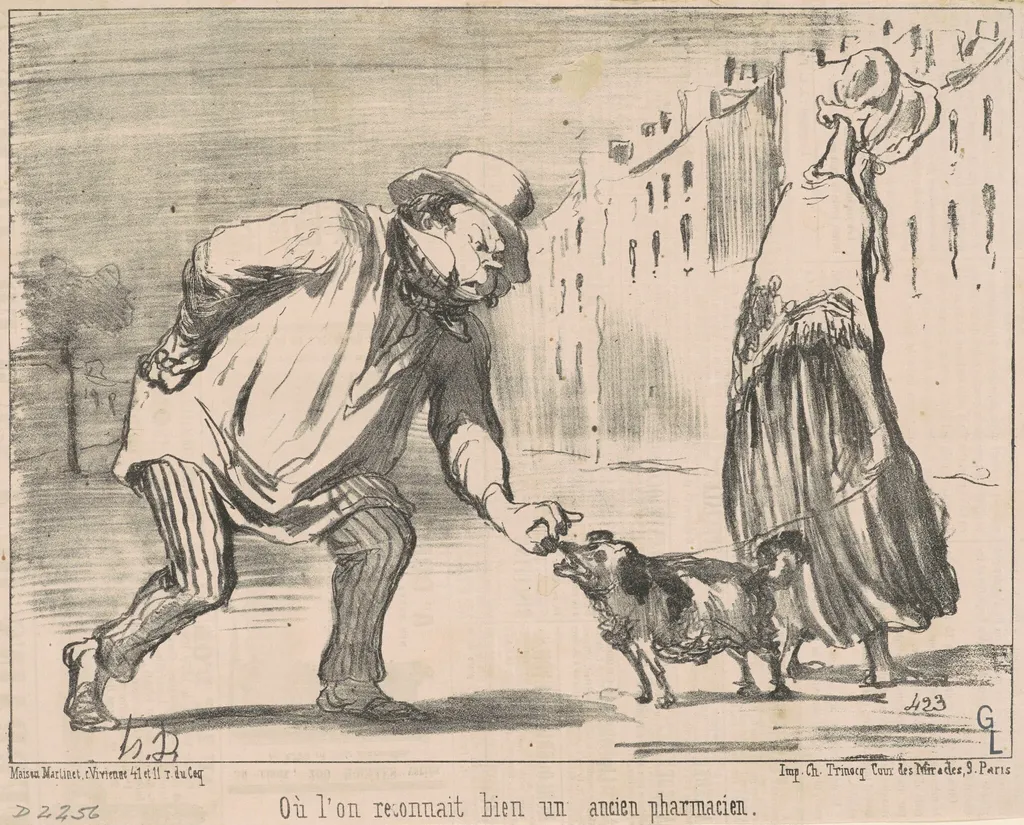
Ou l'on reconnait ... un ancien pharmacien is an ink print by the Impressionist artist Honoré Daumier. It dates from 1852 and is held in the collection of the National Gallery of Art.
About this work
Overview
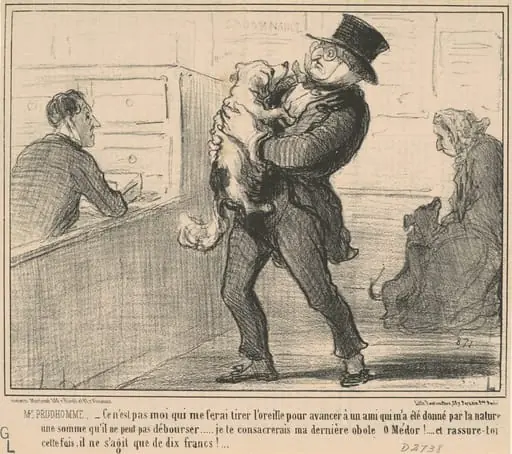
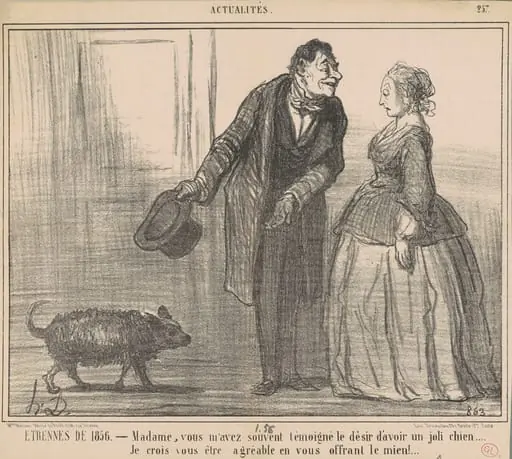
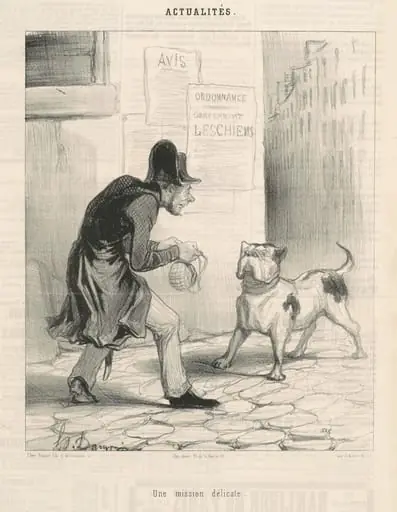
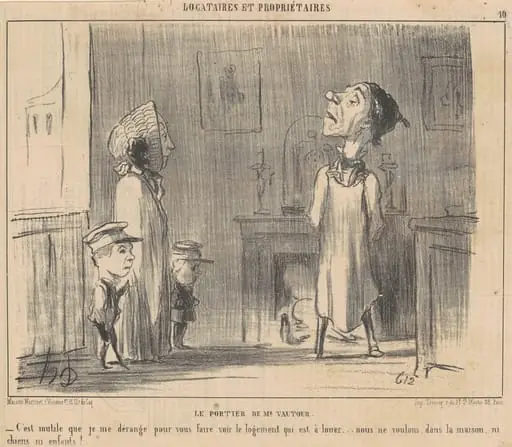
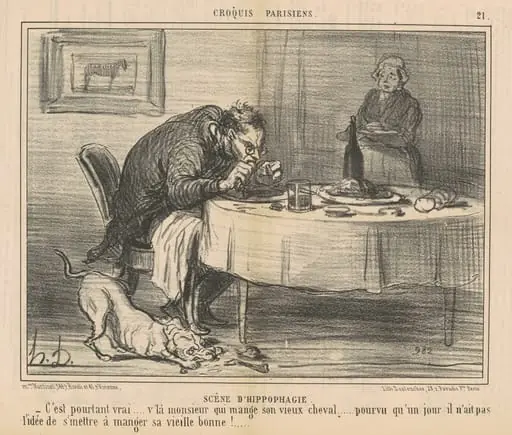
Rendered in monochrome, the image portrays a man engaged with a small dog, held by a second figure.
Created in 1852, this lithograph by Honoré Daumier captures a fleeting moment in urban life. Rendered in monochrome, the image portrays a man engaged with a small dog, held by a second figure. The composition relies on minimal yet expressive lines to convey motion and social interaction. As a print, it reflects Daumier’s engagement with everyday scenes, produced through the lithographic process that allowed for wide circulation among Parisian audiences.
Subject & Meaning
The scene depicts an unscripted encounter between a man and a dog, observed by a bystander. The dog’s restrained posture and the man’s animated gesture suggest a moment of recognition or dispute, possibly over ownership or behavior. Daumier often used such vignettes to comment on social norms and public conduct. Here, the interaction is neither heroic nor tragic, but quietly revealing of urban tensions and the quiet dramas of ordinary life.
Technique & Style
Daumier employed lithography to achieve rapid, fluid lines and tonal contrasts with ink. The monochromatic palette, achieved through washes and hatching, emphasizes movement and texture without color distraction. Figures are rendered with loose, energetic strokes, while the background is suggested rather than detailed, allowing the viewer’s eye to focus on the central interaction. This approach aligns with his broader practice of capturing transient moments with economical draftsmanship.
History & Provenance
The work was produced during Daumier’s prolific period as a political and social satirist, following his imprisonment for caricaturing Louis-Philippe. Though less overtly political than his earlier works, this lithograph belongs to a series documenting Parisian street life. It was likely published in periodicals or sold as a standalone print, reaching a broad middle-class audience interested in contemporary scenes of urban society.
Context
In 1852, Paris was undergoing rapid modernization under Napoleon III, with expanding boulevards and a growing urban population. Daumier’s prints responded to this changing environment, documenting the interactions of its diverse inhabitants. This scene reflects the increasing visibility of pets in city life and the informal social codes governing public behavior. His work stands as a visual record of the city’s evolving social fabric.
Legacy
Daumier’s lithographs, including this one, influenced later realist and modernist artists by demonstrating how everyday moments could carry psychological and social weight. His ability to distill complex human interactions into simple, dynamic compositions set a precedent for narrative printmaking. Though not widely exhibited in his lifetime, his work gained recognition in the 20th century as foundational to modern visual storytelling.
Artist & collection
Artist
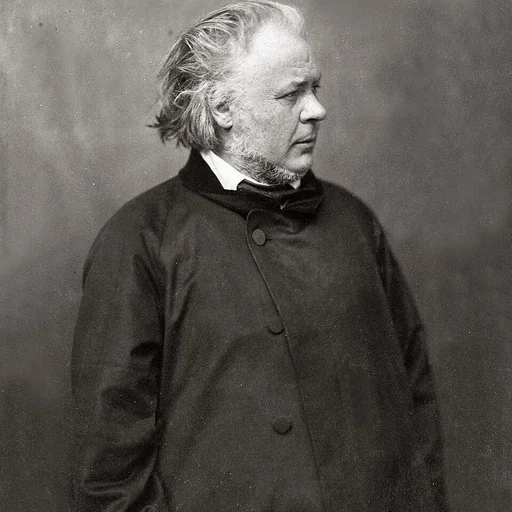
Honoré-Victorin Daumier was a French painter, sculptor, and printmaker, whose many works offer commentary on the social and political life in France, from the Revolution of 1830 to the fall of the Second French Empire in 1870.