Artwork
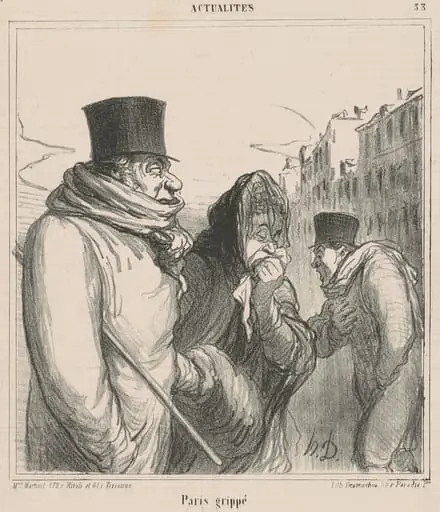
Paris grippé
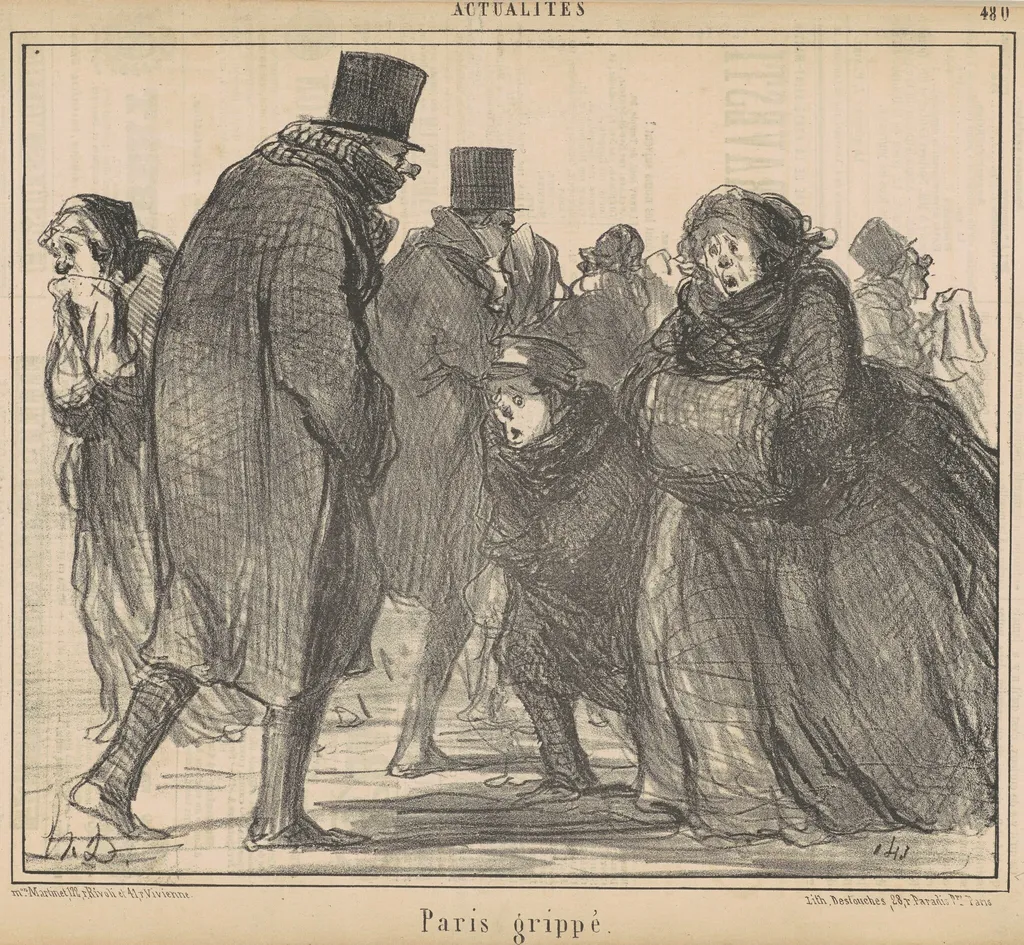
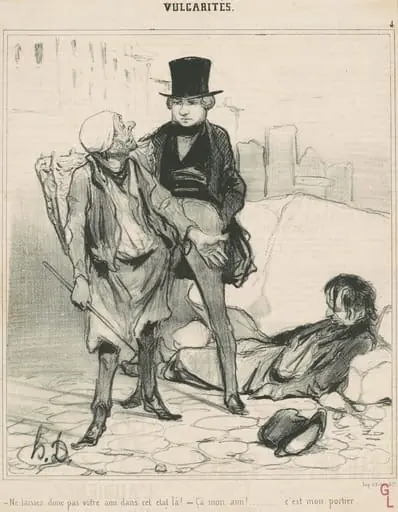
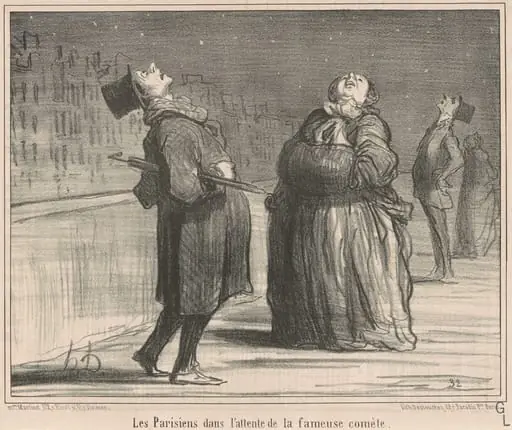
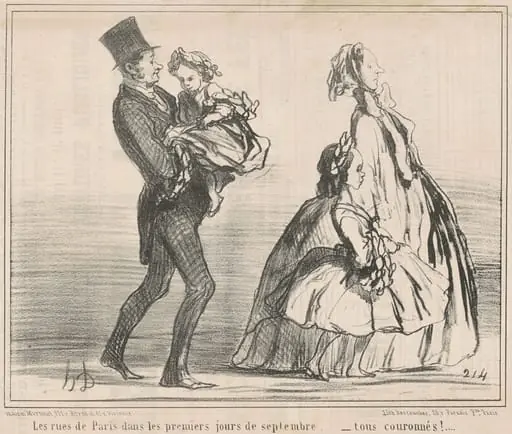
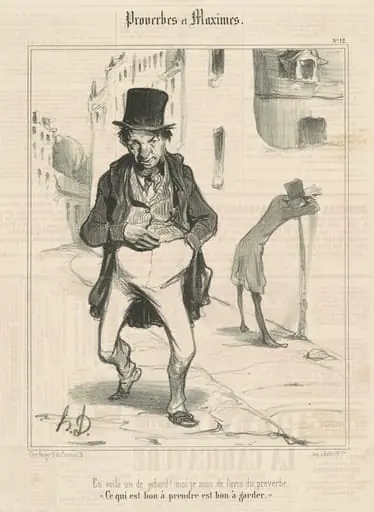
Paris grippé is an ink print by the Impressionist artist Honoré Daumier. It dates from 1858 and is held in the collection of the National Gallery of Art.
About this work
Overview
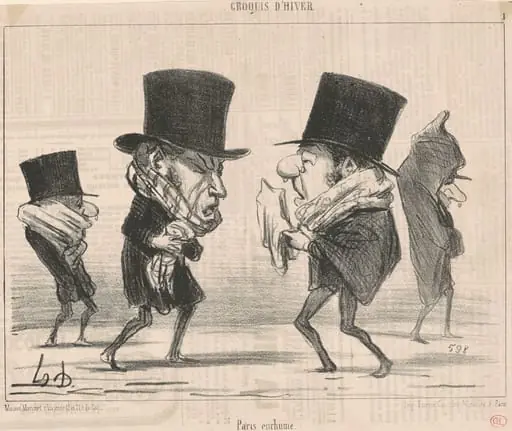
Honoré Daumier’s 1858 lithograph, titled “Paris grippé,” presents a crowded winter street in mid‑nineteenth‑century Paris. The composition is dominated by a mass of pedestrians wrapped in thick coats, their posture and expressions suggesting the chill of a harsh season. The work captures a fleeting moment of urban life, emphasizing the density and movement of the city’s inhabitants.
Subject & Meaning
The scene focuses on ordinary Parisians navigating a frigid day, their heavy garments and huddled stance conveying collective discomfort. By foregrounding the physical strain of daily travel, Daumier hints at broader social concerns, subtly critiquing the hardships endured by the lower and middle classes in a rapidly expanding metropolis.
Technique & Style
Executed in lithography, the image relies on strong, decisive lines that delineate the throng of figures and the contrast between dark coats and a lightened sky. Daumier’s use of dense ink areas creates a visual weight for the clothing, while the sparer background allows the crowd to dominate the picture plane, reinforcing the sense of congestion.
Context
Created during the 1850s, a period marked by extensive urban renewal under Baron Haussmann, the print reflects the reality of Parisian life amid modernization. Winter conditions were notoriously severe, and Daumée’s depiction offers a contemporary record of how ordinary citizens coped with the city’s evolving infrastructure and the social pressures of the era.
Artist & collection
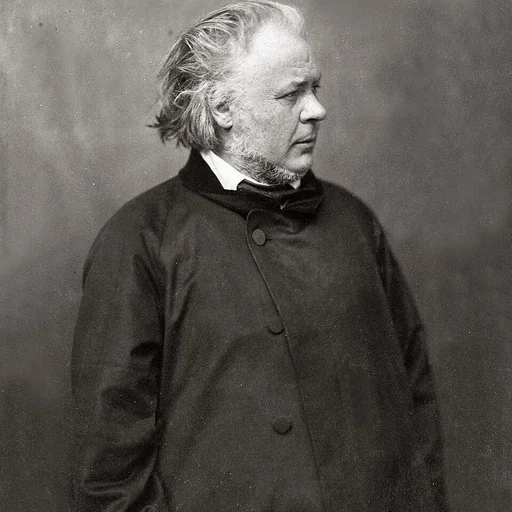
Artist
Honoré-Victorin Daumier was a French painter, sculptor, and printmaker, whose many works offer commentary on the social and political life in France, from the Revolution of 1830 to the fall of the Second French Empire in 1870.