Artwork
Tiens Dorothée ... Voila où m'a conduit ...
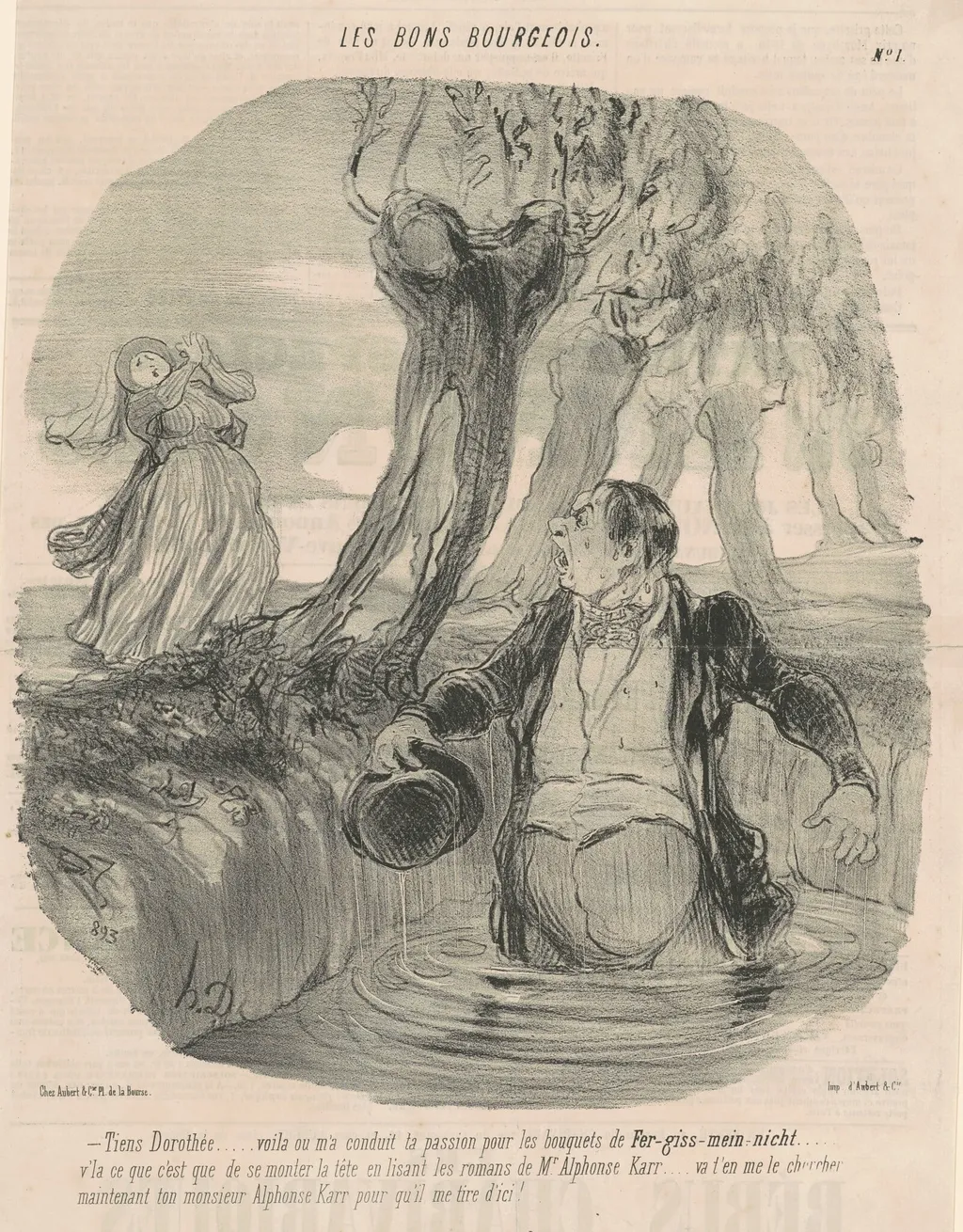
Tiens Dorothée ... Voila où m'a conduit ... is an ink print by the Romanticist artist Honoré Daumier. It dates from 1846 and is held in the collection of the National Gallery of Art. Tiens Dorothée .
About this work
Overview
Tiens Dorothée ... Voilà où m'a conduit ... is a lithograph by Honoré Daumier, created in 1846. The print features a man immersed in water, extending a hand while clutching a hat, enveloped by anthropomorphic tree branches. A woman observes from the background, adding a layer of human interaction to the scene.
Subject & Meaning
The subject conveys a sense of vulnerability. The contrast between the distressed man's plight and the woman's reaction in the background underscores a social commentary, exploring the tension between human struggles and the natural world's indifference.
Technique & Style
Executed in lithography, the work showcases Daumier's adeptness with the medium. The technique allowed for expressive lines and textures, particularly evident in the human-like tree branches, which blend the organic with the figurative.
History & Provenance
Created in 1846, the lithograph is characteristic of Daumier's mid-19th-century output. Specific provenance details are not provided, but the work aligns with the artist's period focus on social themes and lithographic experimentation.
Context
Within the context of 19th-century French art, the piece reflects Daumier's penchant for socially aware themes, often infused with elements of the surreal or unexpected, as seen in the anthropomorphic tree.
Artist & collection

Artist
Honoré-Victorin Daumier was a French painter, sculptor, and printmaker, whose many works offer commentary on the social and political life in France, from the Revolution of 1830 to the fall of the Second French Empire in 1870.









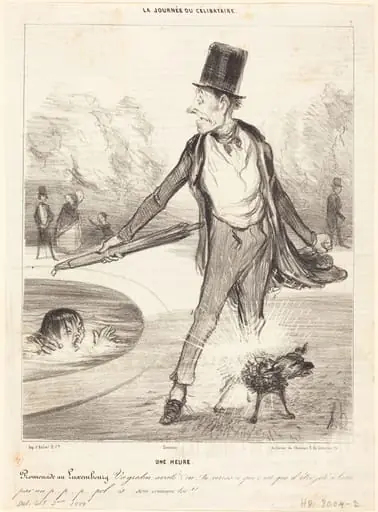 Une heure - Promenade au Luxembourg
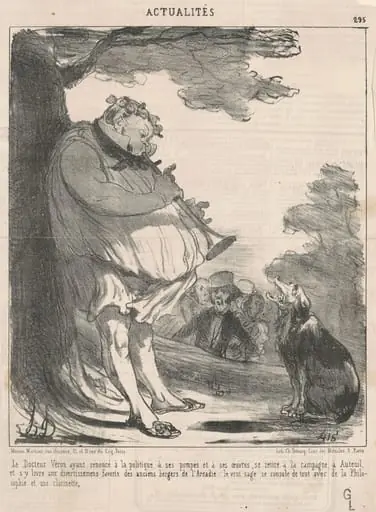 Le docteur Véron ... a Auteuil ...
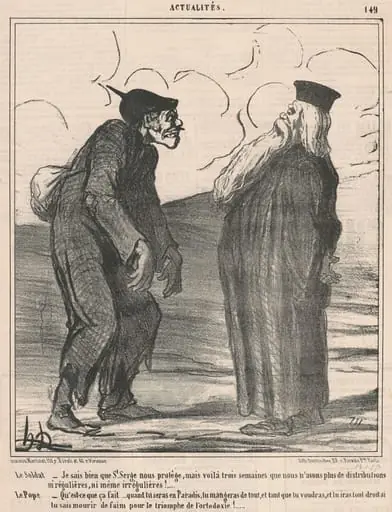 Le soldat...Je sais...
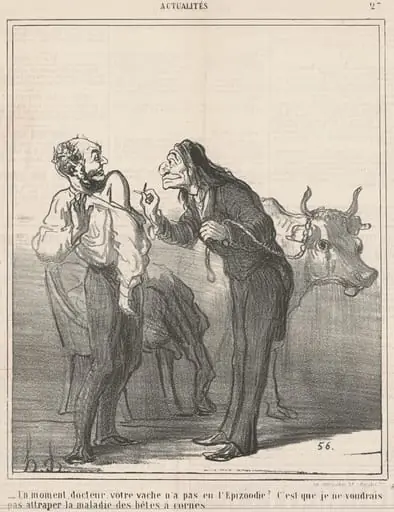 Un moment ... votre vache n'a pas eu l'epizoodie? ...
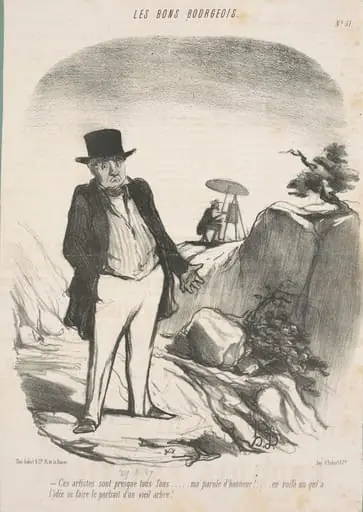 Ces artistes sont presque tous fous . . . Ma parole d'honneur! . . . En voilà un qui a l'idée de faire le portrait d'un vieil arbre!
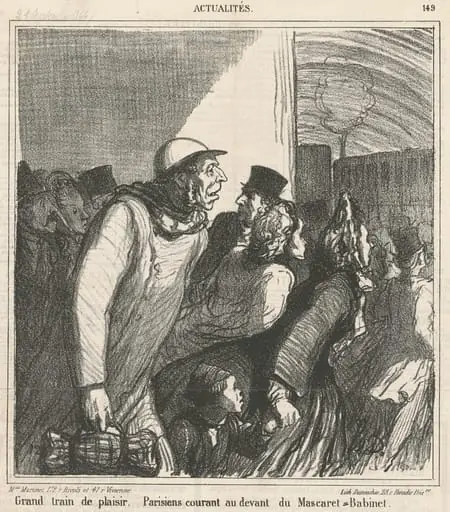 Grand train de plaisir
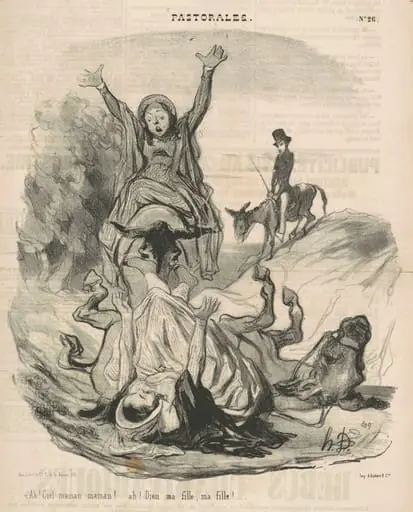 Ah! Ciel maman maman ... Ah! Dieu ma fille ...
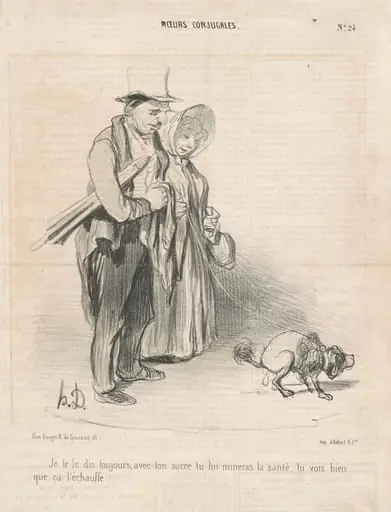 Je te le dis toujours, avec ton sucre...
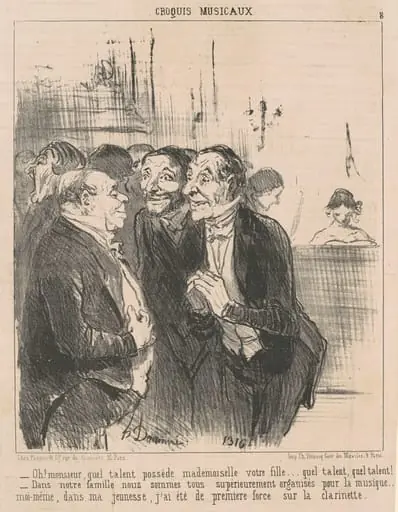 Oh! Monsieur, quel talent possède ...
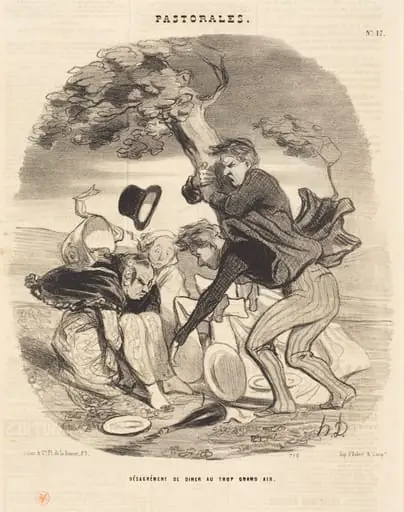 Désagrément de diner au trop grand air