Artwork
Une Demande en séparation
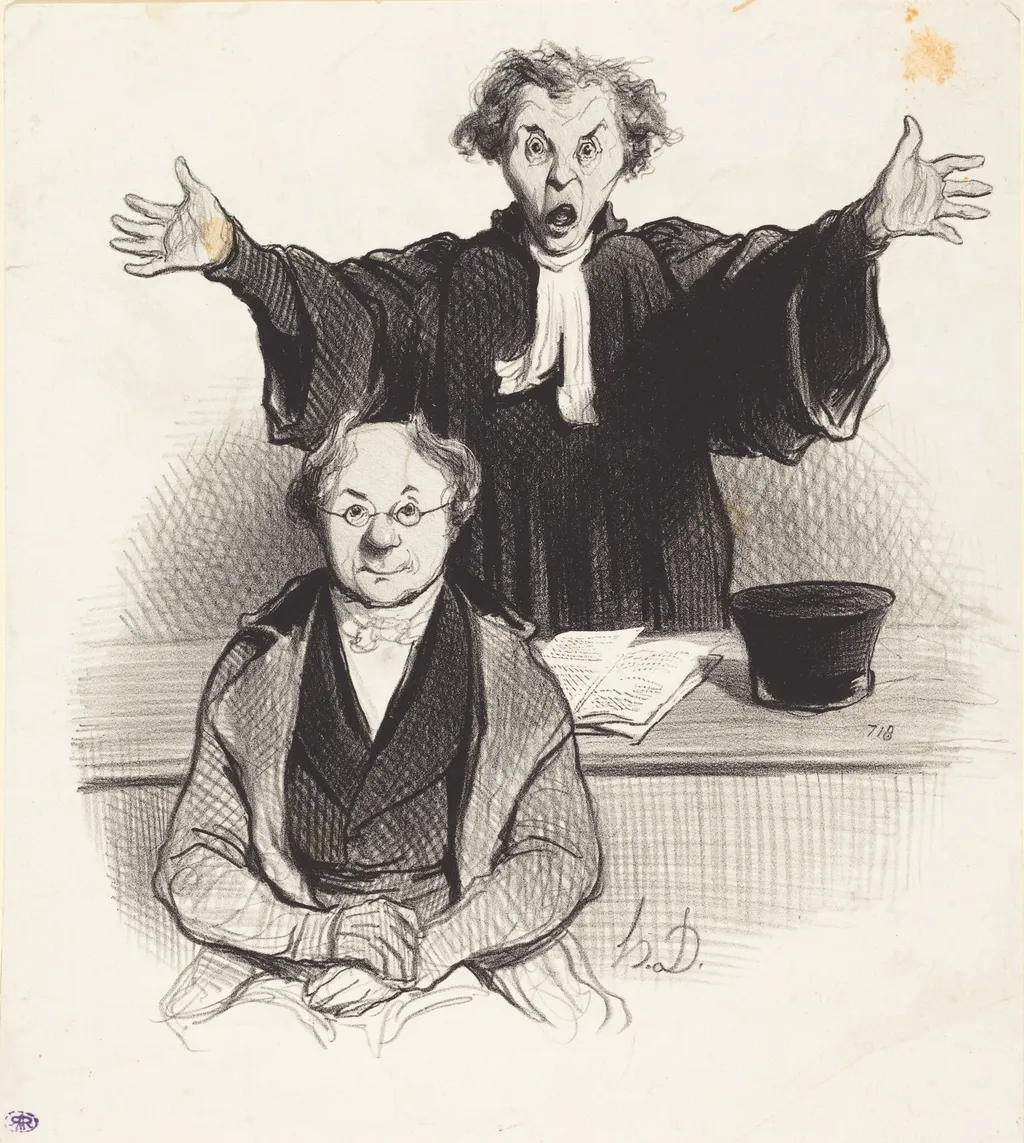
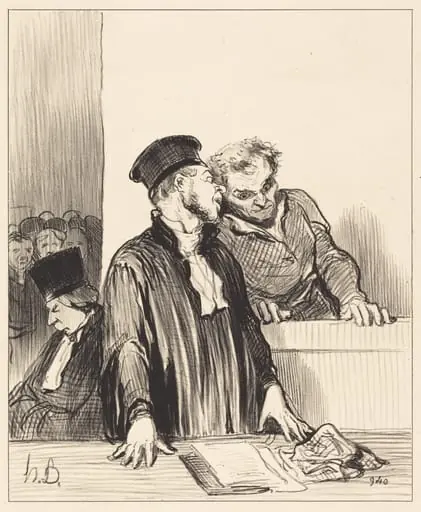
Une Demande en séparation is an ink print by the Romanticist artist Honoré Daumier. It dates from 1845 and is held in the collection of the National Gallery of Art.
About this work
Overview
Created in 1845, this lithograph by Honoré Daumier captures a moment of domestic tension, rendered with the sharp wit characteristic of his journalistic illustrations. Produced during the July Monarchy, the print emerged from Daumier’s engagement with satirical periodicals like *Le Charivari*, where he translated social critique into visual form using the accessibility of lithographic printing.
Subject & Meaning
One figure, seated and bespectacled, appears stunned, while the other, disheveled and gesturing wildly, embodies emotional outburst.
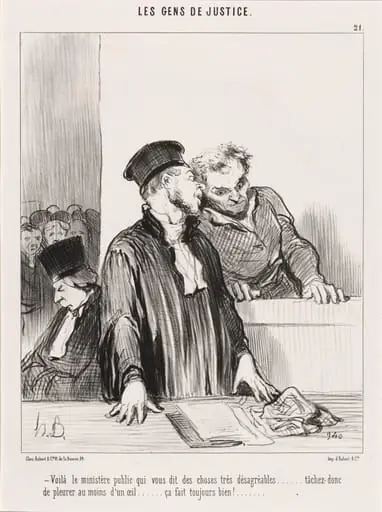
The scene portrays a confrontational exchange between two men in a domestic setting, suggesting a marital separation proceeding. One figure, seated and bespectacled, appears stunned, while the other, disheveled and gesturing wildly, embodies emotional outburst. Daumier uses this intimate conflict to expose the performative nature of bourgeois morality and the legal machinery that formalized personal breakdowns under the monarchy.
Technique & Style
Daumier employed lithography to achieve rapid, expressive lines that convey movement and psychological intensity. His loose, energetic strokes define the standing figure’s agitation, while the seated man’s stillness is emphasized through tighter contours. The sparse background—open book, discarded hat—hints at disrupted order, reinforcing the narrative without clutter. The medium allowed for wide distribution, aligning with his goal of public commentary.
History & Provenance
The print was produced during a period of heightened political censorship in France, when Daumier faced imprisonment for his caricatures of King Louis-Philippe. Though *Une Demande en séparation* avoids direct political figures, its critique of legal and social institutions reflects the broader climate of dissent. It circulated among urban readers familiar with the tensions between public propriety and private chaos.
Context
Under the July Monarchy, divorce laws were restrictive and socially stigmatized, yet increasingly sought by the middle class. Daumier’s work tapped into public awareness of these contradictions, portraying marriage not as a sacred bond but as a site of legal and emotional negotiation. His imagery resonated with readers navigating shifting gender roles and rising legal formalism in personal life.
Legacy
This print exemplifies Daumier’s enduring influence on social realism in printmaking. By elevating everyday domestic scenes into vehicles for institutional critique, he expanded the scope of caricature beyond political parody. Later artists and illustrators drew from his ability to fuse psychological nuance with social observation, cementing lithography as a tool for democratic visual discourse.
Artist & collection

Artist
Honoré-Victorin Daumier was a French painter, sculptor, and printmaker, whose many works offer commentary on the social and political life in France, from the Revolution of 1830 to the fall of the Second French Empire in 1870.