Artwork
Voila... mon pot de fleurs... va avoir du soleil...
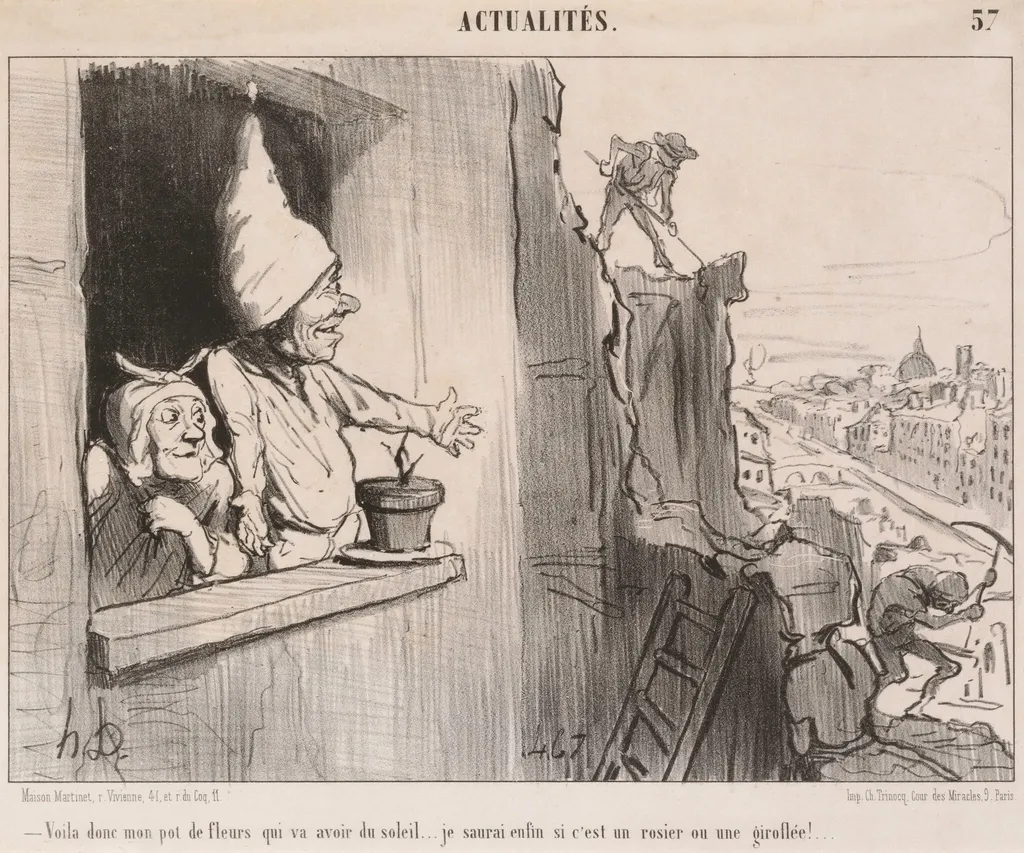
Voila... mon pot de fleurs... va avoir du soleil... is an ink print by the Impressionist artist Honoré Daumier. It dates from 1852 and is held in the collection of the National Gallery of Art.
About this work
Overview
Created in 1852, this lithograph by Honoré Daumier captures a moment of everyday absurdity with dry wit.
Created in 1852, this lithograph by Honoré Daumier captures a moment of everyday absurdity with dry wit. Executed in the lithographic medium, it belongs to a body of work produced for Parisian satirical journals, where Daumier refined his ability to distill social observation into concise visual narratives. The image avoids overt political symbolism, instead relying on human behavior to convey its tone.
Subject & Meaning
Two women lean from a window, gleefully anticipating sunlight for a potted plant. Below, a man struggles to climb a tall pole, surrounded by onlookers near a river. The contrast between their casual delight and his precarious effort underscores a quiet mockery of misplaced priorities. The scene reflects Daumier’s interest in the quirks of ordinary life, where trivial actions become unintentional spectacles.
Technique & Style
Daumier employed rapid, fluid lines characteristic of lithographic sketching, allowing movement and spontaneity to define the composition. The figures are rendered with minimal detail, their expressions suggested through posture and gesture rather than refined features. The background fades into loose washes, directing focus to the interplay of figures and the humor of their spatial relationships.
History & Provenance
The print was likely published in *Le Charivari*, a weekly satirical periodical where Daumier regularly contributed. Though not tied to a specific political event, it emerged during a period of heightened censorship under Louis-Napoléon Bonaparte, when direct criticism of authority was risky. Daumier’s indirect satire allowed him to navigate these constraints while maintaining his critical voice.
Context
Mid-19th-century Paris saw rapid urbanization and a growing middle class, whose daily rituals became fertile ground for satire. Daumier’s work responded to this shifting society, observing how public and private spaces intersected in the lives of ordinary people. His prints often framed mundane acts as miniature dramas, revealing the absurdities embedded in routine.
Legacy
Daumier’s lithographs influenced later generations of illustrators and cartoonists by demonstrating how simplicity and timing could convey complex social commentary. His ability to capture human foible without caricature set a precedent for observational humor in print. Though less overtly political than some of his works, this piece exemplifies his enduring skill in finding narrative in the trivial.
Artist & collection

Artist
Honoré-Victorin Daumier was a French painter, sculptor, and printmaker, whose many works offer commentary on the social and political life in France, from the Revolution of 1830 to the fall of the Second French Empire in 1870.









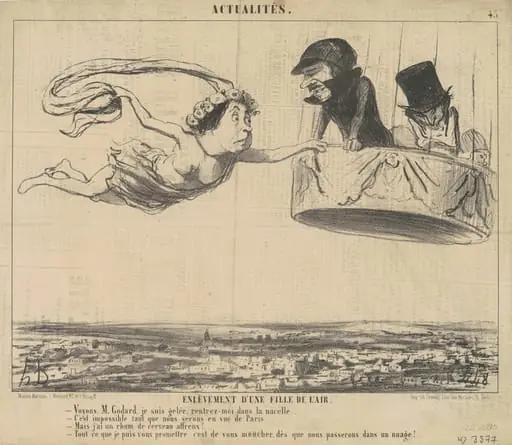 Enlèvement d'une fille de l'air
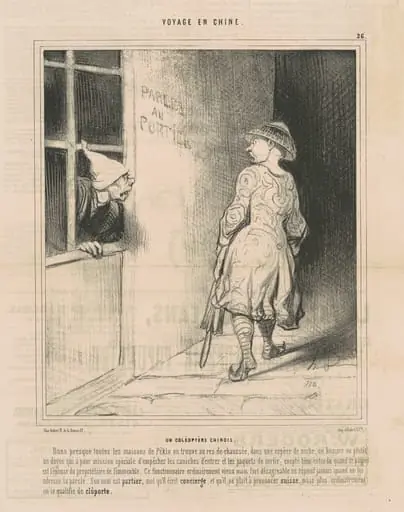 Un coléoptère chinois
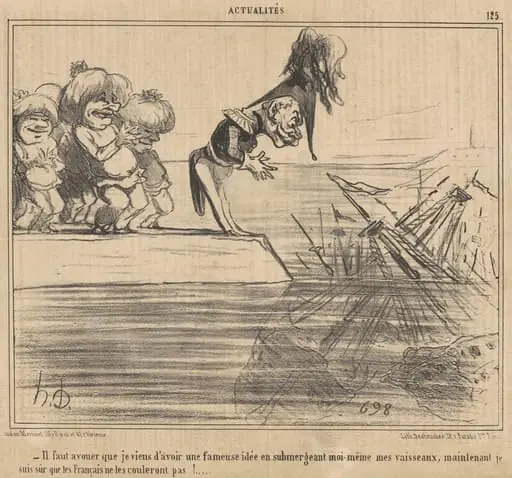 Il faut avouer que je viens d'avoir une ...
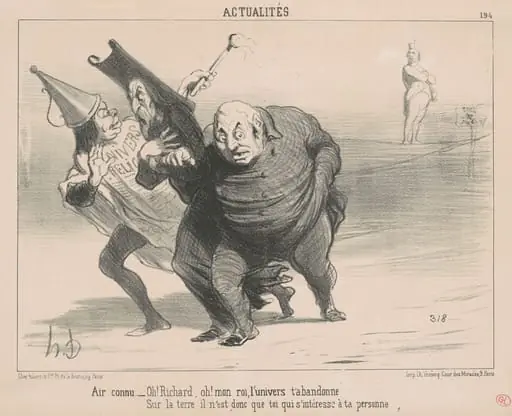 Air connu: Oh! Richard, Oh! Mon roi ...
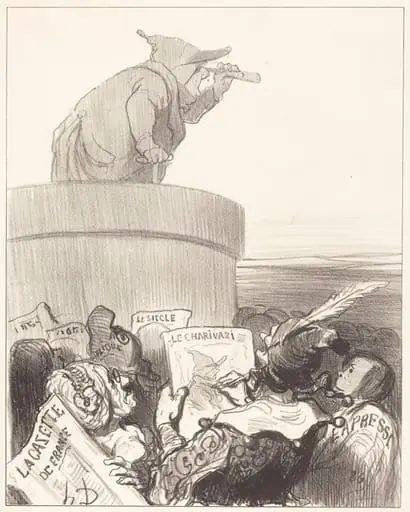 Le Constitutionnel contemplant l'horizon politique
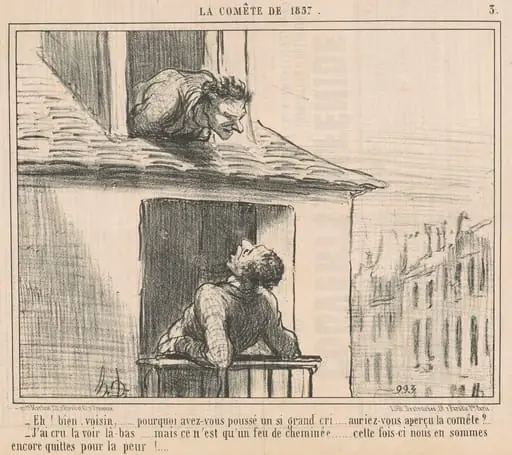 Eh! Bien, voisin ... pourquoi avez-vous poussé ...
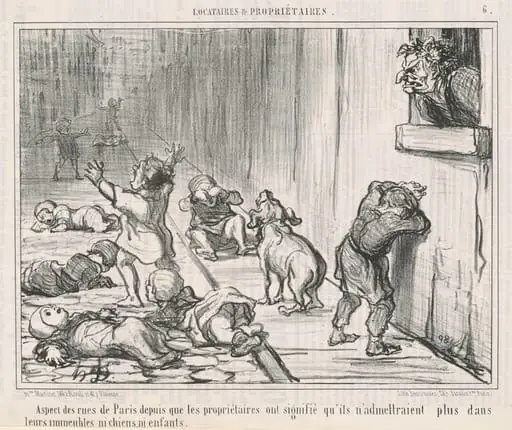 Aspect des rues de Paris depuis ...
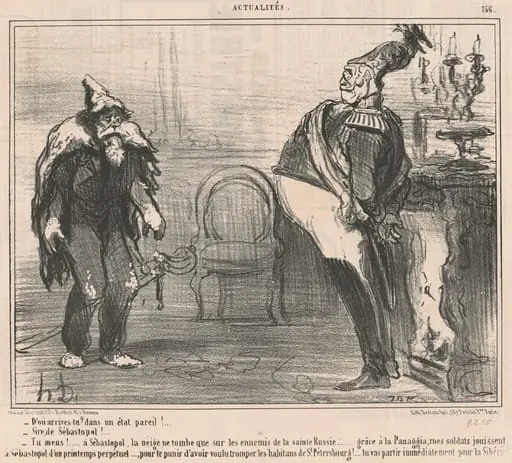 D'ou arrives-tu?
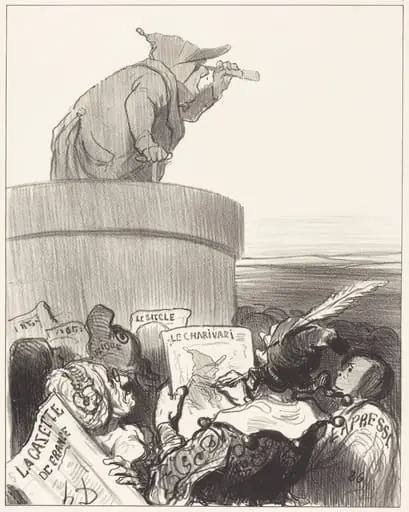 Le Constitutionnel contemplant l'horizon politique
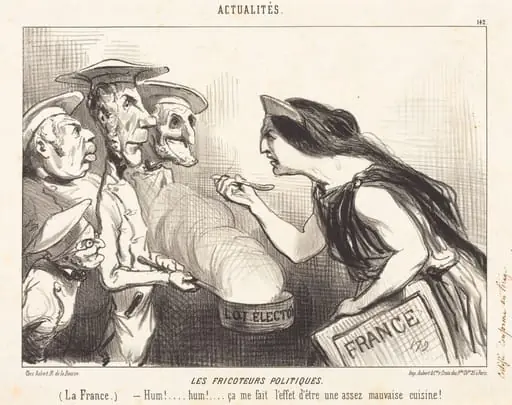 Les Fricoteurs politiques
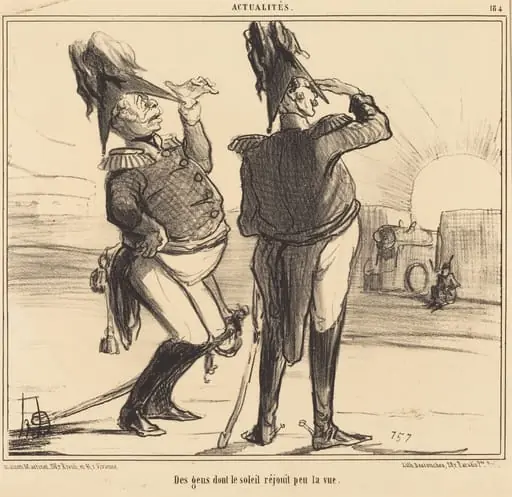 Des gens dont le soleil réjouit peu la vue
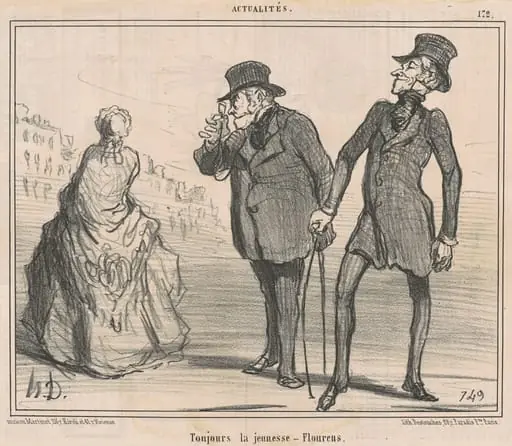 Toujours la heunesse-flourens