Artwork
Vois-tu, c'est l'éclipse qui commence ...
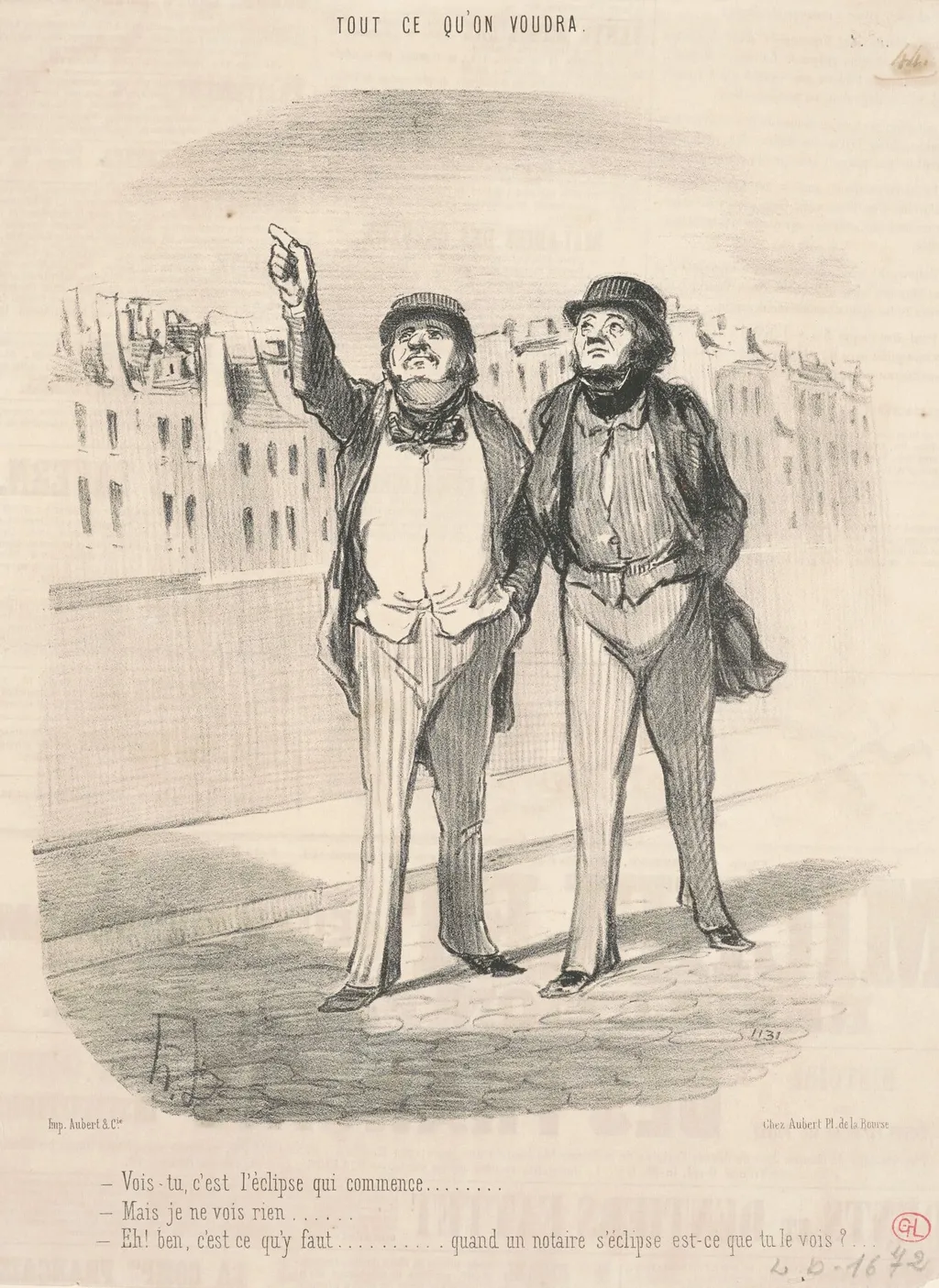
Vois-tu, c'est l'éclipse qui commence ... is an ink print by the Romanticist artist Honoré Daumier. It dates from 1847 and is held in the collection of the National Gallery of Art. Honoré Dauméer’s lithograph titled *Vois‑tu, c’est l’éclipse qui commence…* captures a brief encounter on a cobbled street.
About this work
Overview
Honoré Dauméer’s lithograph titled *Vois‑tu, c’est l’éclipse qui commence…* captures a brief encounter on a cobbled street. Two men walk side by side, one gesturing upward while they converse, set against a row of narrow, tall façades beneath a muted, overcast sky.
Subject & Meaning
The composition foregrounds ordinary urban life: a casual dialogue interrupted by a gesture toward the heavens. By juxtaposing the mundane act of strolling with a sudden glance at the sky, Daumier hints at the tension between daily routine and the unexpected, inviting viewers to consider how people observe and comment on their surroundings.
Technique & Style
Executed in lithography, the work relies on bold, linear marks that define the street’s texture and the silhouettes of the figures. Daumier’s characteristic use of contrast—dark outlines against a lighter background—creates a sense of depth while preserving the immediacy of a sketch, a hallmark of his socially observant prints.
Context
Created during the mid‑19th‑century Parisian boom, the scene reflects Daumier’s ongoing interest in the city’s public spaces and the interactions that unfold within them. The lithograph aligns with his broader portfolio, which frequently employs humor and subtle satire to critique contemporary society.
Artist & collection
Artist
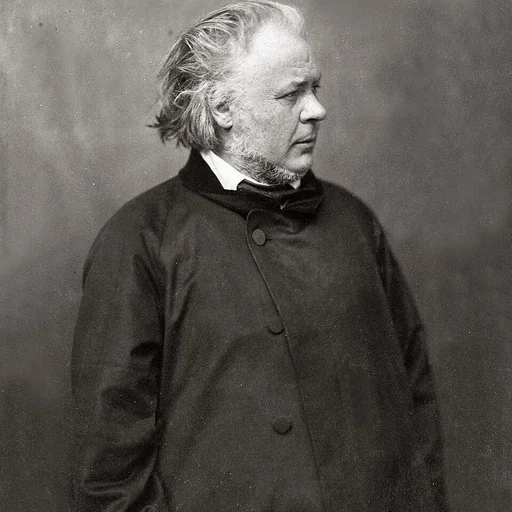
Honoré-Victorin Daumier was a French painter, sculptor, and printmaker, whose many works offer commentary on the social and political life in France, from the Revolution of 1830 to the fall of the Second French Empire in 1870.









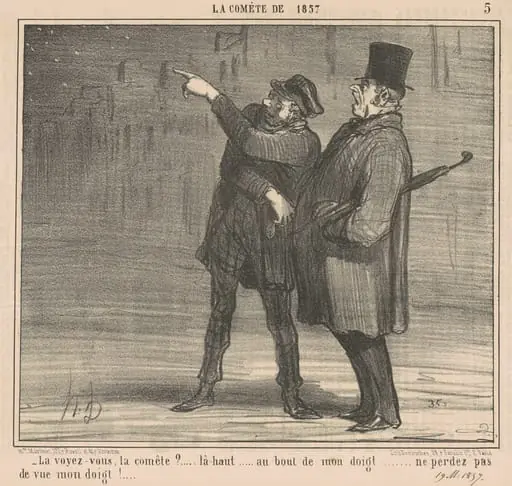 La voyez-vous la comète? ... La-haut ...
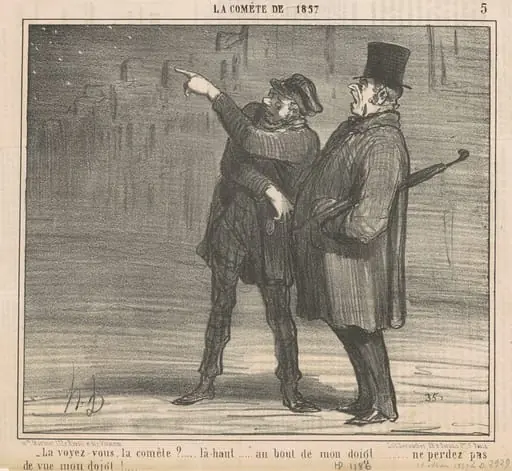 La voyez-vous la comète? ...
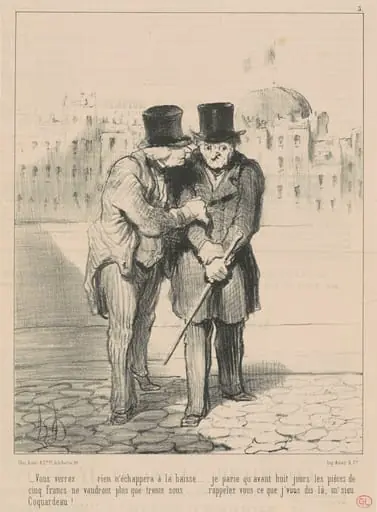 Vous verrez ... rien n'échappera a la baisse ...
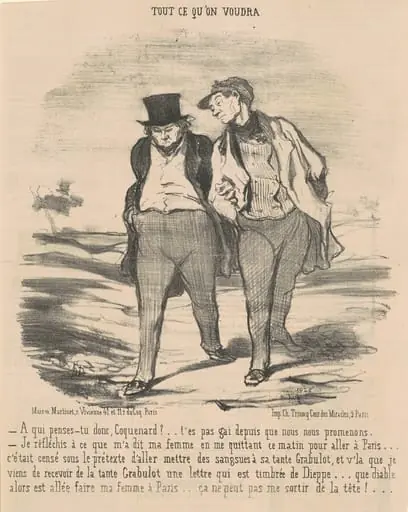 A qui penses-tu donc, coquenard? ...
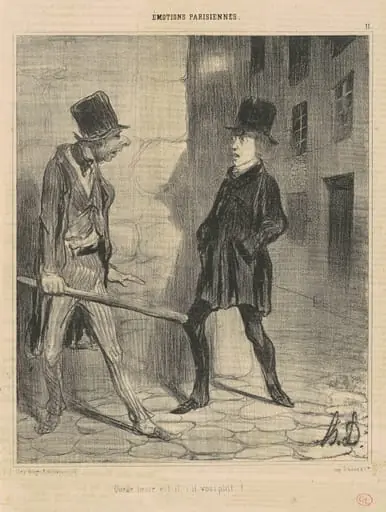 Quelle heure est'il, s'il vous plait?...
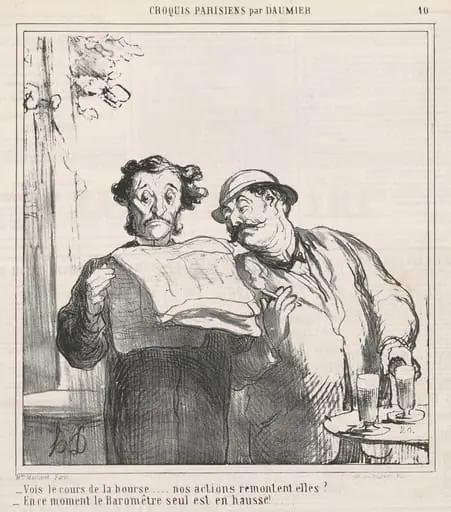 Vois le cours de la bourse
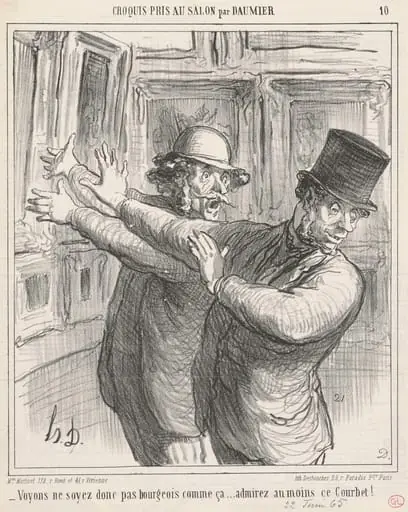 Voyons ... admirez au moins ce Courbet! ...
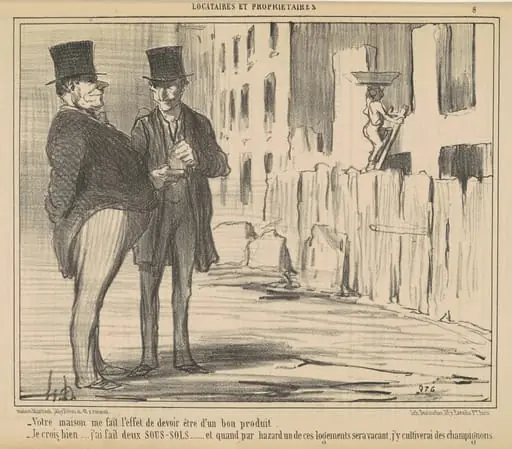 Votre maison me fait l'effet de devoir ...