Artwork
Vue prise sur n'importe quel boulevard
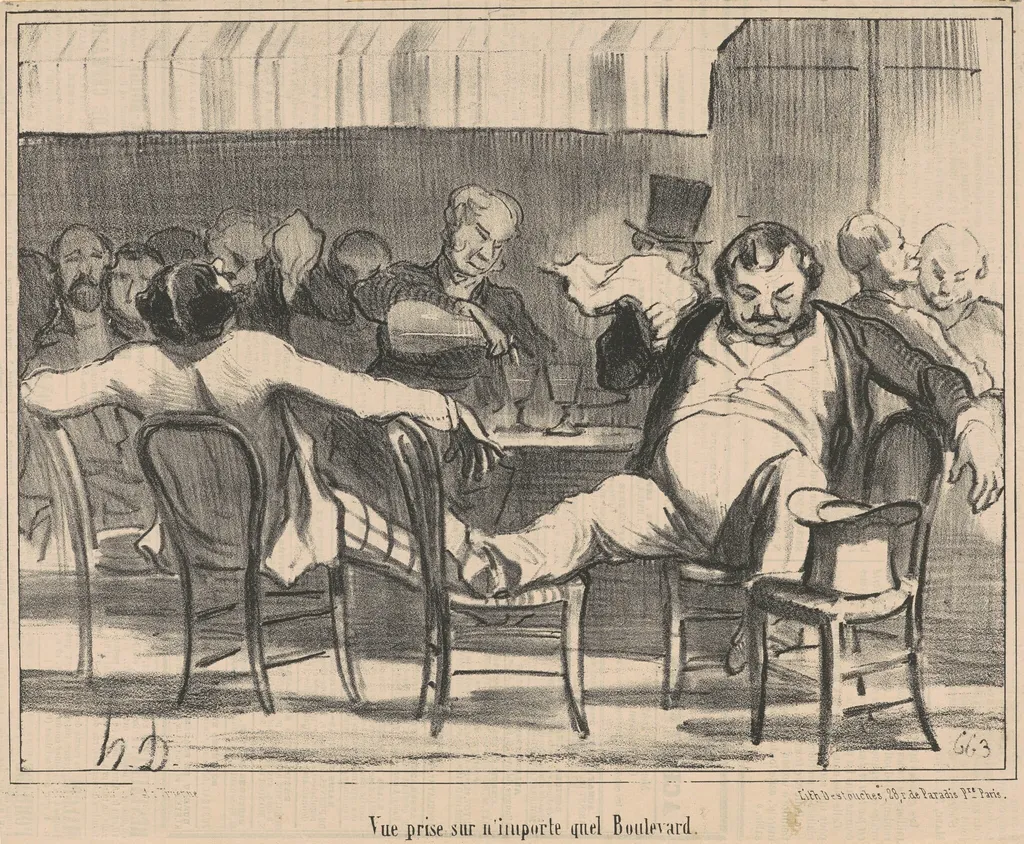
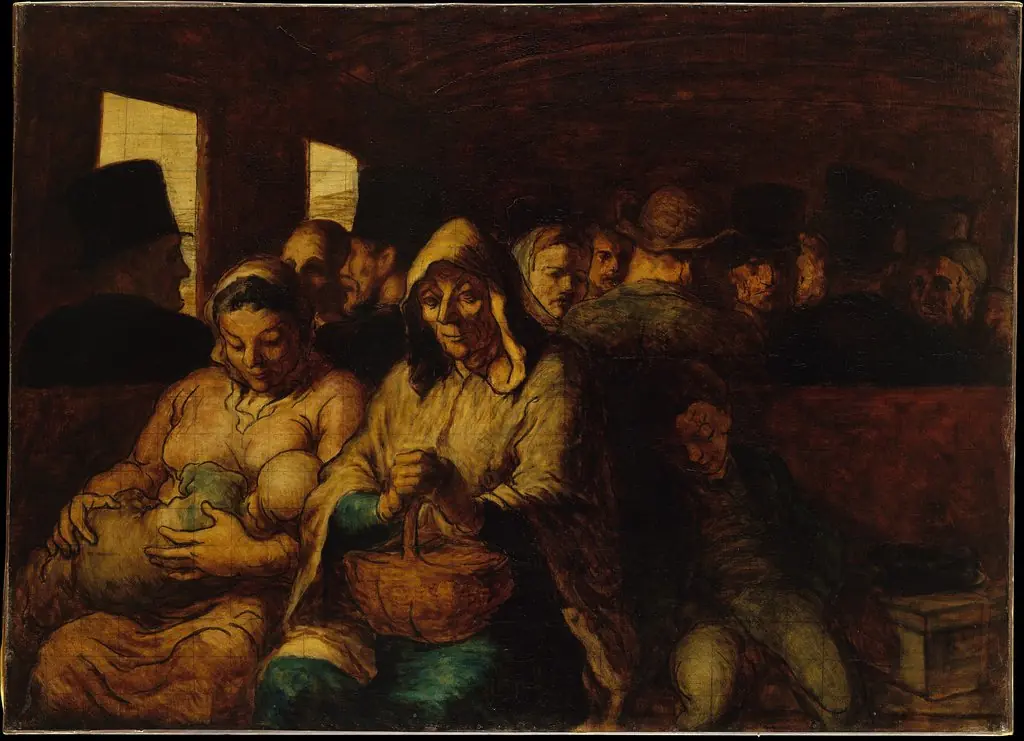
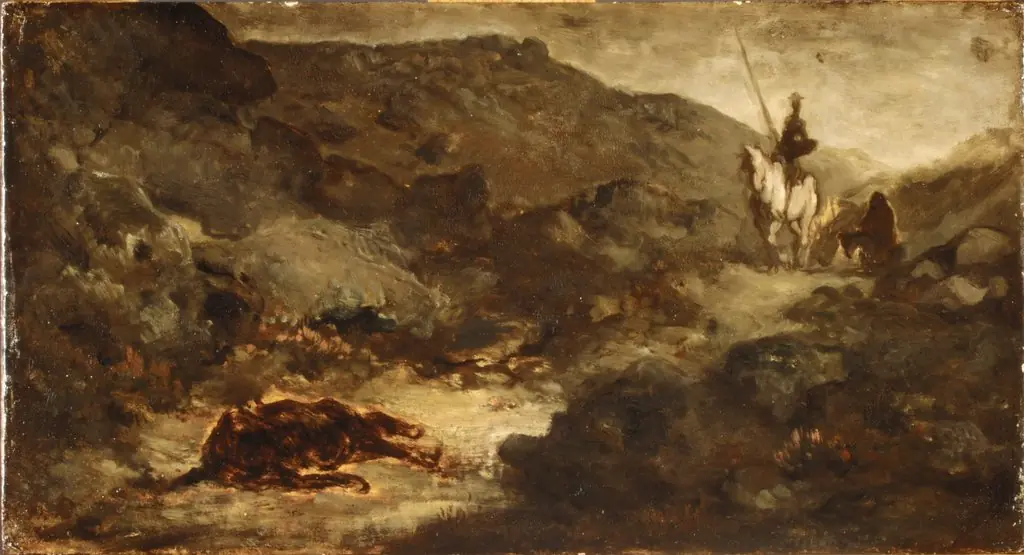
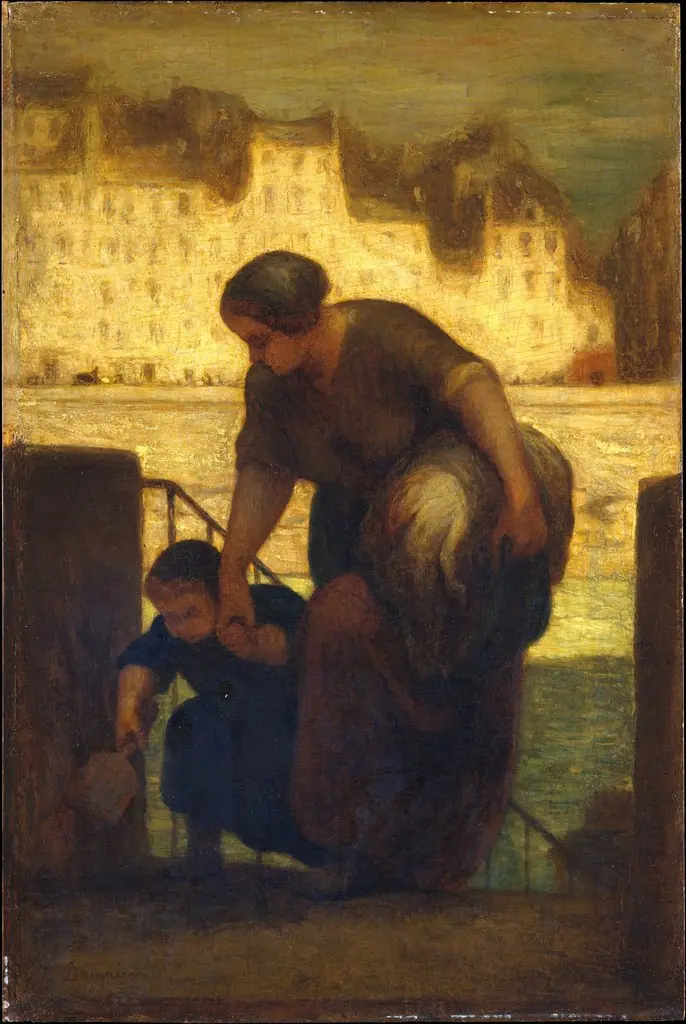
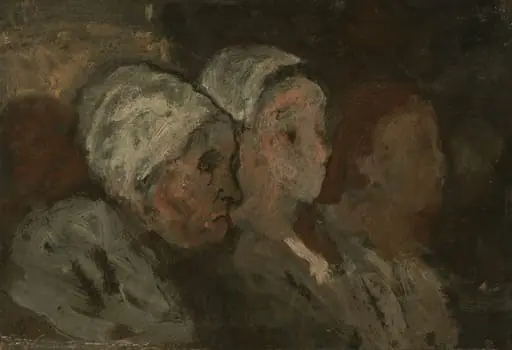
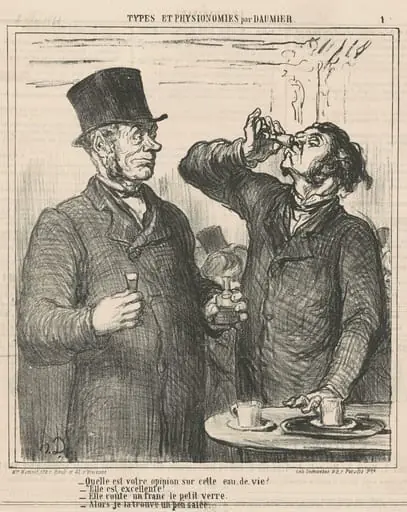
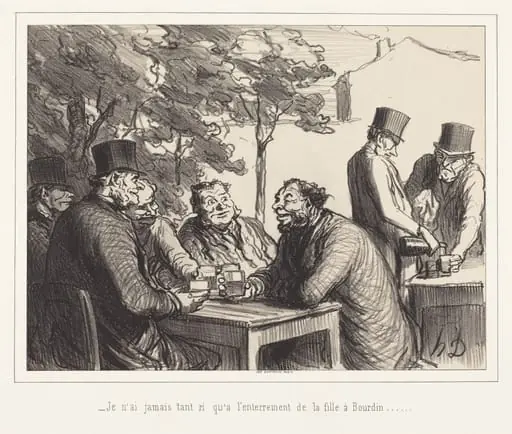
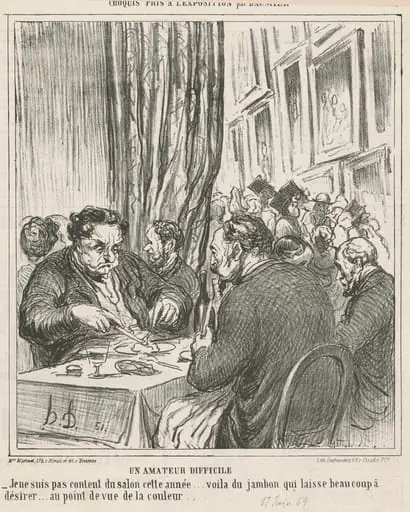
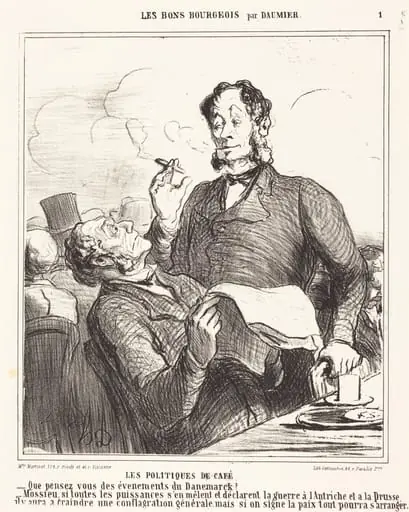
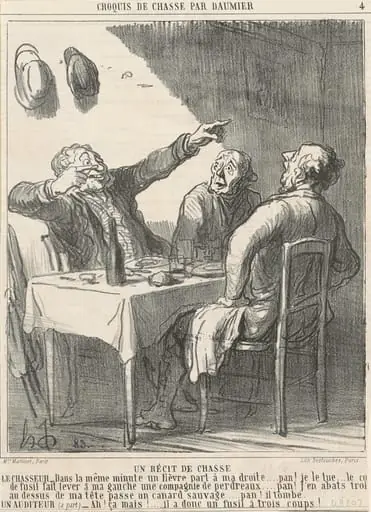
Vue prise sur n'importe quel boulevard is an ink print by the Impressionist artist Honoré Daumier. It dates from 1854 and is held in the collection of the National Gallery of Art. Honoré Daumée’s lithograph Vue prise sur n’importe quel boulevard, executed in 1854, depicts a bustling interior of a Parisian café.
About this work
This lithograph shows people inside a Paris café, packed in tight. Faces look big and noses even bigger—Daumier liked to poke fun this way. The lamp in the back throws sharp light on hats and coats.
He made this print in 1854, when cafés were new social spots. Critics say his bulgy figures show how people stretched rules back then.
To see more of his bold lines, look up Daumier, Honoré.
Overview
Honoré Daumée’s lithograph Vue prise sur n’importe quel boulevard, executed in 1854, depicts a bustling interior of a Parisian café. The print presents a tightly packed group of patrons, illuminated by a single lamp that casts a sharp contrast on their attire. The composition captures a moment of everyday urban life in mid‑19th‑century France.
Subject & Meaning
The figures are rendered with exaggerated facial features—oversized noses and enlarged expressions—that inject a satirical tone into the scene. Through this caricature, Daumier comments on the convivial yet chaotic nature of café culture, hinting at broader social dynamics and the loosening of conventional decorum among Parisians.
Technique & Style
Created as a lithograph, the work relies on bold, fluid lines and stark chiaroscuro produced by the lamp’s light. Daumier’s characteristic use of thick contours and exaggerated anatomy emphasizes both the humor and the immediacy of the moment, while the print’s texture conveys the tactile atmosphere of the crowded space.
History & Provenance
The print emerged during a period when cafés were newly established as central gathering places for the city’s diverse classes. Contemporary critics noted Daumier’s “bulgy” figures as a visual metaphor for the way Parisians were stretching social conventions, reflecting the evolving public sphere of the 1850s.
Context
In the 1850s, Paris experienced rapid urban transformation under Haussmann’s renovations, and cafés became hubs for political discussion, artistic exchange, and leisure. Daumier’s work aligns with his broader oeuvre of social satire, documenting everyday scenes that reveal the tensions and vibrancy of a modernizing capital.
Artist & collection
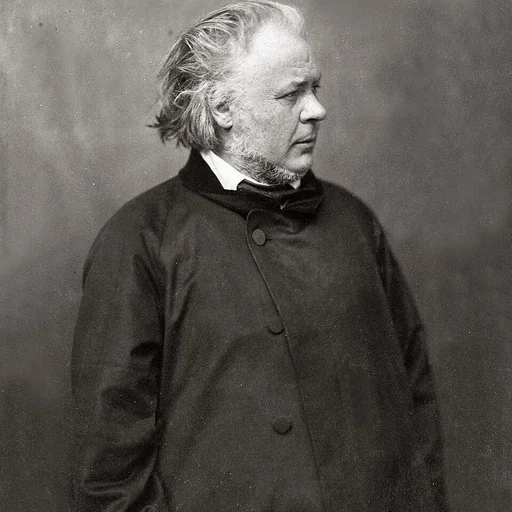
Artist
Honoré-Victorin Daumier was a French painter, sculptor, and printmaker, whose many works offer commentary on the social and political life in France, from the Revolution of 1830 to the fall of the Second French Empire in 1870.