Artwork
On the Thames
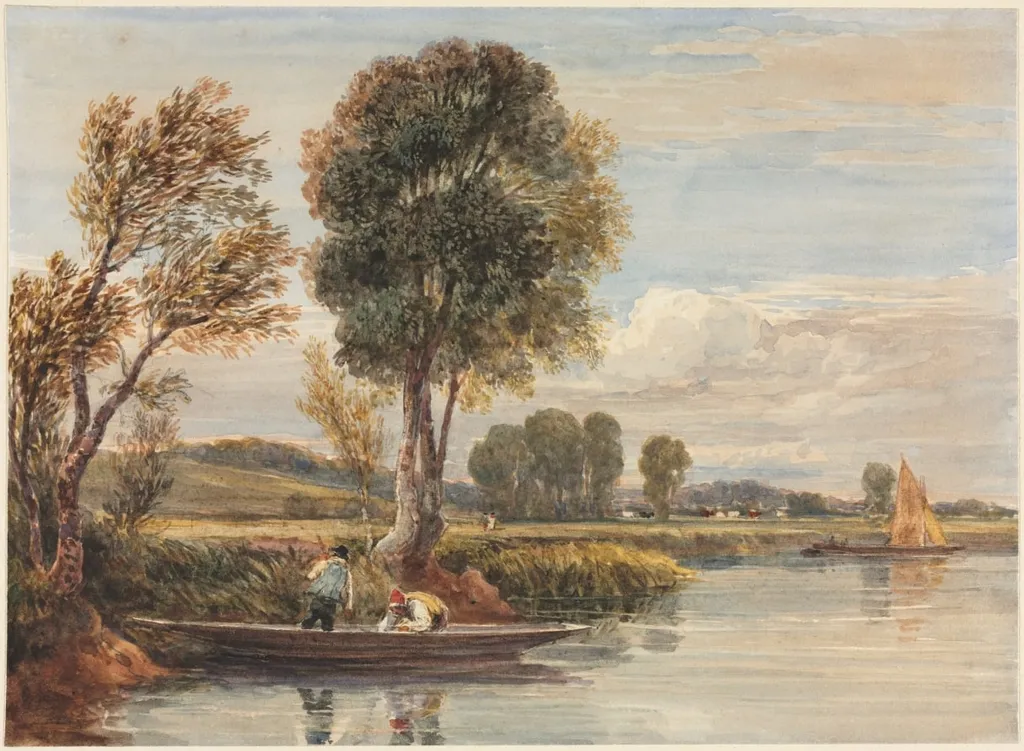
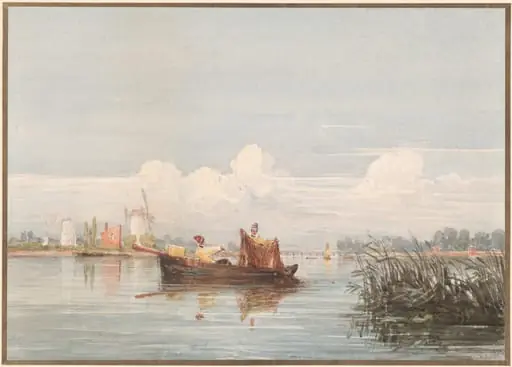
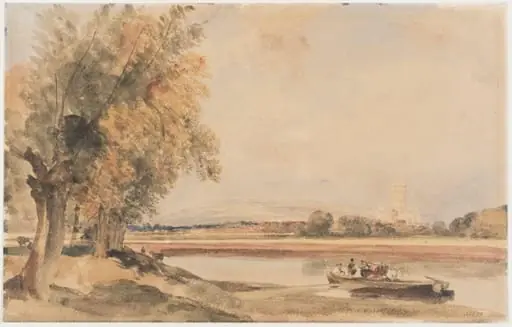
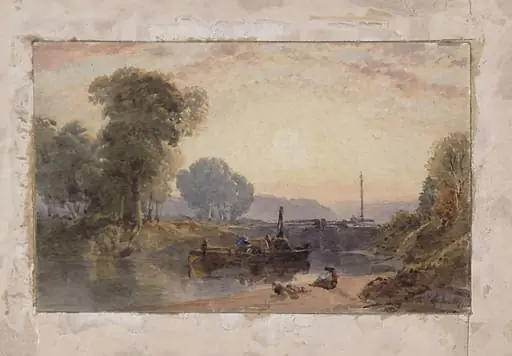
On the Thames is a drawing by the Romanticist artist David Cox. It dates from 1828 and is held in the collection of the Cleveland Museum of Art.
About this work
Overview
His use of thin washes and deliberate brushwork conveys atmosphere rather than detail, emphasizing the dynamic interplay between sky, water, and land.
David Cox, a leading watercolorist of early 19th-century Britain, captured the transient effects of light and weather with remarkable immediacy. This drawing on the Thames reflects his preference for spontaneous, expressive mark-making over polished finish. His use of thin washes and deliberate brushwork conveys atmosphere rather than detail, emphasizing the dynamic interplay between sky, water, and land.
Subject & Meaning
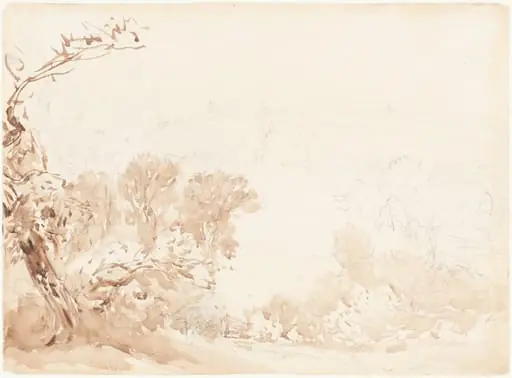
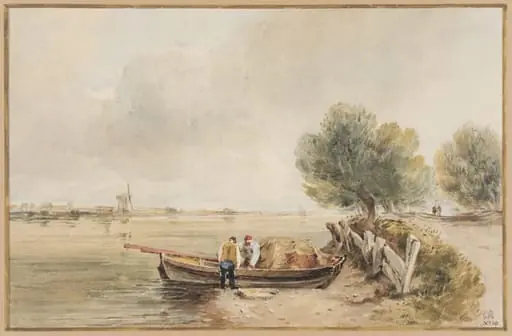
The scene depicts a quiet stretch of the Thames, with trees lining the banks and small boats resting on the water. There is no narrative or human activity to anchor the moment—instead, the focus lies in the shifting quality of light and air. The composition invites contemplation of nature’s quiet rhythms, presenting the river as a living element shaped by wind and weather rather than a static backdrop.
Technique & Style
Cox employed rapid, unblended strokes to suggest movement: thin washes of blue and gray imply drifting clouds, while flecks of pigment in the foliage evoke rustling leaves. The river’s surface is built from scattered dabs of color, creating a flickering effect that mimics sunlight on water. He avoided smooth transitions, allowing the paper’s texture and pigment granularity to contribute to the sense of natural energy.
History & Provenance
Created during Cox’s mature period, this work aligns with his shift toward more experimental watercolor techniques in the 1830s and 1840s. It was likely made during one of his sketching trips along the Thames, part of his broader practice of observing nature directly. The drawing remained in private hands until entering a public collection, where it now serves as an example of his innovative approach to landscape.
Context
Cox worked alongside the Royal Watercolour Society’s founding members, yet his style diverged from their polished conventions. While contemporaries favored detailed, finished compositions, he embraced spontaneity and atmospheric suggestion, anticipating later Impressionist concerns. His work reflected a growing interest in plein air sketching and the emotional resonance of weather, aligning with Romantic-era sensibilities.
Legacy
Cox’s loose, expressive watercolor technique influenced later British landscape artists who sought to capture transient effects without academic rigidity. His willingness to leave areas unfinished and prioritize sensory impression over detail helped expand the possibilities of the medium. Today, his work is recognized for its role in shifting watercolor from a preparatory tool to a standalone artistic language.
Artist & collection
Artist
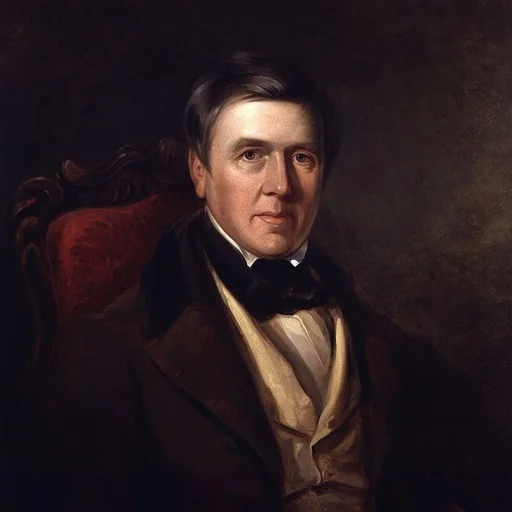
David Cox (29 April 1783 – 7 June 1859) was an English landscape painter, one of the most important members of the Birmingham School of landscape artists and an early precursor of Impressionism.

![Trees [verso], by David Cox](https://artifactworldgallery.com/img/david-cox--trees-verso--2f59ba73e183df09-w320.webp)
![Chatsworth [recto], by David Cox](https://artifactworldgallery.com/img/david-cox--chatsworth-recto--3f4d97adb21a8333-w320.webp)