Artwork
Landscape
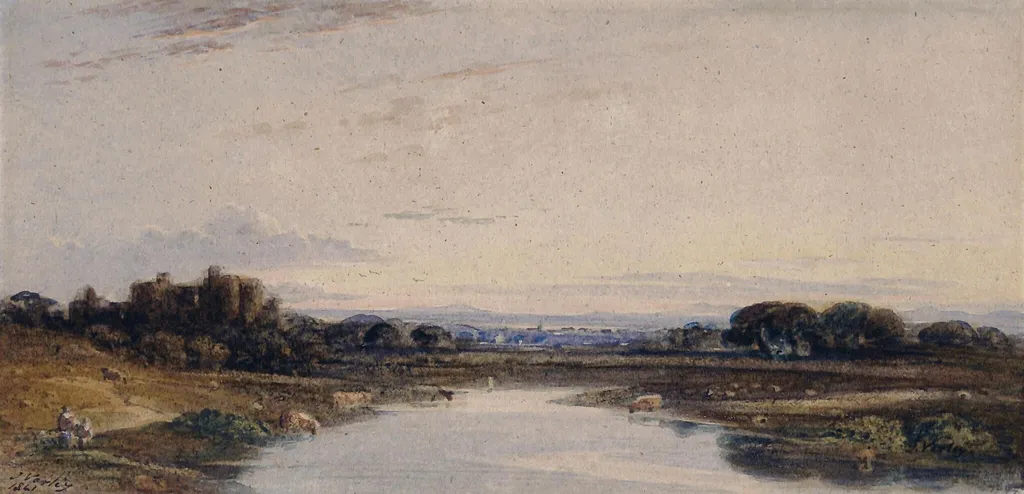
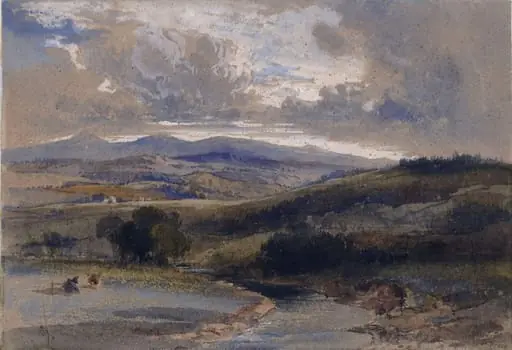
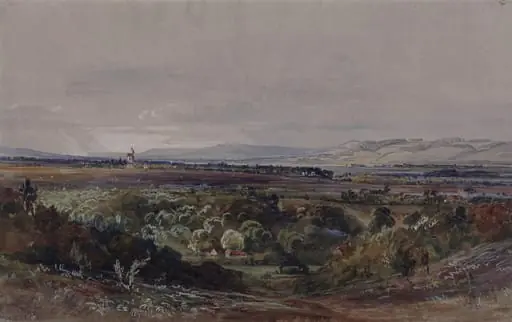
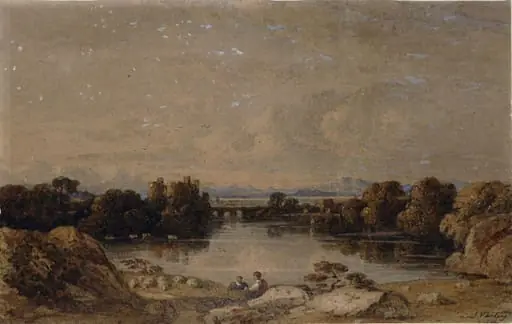
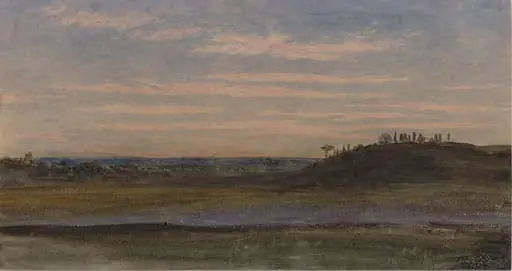
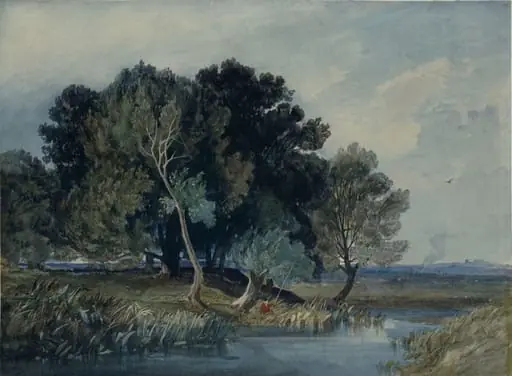
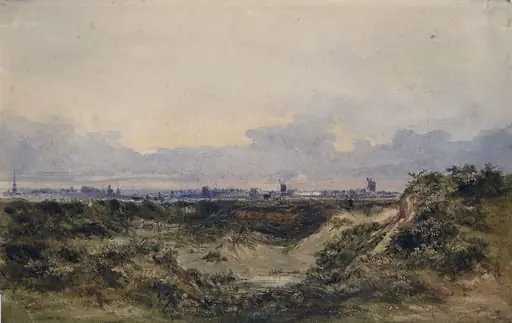
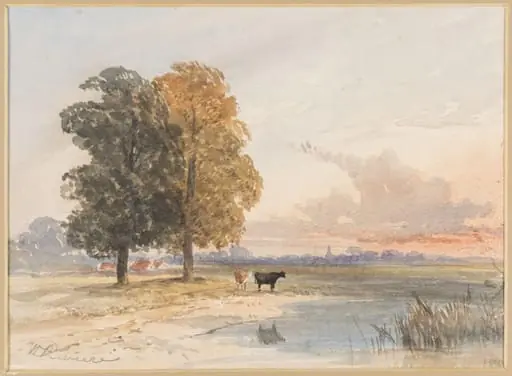
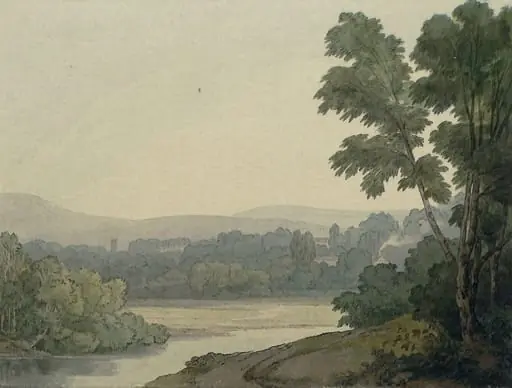
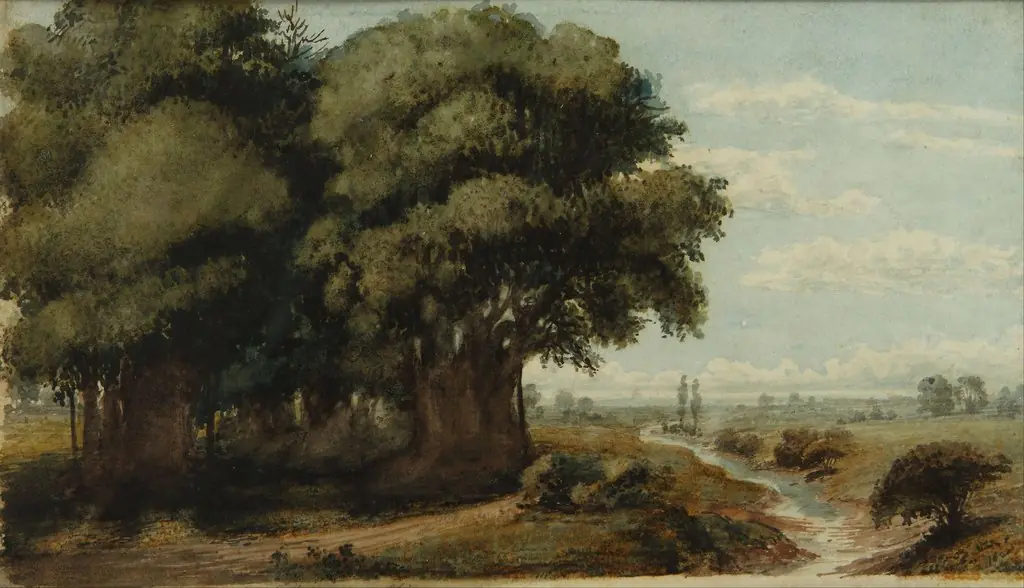
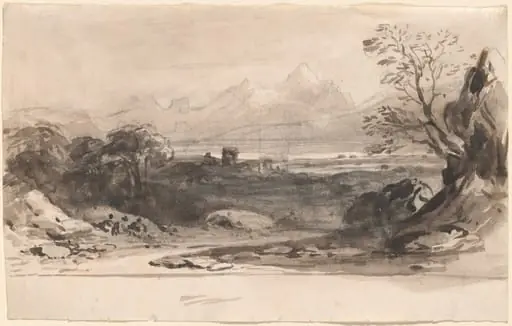
Landscape is a watercolor work on paper by the Romanticist artist John Varley. It dates from 1800 and is held in the collection of the Victoria and Albert Museum.
About this work
Overview
It resides in the Victoria and Albert Museum’s collection, part of a broader body of work that bridges topographical precision and atmospheric suggestion.
Painted in 1800 by John Varley, this watercolour landscape reflects the quietude of the English countryside. Executed in delicate washes, the work exemplifies Varley’s mastery of the medium during a period when watercolour was gaining recognition as a serious artistic form. It resides in the Victoria and Albert Museum’s collection, part of a broader body of work that bridges topographical precision and atmospheric suggestion.
Subject & Meaning
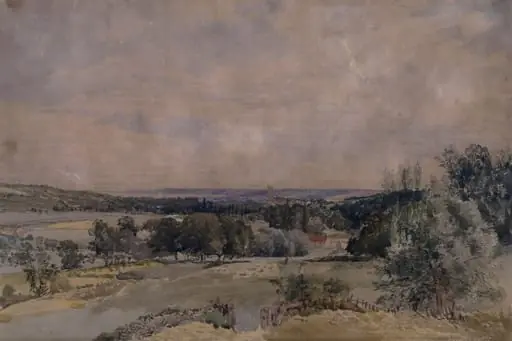
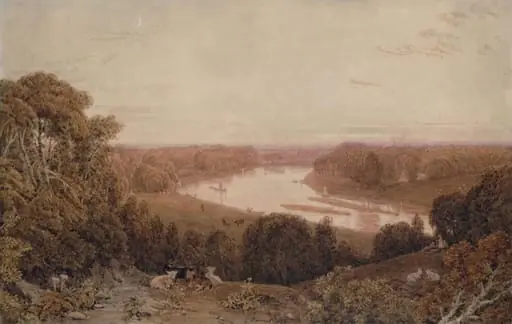
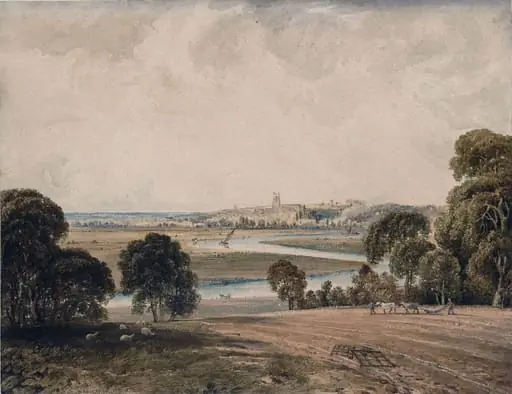
The scene depicts a tranquil river meandering through an open, low-lying terrain. Crumbling stone walls and bare trees suggest decay or abandonment, while distant buildings hint at human presence without intrusion. Two indistinct figures near the bank evoke solitude rather than activity. The composition avoids drama, instead offering a contemplative mood—nature as a space for quiet reflection, not grandeur or turmoil.
Technique & Style
Varley employed thin, layered watercolour washes to create a hazy, atmospheric effect. Colors blend softly with minimal definition, avoiding sharp contours or strong contrasts. The sky is rendered with faint cloud tones, and the river reflects the pale horizon without ripples or detail. This subdued handling enhances the sense of stillness, aligning with early Romantic sensibilities that favored mood over narrative.
History & Provenance
Created during Varley’s active years as a watercolourist, the work predates his more famous visionary drawings made with William Blake. It entered the Victoria and Albert Museum’s collection as part of its 19th-century British watercolour holdings. No documented prior ownership is recorded, suggesting it remained in Varley’s circle or was acquired directly from the artist’s estate.
Context
In early 19th-century England, watercolour was increasingly used for landscape studies, often tied to travel and personal observation. Varley, alongside contemporaries like Turner and Girtin, helped elevate the medium beyond mere sketching. His interest in the mystical and the natural coexisted with a broader cultural turn toward emotional engagement with the environment, though this work leans toward calm observation rather than overt symbolism.
Legacy
Though less celebrated than his visionary collaborations, this landscape exemplifies Varley’s technical discipline and sensitivity to light and atmosphere. It contributes to the understanding of how watercolour artists of the period balanced observation with emotional tone. The work remains a quiet reference point in the evolution of British landscape art, valued for its restraint and meditative quality.
Artist & collection
Artist
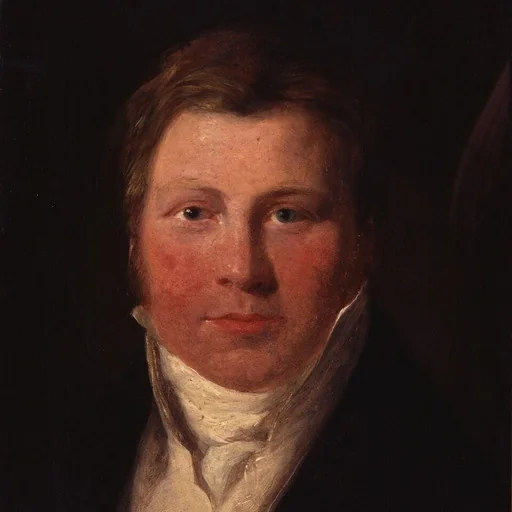
John Varley (17 August 1778 – 17 November 1842) was an English watercolour painter and astrologer, and a close friend of William Blake.

![Study of a Head in Profile [verso], by John Varley](https://artifactworldgallery.com/img/john-varley--study-of-a-head-in-profile-verso--3e16e84b6ceccae1-w320.webp)
![Two Studies of a Figure Holding a Basket [verso], by John Varley](https://artifactworldgallery.com/img/john-varley--two-studies-of-a-figure-holding-a-basket-verso--7e8aaeb3f643e9b3-w320.webp)