Artwork
Hay Field
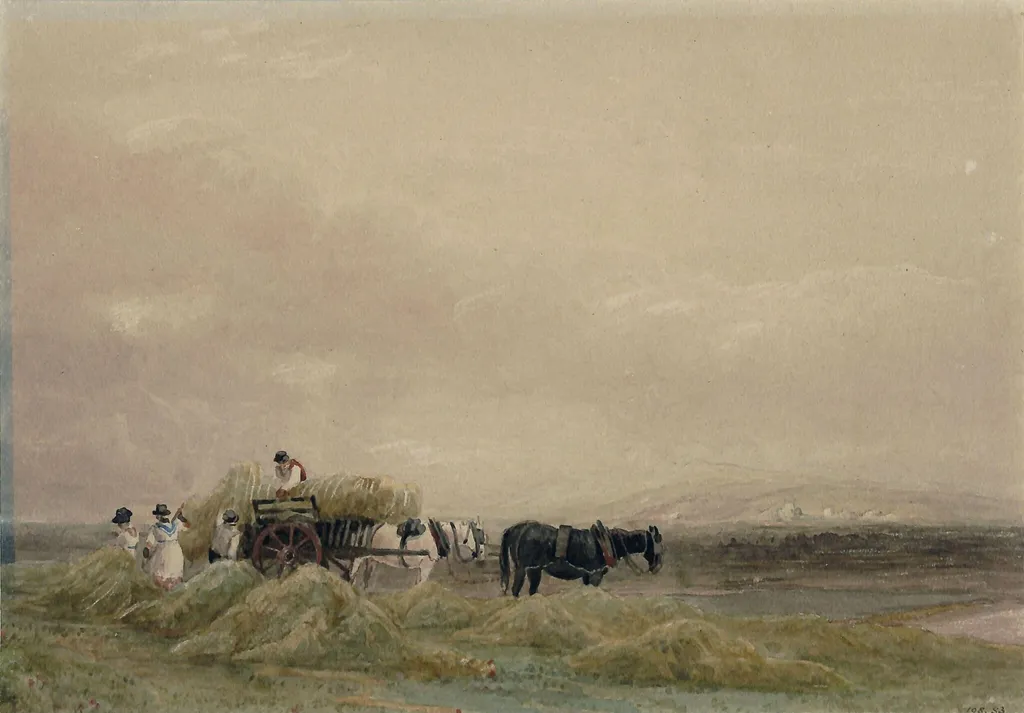
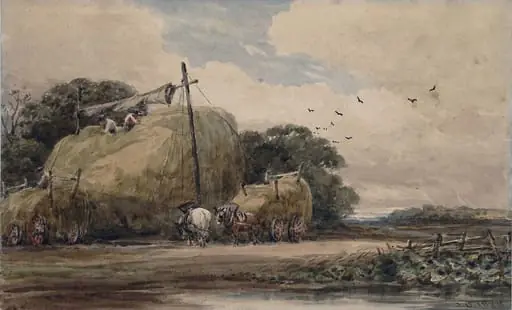
Hay Field is a watercolor work on paper by the Romanticist artist David Cox. It dates from 1822 and is held in the collection of the Victoria and Albert Museum.
About this work
Overview
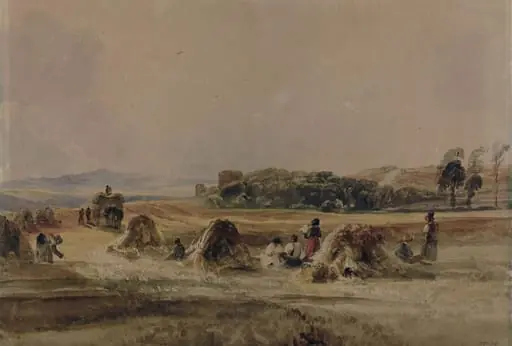
David Cox created this watercolour in 1822, depicting a rural hayfield in mid-summer. The work is signed and dated twice, a practice suggesting personal investment or a deliberate emphasis on authorship. Executed in transparent washes, the piece captures a quiet moment of agricultural labor, avoiding dramatic flourish in favor of observed detail and atmospheric tone.
Subject & Meaning
The scene centers on laborers gathering hay around a heavily loaded cart drawn by a black horse. Figures are rendered with minimal detail, their identities subsumed into the rhythm of work. The composition conveys neither idealization nor hardship, but a matter-of-fact presence of rural life, reflecting Cox’s interest in the dignity of everyday toil within the natural world.
Technique & Style
Cox employed loose, wet-on-wet watercolour techniques to suggest the texture of hay and the weight of the cart’s load. Soft edges and muted earth tones—ochres, greens, and greys—create a hazy, diffused light. The horse’s coat is hinted with dry brushstrokes, while distant hills fade into atmospheric perspective, reinforcing the painting’s quiet, contemplative mood.
History & Provenance
The work dates from Cox’s early period, when he was developing his distinctive watercolour style outside the Royal Academy’s conventions. Though specific ownership records are sparse, its survival and inclusion in institutional collections indicate early recognition of Cox’s contribution to British watercolour practice beyond topographical representation.
Context
Created during the height of Romanticism, the painting aligns with the era’s fascination with rural life, yet resists sentimentality. Unlike idealized pastoral scenes, Cox’s work embraces the unembellished reality of agricultural labor, reflecting broader shifts in British art toward observation over myth, and nature as a lived environment rather than a symbolic backdrop.
Legacy
This watercolour exemplifies Cox’s role in expanding the expressive potential of the medium. His emphasis on light, texture, and transient effects influenced later British watercolourists and contributed to the medium’s acceptance as a vehicle for serious landscape expression, distinct from academic oil painting traditions.
Own this work as a print
Artist & collection
Artist
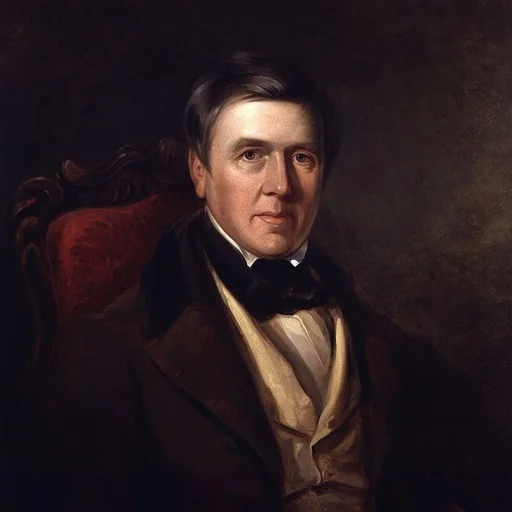
David Cox (29 April 1783 – 7 June 1859) was an English landscape painter, one of the most important members of the Birmingham School of landscape artists and an early precursor of Impressionism.

![Trees [verso], by David Cox](https://artifactworldgallery.com/img/david-cox--trees-verso--2f59ba73e183df09-w320.webp)
![Chatsworth [recto], by David Cox](https://artifactworldgallery.com/img/david-cox--chatsworth-recto--3f4d97adb21a8333-w320.webp)