Artwork
Church of Sant' Onofrio, Rome
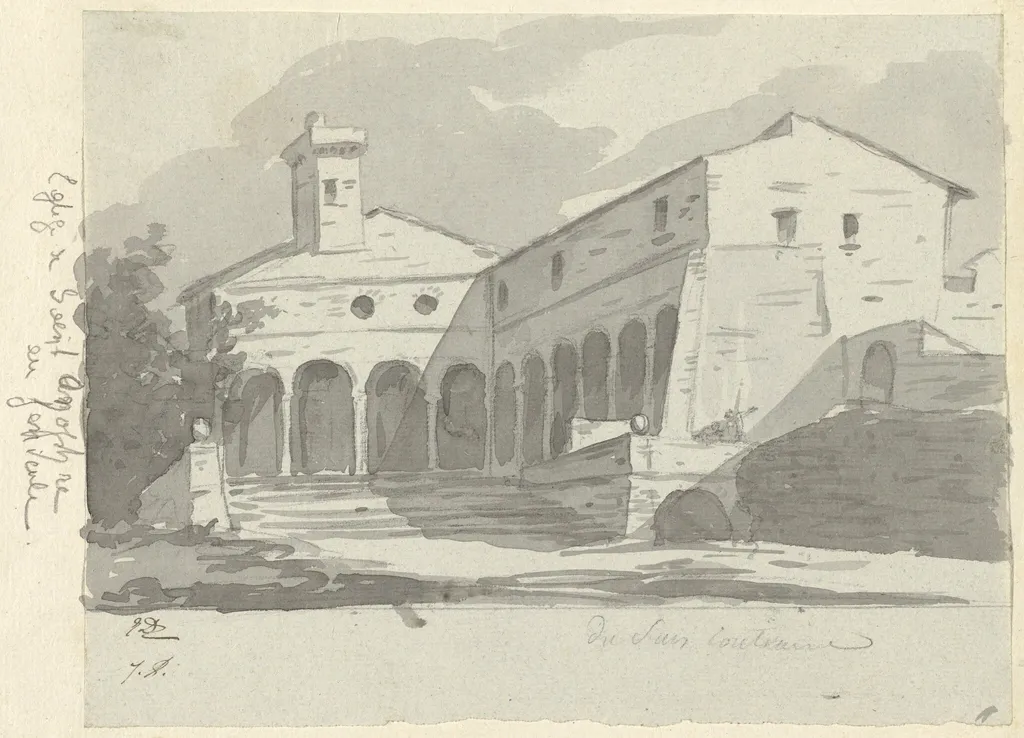
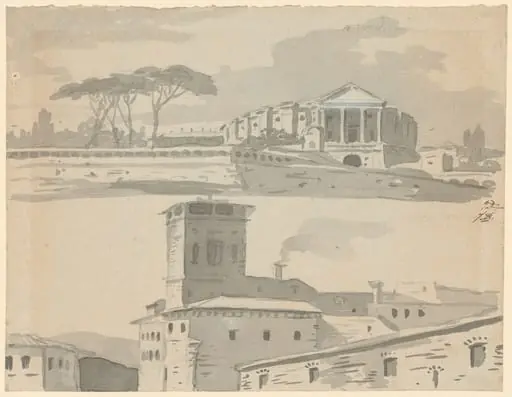
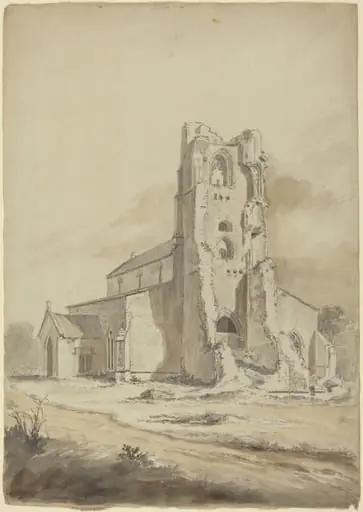
Church of Sant' Onofrio, Rome is a chalk drawing by the Neoclassicist artist Jacques-Louis David. It dates from 1778 and is held in the collection of the National Gallery of Art. This drawing, dated 1778, depicts the Church of Sant'Onofrio in Rome, rendered in gray wash over black chalk on pale blue laid paper.
About this work
Overview
This drawing, dated 1778, depicts the Church of Sant'Onofrio in Rome, rendered in gray wash over black chalk on pale blue laid paper.
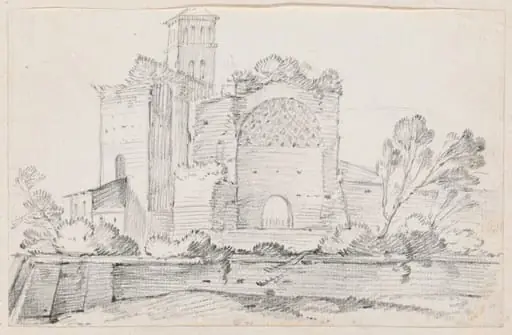
This drawing, dated 1778, depicts the Church of Sant'Onofrio in Rome, rendered in gray wash over black chalk on pale blue laid paper. The medium allows for subtle tonal gradations, with the wash bleeding slightly onto the album’s margins. The composition captures the building’s modest stone facade and small rear tower, positioned on a gentle slope, suggesting a quiet, contemplative setting rather than a grand monument.
Subject & Meaning
The church, associated with the hermit saint Onofrio, was a place of quiet devotion in Renaissance Rome. David’s sketch emphasizes its weathered simplicity, avoiding ornamental detail. The restrained treatment reflects an interest in architectural authenticity and the spiritual atmosphere of the site, aligning with his early studies of classical and ecclesiastical forms before his later revolutionary works.
Technique & Style
David employed light, rapid strokes of gray wash to suggest the texture of aged stonework, while leaving areas of the paper untouched to imply highlights and open windows. The pale blue ground subtly evokes the sky, enhancing the sense of ambient light. This method, relying on negative space and tonal contrast, demonstrates an early mastery of chiaroscuro, used here not for drama but for quiet realism.
History & Provenance
Created during David’s stay in Rome as a pensioner of the French Academy, this drawing belongs to a series of architectural studies made between 1775 and 1780. It was likely part of an album compiled for personal reference or academic exchange. The work remained in the artist’s possession until his death, later entering a private collection before being acquired by its current institution.
Context
In the late 1770s, David was immersed in studying Roman antiquities and early Christian architecture, moving away from Rococo elegance toward classical restraint. Sant'Onofrio, a modest 15th-century structure, offered a model of unadorned form and harmonious proportion. These sketches informed his later historical paintings, grounding them in observed reality rather than idealized convention.
Legacy
This drawing exemplifies David’s formative engagement with architectural observation, a practice that shaped his disciplined approach to composition. Though not widely exhibited, it remains a key document in understanding his transition from academic training to the austere clarity that would define his mature style. It stands as a quiet testament to the value of direct study in his artistic development.
Artist & collection
Artist
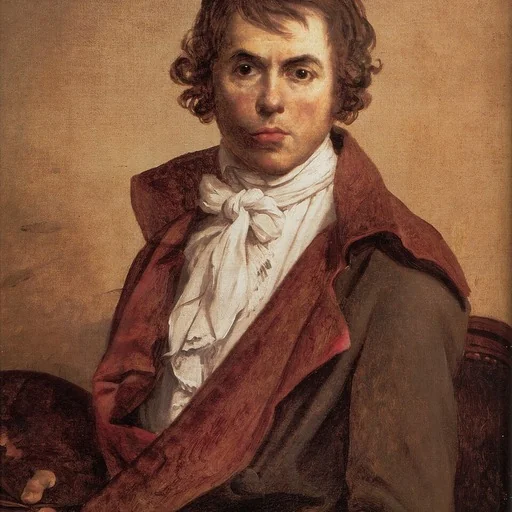
Jacques-Louis David was born in Paris on 30 August 1748 into a bourgeois family; his father died in a duel when the boy was nine, and a maternal uncle guided his education.

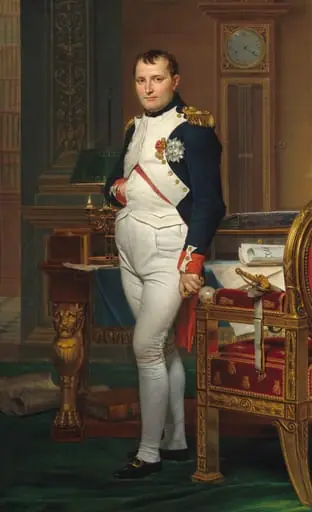 The Emperor Napoleon in His Study at the Tuileries
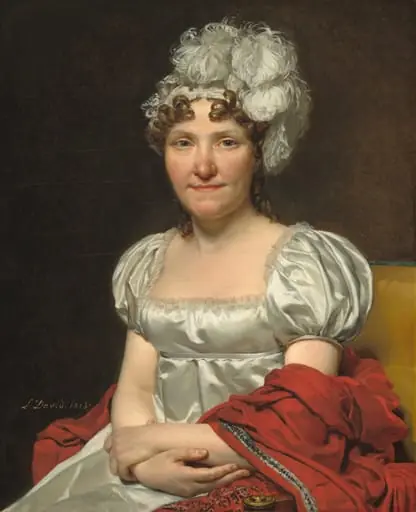 Madame David
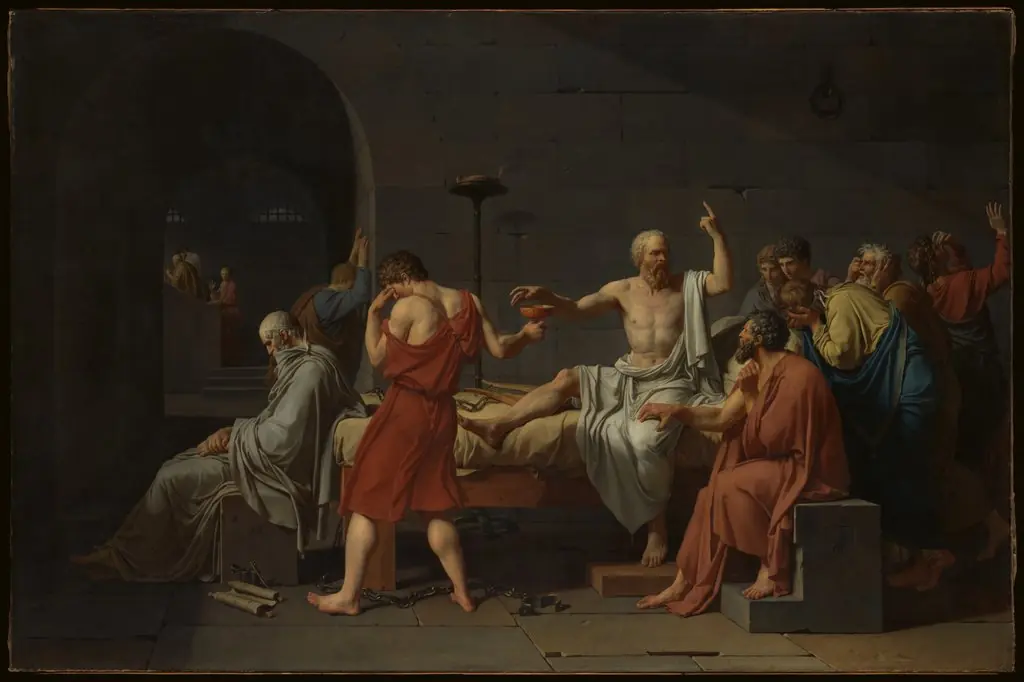 The Death of Socrates
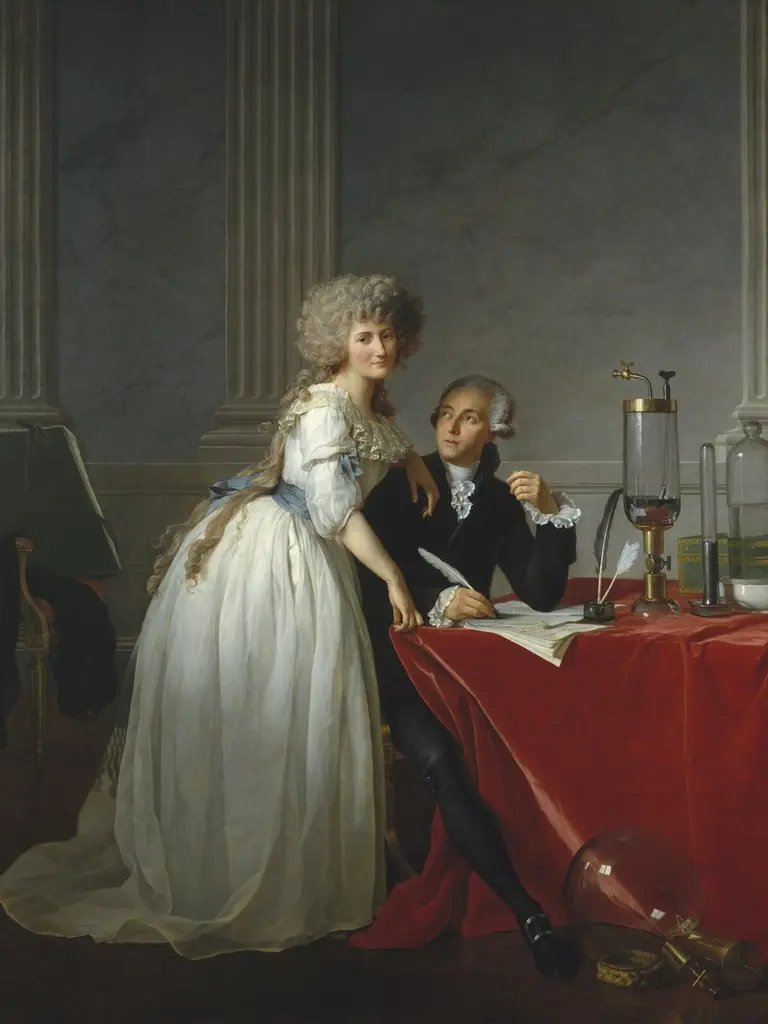 Portrait of Antoine-Laurent Lavoisier and his wife
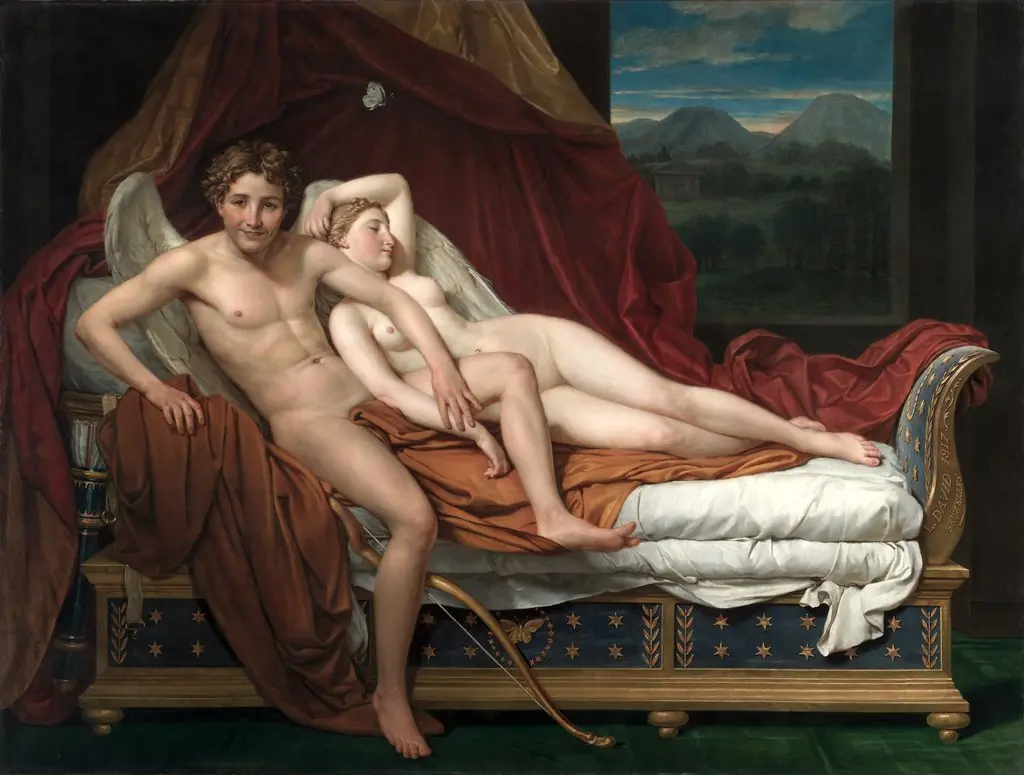 Cupid and Psyche
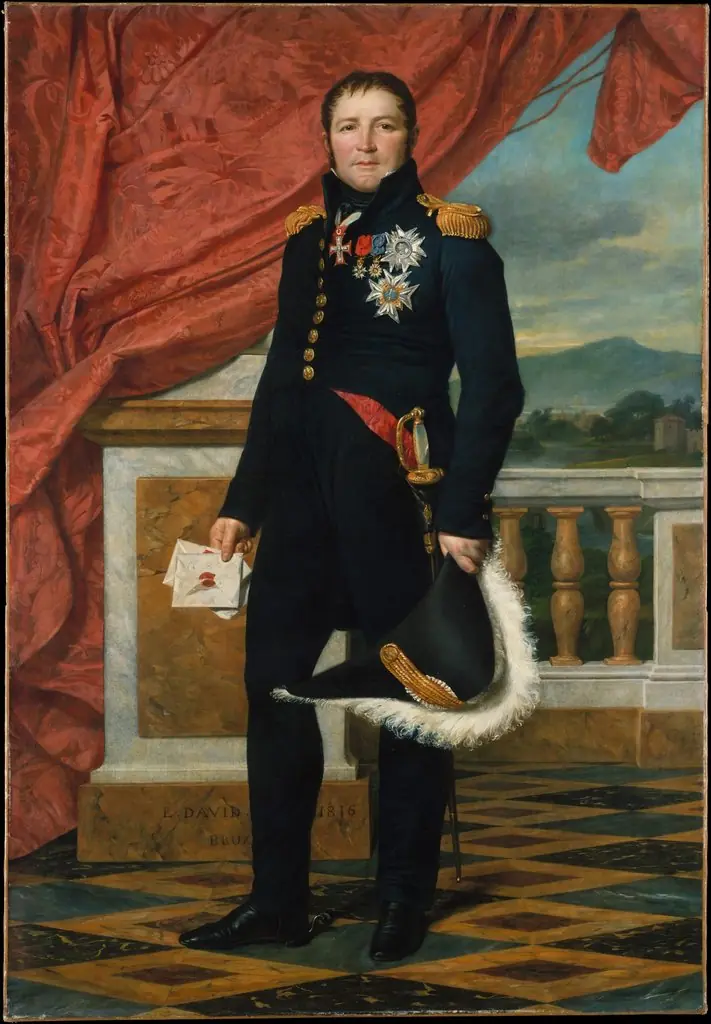 General Étienne-Maurice Gérard (1773–1852), Marshal of France
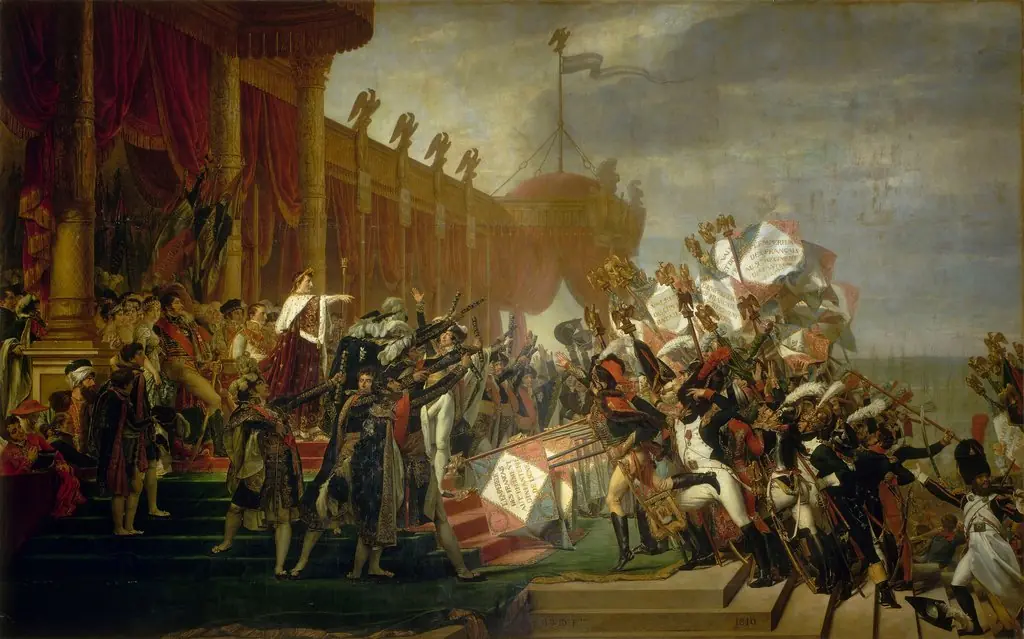 The Distribution of the Eagle Standards
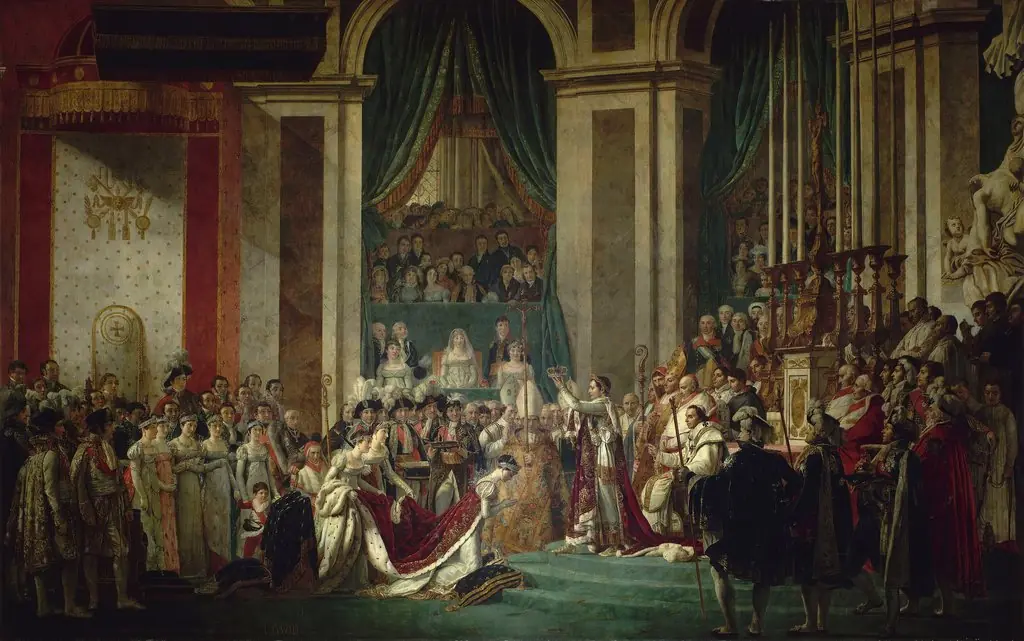 Coronation of Emperor Napoleon I and Coronation of the Empress Josephine