Artwork
Entrance to the Gardens of the Villa Giulia
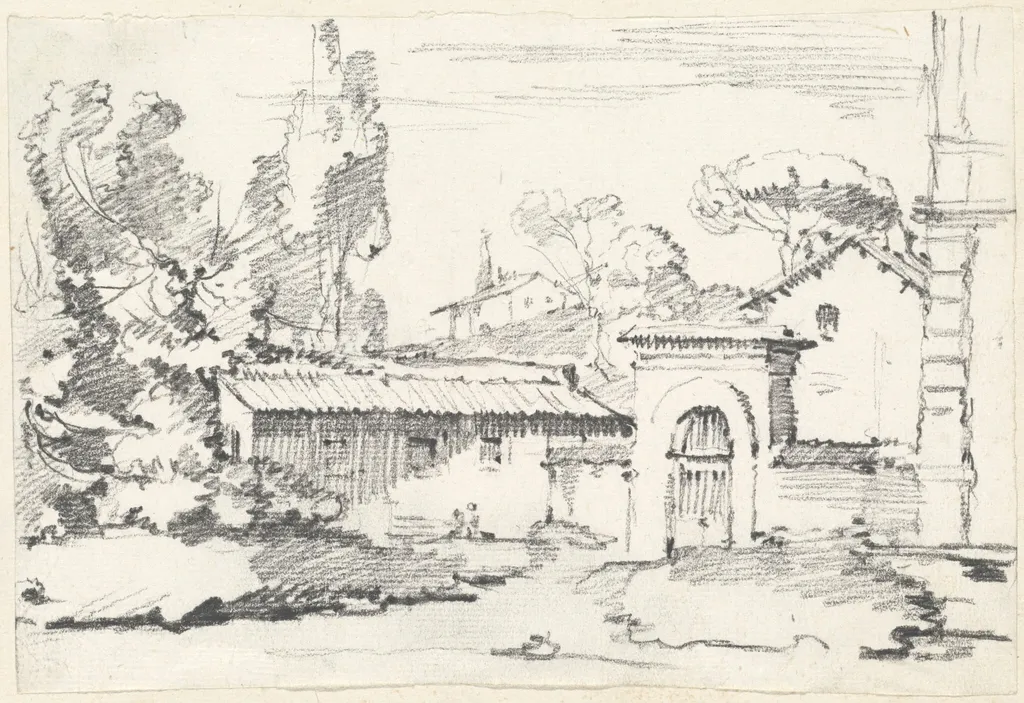
Entrance to the Gardens of the Villa Giulia is a chalk drawing by the Baroque artist Joseph-Marie Vien. It dates from 1748 and is held in the collection of the National Gallery of Art. Created in 1748, this black‑chalk drawing depicts the entrance to the gardens of Rome’s Villa Giulia.
About this work
Overview
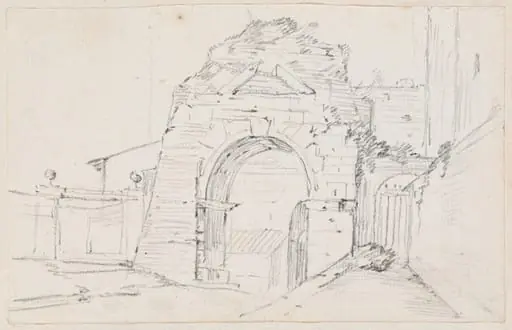
Created in 1748, this black‑chalk drawing depicts the entrance to the gardens of Rome’s Villa Giulia. The composition presents a gently curving bridge, an arched gateway, and a narrow path flanked by leafless trees, leading toward modest buildings with sloping roofs and simple columns. A solitary figure is shown walking near the gate, lending a sense of scale to the tranquil scene.
Subject & Meaning
The work records an architectural and landscape view that combines elements of classical antiquity with Renaissance garden design. By emphasizing the orderly arrangement of arches, columns, and the linear perspective of the pathway, the drawing conveys the harmony between built structures and their surrounding nature, reflecting 18th‑century ideals of cultivated beauty and measured elegance.
Technique & Style
This restrained draftsmanship aligns with the academic emphasis on controlled line work prevalent in French drawing schools of the period.
Executed entirely in black chalk on laid paper, the drawing relies on delicate, smudged strokes that suggest immediacy. The artist’s hand balances precise contour lines with softer shading, creating a subtle atmospheric effect while maintaining clear definition of architectural details. This restrained draftsmanship aligns with the academic emphasis on controlled line work prevalent in French drawing schools of the period.
History & Provenance
The piece belongs to the early output of Joseph‑Marie Vien, a French painter who later served as Premier peintre du Roi from 1789 to 1791. Produced before his royal appointment, the drawing illustrates Vien’s formative approach to landscape and architectural subjects. Its later ownership history is not extensively documented, but it now resides in a public collection dedicated to 18th‑century French art.
Context
In the mid‑1700s, French academies promoted drawing as a foundational skill, encouraging artists to study classical architecture and idealized nature. Vien’s depiction of the Villa Giulia entrance reflects this pedagogical focus, while also engaging with the broader European fascination with Italian garden tours, which were popular among aristocratic travelers seeking cultural refinement.
Artist & collection
Artist
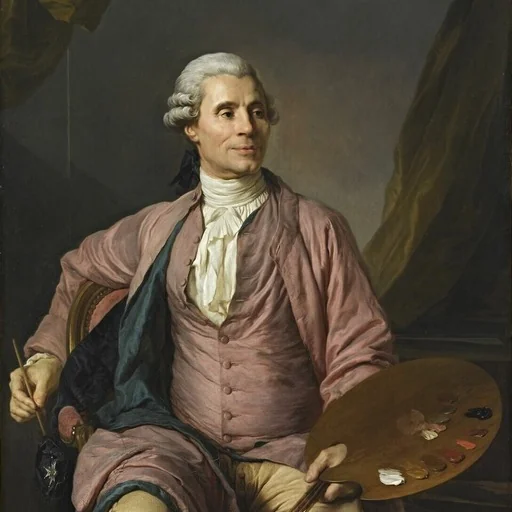
Joseph-Marie Vien (18 June 1716 – 27 March 1809) was a French painter. He was the last holder of the post of Premier peintre du Roi, serving from 1789 to 1791, before it was abolished during the French Revolution.

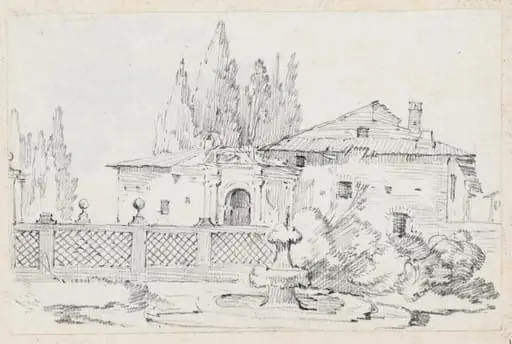 House and Trees across a Garden Wall
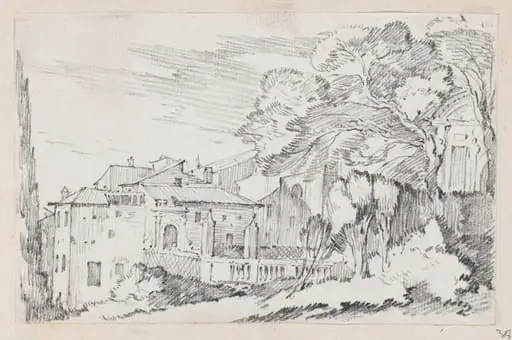 Houses and a Garden on a Hillside in Italy
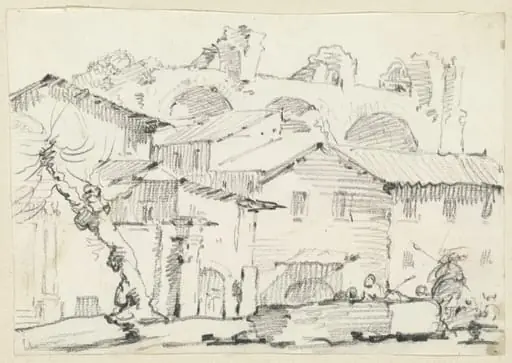 Houses on the North Side of the Forum with the Basilica of Maxentius Beyond
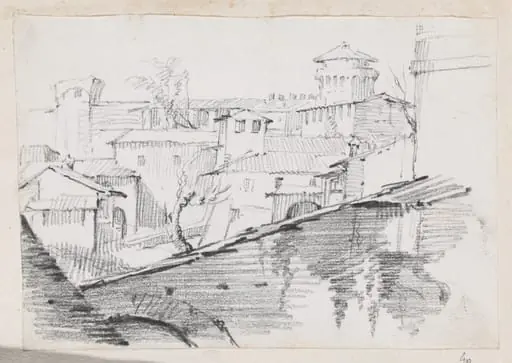 The Forno inside the Walls of the Vatican
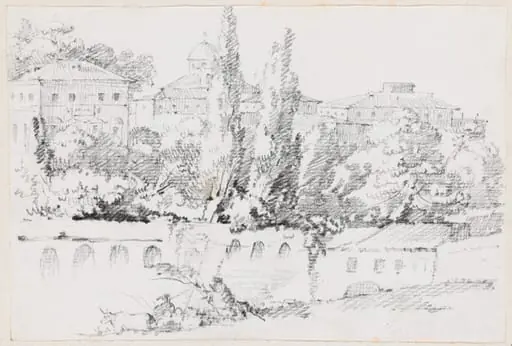 Walls of Rome with Santa Maria del Popolo in the Distance
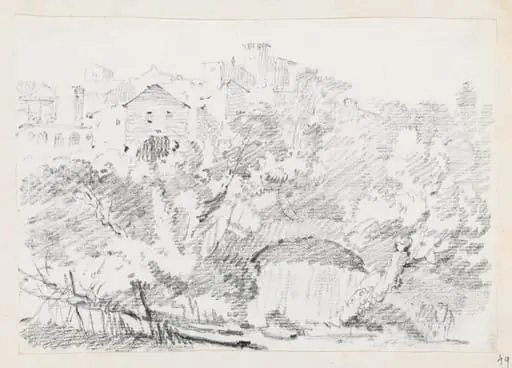 A Waterfall near a Hilltown in Italy
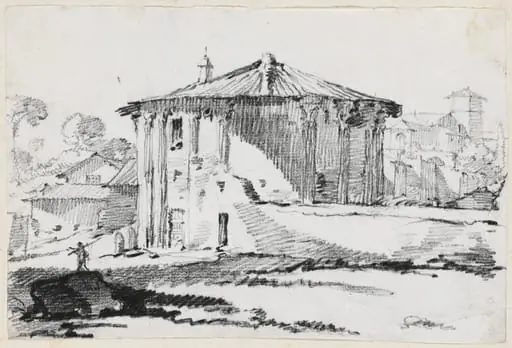 The Round Temple on the Piazza Bocca della Verità, Rome
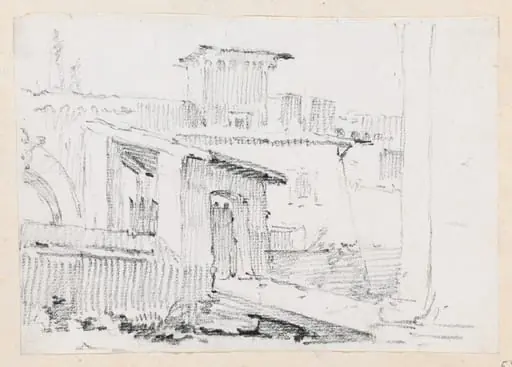 Roman Buildings with an Open Shed
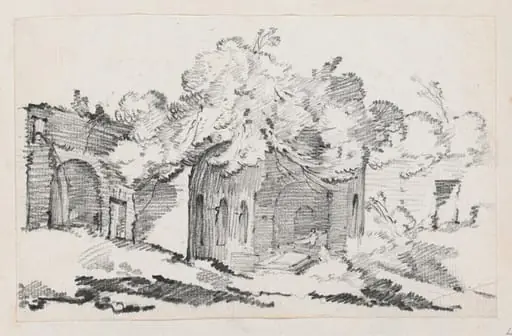 The Grotto of the Nymph Egeria