Artwork
Head of a Boy
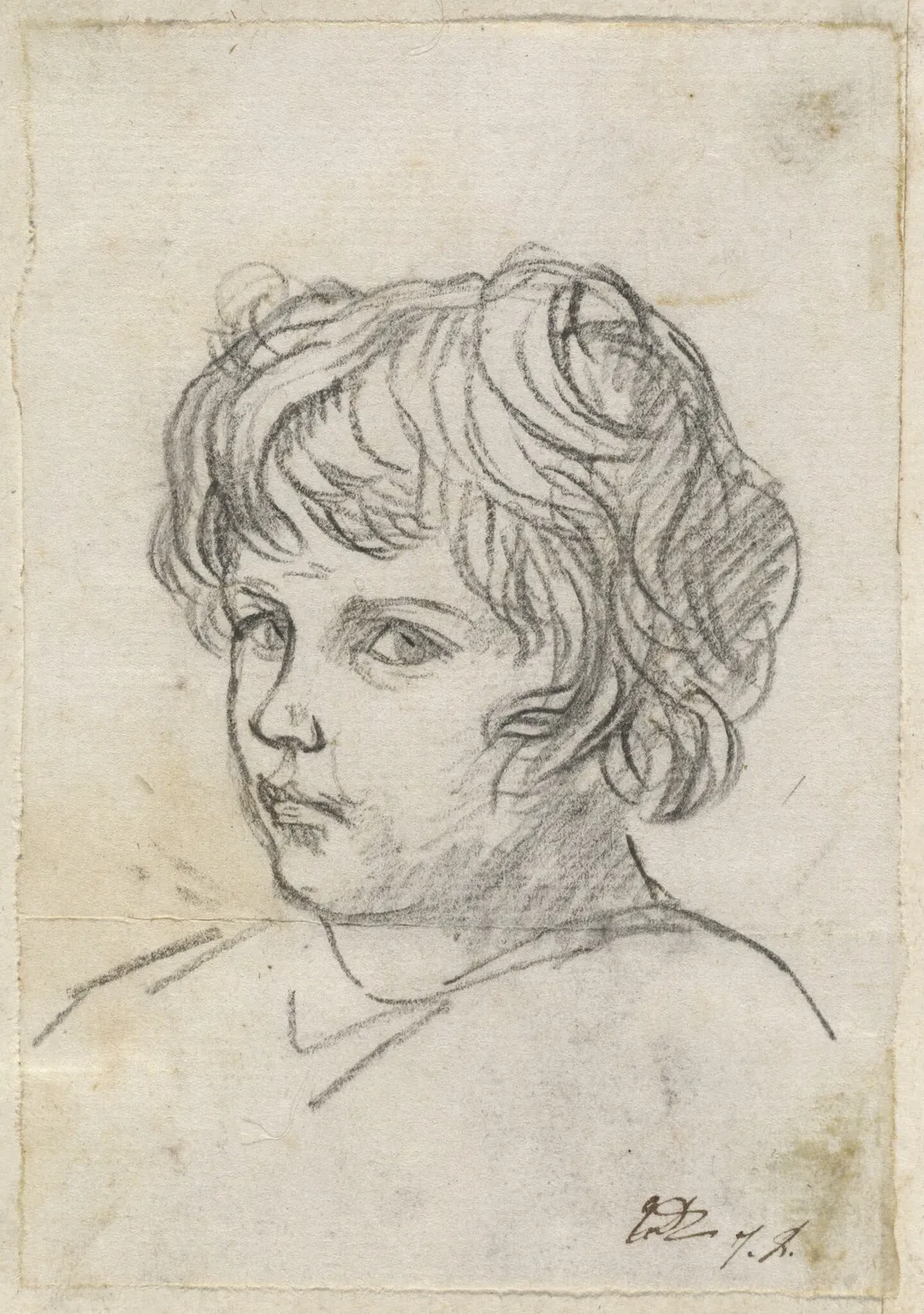
Head of a Boy is a chalk drawing by the Neoclassicist artist Jacques-Louis David. It dates from 1778 and is held in the collection of the National Gallery of Art.
About this work
Overview
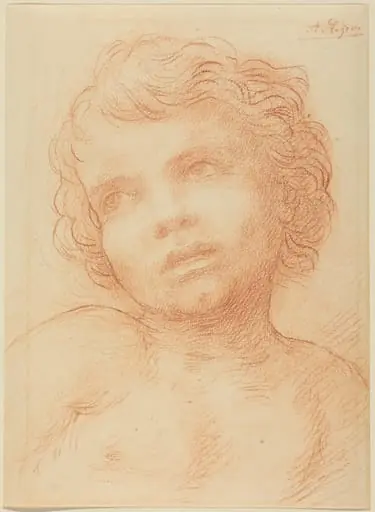
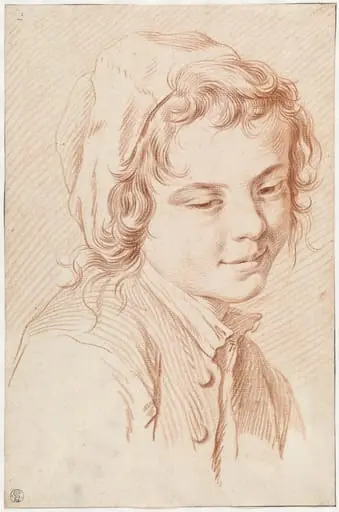
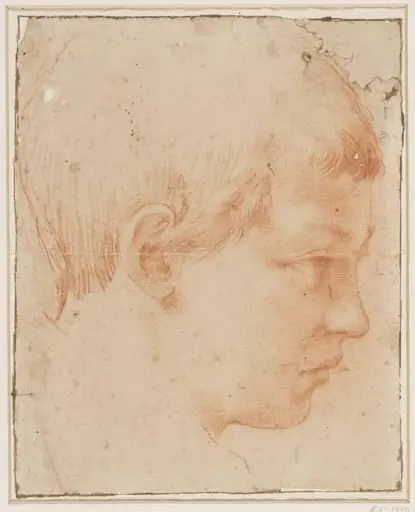
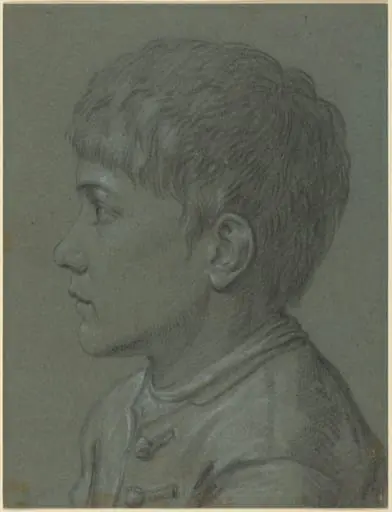
Jacques‑Louis David’s drawing titled Head of a Boy dates from 1778. Executed in black chalk on a sheet of bluish laid paper, the work measures a modest size typical of preparatory studies. The portrait captures a young male sitter, his head slightly turned, his eyes looking away from the viewer, suggesting a moment of introspection.
Subject & Meaning
The figure is a child, rendered with a calm, thoughtful demeanor. The slight turn of the head and the averted gaze create a sense of quiet contemplation, inviting the viewer to imagine the boy’s inner world. The drawing does not convey a specific narrative but emphasizes the study of youthful expression and character.
Technique & Style
David employs a restrained palette of black chalk, exploiting the medium’s capacity for delicate line and tonal variation. Subtle chiaroscuro model the boy’s features, allowing light and shadow to suggest volume on the paper’s bluish ground. The careful rendering of curls and facial planes reflects the artist’s academic training and his interest in precise draftsmanship.
History & Provenance
Created toward the end of David’s early career, the drawing predates his revolutionary period and aligns with his academic practice of drawing from live models. The work has remained in private collections before entering a museum inventory, where it is catalogued as a representative example of David’s preparatory studies from the late 1770s.
Artist & collection
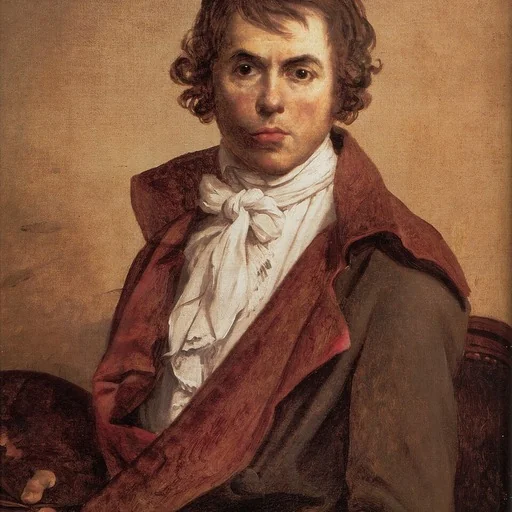
Artist
Jacques-Louis David was born in Paris on 30 August 1748 into a bourgeois family; his father died in a duel when the boy was nine, and a maternal uncle guided his education.

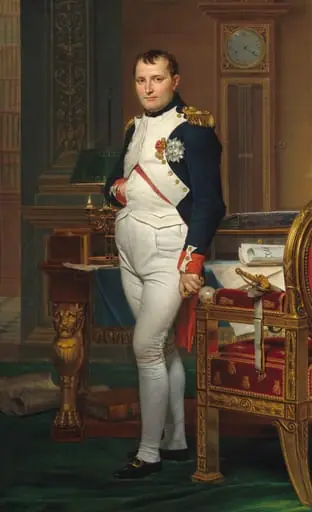 The Emperor Napoleon in His Study at the Tuileries
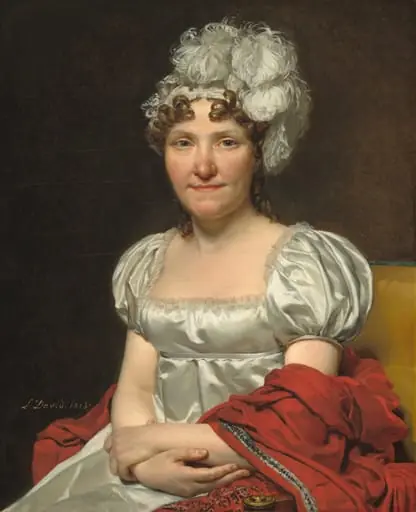 Madame David
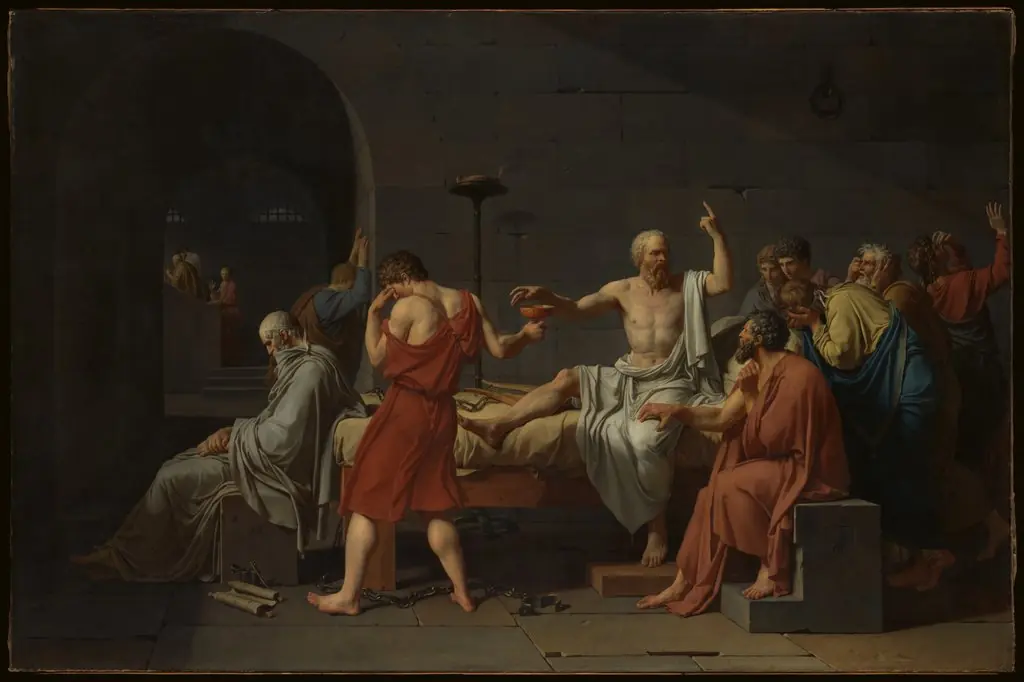 The Death of Socrates
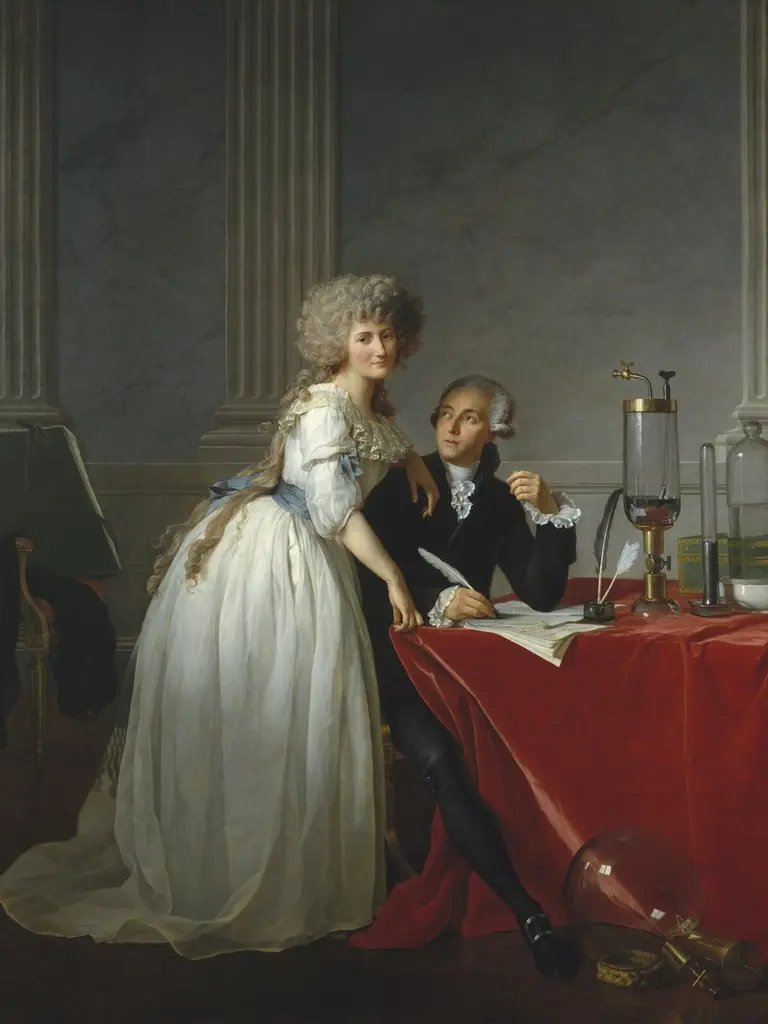 Portrait of Antoine-Laurent Lavoisier and his wife
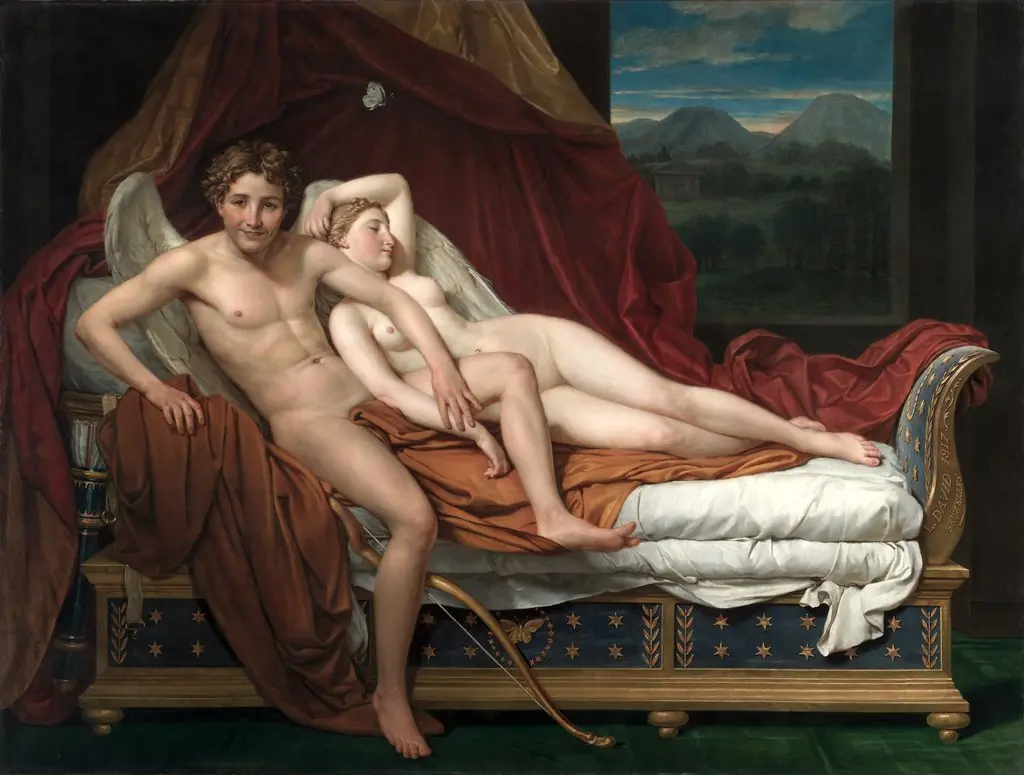 Cupid and Psyche
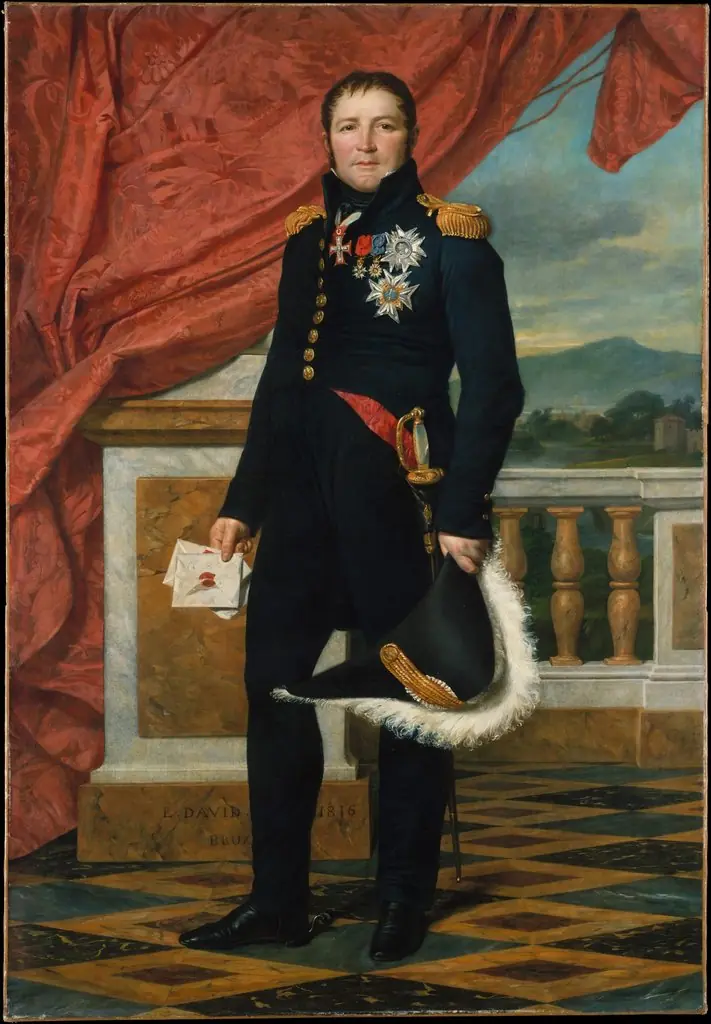 General Étienne-Maurice Gérard (1773–1852), Marshal of France
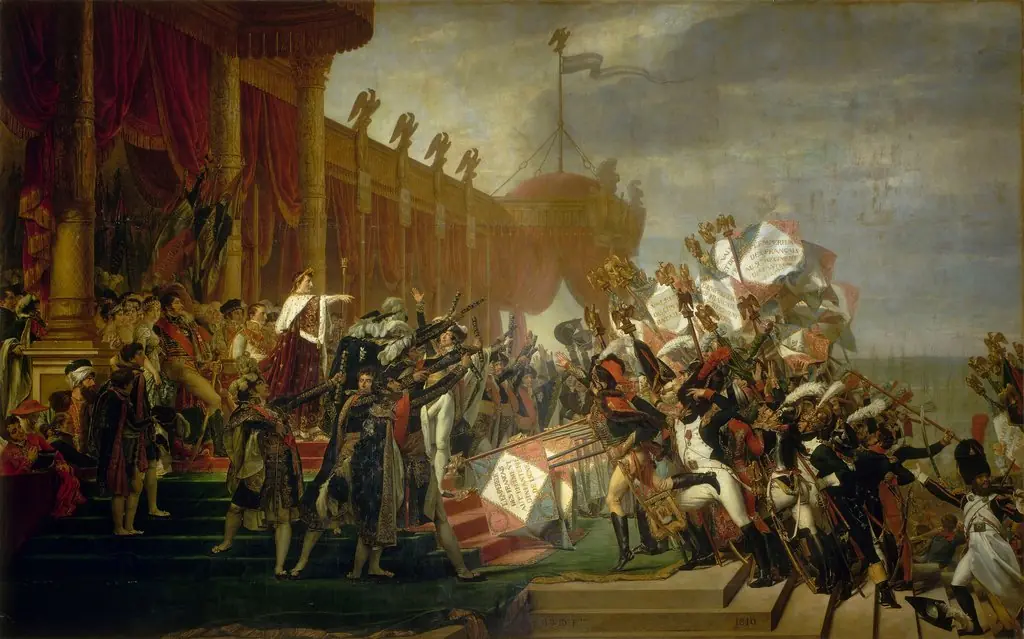 The Distribution of the Eagle Standards
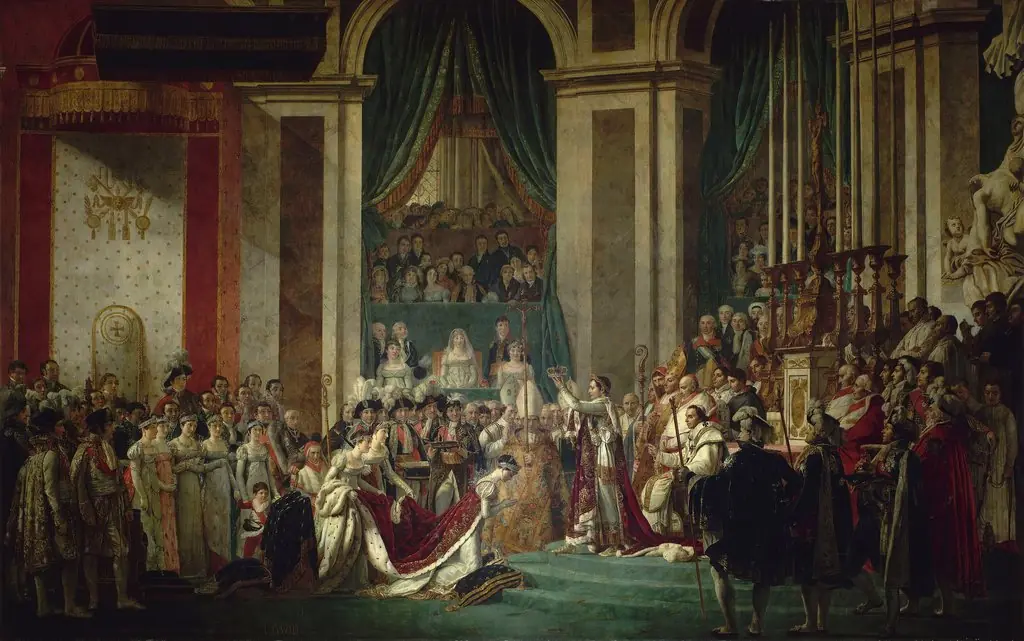 Coronation of Emperor Napoleon I and Coronation of the Empress Josephine