Artwork
Wells of Moses, Wilderness of Tyh
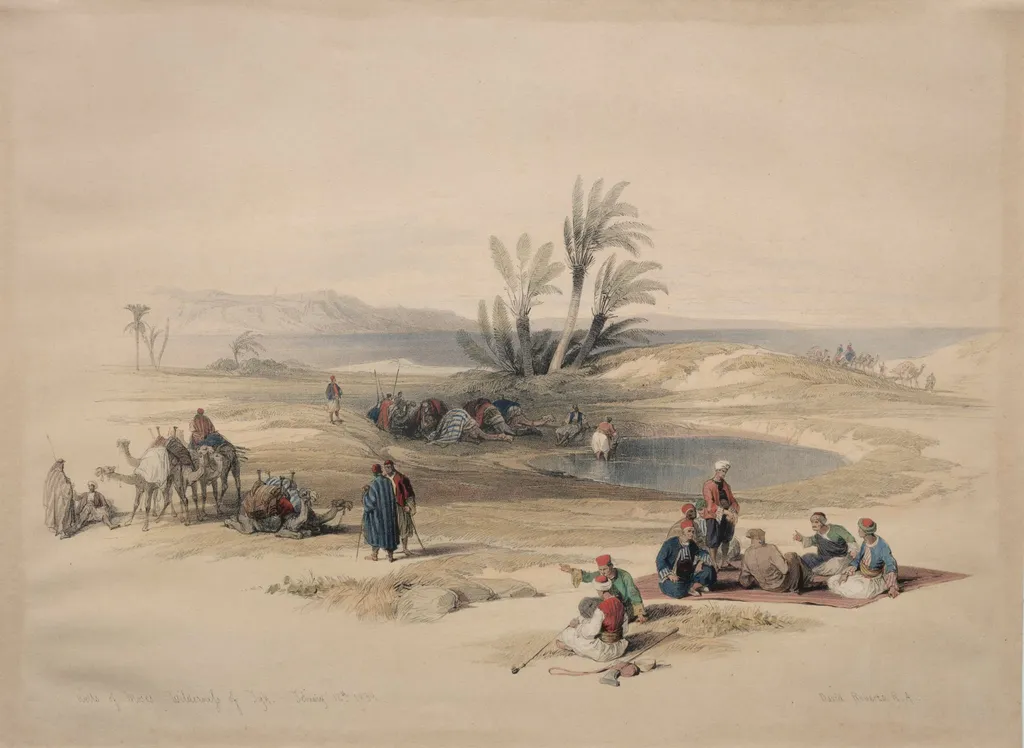
Wells of Moses, Wilderness of Tyh is a print by the Romanticist artist David Roberts. It dates from 1839 and is held in the collection of the Cleveland Museum of Art.
About this work
Overview
The image captures a moment of quiet activity around a water source, rendered with careful attention to topography and human presence.
Created in 1839 by Scottish artist David Roberts, this print depicts a desert oasis in the Wilderness of Tyh. It belongs to a larger body of work produced after Roberts’s journey through Egypt and the Levant between 1838 and 1840. The image captures a moment of quiet activity around a water source, rendered with careful attention to topography and human presence. Roberts’s focus on authentic observation distinguished his approach from idealized Orientalist imagery of the period.
Subject & Meaning
The scene centers on a natural spring surrounded by palm trees, where travelers rest and tend to camels. Figures in both European and local attire suggest a convergence of cultures along trade or pilgrimage routes. The composition emphasizes endurance and daily life in arid landscapes, avoiding dramatic narrative in favor of quiet observation. The presence of water as a life-sustaining element underscores the environmental and social significance of oases in desert regions.
Technique & Style
Roberts employed soft tonal gradations to model light across sand, rock, and vegetation, creating a sense of atmospheric depth. The figures are rendered with modest detail, avoiding caricature while preserving cultural distinctions in dress. The print’s composition balances foreground activity with expansive background terrain, guiding the viewer’s eye toward distant mountains. His method reflects a commitment to topographical accuracy, informed by on-site sketching rather than studio invention.
History & Provenance
The work emerged from Roberts’s travels in the Near East, documented in field sketches later translated into lithographs and oil paintings. It was produced during the period leading to his election as a Royal Academician in 1841, a recognition of his contributions to topographical art. The print likely circulated as part of a published series intended for European audiences interested in the archaeology and geography of the region.
Context
Roberts’s work coincided with growing European interest in the Middle East, fueled by archaeological expeditions and colonial expansion. Unlike many contemporaries who exoticized the region, he prioritized observational fidelity. His images contributed to a shift in visual representation, moving away from fantasy toward documentation. This print reflects a transitional moment in Western art, where ethnographic interest began to inform landscape depiction.
Legacy
Roberts’s detailed depictions of Middle Eastern sites influenced later generations of travelers and artists seeking authentic visual records. His prints served as reference materials for scholars and the public alike, shaping perceptions of the region’s architecture and environment. While not widely celebrated in fine art circles today, his work remains a valuable historical archive of 19th-century landscapes and cultural encounters.
Artist & collection
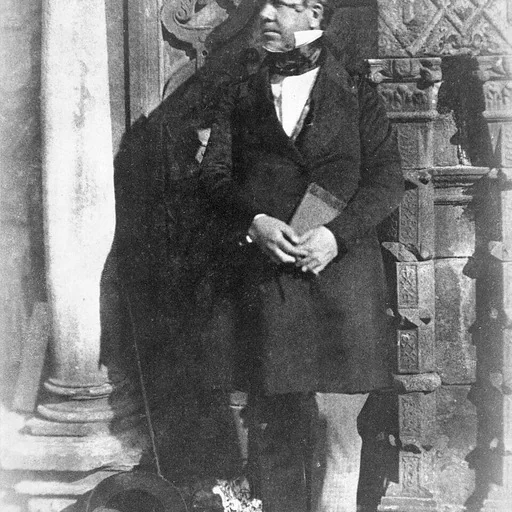
Artist
David Roberts (24 October 1796 – 25 November 1864) was a Scottish painter. He is especially known for The Holy Land, Syria, Idumea, Arabia, Egypt, and Nubia, a prolific series of detailed lithograph prints of Egypt and…

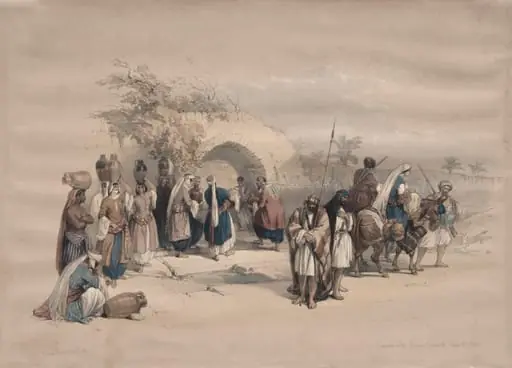 Fountain of the Virgin, Nazareth
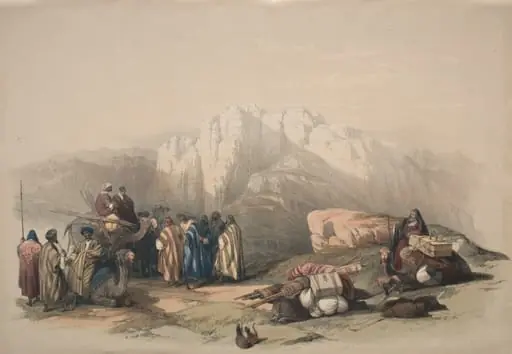 Tomb of Aaron, Summit of Mount Horeb
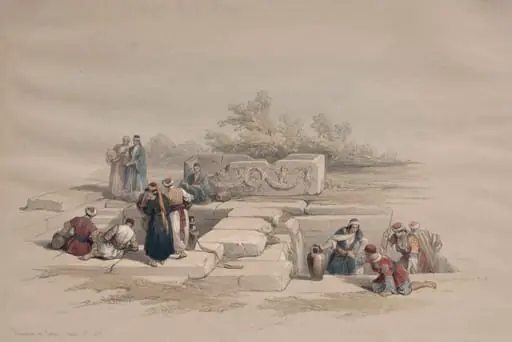 Fountain at Cana
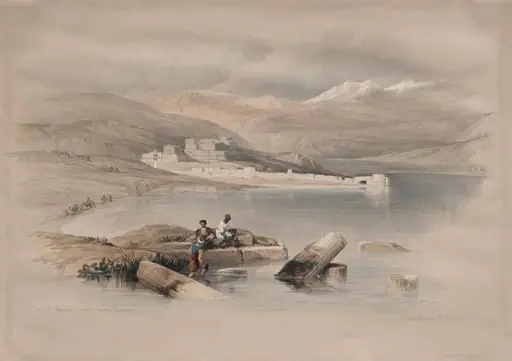 Town of Tiberias Looking Towards Lebanon
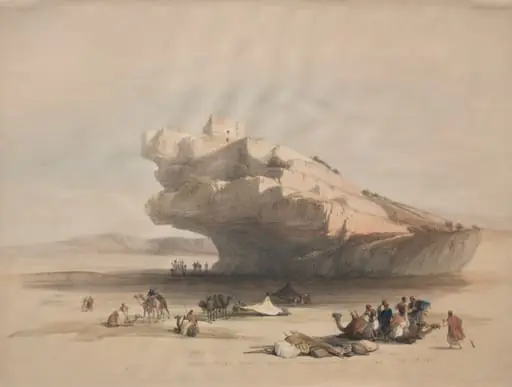 Approach to Petra, an Ancient Watch Tower Commanding the Valley of El Chor
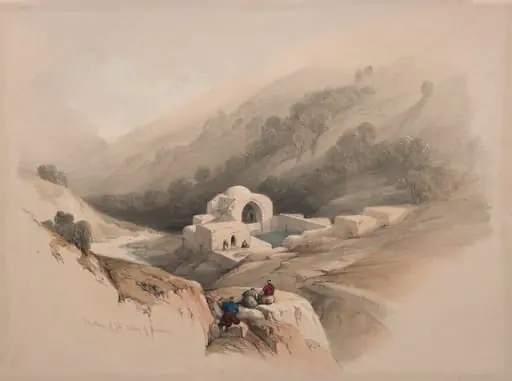 Fountain of Job, Valley of Hinnom
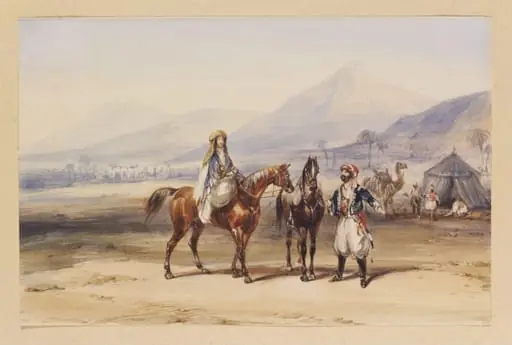 Syrian Travel
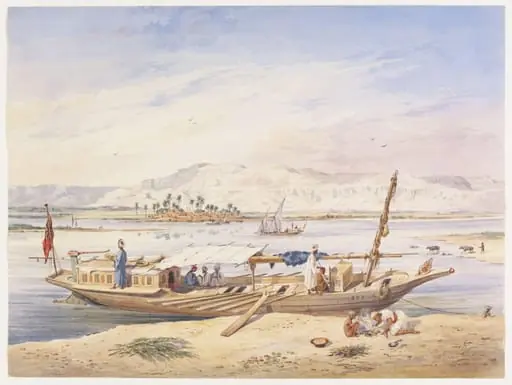 J.W.P.'s Kanja moored beside the East bank of the Nile at Luxor
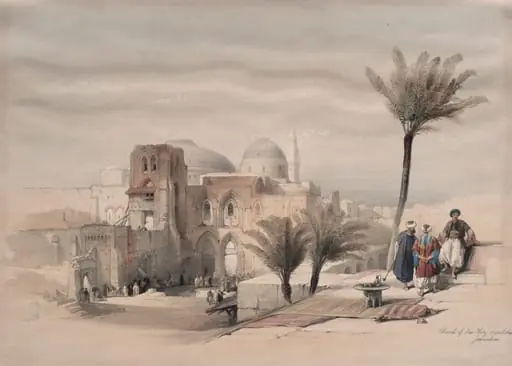 Church of the Holy Sepulchre, Jerusalem
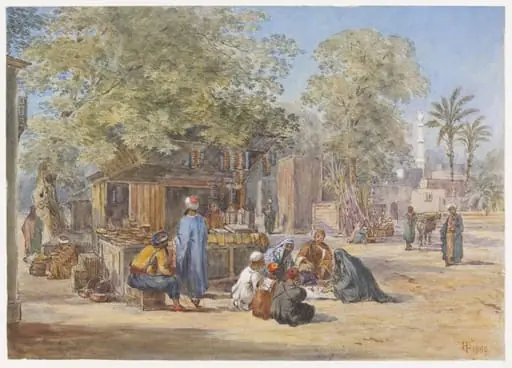 Egyptian Village Scene
 Jerusalem from the North
 Encampment of Pilgrims, Jericho