Artwork
Egyptian Village Scene
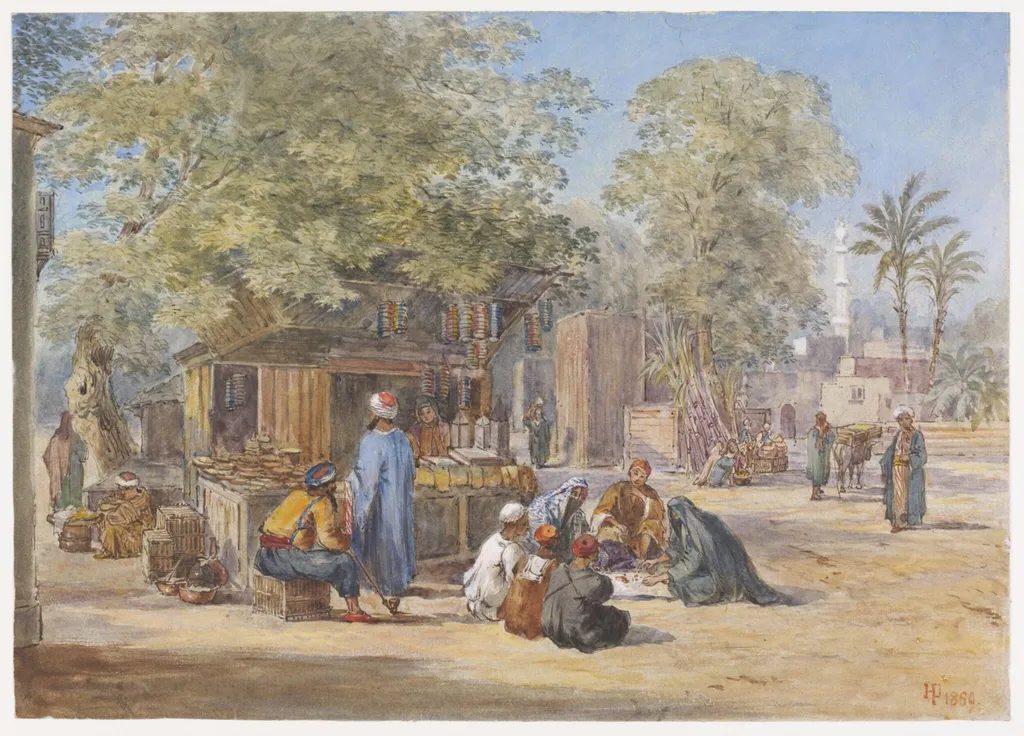
Egyptian Village Scene is a watercolor work on paper by the Impressionist artist Henry RI Pilleau. It dates from 1869 and is held in the collection of the Victoria and Albert Museum.
About this work
This watercolour painting is titled Egyptian Village Scene. It was created by Henry RI Pilleau in 1869.
The scene depicts Egyptian men and women in a town or village on the Nile, with a market stall displaying its wares. The painting shows everyday life in a village setting.
To learn more about the style and techniques used in this painting, look up the movement: Impressionism.
Overview
Egyptian Village Scene is a watercolour painting by Henry RI Pilleau, created in 1869, depicting daily life in a Nile-side Egyptian village or town.
Subject & Meaning
The scene focuses on everyday activities, with figures of both men and women engaged in market transactions. A shaded tree overlooks a stall offering paper lanterns and bread, while another stall sells sugar cane. A mosque with a white minaret is visible in the background, though its design does not specify a particular location.
Technique & Style
While the painting's style is not explicitly described here, it is suggested to be related to Impressionism, implying the use of light, colour, and possibly everyday life themes characteristic of the movement. However, the actual techniques employed by Pilleau in this work are not detailed.
History & Provenance
Pilleau visited Egypt multiple times, including in 1842-43 with Lieutenant Colonel George Everest, and again in 1863 and 1868-69. This watercolour, from 1869, followed his earlier Sketches in Egypt (1845), a set of coloured lithographs that contributed to the Victorian public's interest in Egyptian and Holy Land scenes.
Context
The painting reflects the growing 19th-century European fascination with Orientalist subjects. Pilleau's work, alongside that of Wilkie, Roberts, and Owen Jones, catered to this interest, potentially influencing his decision to leave the army for a career in art and travel.
Legacy
The specific legacy of Egyptian Village Scene is not detailed, but Pilleau's overall body of work, including exhibitions at London institutions, suggests a contribution to the visual documentation and popularization of rural and urban life in Egypt and other countries during the Victorian era.
Artist & collection
Artist
Henry Pilleau put brush to paper in Egypt and the Levant, leaving small watercolors of rivers and ports.

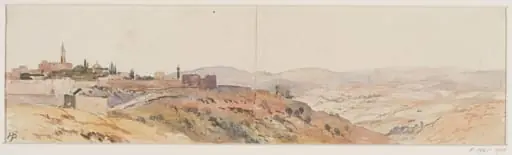
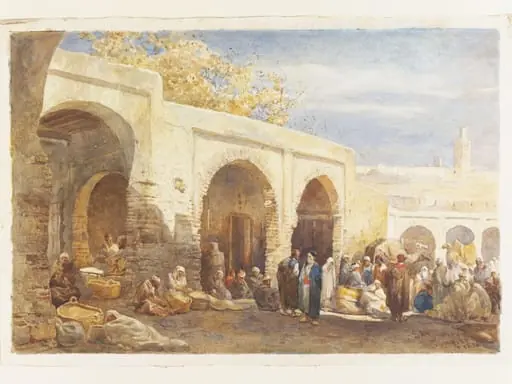 The Corn Market, Tangier
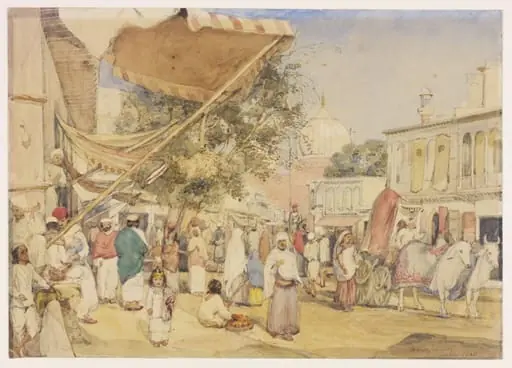 View of the bazaar at the back of the Jami Masjid, Delhi
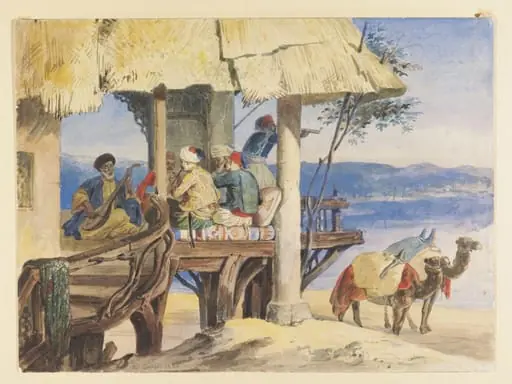 Turkish Musicians in a coffee-house overlooking the Bosphorus
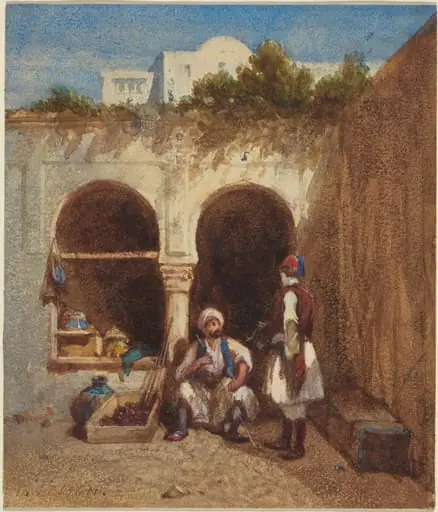 Arab Market
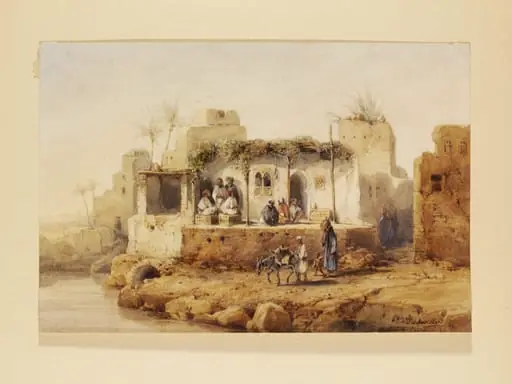 à Minieh, Egypte
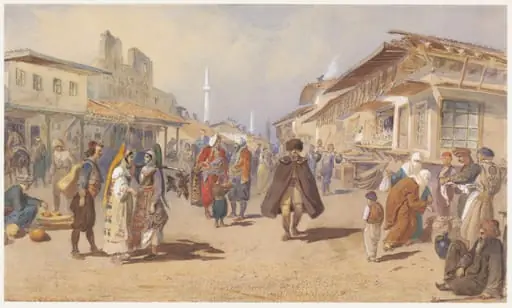 Vue de Belgrad la ruine du Prince Eugene
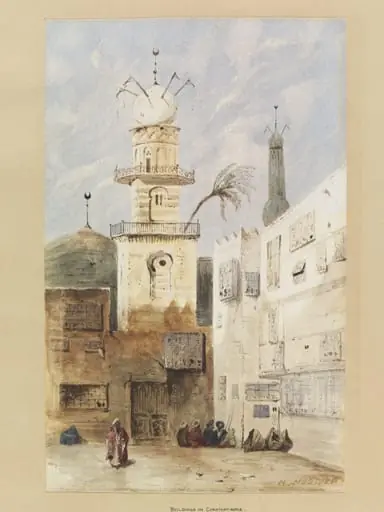 Mosque, possibly in North Africa
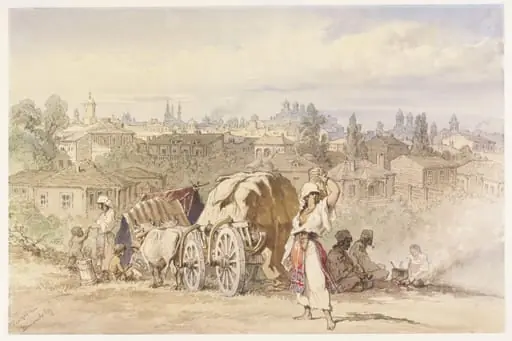 A Gipsy Encampment at Filaret outside Bucharest
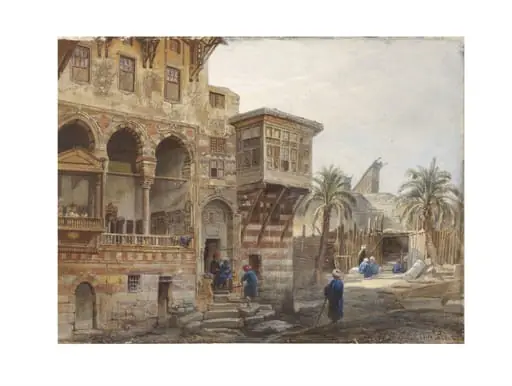 Exterior of the House of the Memluk Raduan Bey, Cairo
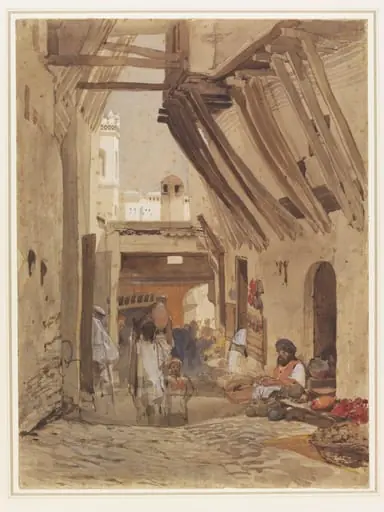 Street Scene
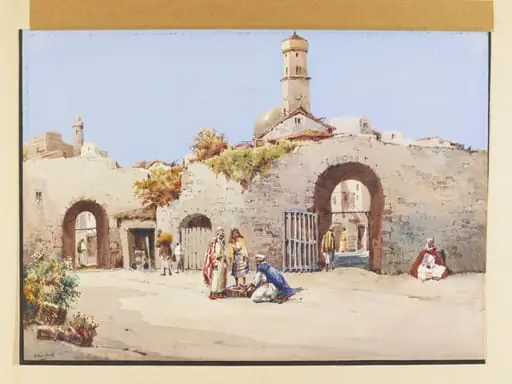 The City Walls, Jaffa, Palestine
![Cairo, the Nile, and the Pyramids of Gizeh. from the Moccat[e]m, by Unknown](https://artifactworldgallery.com/img/unknown--cairo-the-nile-and-the-pyramids-of-gizeh-from-the-moccat-e-m--6e7774624f6a7e54-w320.webp) Cairo, the Nile, and the Pyramids of Gizeh. from the Moccat[e]m
Cairo, the Nile, and the Pyramids of Gizeh. from the Moccat[e]m