Artwork
Landscape with a Farmhouse and Figures
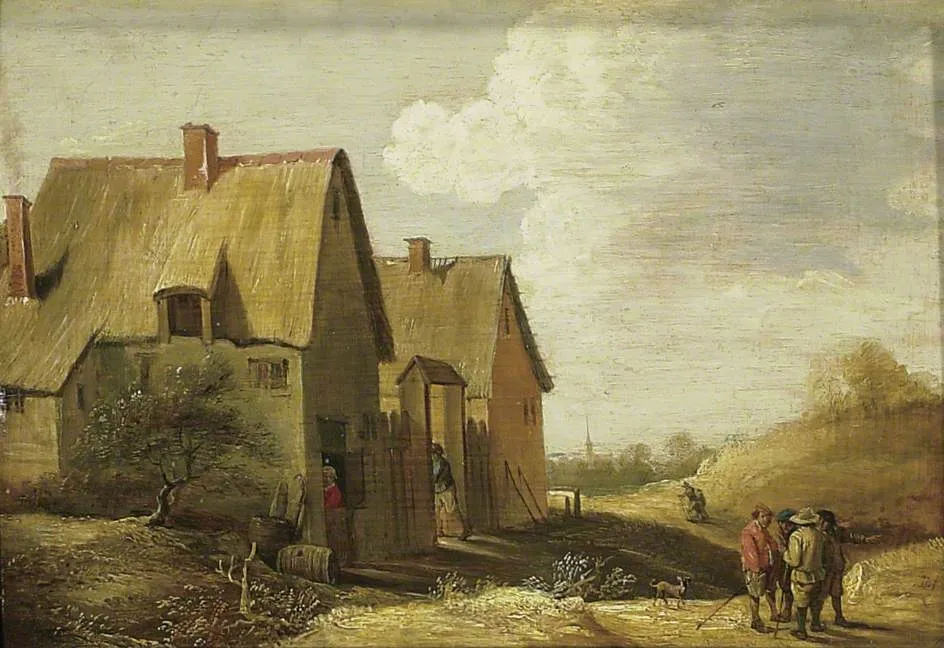
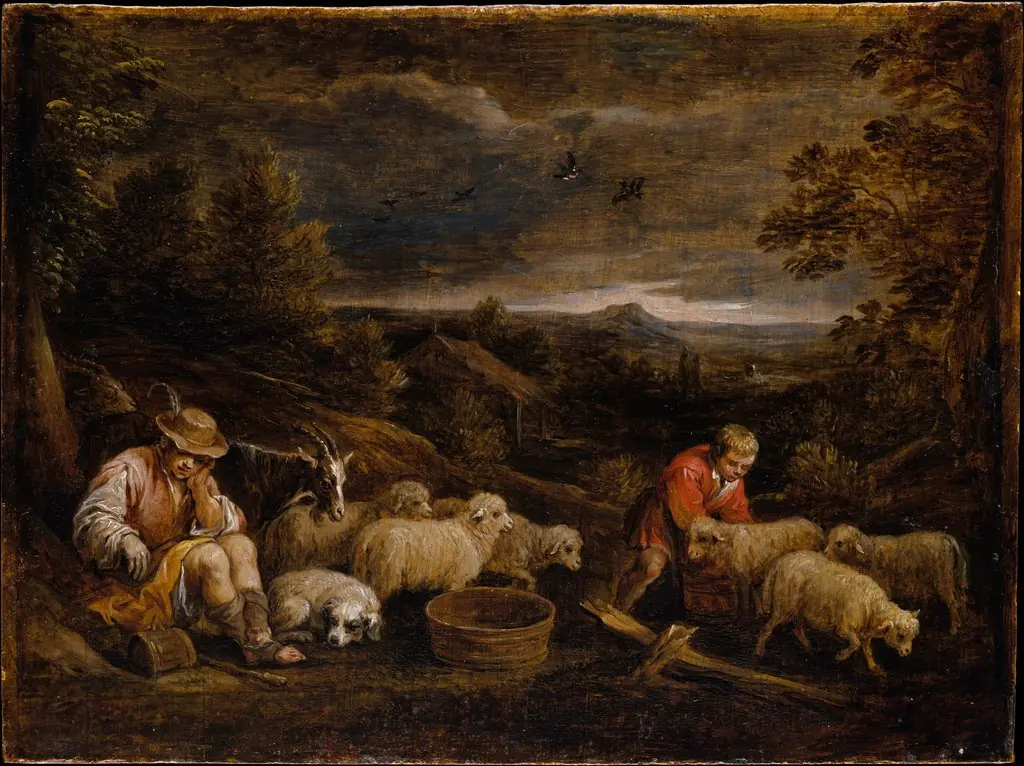
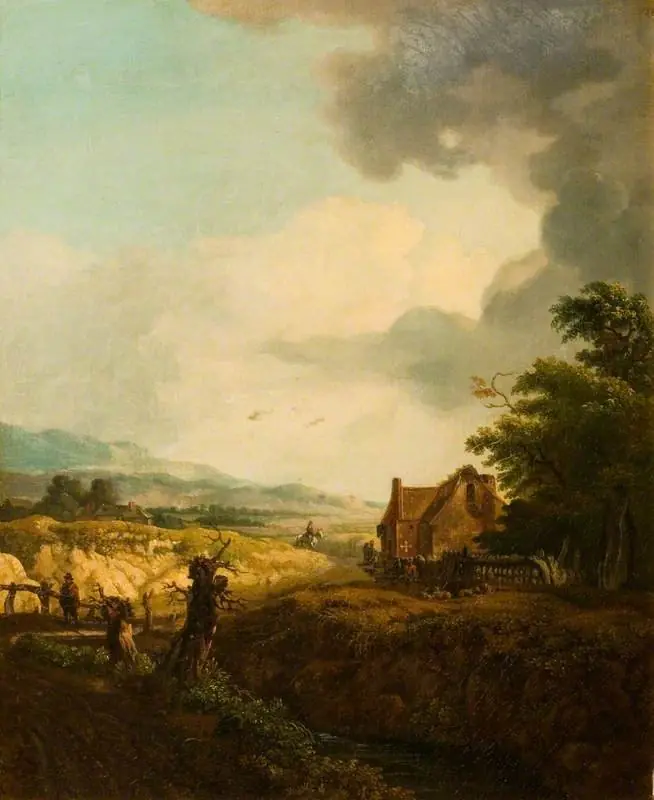
Landscape with a Farmhouse and Figures is an oil painting by the Flemish Baroque painting artist David Teniers the Younger. It dates from 1660 and is held in the collection of the Ashmolean Museum.
About this work
Overview
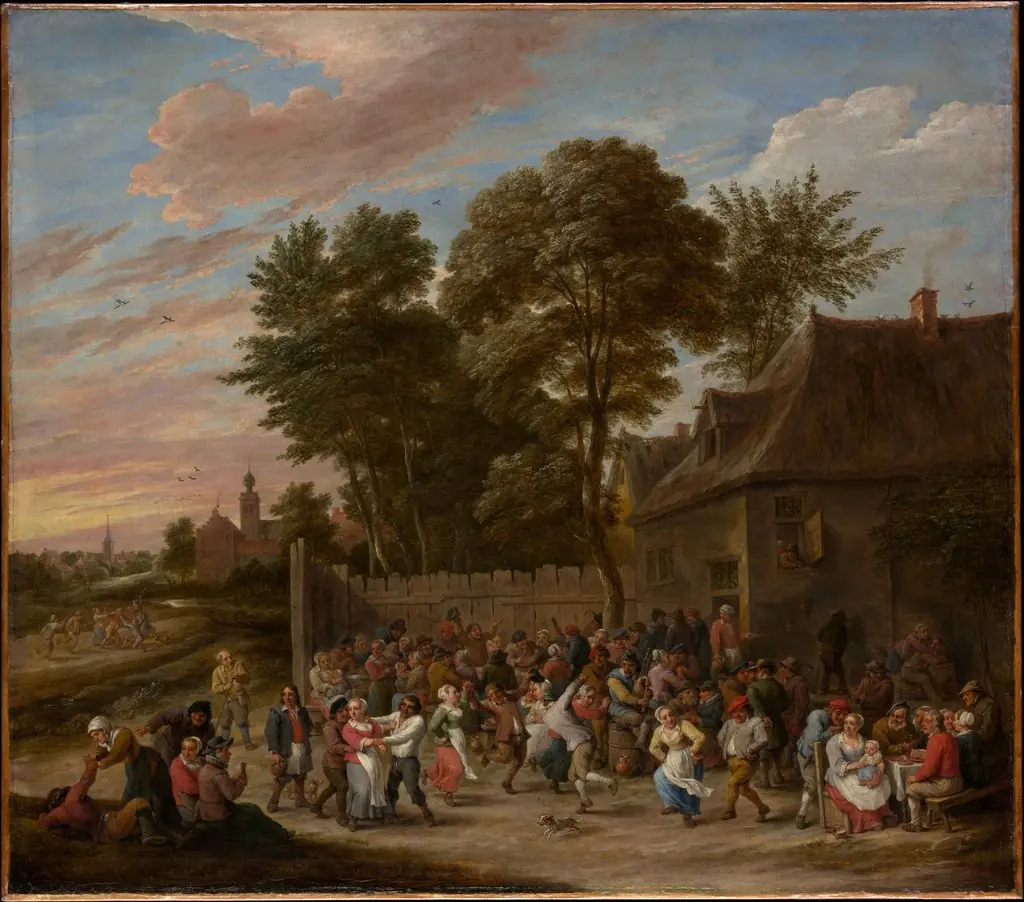
Painted around 1660, this oil-on-canvas work by David Teniers the Younger depicts a quiet rural scene centered on a modest farmhouse.
Painted around 1660, this oil-on-canvas work by David Teniers the Younger depicts a quiet rural scene centered on a modest farmhouse. The composition balances architecture, figures, and natural elements in a harmonious arrangement. It resides in the Ashmolean Museum, where it exemplifies the artist’s focus on everyday peasant life and the Dutch-Flemish landscape tradition of the mid-seventeenth century.
Subject & Meaning
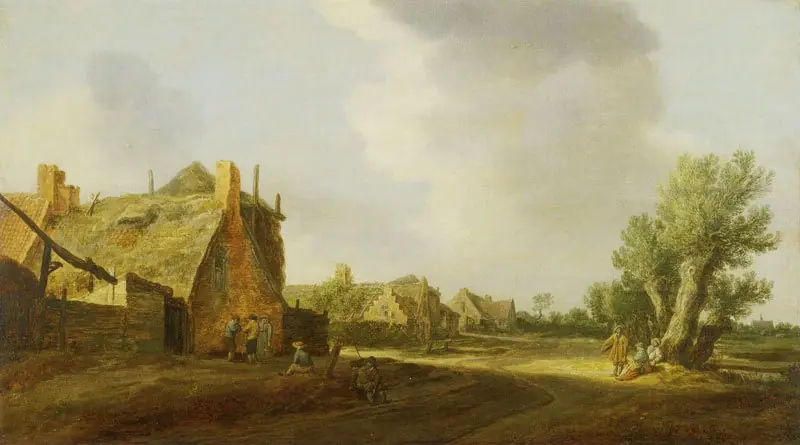
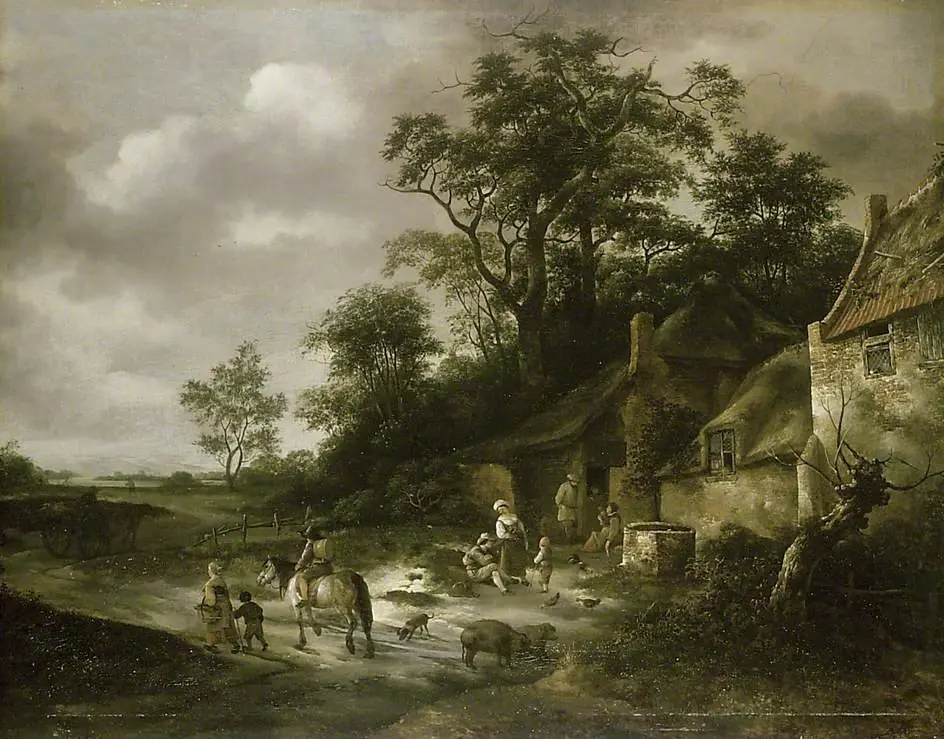
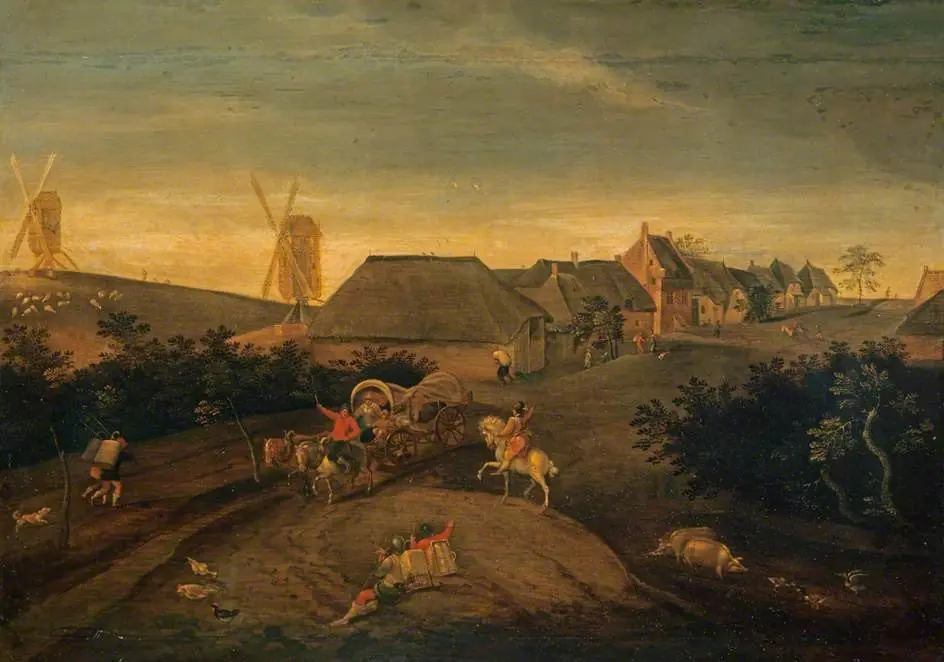
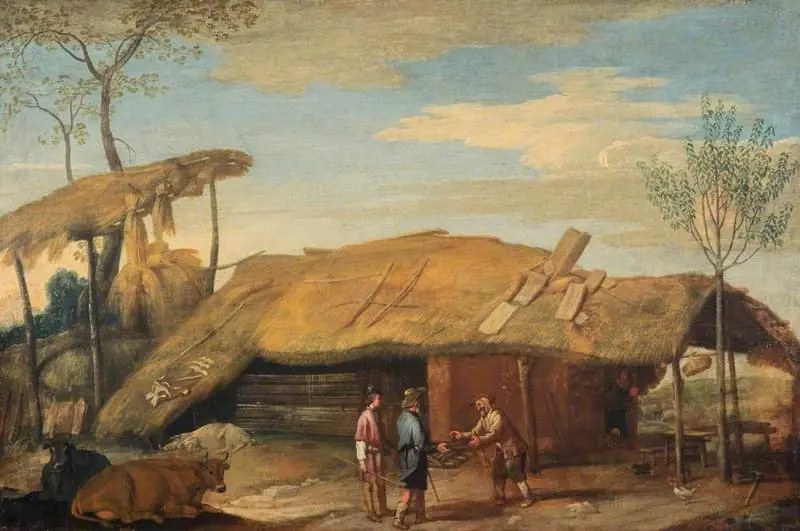
The painting portrays a group of villagers gathered near a stone farmhouse with a thatched roof, engaged in quiet conversation. A dog rests nearby, adding a sense of domestic routine. The figures, dressed in simple garments including a red shirt and a wide-brimmed hat, suggest ordinary laborers. Their presence imbues the scene with a sense of stillness and unremarkable dignity, reflecting the value placed on rural life in the period.
Technique & Style
Teniers employed soft, muted tones to render the gray sky and earthy architecture, creating a subdued atmosphere. Brushwork is precise yet unobtrusive, with careful attention to texture in the thatch, stone, and foliage. The figures are rendered with minimal detail, emphasizing their integration into the landscape rather than individual identity. Light is diffused, enhancing the tranquil mood without dramatic contrast.
History & Provenance
The painting entered the Ashmolean Museum’s collection in the eighteenth century, likely through the bequest of a private collector. Its attribution to Teniers the Younger has been consistently supported by stylistic analysis and archival records. It has remained in institutional hands since its acquisition, with no significant alterations or reattributions recorded over time.
Context
Created during the Dutch Golden Age, this work aligns with a broader trend in Flemish and Dutch art that celebrated rural labor and vernacular architecture. Unlike grand historical or mythological subjects, Teniers focused on the quiet rhythms of peasant existence. His paintings were valued by collectors for their realism and subtle narrative, offering a counterpoint to urban elite culture.
Legacy
Teniers’s depictions of rural life influenced later genre painters in the Low Countries and beyond. This painting, while not widely exhibited, remains a representative example of his mature style. It contributes to scholarly understanding of how everyday scenes were elevated in art during a period when social observation became a legitimate subject for painting.
Artist & collection
Artist
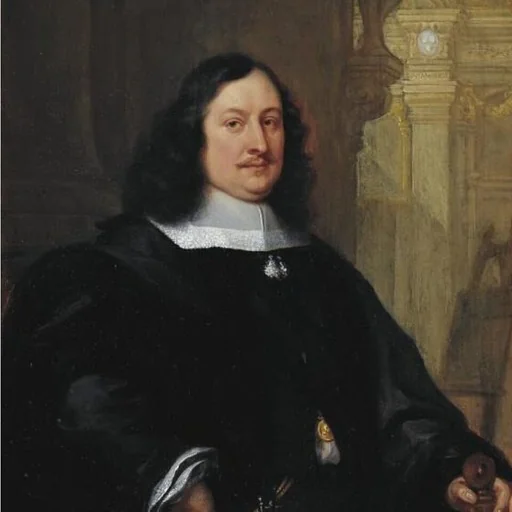
David Teniers the Younger or David Teniers II was a Flemish Baroque painter, printmaker, and artist.