Artwork
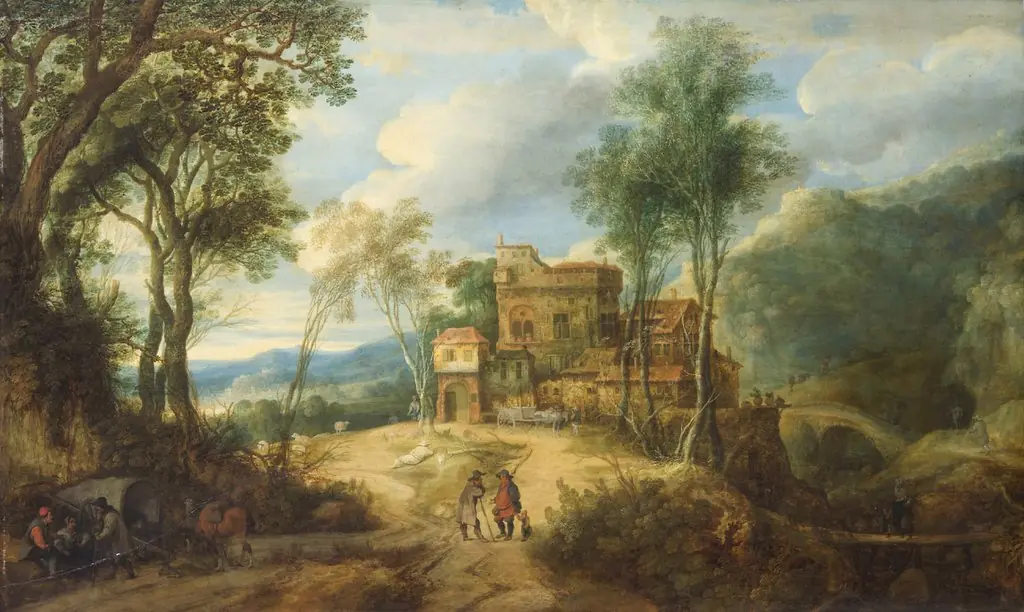
Landscape with Gypsies
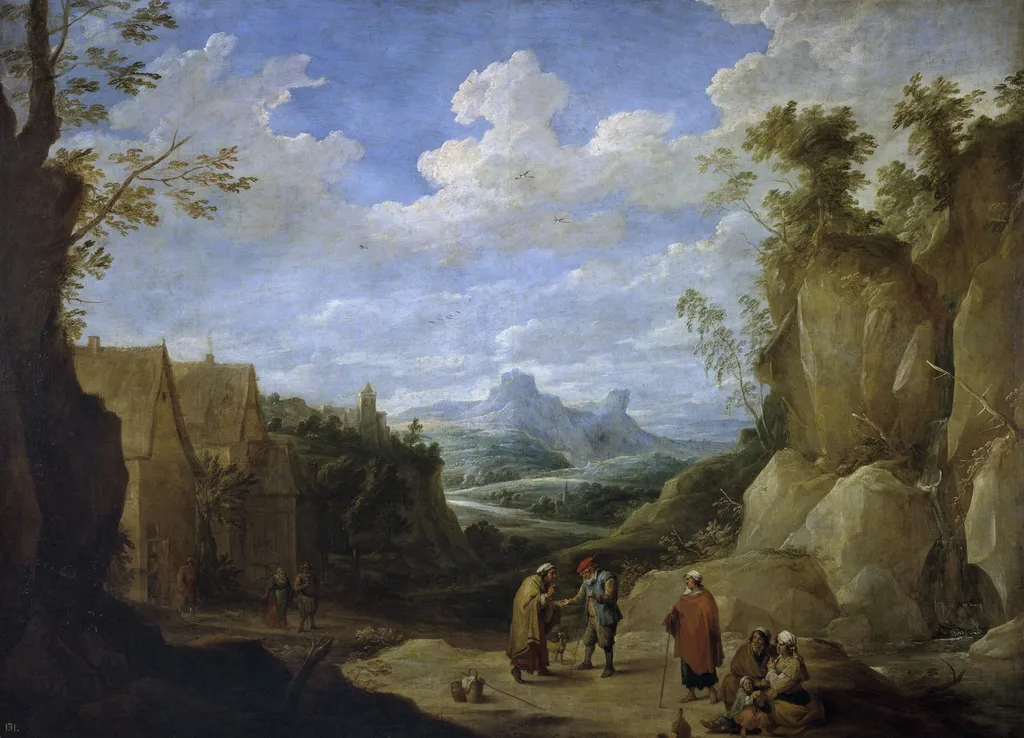
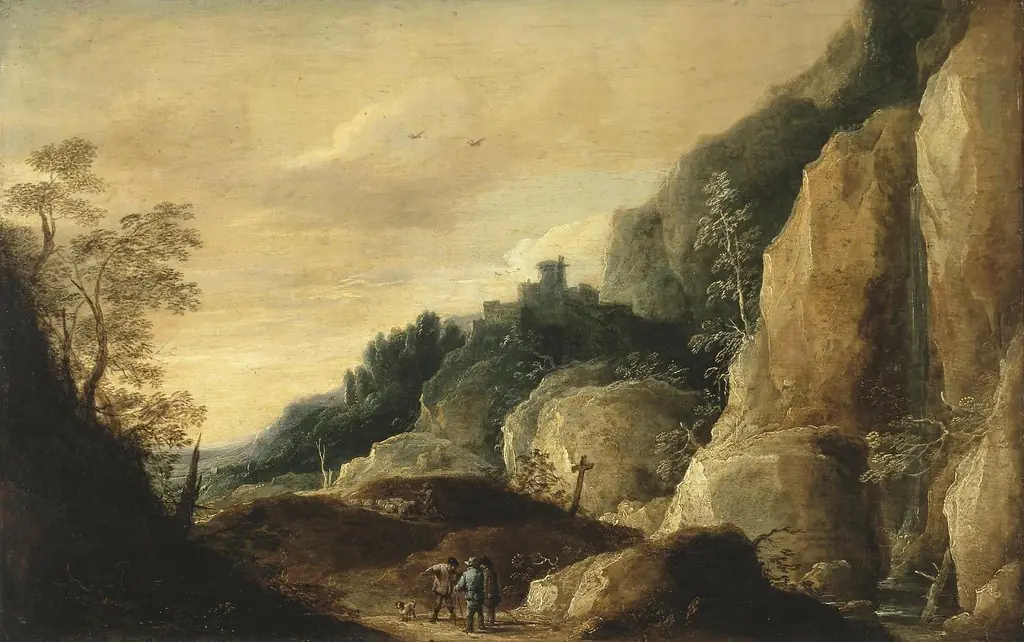
Landscape with Gypsies is an oil painting by the Flemish Baroque painting artist David Teniers the Younger. It dates from 1641 and is held in the collection of the Museo del Prado.
About this work
Overview
Landscape with Gypsies is a 17th-century oil painting by David Teniers the Younger, dated to 1641, and part of the collection at the Museo del Prado.
Subject & Meaning
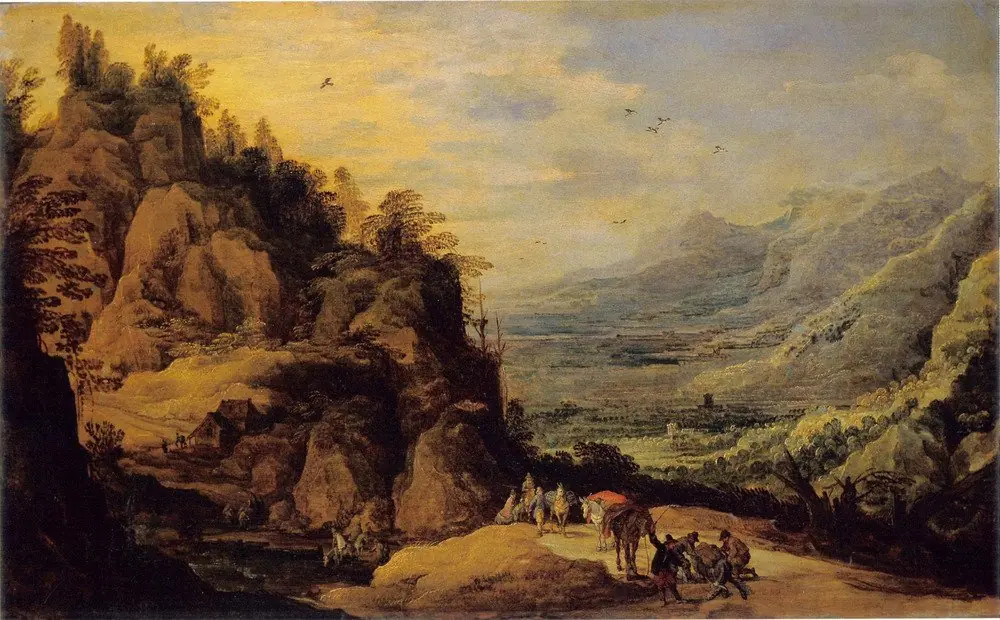
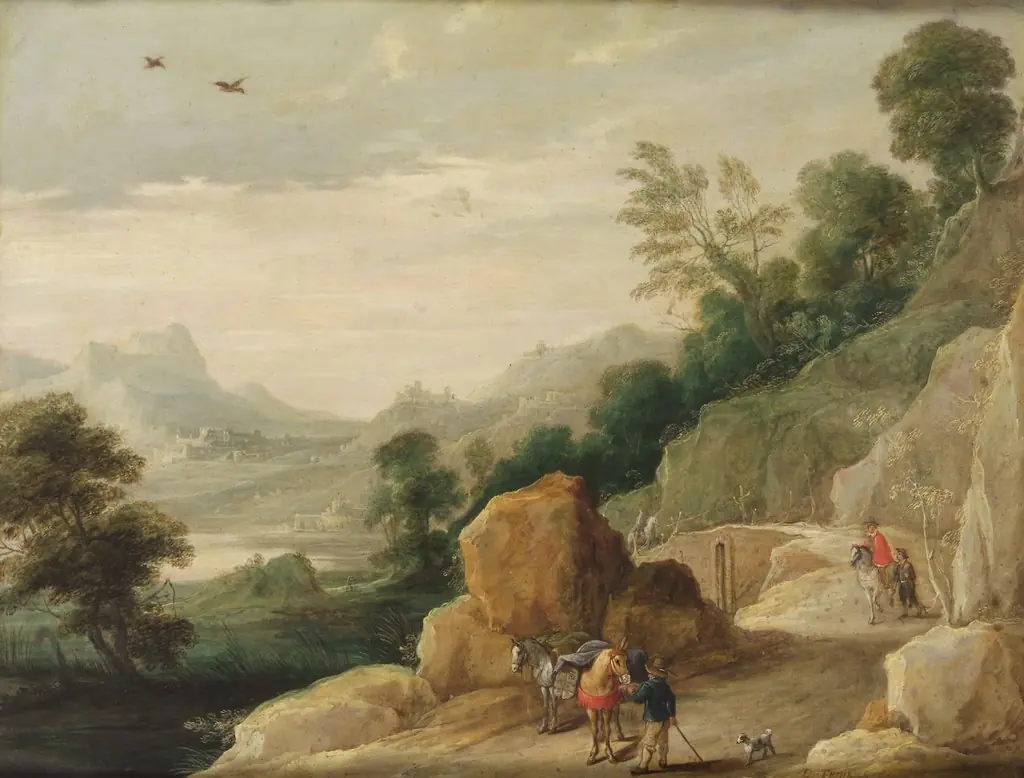
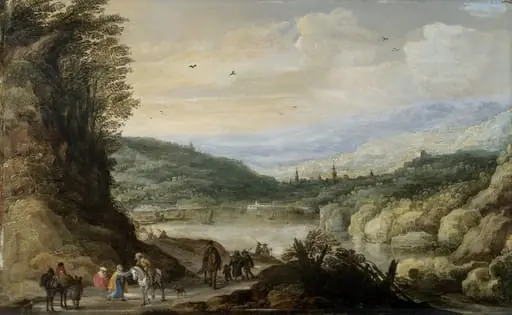
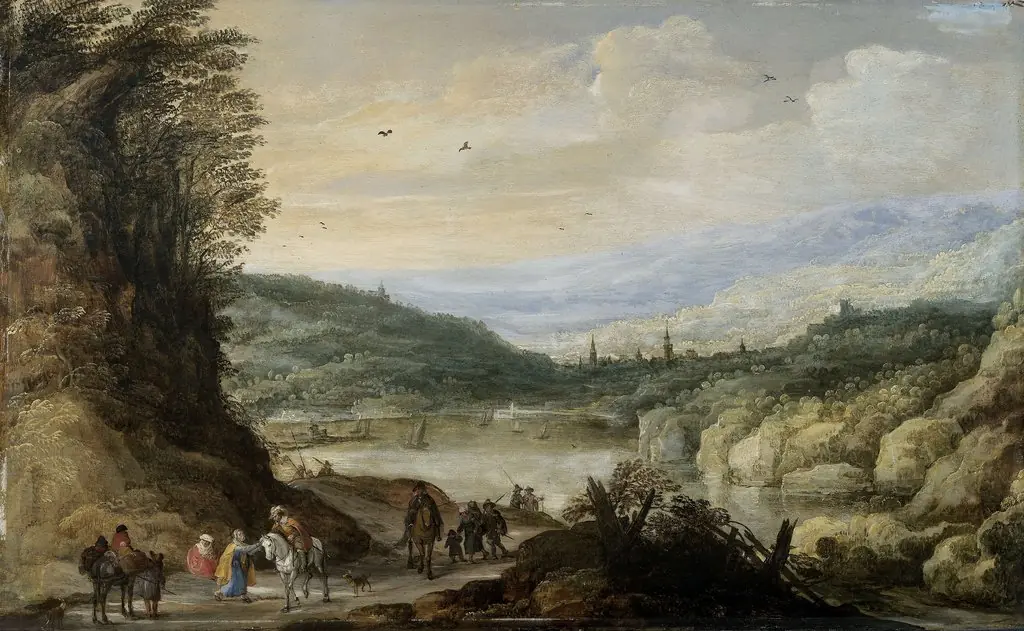
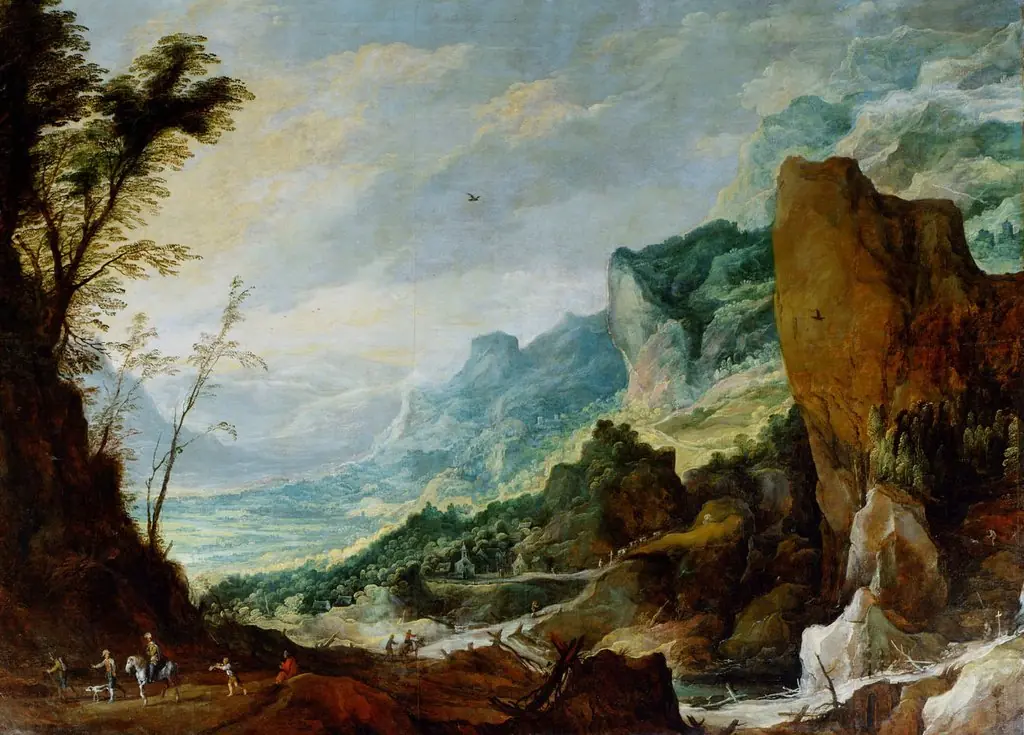
The painting depicts a serene rural scene with a small village nestled between hills and a river. Figures in simple attire engage in daily activities, while a distinct group in the foreground, possibly gypsies, is shown with a dog and basket, suggesting travel.
Technique & Style
The work features a bright, cloudy sky and trees framing the composition, characteristic of Teniers' landscape style. The blending of old, thatched-roof buildings with the natural, rocky landscape demonstrates his attention to integrating architecture and nature.
History & Provenance
Created in 1641, the painting is now held in the collection of the Museo del Prado, though specific details of its ownership history before entering the museum are not provided here.
Context
The painting reflects the Flemish landscape tradition of the time, emphasizing harmony between human presence and the natural world. The inclusion of possibly itinerant figures adds a layer of social observation.
Legacy
While not further elaborated here, the painting's presence in the Prado suggests its recognition as a notable work by Teniers, contributing to the museum's collection of 17th-century Flemish art.
Own this work as a print
Artist & collection
Artist
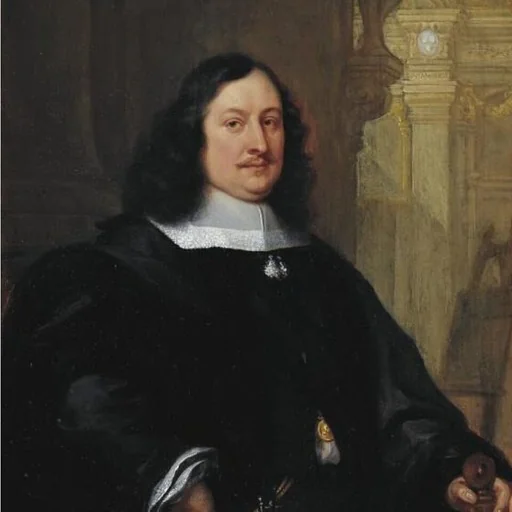
David Teniers the Younger or David Teniers II was a Flemish Baroque painter, printmaker, and artist.