Artwork
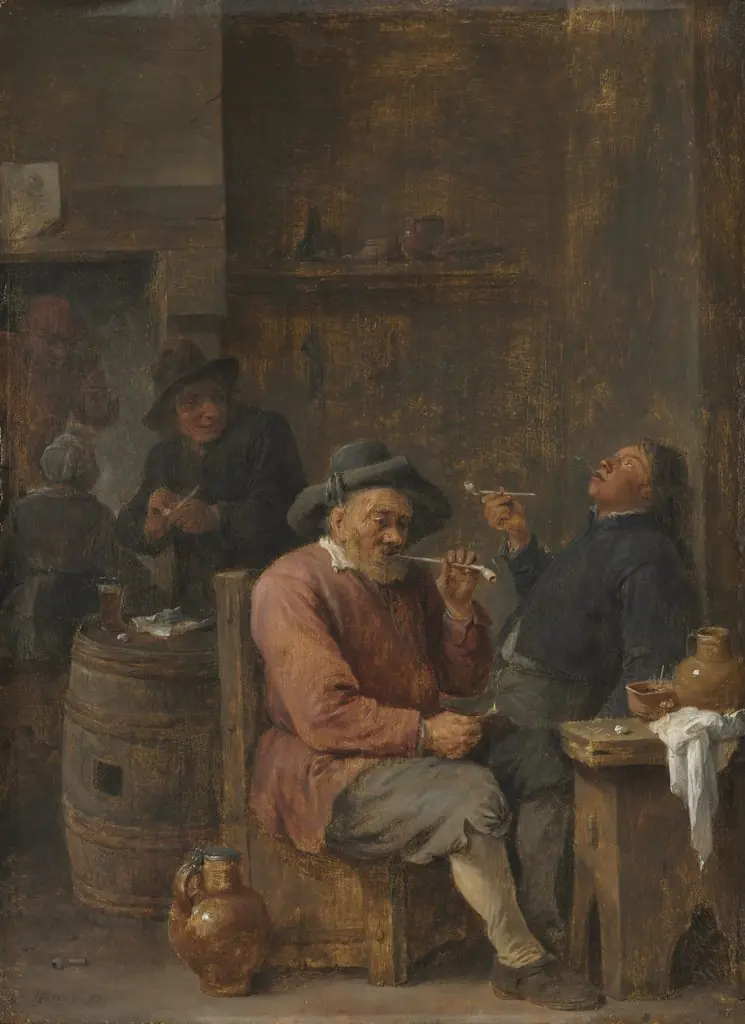
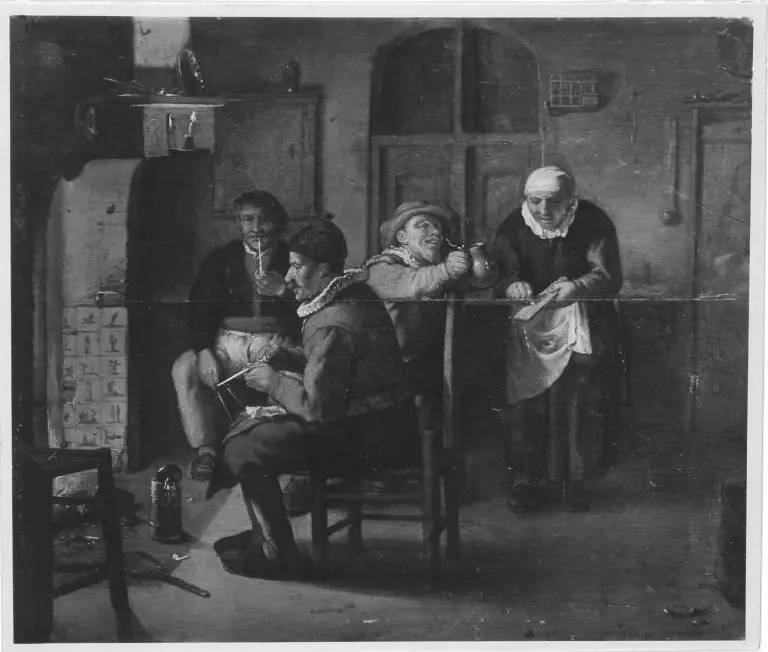
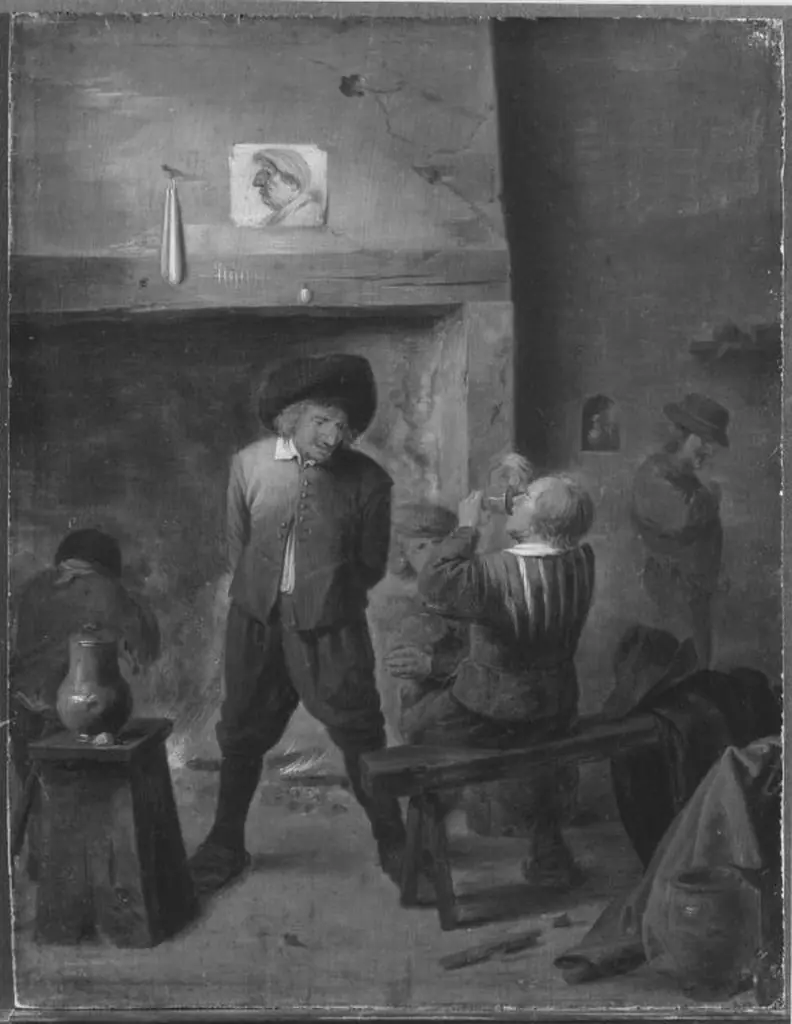
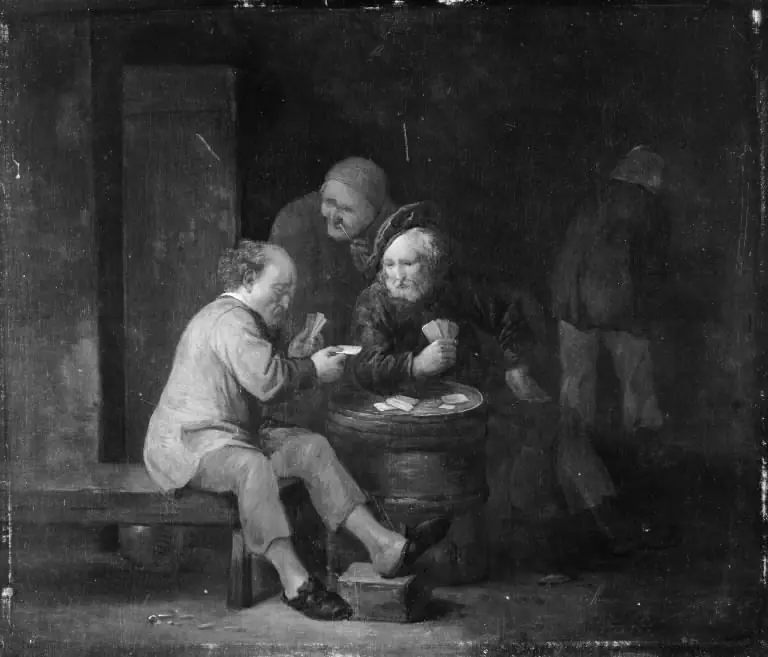
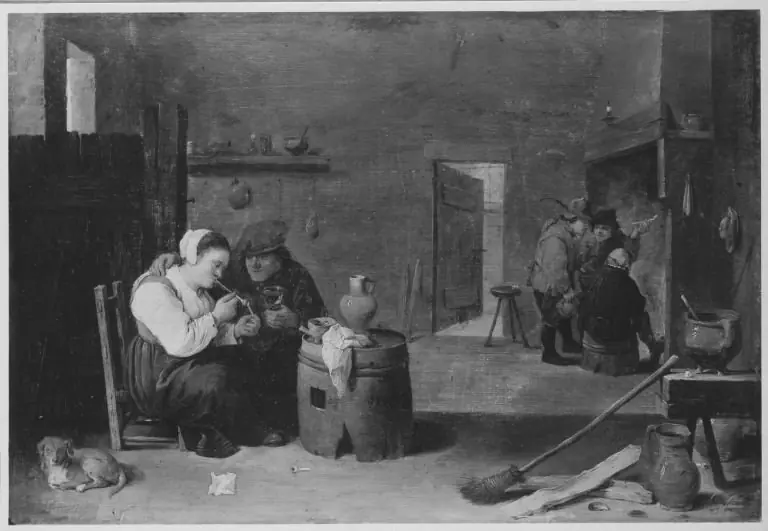
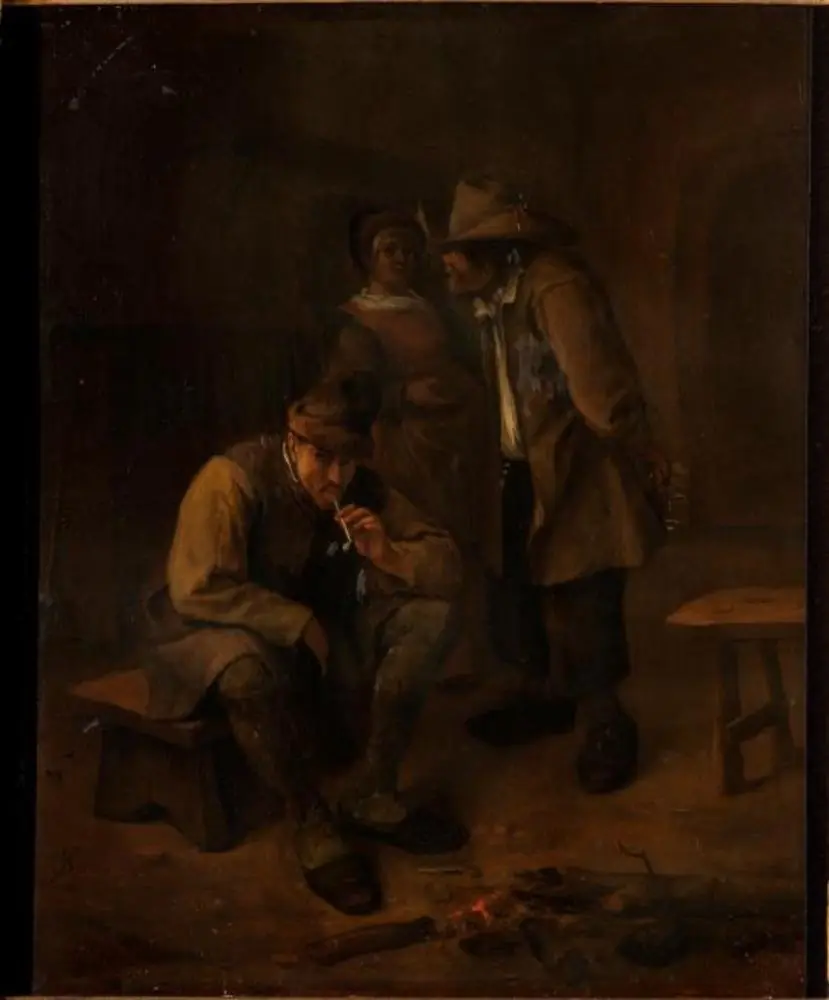
Zwei Bauern und ein altes Weib in der Schenke
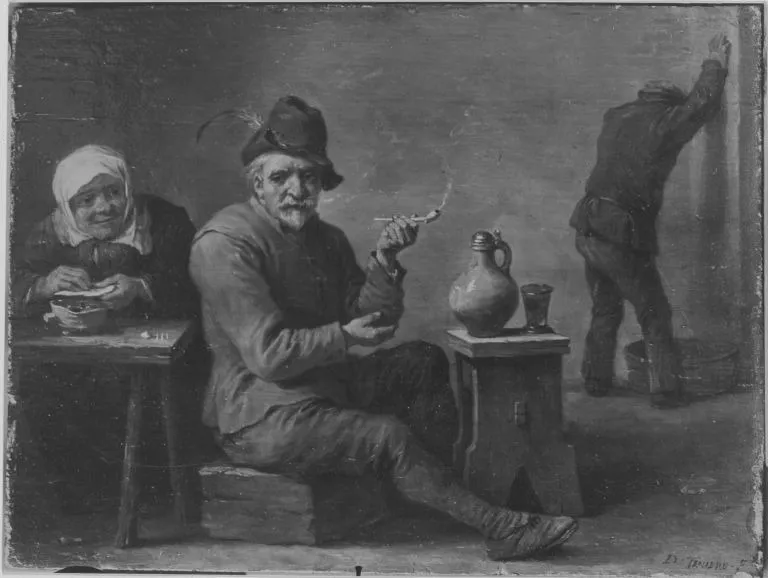
Zwei Bauern und ein altes Weib in der Schenke is an unspecified painting by the Flemish Baroque painting artist David Teniers the Younger. It dates from 1650 and is held in the collection of the Bavarian State Painting Collections.
About this work
Overview
Painted around 1650 by David Teniers the Younger, this work captures a quiet interior scene in a Flemish tavern.
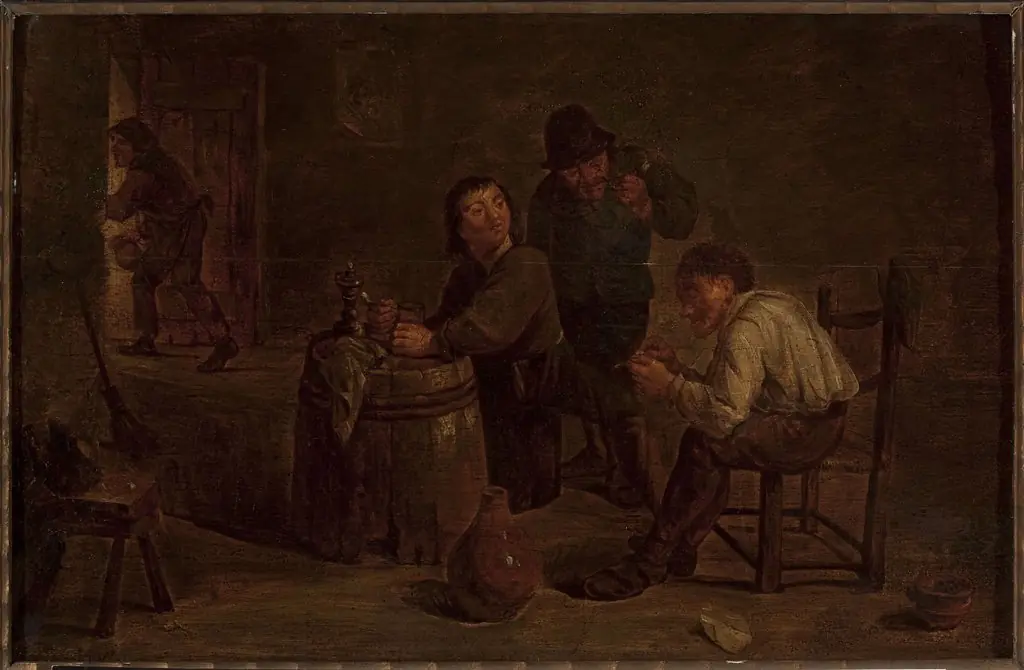
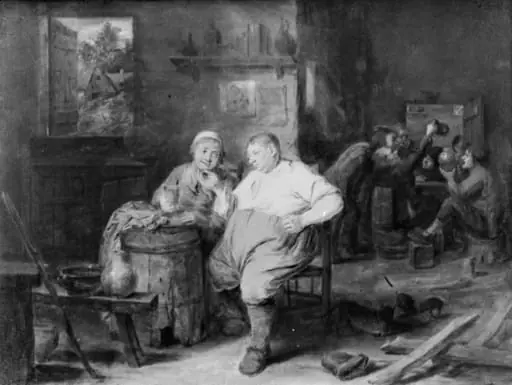
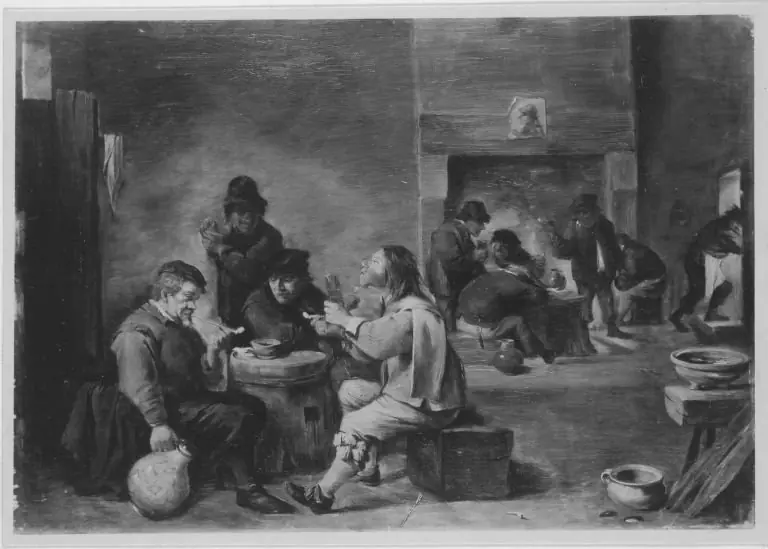
Painted around 1650 by David Teniers the Younger, this work captures a quiet interior scene in a Flemish tavern. It is part of the collection at the Alte Pinakothek in Munich. The composition centers on three figures engaged in solitary, unremarkable actions—smoking, holding a bowl, and leaning against a wall—suggesting a moment of pause rather than social interaction. The dim lighting and restrained palette reinforce the subdued tone of the setting.
Subject & Meaning
The painting portrays three rural figures in a moment of stillness, their identities marked by modest attire and simple gestures. The seated man smokes a pipe, the woman cradles a bowl, and the third figure stands with his back turned, isolated from the others. No narrative climax is implied; instead, the scene emphasizes the quiet dignity of ordinary laborers, reflecting a broader interest in the private lives of the lower classes during the 17th century.
Technique & Style
Teniers employs a muted color palette and careful attention to texture, rendering fabric, wood, and clay with subtle realism. The lighting is directional but unobtrusive, casting soft shadows that define form without drama. Brushwork is precise yet unobtrusive, avoiding theatricality. The composition is tightly framed, focusing attention on the figures’ postures and the sparse interior, reinforcing the painting’s intimate, unadorned character.
History & Provenance
The painting entered the Alte Pinakothek’s collection in the 19th century, likely as part of a broader acquisition of Flemish genre works. Its provenance before that is undocumented, but it aligns with Teniers’s known output from his mid-career period in Antwerp. It was never widely exhibited or reproduced in its time, suggesting it was valued more for its quiet observation than for public acclaim.
Context
In mid-17th-century Flanders, genre scenes of peasant life gained popularity among urban patrons seeking authentic depictions of rural existence. Teniers, working under the influence of Pieter Bruegel the Elder, avoided caricature, instead presenting his subjects with observational neutrality. This painting reflects a cultural shift toward valuing everyday moments, even among those without social prominence.
Legacy
Though not among Teniers’s most famous works, this painting exemplifies his consistent approach to genre painting: understated, attentive to detail, and free from moralizing. It contributed to a tradition of Flemish realism that influenced later artists interested in the quietude of daily life. Its preservation in a major European collection underscores its role as a representative example of 17th-century secular painting.
Artist & collection
Artist
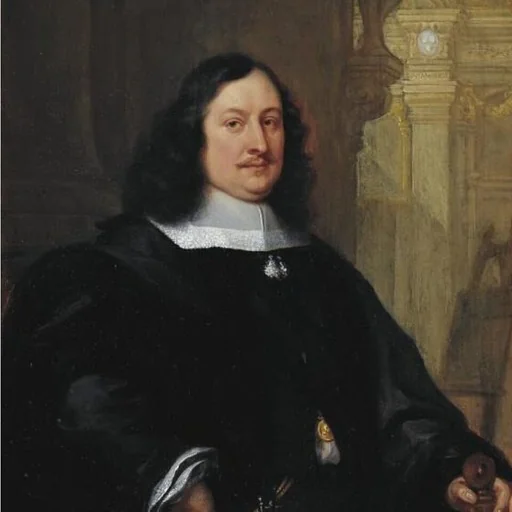
David Teniers the Younger or David Teniers II was a Flemish Baroque painter, printmaker, and artist.