Artwork
Bauernschenke (Kopie nach)
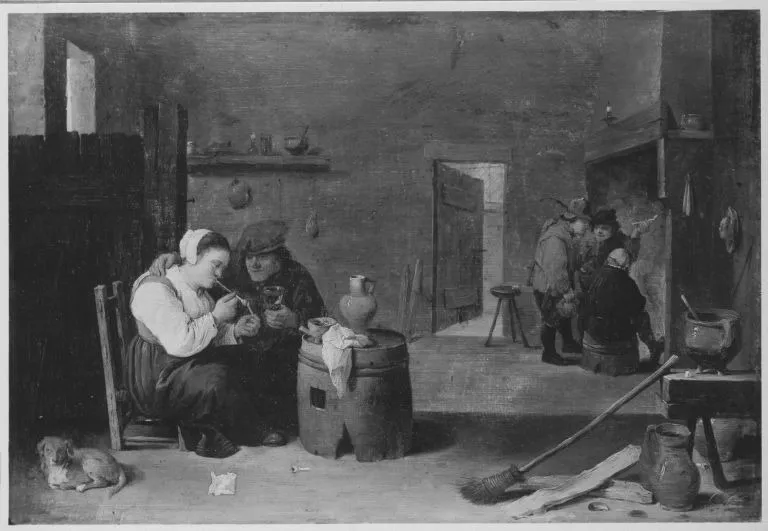
Bauernschenke (Kopie nach) is an unspecified painting by the Flemish Baroque painting artist Unknown. It dates from 1650 and is held in the collection of the Bavarian State Painting Collections.
About this work
Overview
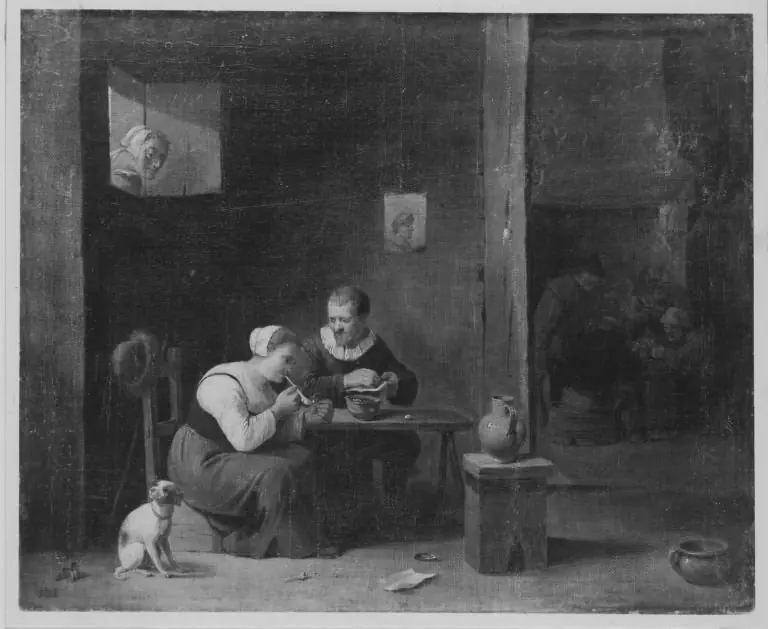
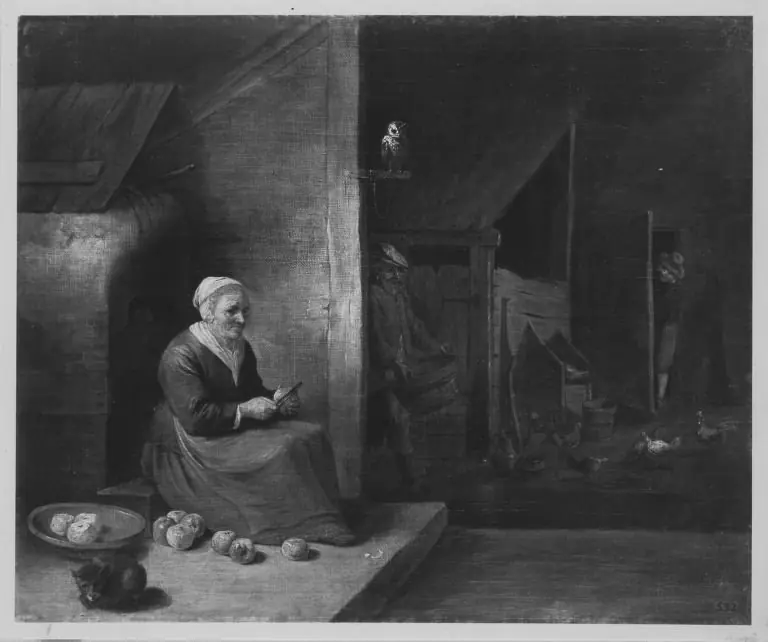
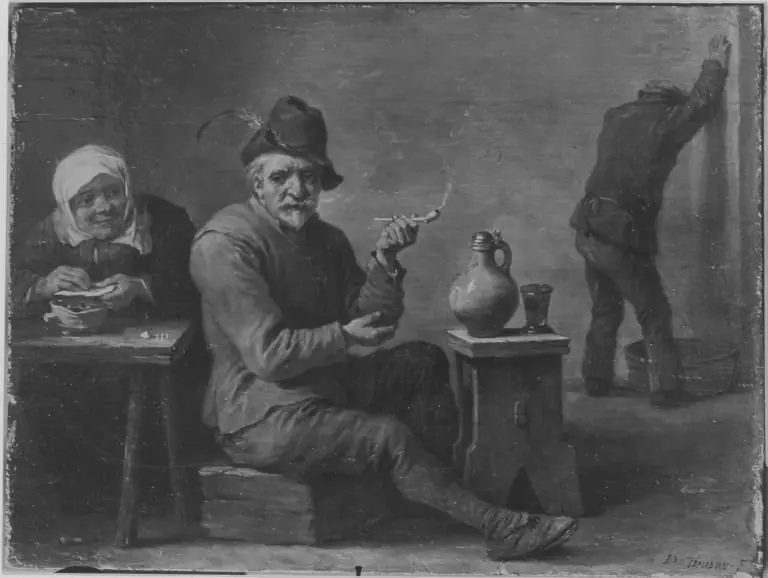
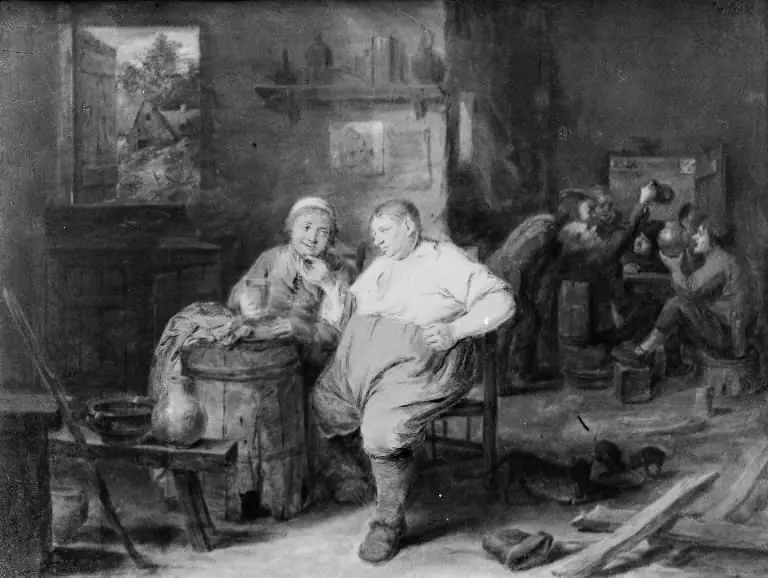
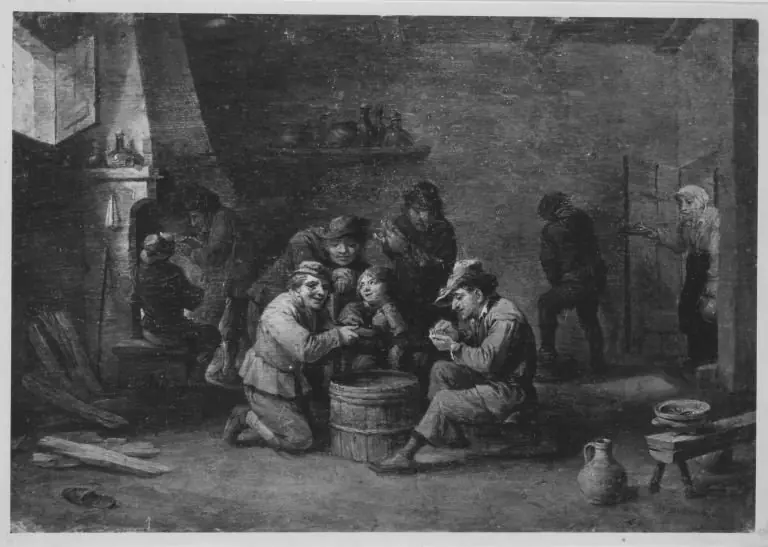
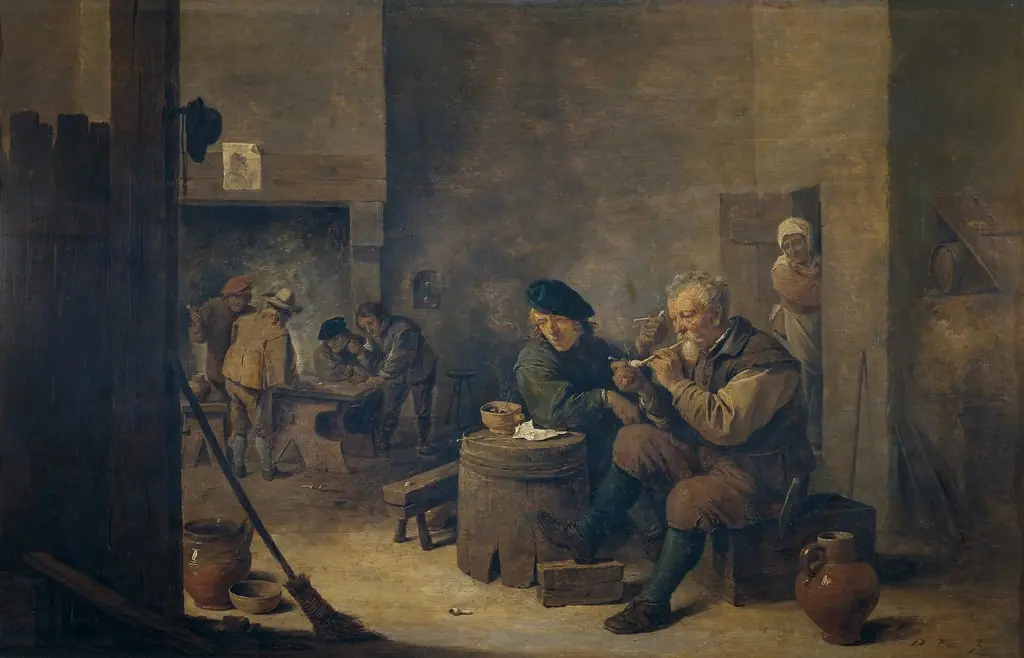
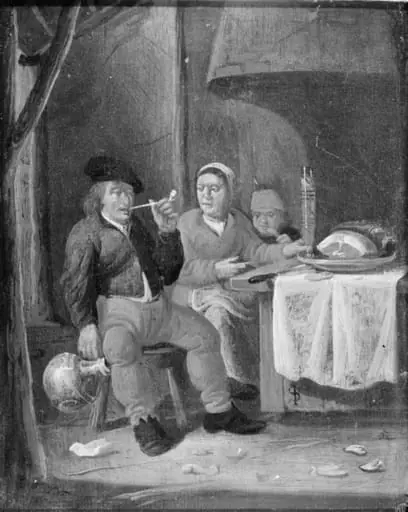
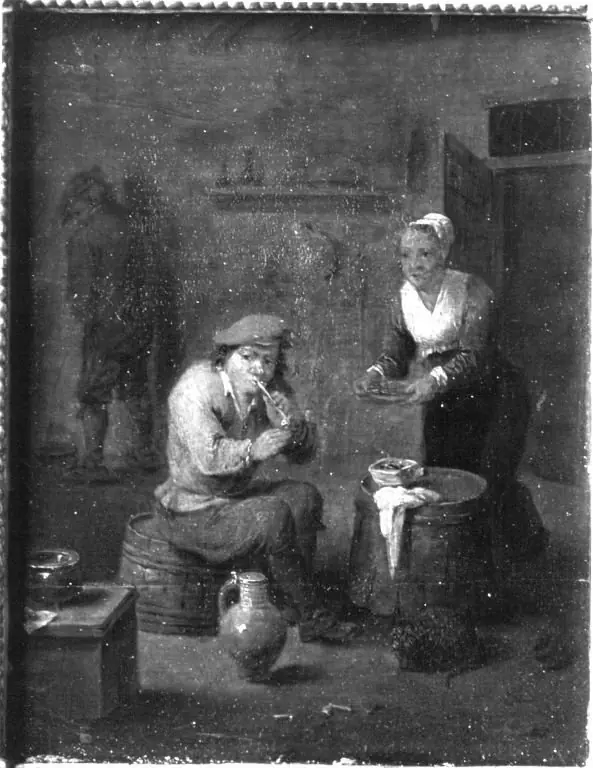
This painting is a copy after a work by an unknown original artist, depicting a quiet interior scene in a rural setting. Two figures—a woman and a man—sit side by side, each smoking a pipe. The dim lighting and sparse furnishings suggest a modest, everyday environment. The composition emphasizes stillness and solitude, with minimal detail drawing attention to the figures and their shared moment.
Subject & Meaning
The presence of a dog and a broom implies domestic life, grounding the scene in the ordinary rhythms of rural labor and rest.
The figures, dressed in plain, dark clothing and a white headscarf, appear engaged in a routine, intimate act: smoking. Their posture and lack of interaction suggest quiet companionship rather than conversation. The presence of a dog and a broom implies domestic life, grounding the scene in the ordinary rhythms of rural labor and rest. The mood is contemplative, avoiding narrative drama in favor of quiet realism.
Technique & Style
The artist employs chiaroscuro to model forms and define space, using strong contrasts between light and shadow to give volume to the figures and objects. The dim interior is rendered with muted tones, allowing the play of light to guide the viewer’s eye. Brushwork is restrained, favoring texture over detail, which enhances the sense of authenticity and unembellished realism in the setting.
History & Provenance
The painting is a copy, indicating it was made in emulation of an earlier work, likely from the 17th or early 18th century. Its origin as a reproduction suggests it was created for private collection or study, rather than as an original commission. The identity of the original artist remains unconfirmed, and the copyist’s name is not recorded in available sources.
Context
The scene reflects a tradition of Dutch and Flemish genre painting that portrayed rural life with unidealized realism. Such works often highlighted the dignity of everyday labor and quiet domestic moments. The inclusion of smoking, a common habit among peasants, aligns with broader 17th-century depictions of lower-class life, avoiding moral judgment in favor of observational accuracy.
Legacy
As a copy, this work contributes to the transmission of genre painting traditions across generations. It preserves the visual language of rural realism even when the original is lost. While not widely known, it serves as a testament to the enduring appeal of unadorned domestic scenes in European art, valued for their quiet humanity rather than grandeur.
Artist & collection

 Domestic Scene
 Giacomo and Cardinal Marco, investing Andrea, Abbot of San Zeno, with his Benefice
 The Nymph of Fontainebleau
 Portrait of a Woman
 Madonna and Child with Saints in the Enclosed Garden
 Venus and Minerva
 Family Group of Four on Sofa
 Wall painting from Room H of the Villa of P. Fannius Synistor at Boscoreale