Artwork
Orchard of Bounties
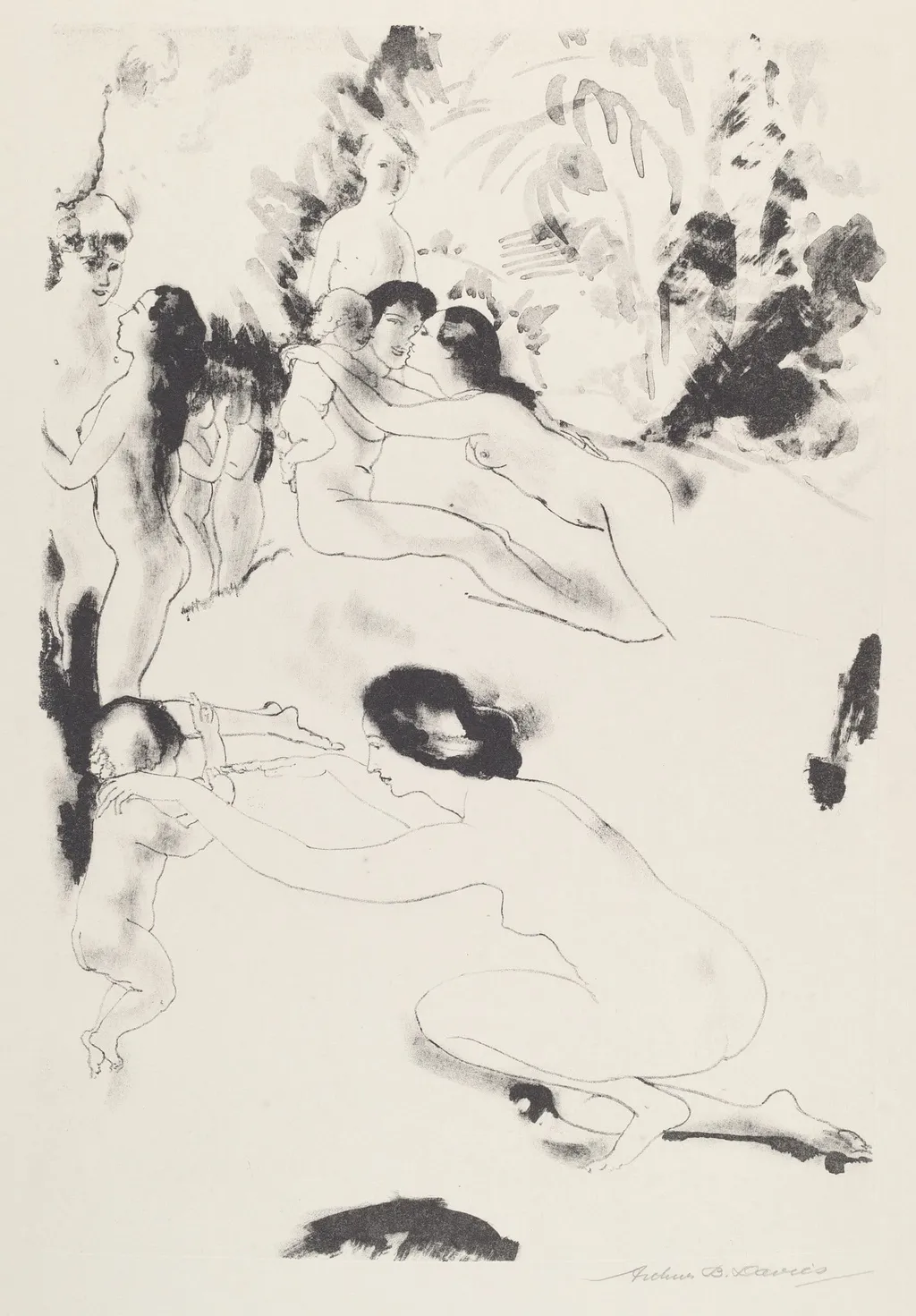
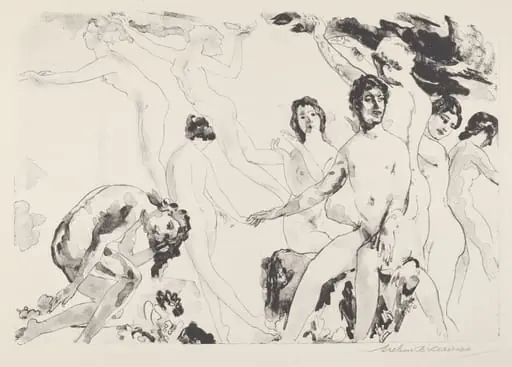
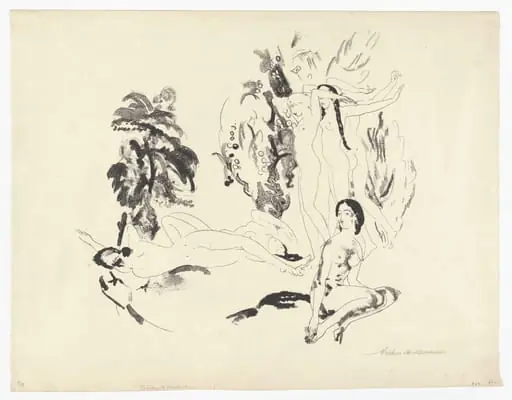
Orchard of Bounties is an ink print by Arthur Bowen Davies. It dates from 1920 and is held in the collection of the National Gallery of Art.
About this work
Overview
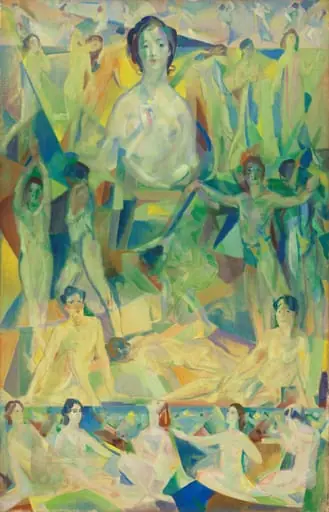
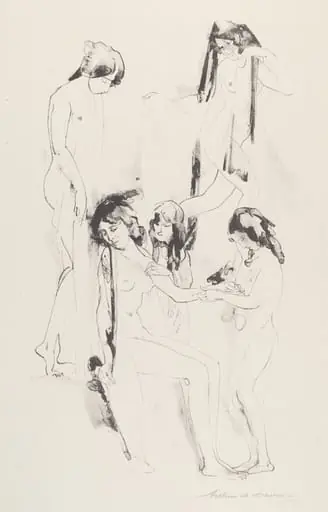
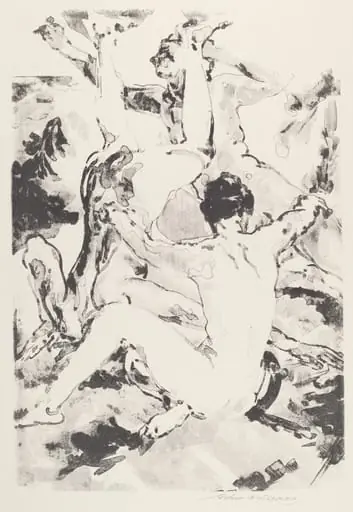
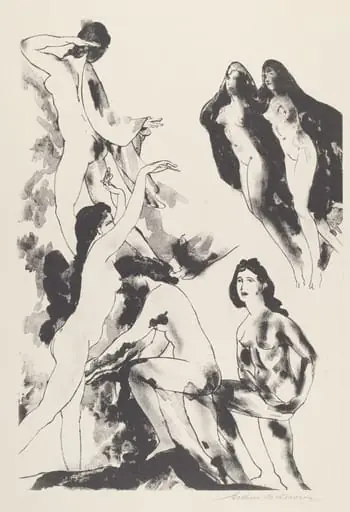
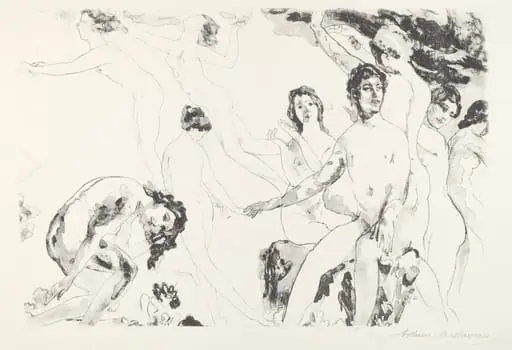
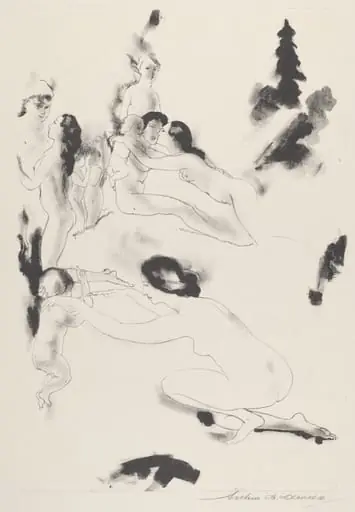
Created in 1920, *Orchard of Bounties* is a black‑ink lithograph with lithotint on wove paper by American painter Arthur B. Davies. The print presents a loosely drawn assembly of figures whose forms merge with one another and the surrounding space, rendered in swift, wavering strokes that convey a sense of movement and immediacy.
Subject & Meaning
The composition depicts a gathering of people intertwined in fluid lines, some upright, others reclined, their silhouettes dissolving into the background. The ambiguous arrangement suggests a communal scene without a specific narrative, inviting viewers to contemplate themes of togetherness and the fleeting nature of human interaction.
Technique & Style
Davies employed lithography, a planographic process in which a greasy drawing on a smooth stone or metal plate attracts ink while the non‑image areas repel it. By adding lithotint—a textured ground—he achieved soft, slightly blurred edges that mimic the spontaneity of a sketch, emphasizing the work’s gestural quality.
History & Provenance
Arthur B. Davies, a leading figure in early‑20th‑century American modernism, used this print to explore experimental approaches within his broader oeuvre. While specific ownership records are limited, the work reflects Davies’s involvement in promoting avant‑garde art in the United States during the post‑World War I era.
Artist & collection
Artist
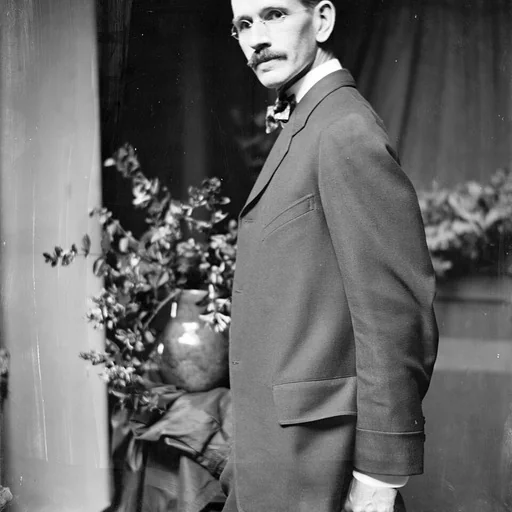
Arthur Bowen Davies (September 26, 1862 – October 24, 1928) was an avant-garde American artist and influential advocate of modern art in the United States c. 1910–1928.