Artwork
H Beard Print Collection
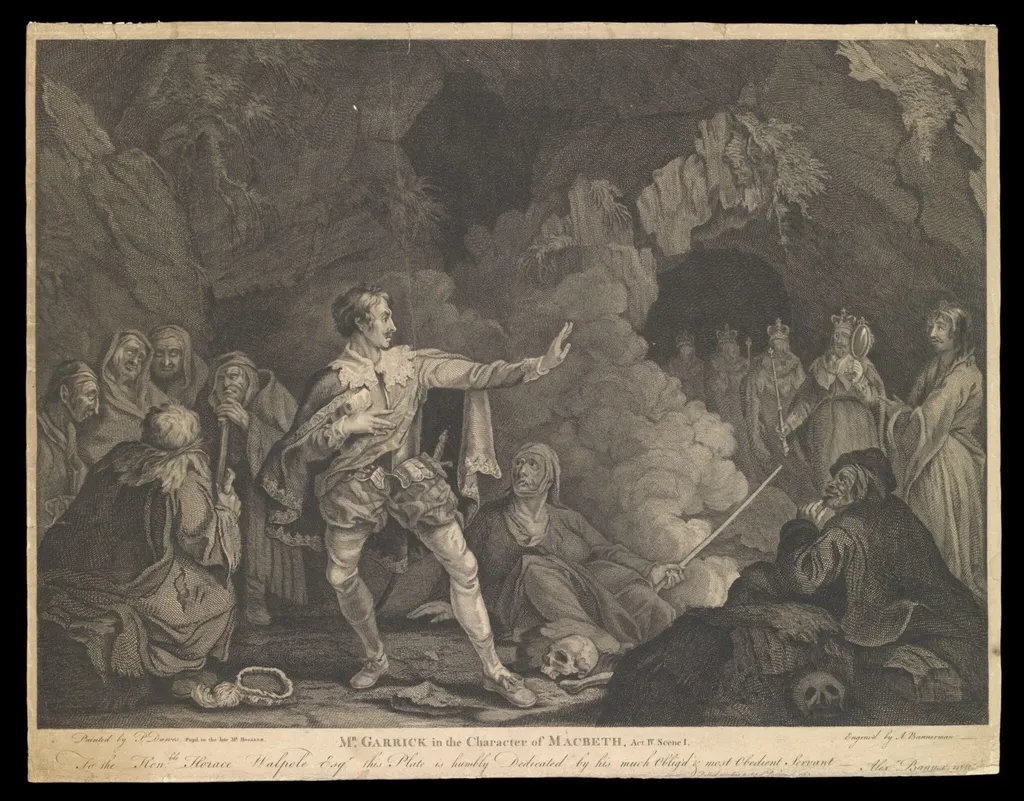
H Beard Print Collection is a print by the Romanticist artist William Dawes. It dates from 1763 and is held in the collection of the Victoria and Albert Museum.
About this work
The print is titled H Beard Print Collection, created by William Dawes in 1763.
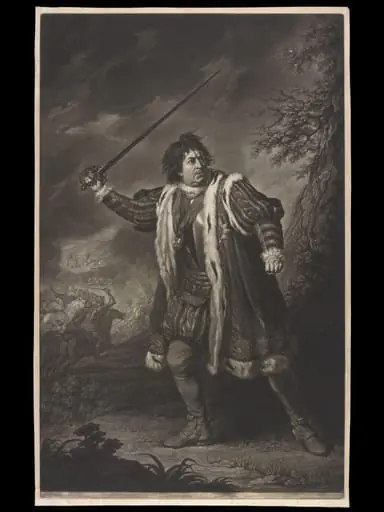
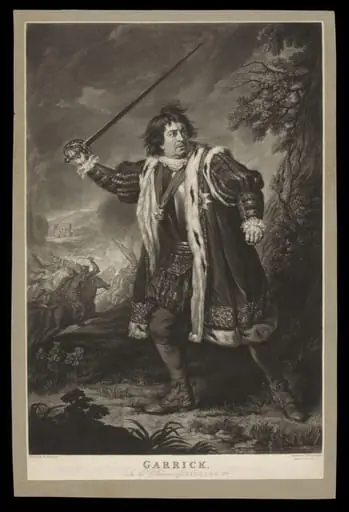
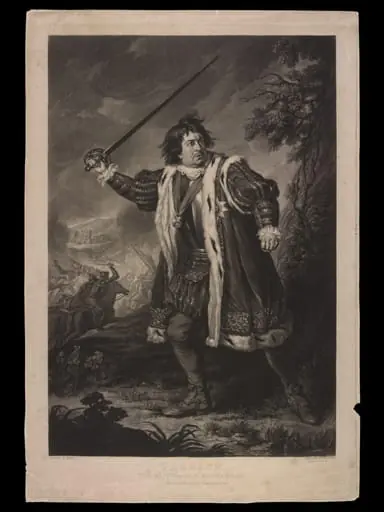
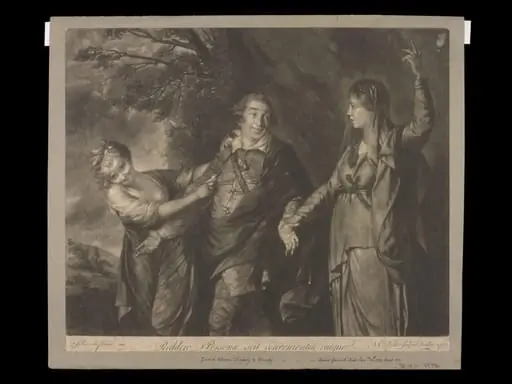
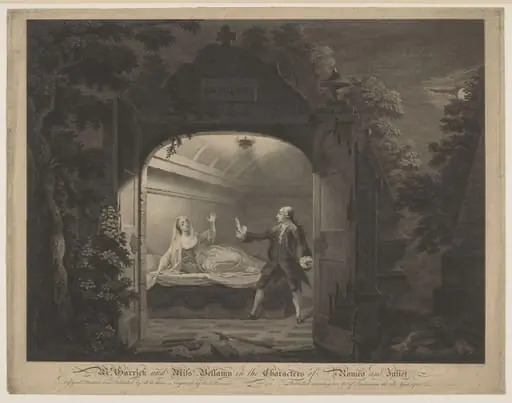
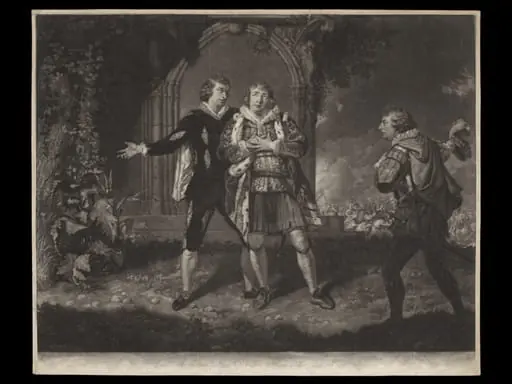
This print is interesting because it depicts a famous actor, David Garrick, as a character from a play. The fact that it's an allegory suggests that the image may have symbolic meanings beyond the literal scene.
You can learn more about this style by exploring the movement: Romanticism.
Overview
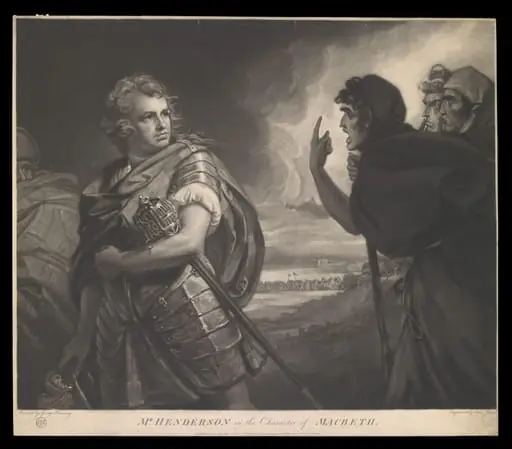
The work, known as the H Beard Print Collection, is a 1763 print executed by William Dawes. It presents the celebrated eighteenth‑century actor David Garrick in the role of Macbeth, the tragic Scottish king from Shakespeare’s drama. The image functions as an allegorical portrait, merging theatrical representation with visual symbolism.
Subject & Meaning
Garrick’s portrayal of Macbeth serves both as a literal depiction of a stage performance and as a broader commentary on the themes of ambition and moral decline inherent in the play. By casting a well‑known actor in the role, the print invites viewers to consider the interplay between personal reputation and the tragic destiny of the character.
Technique & Style
Executed in the print medium, Dawes employs line work and shading typical of mid‑eighteenth‑century engraving. The composition balances detailed facial features with dramatic chiaroscuro, emphasizing the intensity of Macbeth’s expression. While predating the full Romantic movement, the work hints at emerging interests in emotion and individual experience.
History & Provenance
Created in 1763, the print reflects the period’s fascination with theatrical celebrity and the circulation of portraiture through prints. It was likely produced for a market of admirers of Garrick and Shakespearean drama, and it has since entered collections that document the visual culture surrounding eighteenth‑century theatre.
Context
During the mid‑1700s, prints served as a primary means of disseminating images of famous performers. David Garrick, a dominant figure on the London stage, was frequently rendered in such media, reinforcing his public persona and the growing cult of the actor‑star within the broader Enlightenment cultural landscape.
Artist & collection
Artist
William Dawes made a single surviving satire painting called *The Downfall of Shakespeare Represented on a Modern Stage* in 1763–65.