Artwork
The Downfall of Shakespeare Represented on a Modern Stage
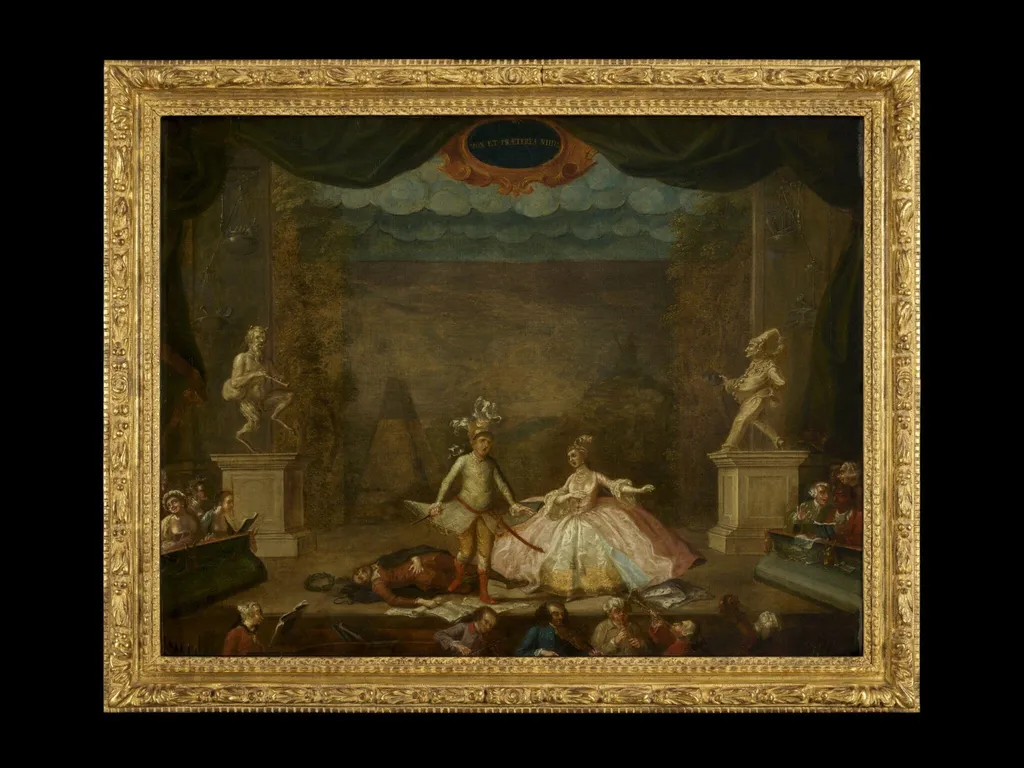
The Downfall of Shakespeare Represented on a Modern Stage is a paint painting by the Rococo painting artist William Dawes. It dates from 1764 and is held in the collection of the Victoria and Albert Museum.
About this work
Overview
The Downfall of Shakespeare Represented on a Modern Stage is a satirical painting by William Dawes, created in response to the shifting theatrical landscape of 1760s London. The work critiques the decline of serious drama, particularly Shakespearean plays, at Covent Garden, amidst the rising popularity of opera and pantomime.
Subject & Meaning
The painting symbolically depicts the demise of Shakespeare, shown slain by an opera singer, with elements of the Covent Garden stage transformed to mock serious drama. The composition contrasts the waning influence of traditional theatre with the ascendance of more frivolous entertainments, highlighting the controversy over Covent Garden's programming under John Beard's management.
Technique & Style
Dawes employs vivid, detailed satire in his painting, incorporating symbolic elements such as unbalanced scales (weighing dramatic versus musical elements) and transformed stage icons (e.g., muses into a satyr and Scaramouche). The contrast between the ignored Shakespearean performance and the engaged opera/pantomime audiences further emphasizes the artist's point through compositional balance.
History & Provenance
Created in the 1760s, the painting reflects the specific cultural shift in London's theatre scene during John Beard's tenure at Covent Garden, where opera performances increased at the expense of Shakespearean plays. The inclusion of a possible Cherokee delegate in the audience may allude to the 1762 Cherokee visit to England, adding a layer of contemporary cultural commentary.
Context
The work is set against the backdrop of 18th-century London theatre politics, where licensing restrictions and managerial decisions significantly impacted the types of performances venues like Covent Garden could host. Dawes's critique reflects broader concerns among theatre enthusiasts about the erosion of 'legitimate' drama.
Legacy
While specific exhibition history and direct influences of 'The Downfall of Shakespeare...' are not detailed here, the painting remains a notable artifact of 18th-century British cultural commentary, offering insights into the period's theatrical preferences and controversies. It is now part of the collection at the Victoria and Albert Museum in London.
Artist & collection
Artist
William Dawes made a single surviving satire painting called *The Downfall of Shakespeare Represented on a Modern Stage* in 1763–65.

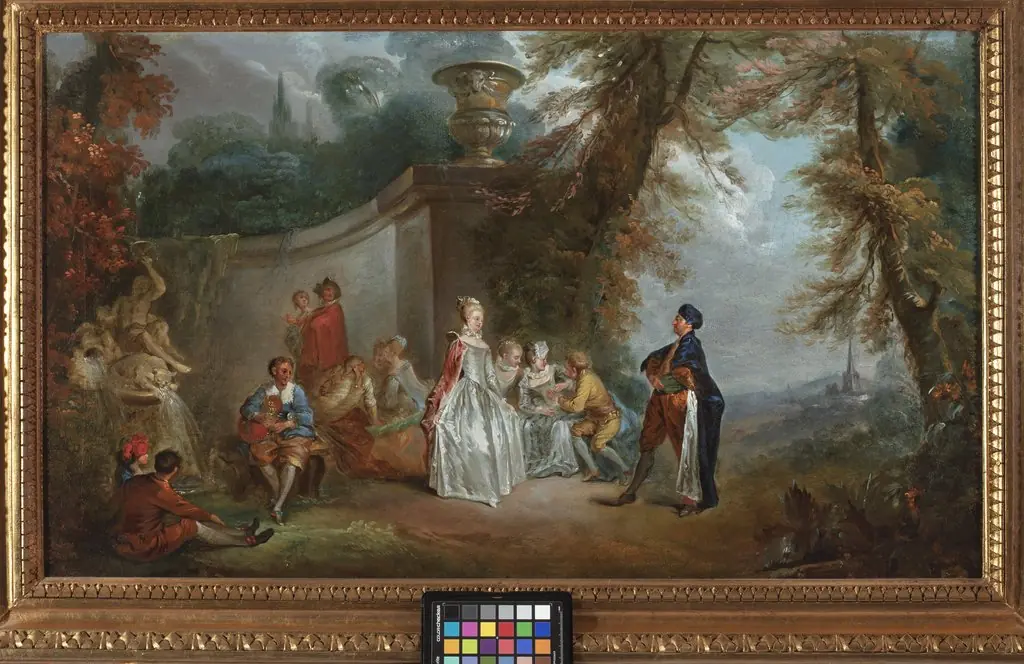 Venetian dance (Fetes Venitiennes)
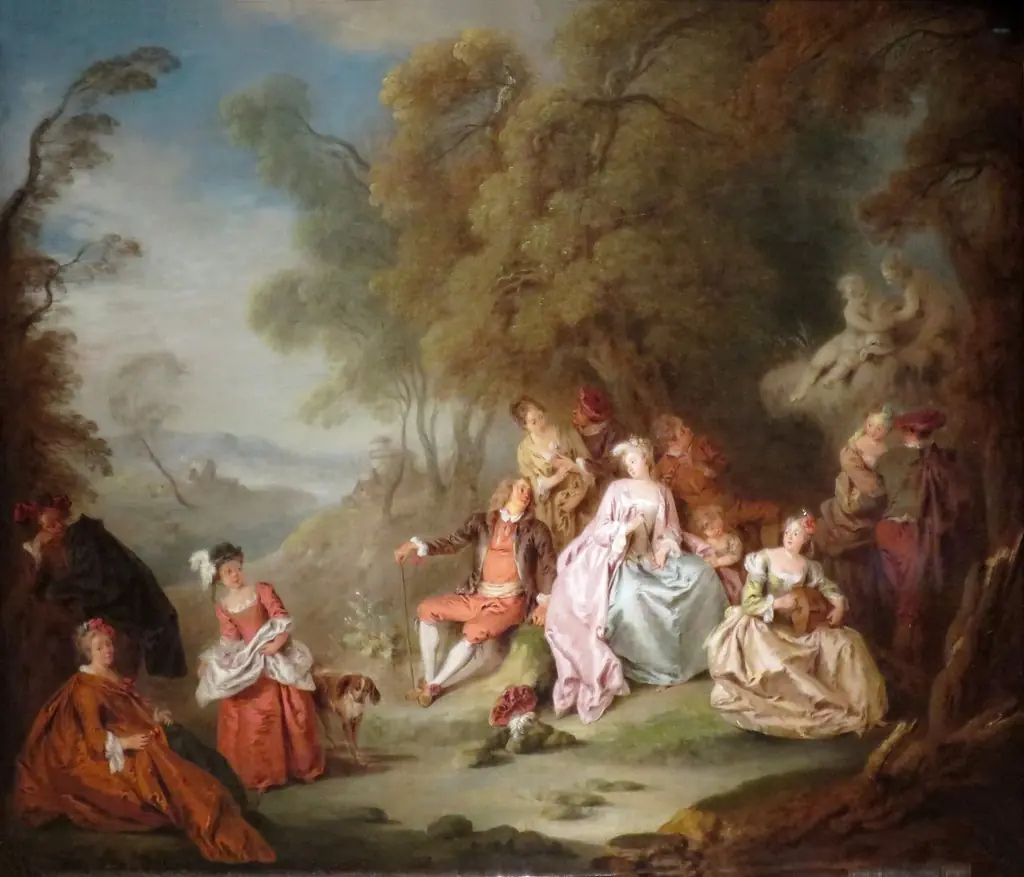 Fête champêtre
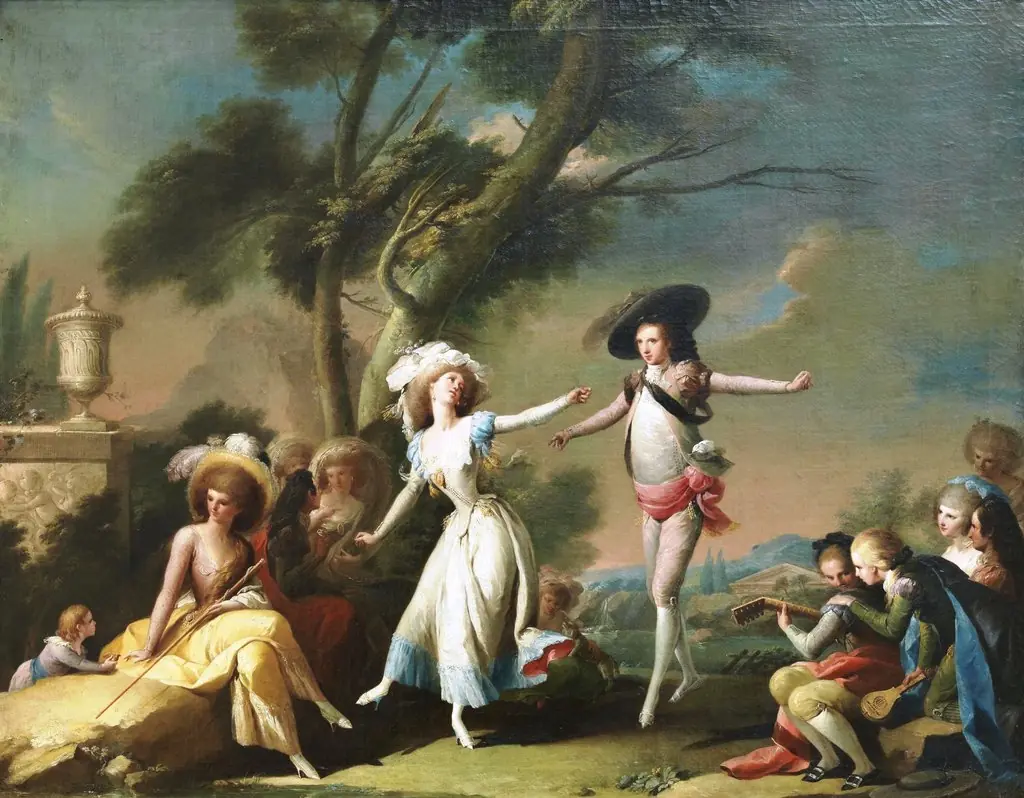 A Festival
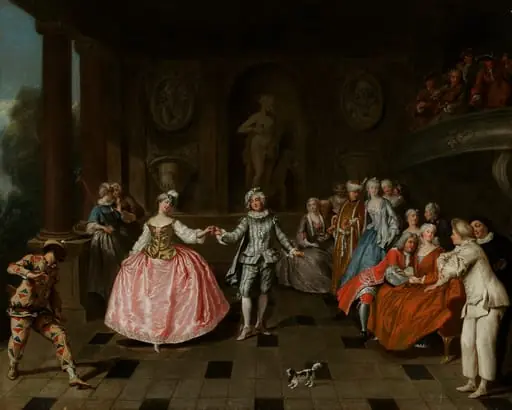 Naamiaistanssiaiset
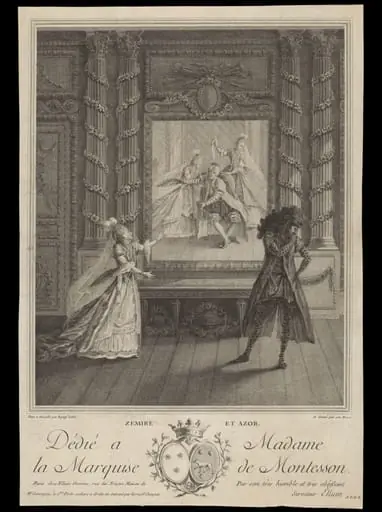 H Beard Print Collection
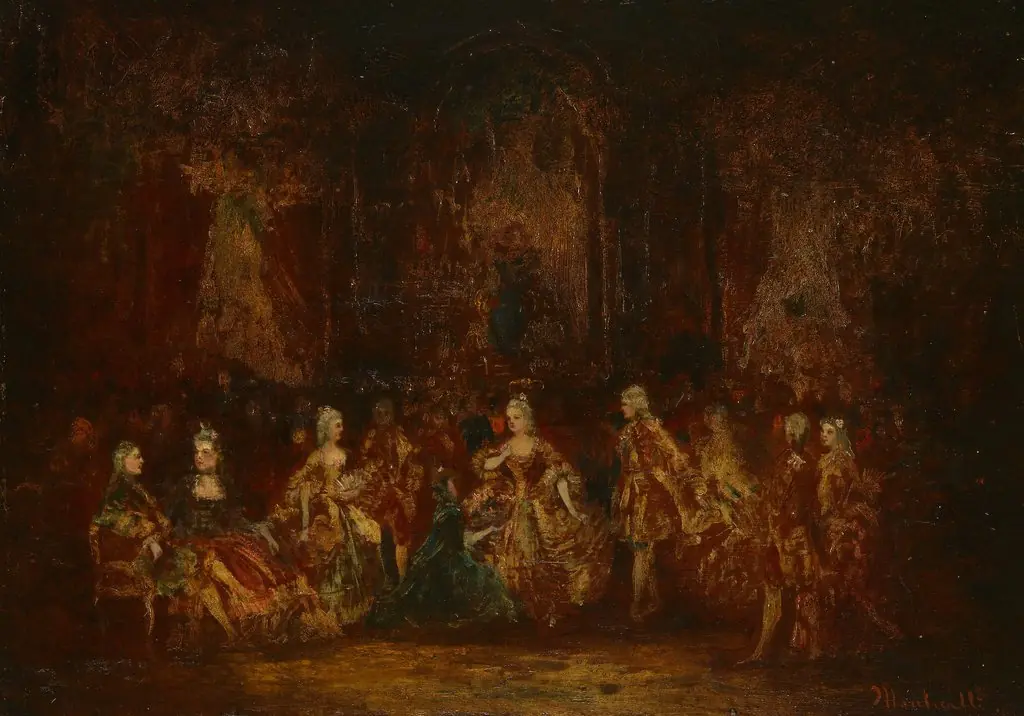 Persons in Louis XV Costumes
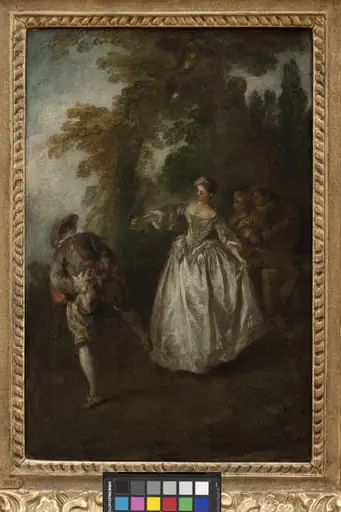 Open Air Dance
 Les Marionnettes
 Park Landscape with Figures beside a Fountain. Decorative Painting for a Private Residence.
 The Art Gallery of Josephus Augustinus Brentano
 La Noce au Château
 Mlle. Salle