Artwork
Albanian duel
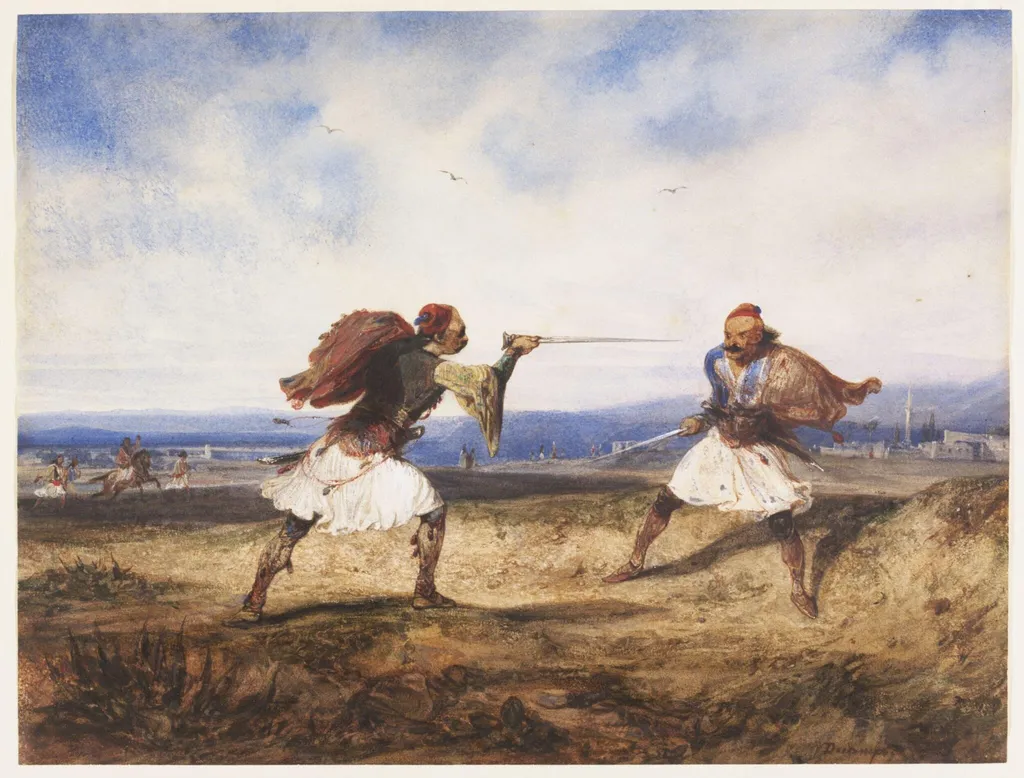
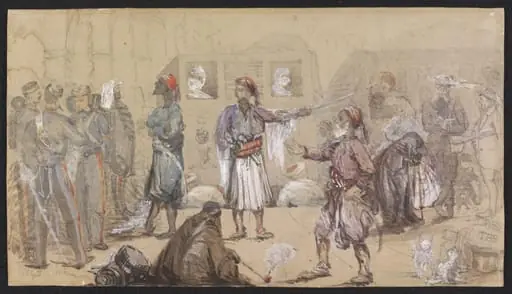
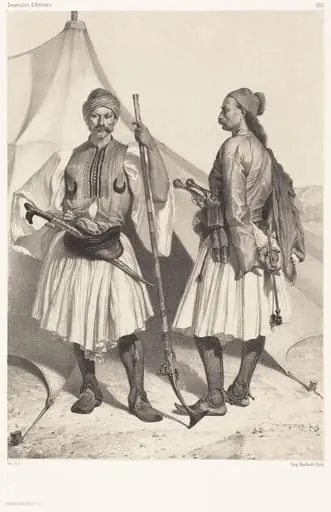
Albanian duel is a watercolor work on paper by the Romanticist artist Alexandre Gabriel Decamps. It dates from 1828 and is held in the collection of the Victoria and Albert Museum. This watercolor depicts a duel between two Albanian combatants, each clad in traditional attire with flowing cloaks and white kilts.
About this work
The tension between them is what makes this painting interesting - it's like a moment frozen in time, and you can sense the drama and conflict.
You see two men fighting in a watercolour painting.
They are dressed in traditional Albanian clothing.
The tension between them is what makes this painting interesting - it's like a moment frozen in time, and you can sense the drama and conflict.
The artist focused on the emotions of the scene.
This was a popular subject in the early 19th century, with many artists depicting fierce Albanian warriors.
The painting shows the intensity of the duel.
Check out the work of artist Decamps, Alexandre-Gabriel, to see more of his style.
Overview
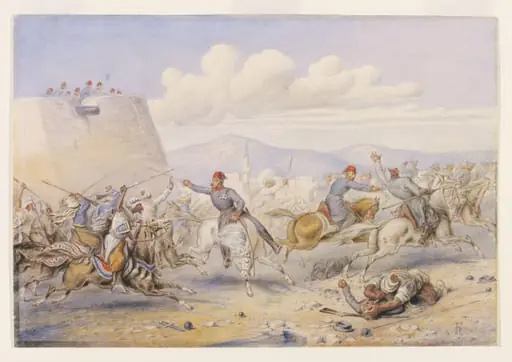
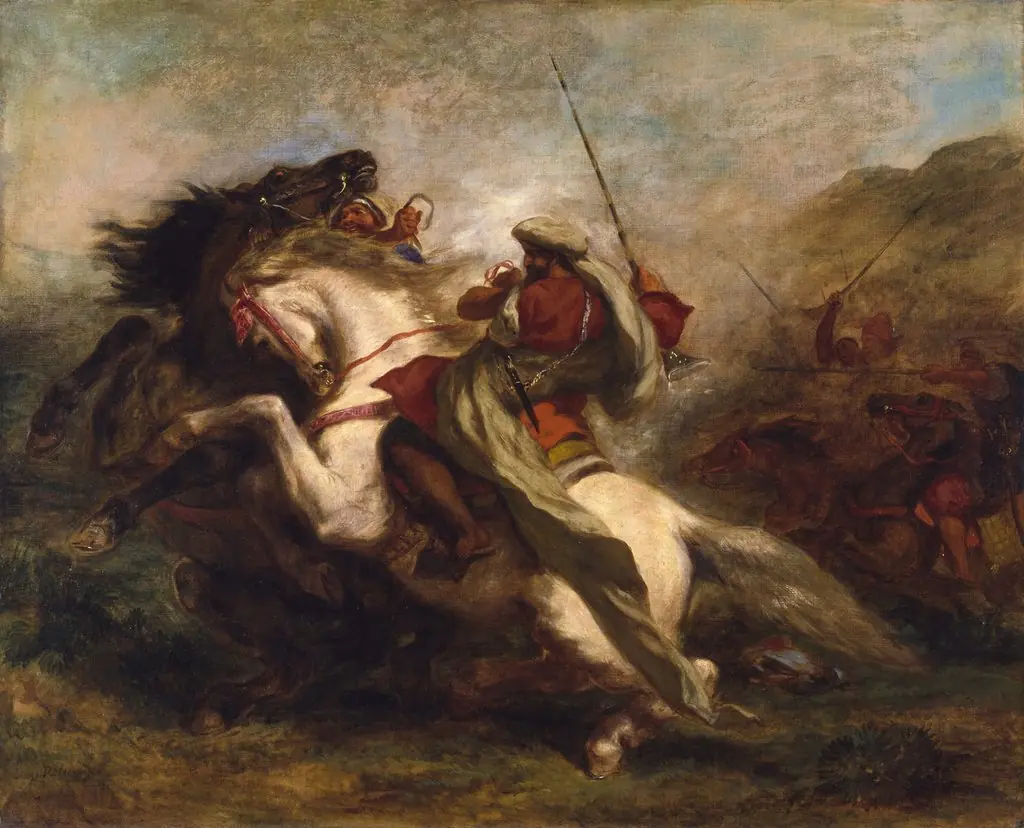
This watercolor depicts a duel between two Albanian combatants, each clad in traditional attire with flowing cloaks and white kilts. The figures are locked in a tense exchange, their short swords—hançer—crossed as they glare at one another, while horses gallop in the background, suggesting an imminent intervention.
Subject & Meaning
The work captures the Romantic fascination with the perceived ferocity of Albanian warriors, a group often described by early‑19th‑century travelers as the most aggressive element of Ottoman forces. The painting emphasizes personal honor and conflict, reflecting the broader cultural motif of duels sparked by slights.
Technique & Style
Executed in watercolor, the artist renders the swirling fabrics and dynamic movement with fluid washes, creating a sense of motion despite the medium’s softness. The contrast between the bright white kilts and darker garments heightens the drama, while the rapid brushwork conveys the immediacy of the clash.
History & Provenance
The scene derives from the artist’s travels through Greece, Albania, and Turkey in 1827‑28, during which he gathered material for his Orientalist subjects. After its creation, the piece was shown at the Paris Salon beginning in 1831, where it received favorable attention alongside the artist’s other works.
Context
Romantic painters of the period often chose exotic or violent subjects to appeal to contemporary tastes for the dramatic and the foreign. This watercolor aligns with that trend, echoing the popularity of depictions of Albanian fighters, such as the portrait of Lord Byron in Albanian costume by Thomas Phillips.
Artist & collection
Artist
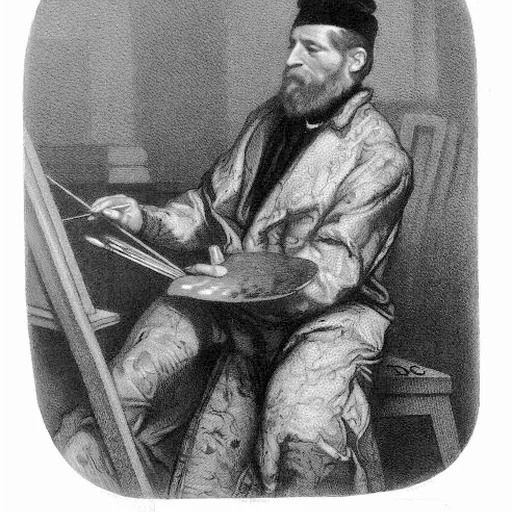
Alexandre-Gabriel Decamps was a French painter noted for his Orientalist works.