Artwork
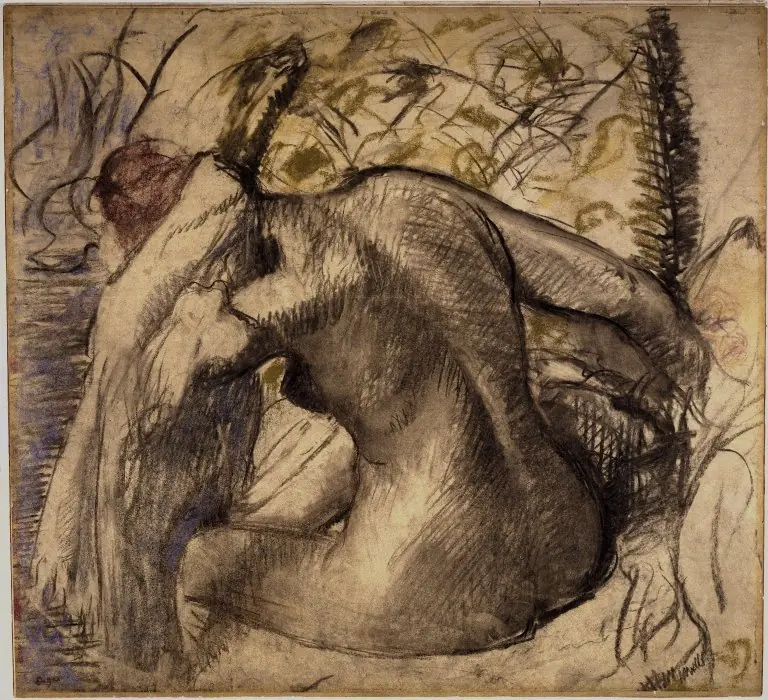
After the Bath: Woman Drying Herself
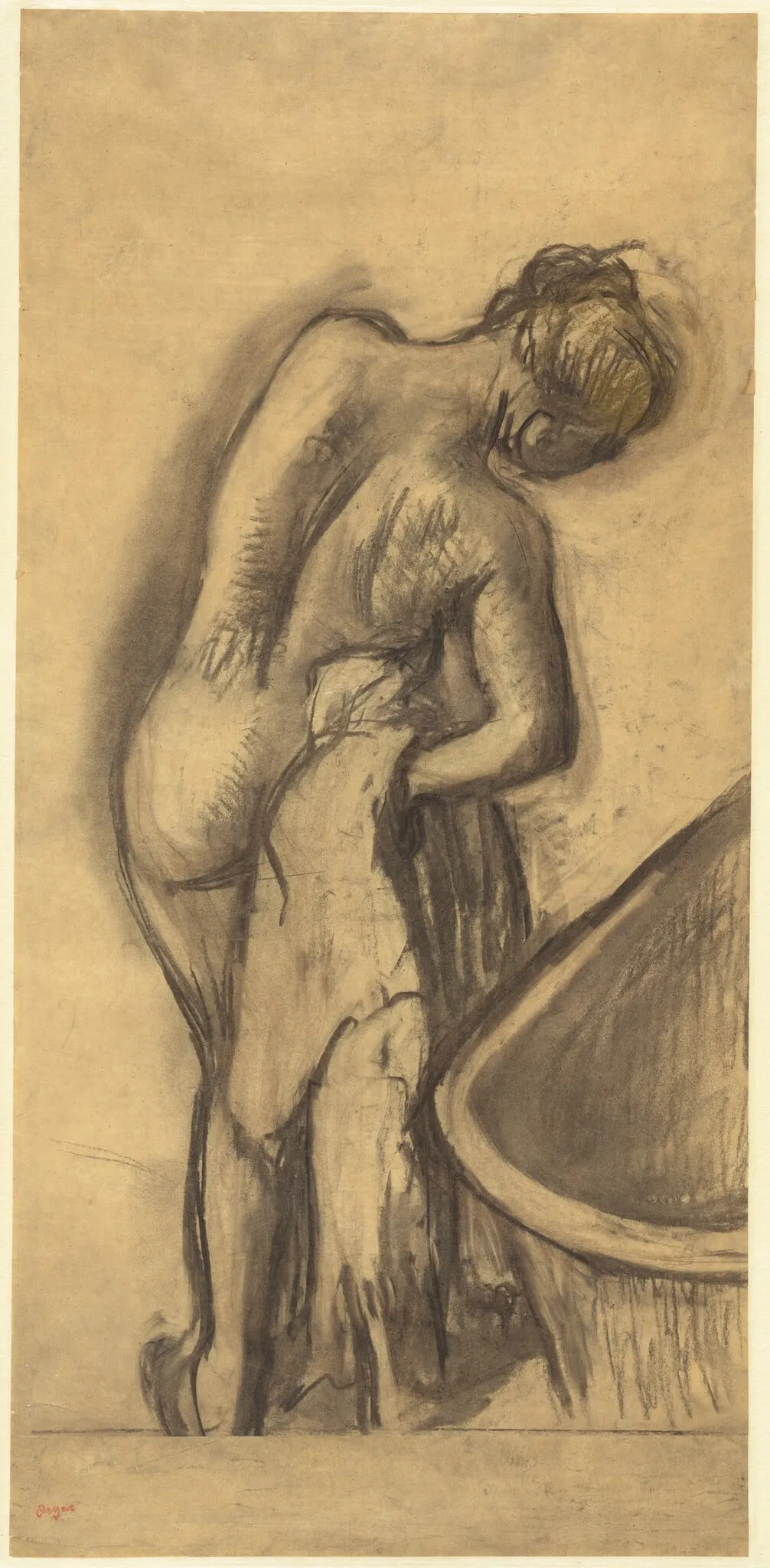
After the Bath: Woman Drying Herself is a pastel drawing by the Impressionist artist Edgar Degas. It dates from 1900 and is held in the collection of the National Gallery of Art.
About this work
Overview
Created circa 1900, this work by Edgar Degas combines charcoal and pastel on tracing paper. The drawing portrays a woman in a private moment, bending to dry her feet after bathing. Executed with swift, gestural lines, the composition captures the figure’s turned back, outstretched arms, and the draped towel, conveying a sense of immediacy and intimacy.
Subject & Meaning
The image focuses on a solitary, nude woman engaged in a mundane domestic act. By isolating this private routine, Degas emphasizes the ordinary beauty of everyday life, inviting viewers to observe a candid, unposed moment rather than an idealized tableau.
Technique & Style
Degas employs loose charcoal strokes to outline the body’s curvature, while pastel adds soft tonal washes that suggest flesh and fabric. The use of tracing paper allows for a light, translucent quality, and the unfinished, sketch‑like handling underscores the work’s status as a rapid study rather than a polished finished piece.
History & Provenance
The drawing belongs to the collection of the National Gallery of Art in Washington, D.C. It forms part of Degas’s extensive output of pastel drawings and studies produced alongside his well‑known paintings, sculptures, and prints, reflecting his lifelong interest in capturing fleeting moments with precision and spontaneity.
Artist & collection
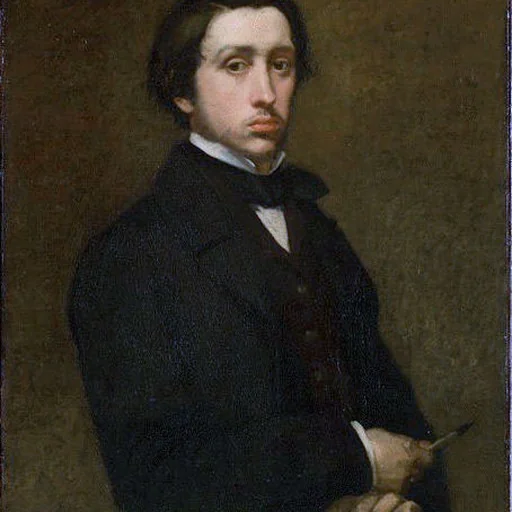
Artist
Born Hilaire-Germain-Edgar De Gas on 19 July 1834 in Paris, Edgar Degas came from an affluent banking family with aristocratic roots and spent his childhood among the cultivated circles of the French capital.

 Seated Nude Woman Drying Her Hair
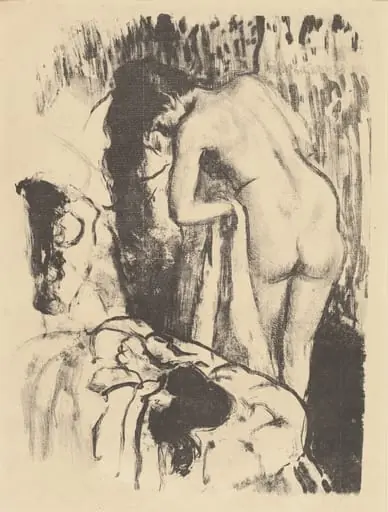 Nude Woman Standing, Drying Herself (Femme nue debout, a sa toilette)
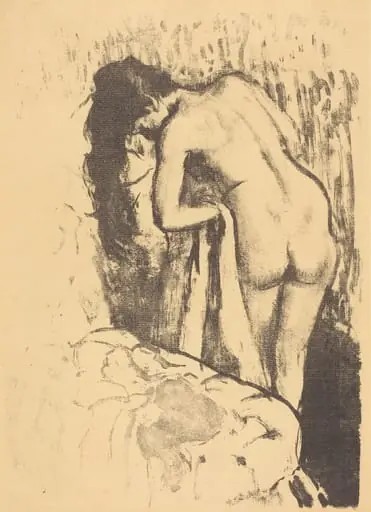 Nude Woman Standing, Drying Herself (Femme nue debout, a sa toilette)
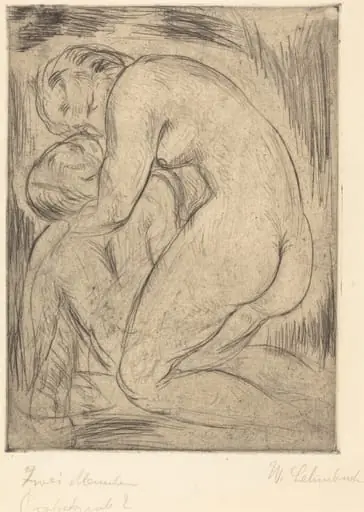 The Dead Man (Der tote Mann)
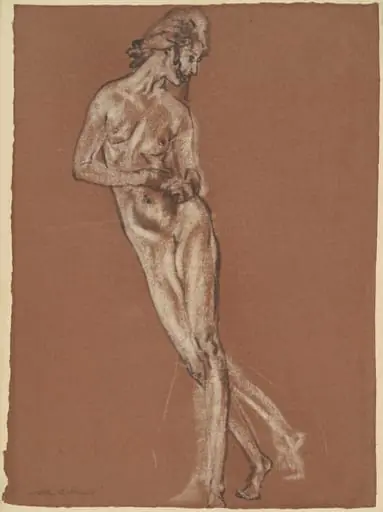 Study for "Stars and Dews and Dreams of Night"
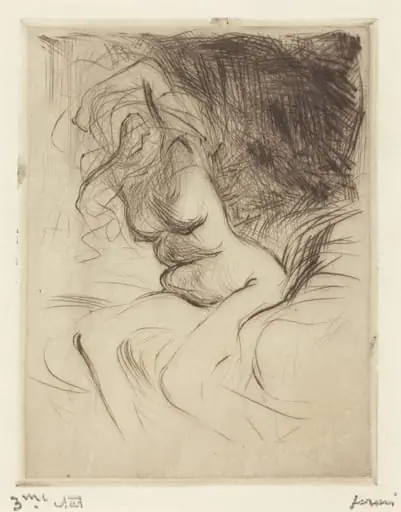 Femme nue passant sa chemise (Nude Woman Taking Off Her Chemise)
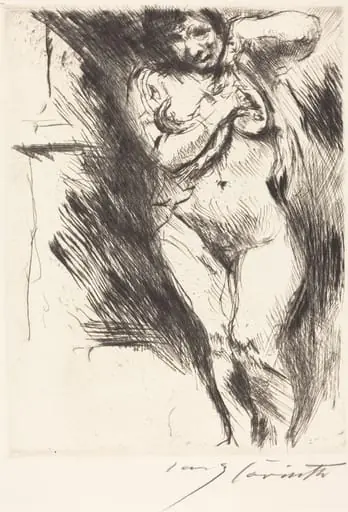 Akt mit hochgehobenem Hemd (Woman Undressing)
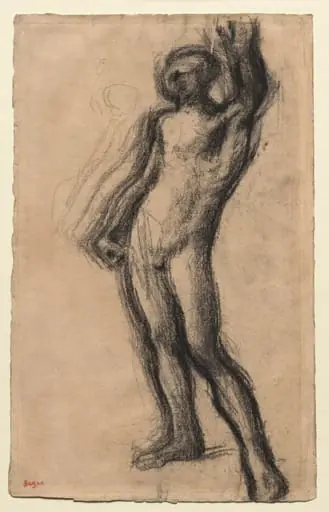 Nude Man Standing, with Left Hand Raised