Artwork
The Dead Man (Der tote Mann)
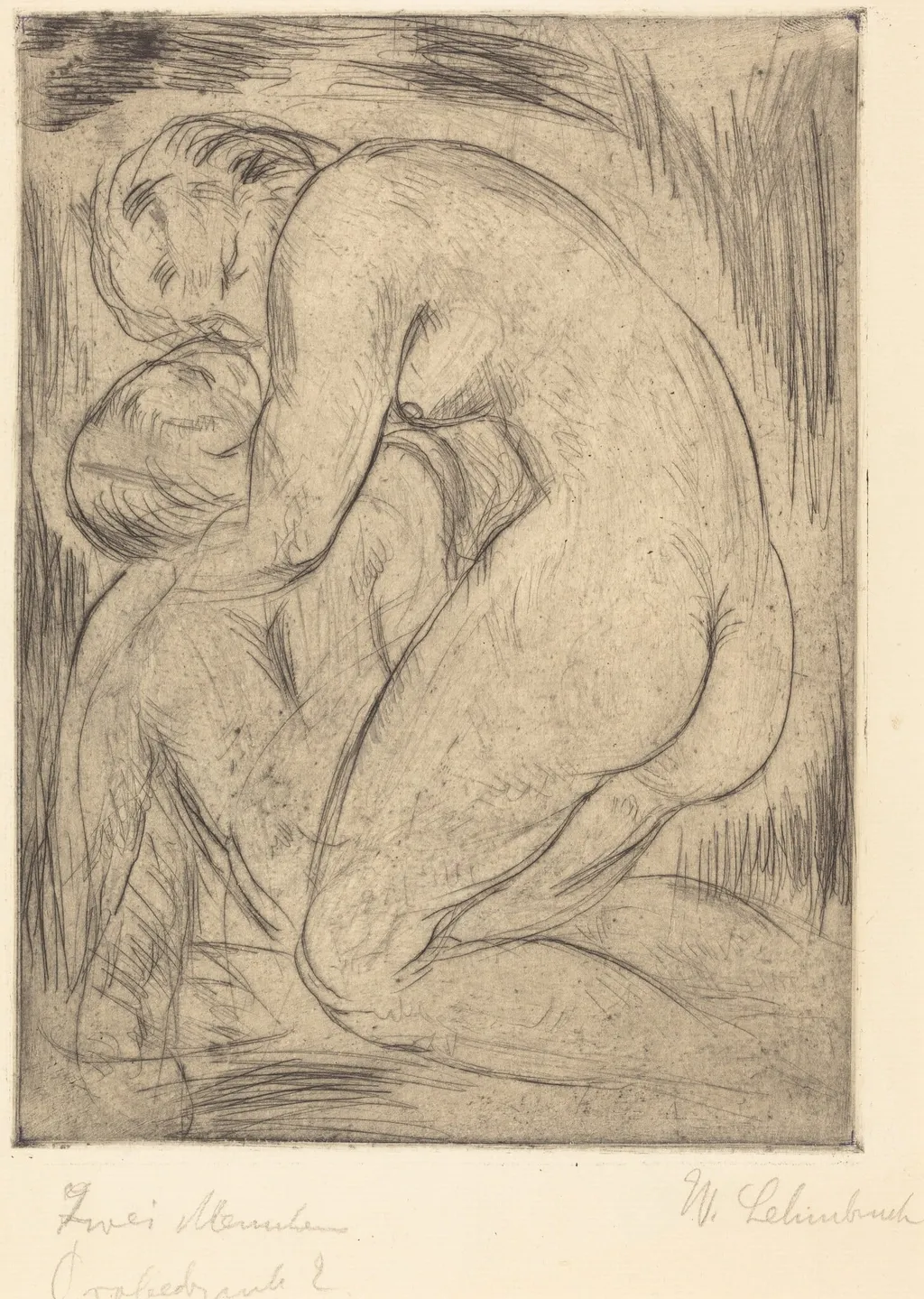
The Dead Man (Der tote Mann) is an ink print by Wilhelm Lehmbruck. It dates from 1915 and is held in the collection of the National Gallery of Art.
About this work
Overview
Wilhelm Lehmbruck's 'The Dead Man (Der tote Mann)' is a 1915 drypoint print, created as a trial proof. It showcases the artist's exploration of the human form through expressive lines and distorted poses.
Subject & Meaning
The print depicts a lone figure lying on its back, with twisted limbs and a stiff pose, conveying a sense of lifelessness. The lack of background or ground creates a sense of isolation and ambiguity.
Technique & Style
Lehmbruck employed drypoint technique, incising the image into a plate to achieve rough, scratchy lines and deep grooves. This method allowed for expressive detail and emphasized the distorted forms characteristic of his work.
Context
Lehmbruck's work was influenced by realism and expressionism, and 'The Dead Man' reflects his engagement with these movements, exploring the human condition through distorted and emotive representations.
Own this work as a print
Artist & collection
Artist
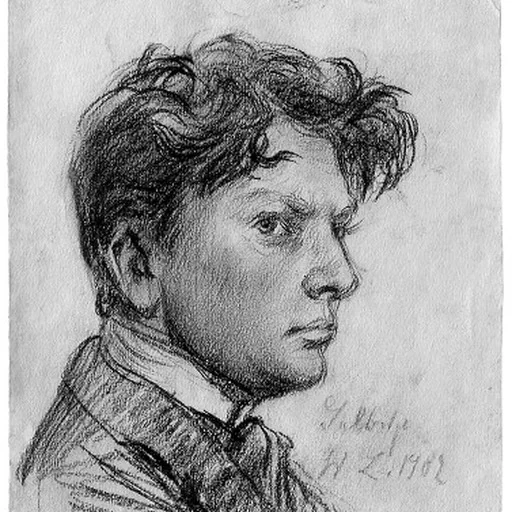
Wilhelm Lehmbruck (4 January 1881 – 25 March 1919) was a German sculptor. One of the most important of his generation, he was influenced by realism and expressionism.

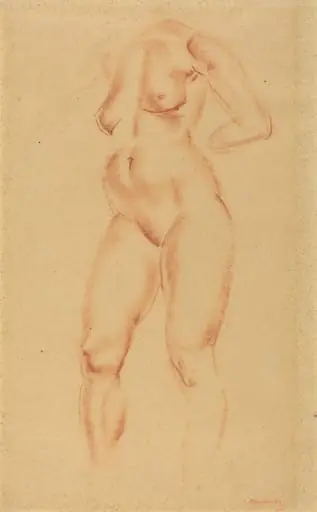
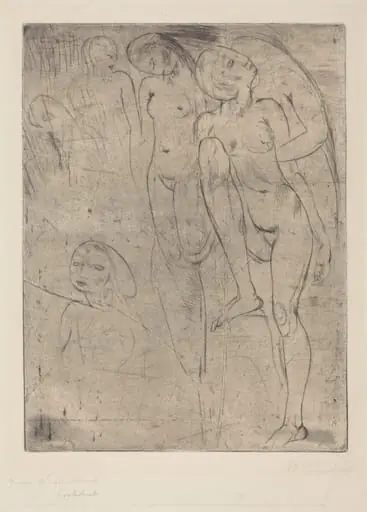
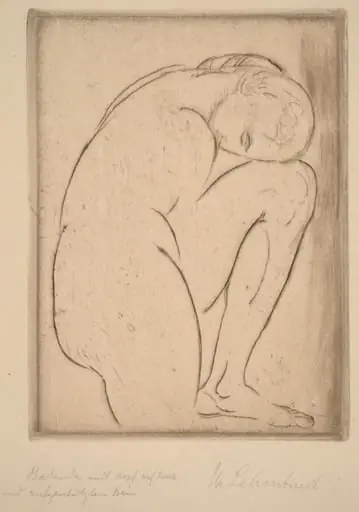
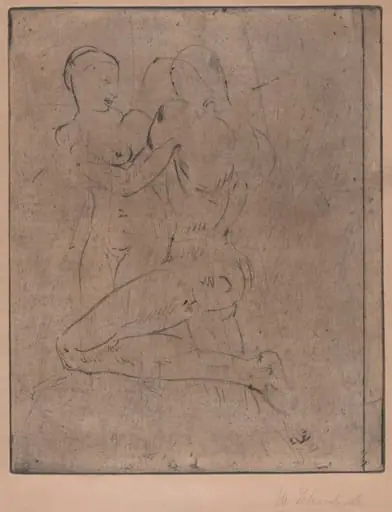
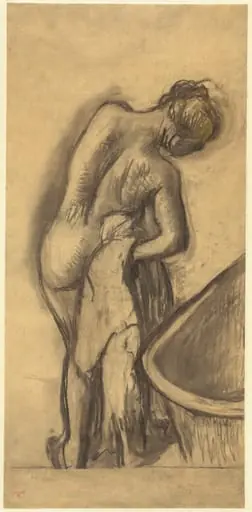 After the Bath: Woman Drying Herself
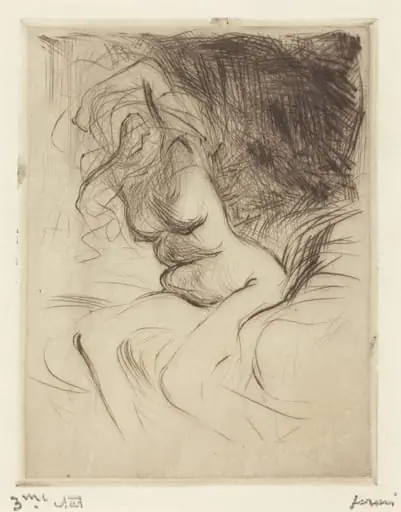 Femme nue passant sa chemise (Nude Woman Taking Off Her Chemise)
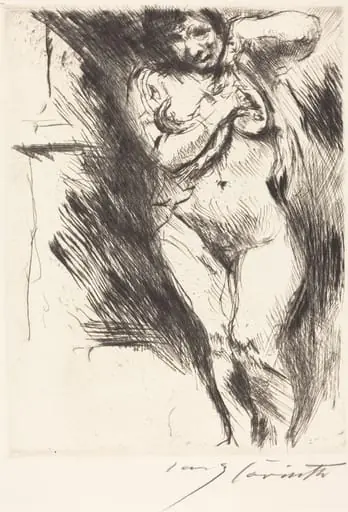 Akt mit hochgehobenem Hemd (Woman Undressing)
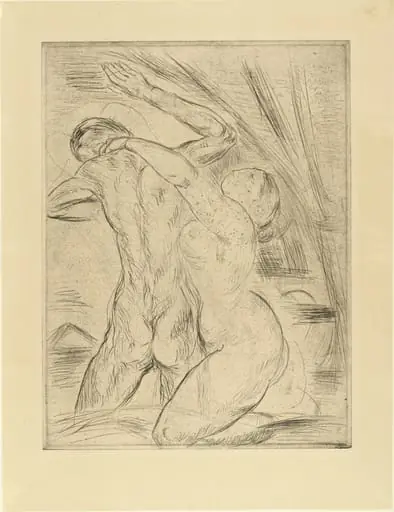 Untitled
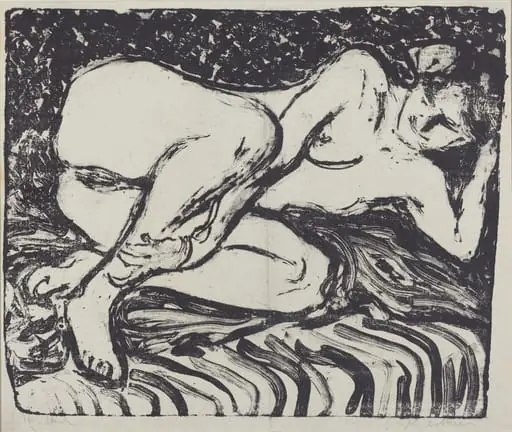 Reclining Nude
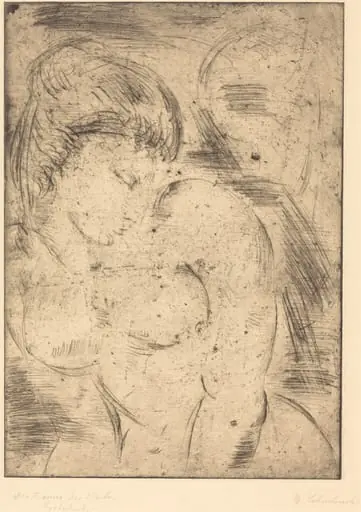 Woman's Dream (Der Traum des Weibes)
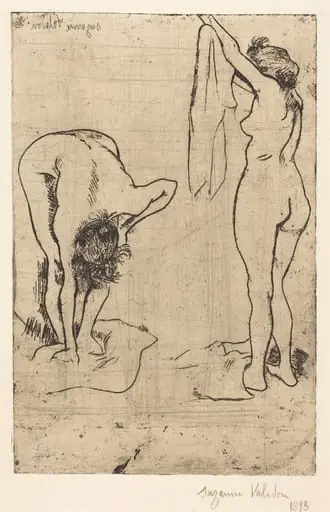 Femmes s'essuyant (Women Drying Themselves)
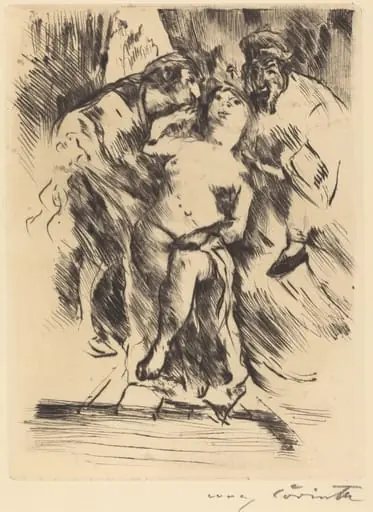 Susanna im Bade (Susanna in the Bath)
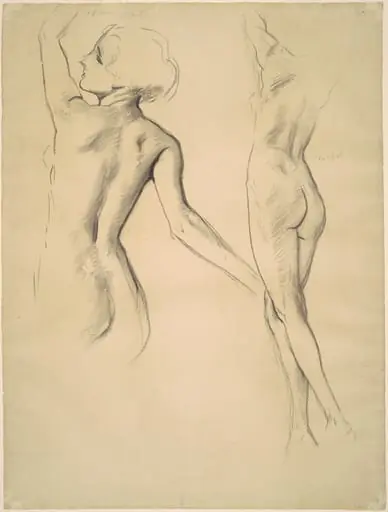 Studies for "Dancing Figures"
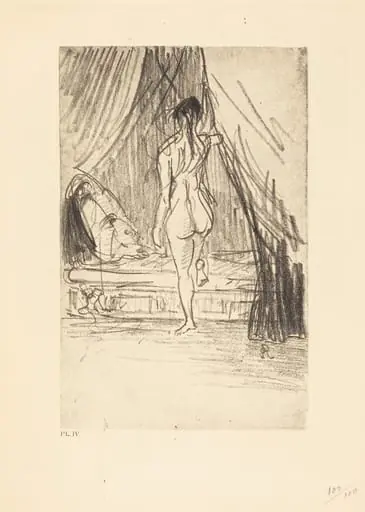 Volupte, Fantome Elastique! (Pleasure, elastic phantom!)
 Versöhnung (The Reconciliation)