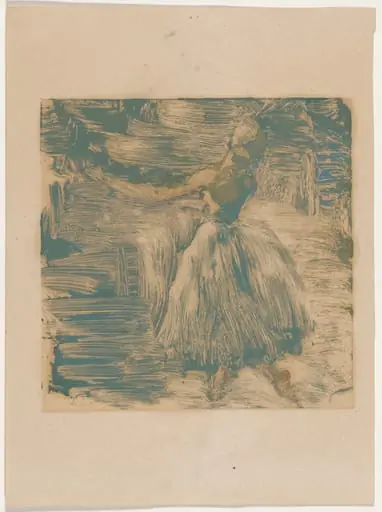
Artwork
Ballet Dancers
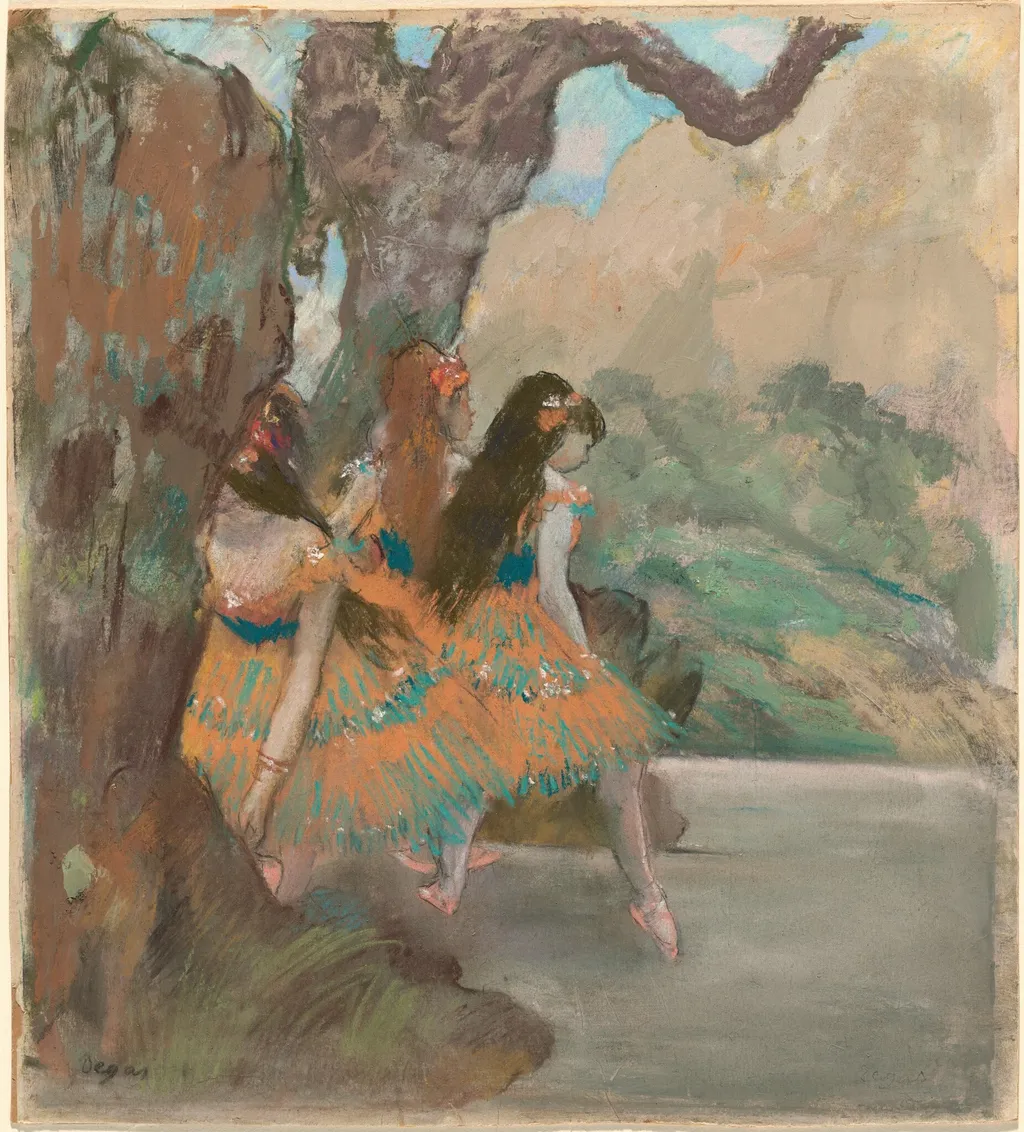
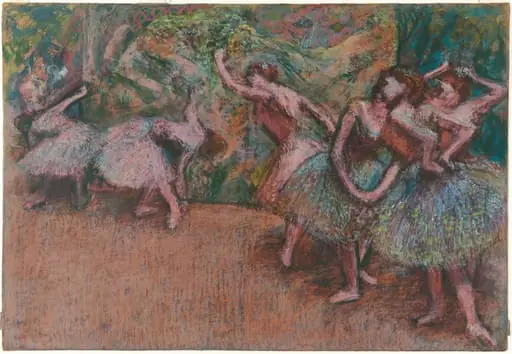
Ballet Dancers is a gouache drawing by the Impressionist artist Edgar Degas. It dates from 1877 and is held in the collection of the National Gallery of Art.
About this work
Overview
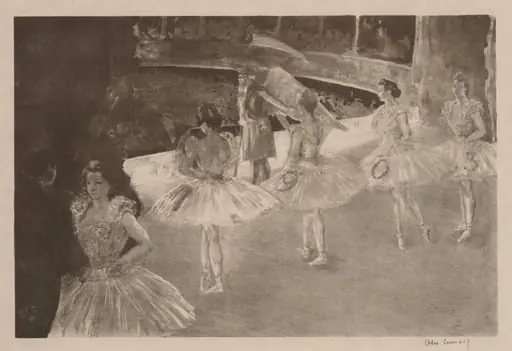
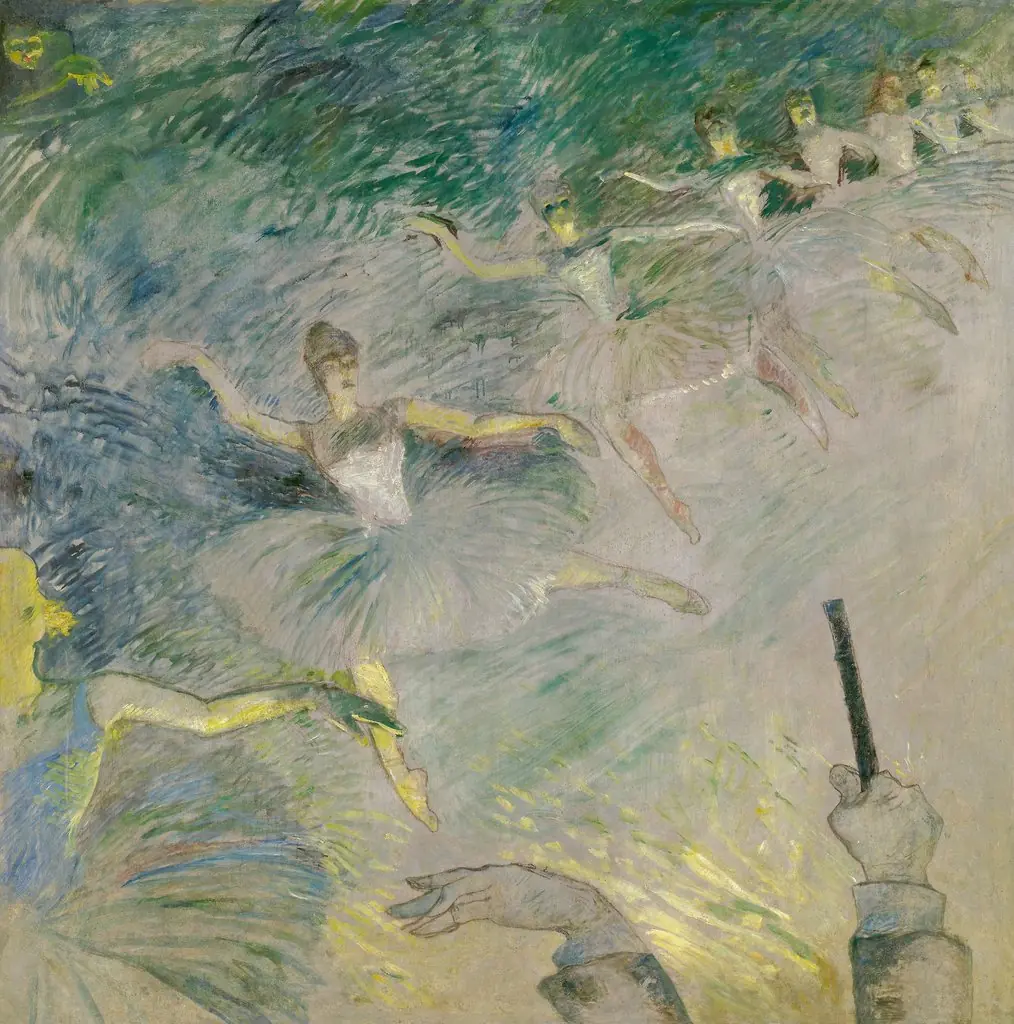
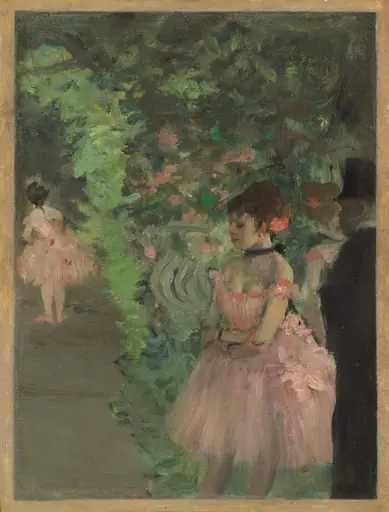
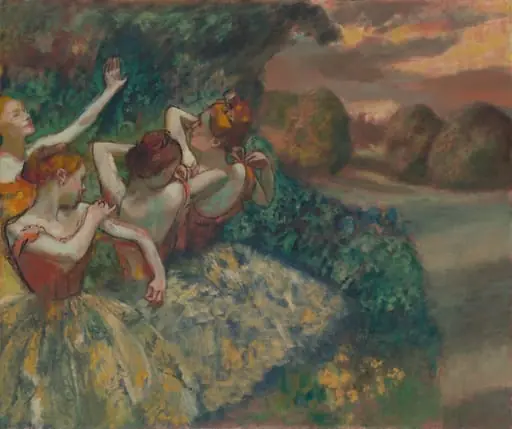
Created circa 1877, this work by Edgar Degas depicts two ballet figures captured in motion. Executed in pastel and gouache applied over a monotype base, the composition presents the dancers against a stage backdrop with a curtain, emphasizing the fleeting gestures of rehearsal or performance.
Subject & Meaning
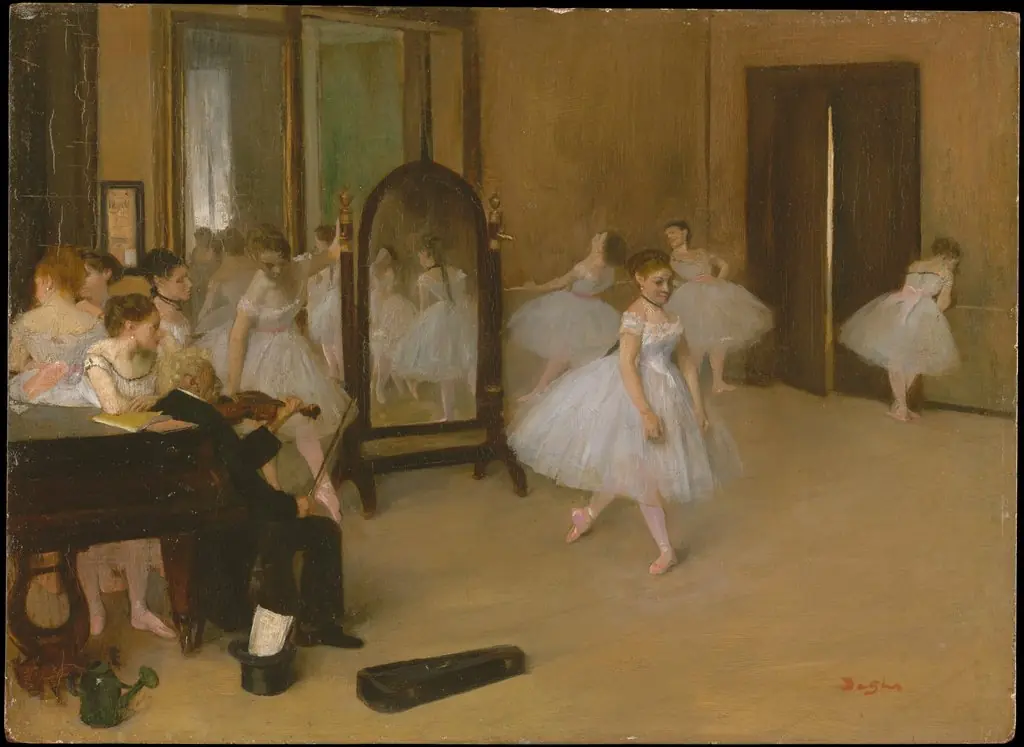
The piece continues Degas’s long‑standing fascination with the ballet, a theme that occupies a substantial portion of his output. By portraying the performers in mid‑movement—one with arms lifted, the other leaning forward—the drawing conveys the transient, kinetic quality of dance practice.
Technique & Style
Degas combined a monotype print with layers of pastel and gouache, allowing him to blend the immediacy of drawing with the soft, atmospheric qualities of pastel. The surface is marked by swift, loose strokes and overlapping color patches, creating a sense of vitality while retaining his precise draftsmanship.
History & Provenance
Although Degas preferred to be identified as a realist, his approach aligns with Impressionist concerns for modern life and movement. The work belongs to the period when he was intensively exploring ballet subjects, employing mixed media to capture the nuance of light and form in the theater environment.
Own this work as a print
Artist & collection

Artist
Born Hilaire-Germain-Edgar De Gas on 19 July 1834 in Paris, Edgar Degas came from an affluent banking family with aristocratic roots and spent his childhood among the cultivated circles of the French capital.