Artwork
The Ballet Master
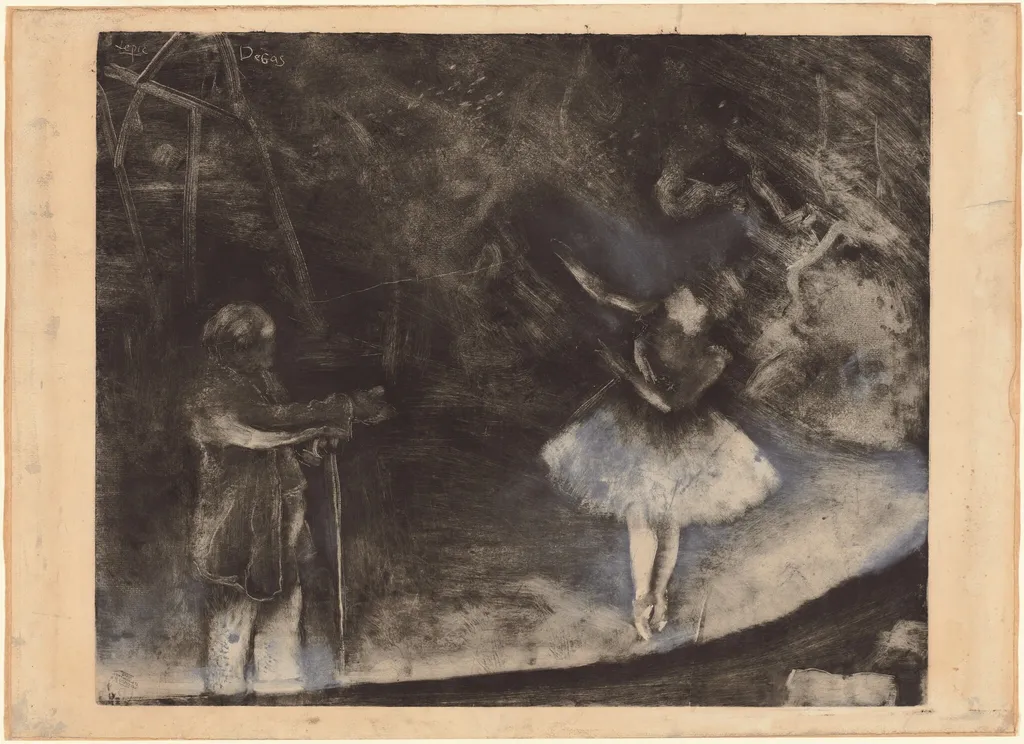
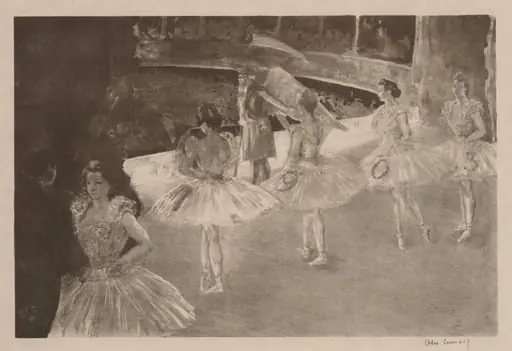
The Ballet Master is a chalk print by the Impressionist artist Edgar Degas. It dates from 1876 and is held in the collection of the National Gallery of Art.
About this work
Overview
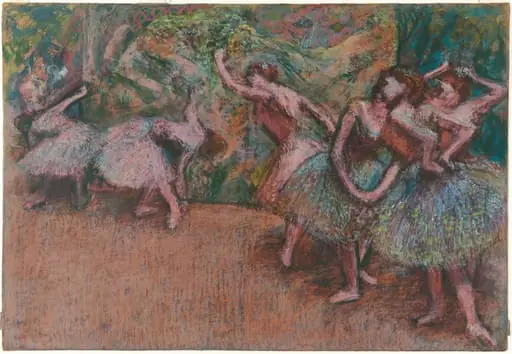
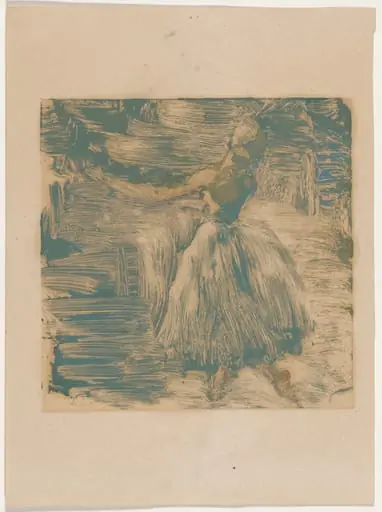
Created circa 1876, *The Ballet Master* is a monotype by Edgar Degas rendered in black ink and later enhanced with white chalk or wash on laid paper. The work belongs to Degas’s extensive series of ballet studies, a subject that occupied a substantial portion of his output during the 1870s.
Subject & Meaning
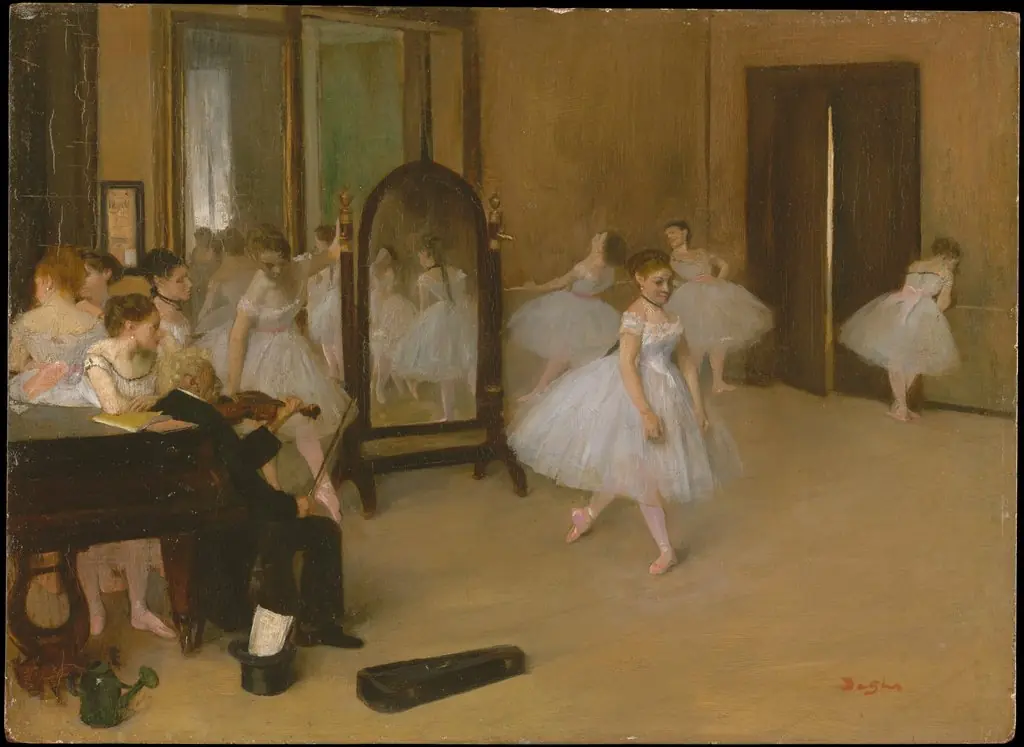
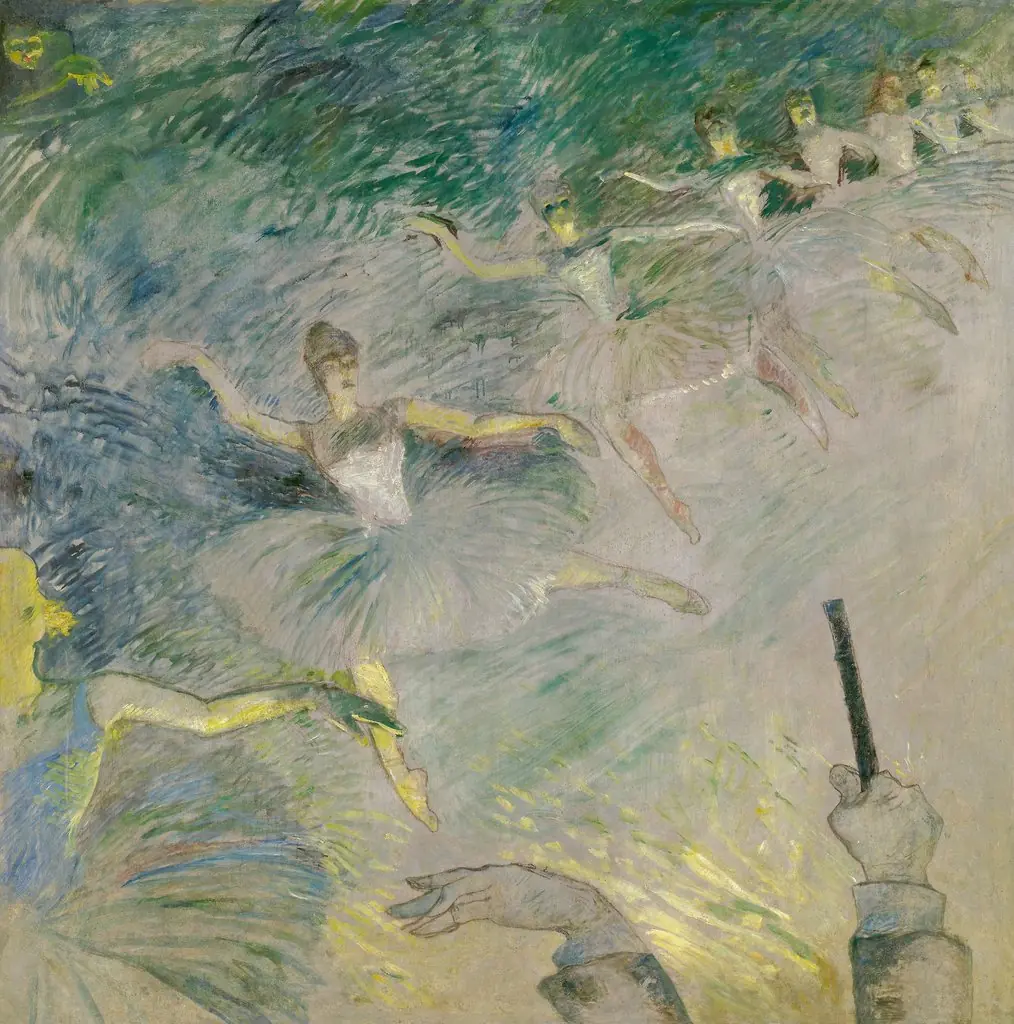
The composition depicts a rehearsal scene: a dancer captured in mid‑leap, her white tutu and outstretched arms contrasting with a dim, smoky studio, while a male figure—presumably the ballet master—holds a long pole used for balance and instruction. The image emphasizes the interaction between performer and teacher within the confined interior space.
Technique & Style
Degas employed the monotype process, pressing ink onto laid paper to produce a single, richly textured impression. He then corrected and heightened areas with white chalk or a diluted wash, allowing him to modify the initial marks. The resulting surface is marked by smudged lines, rapid strokes, and cross‑hatching that convey movement and a sense of immediacy.
History & Provenance
The work originates from Degas’s period of intensive ballet observation, when he frequently attended rehearsals at the Paris Opéra. It remains a testament to his practice of working quickly on location, often revising his compositions directly on the paper. The piece has been held in several public collections, reflecting its importance within Degas’s print oeuvre.
Context
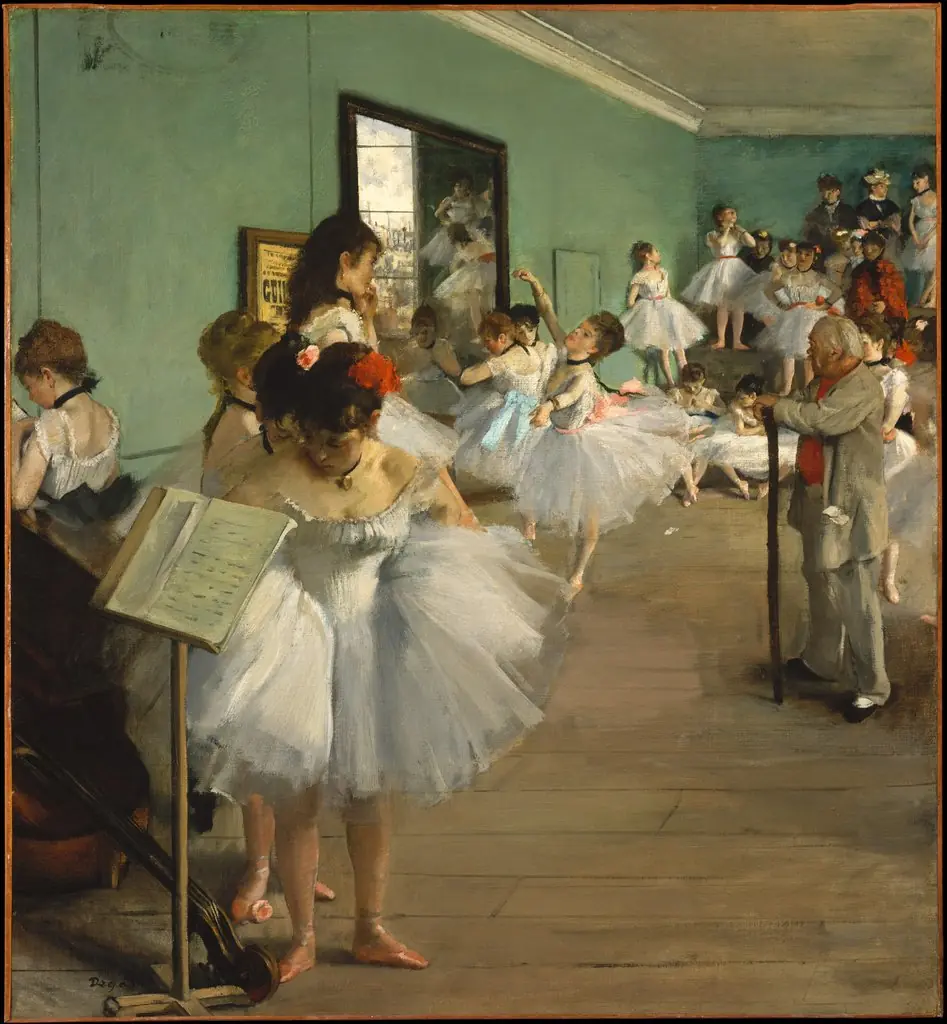
Degas’s interest in ballet diverged from the typical Impressionist focus on outdoor light; instead, he explored the choreography of the human body inside studio settings. This interior focus aligns with his broader realist concerns, documenting everyday moments rather than idealized landscapes.
Artist & collection
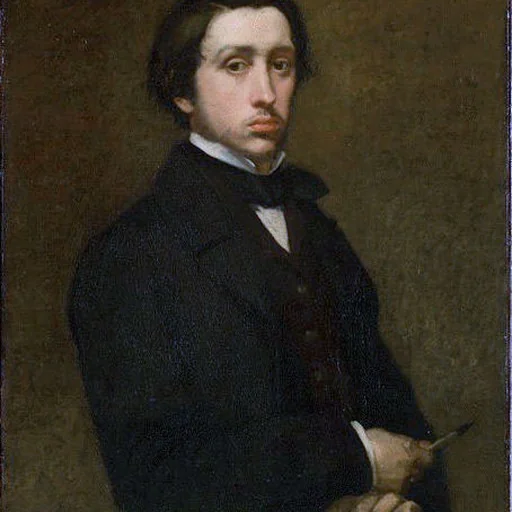
Artist
Born Hilaire-Germain-Edgar De Gas on 19 July 1834 in Paris, Edgar Degas came from an affluent banking family with aristocratic roots and spent his childhood among the cultivated circles of the French capital.