Artwork
The Road (La route)
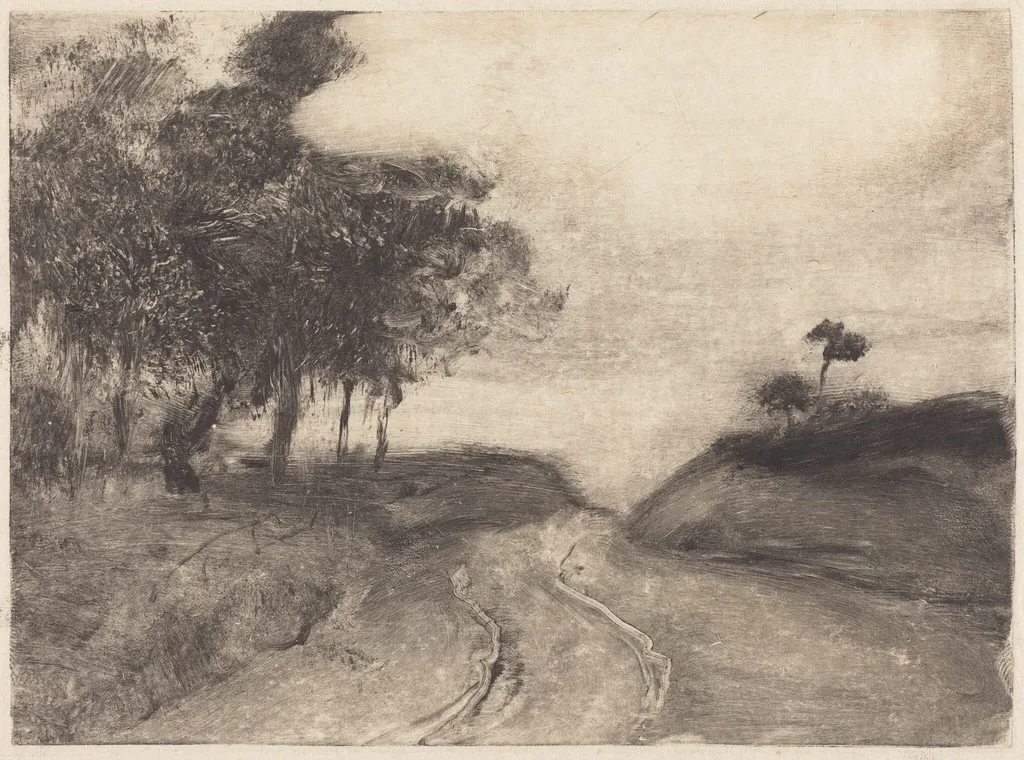
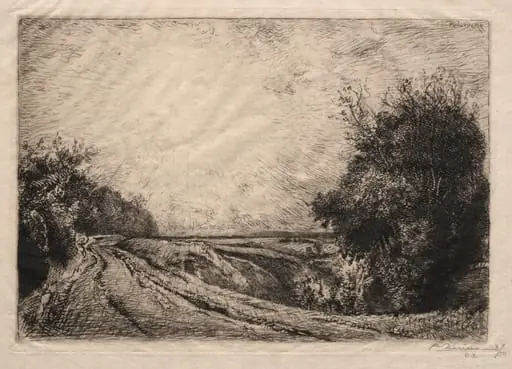
The Road (La route) is a print by the Impressionist artist Edgar Degas. It dates from 1879 and is held in the collection of the National Gallery of Art.
About this work
Overview
The Road (La route), created by Edgar Degas around 1879, is a monotype print on China paper. It deviates from the typical Impressionist plein-air approach, instead showcasing Degas' mastery of draftsmanship and printmaking techniques.
Subject & Meaning
This serene landscape features a winding road, trees, and a hill, set against a lighter sky. The composition's tranquility and use of chiaroscuro evoke a sense of depth and volume, drawing the viewer into the scene.
Technique & Style
Degas employed chiaroscuro to striking effect, contrasting dark tones of the road and trees with the lighter sky. This emphasis on light and dark contrasts highlights his skill in achieving depth through printmaking.
History & Provenance
Created circa 1879, The Road reflects Degas' experimentation beyond his more famous pastels and oils. While associated with Impressionism, the work's approach distinguishes it from the movement's outdoor painting emphasis.
Context
Unlike many Impressionists who focused on capturing outdoor light in plein-air settings, Degas' The Road demonstrates an indoor, more controlled printmaking technique, aligning with his self-identified realist tendencies.
Legacy
The Road contributes to Degas' broader legacy as a versatile artist, highlighting his contributions to printmaking and his innovative use of chiaroscuro in non-traditional mediums.
Own this work as a print
Artist & collection

Artist
Born Hilaire-Germain-Edgar De Gas on 19 July 1834 in Paris, Edgar Degas came from an affluent banking family with aristocratic roots and spent his childhood among the cultivated circles of the French capital.

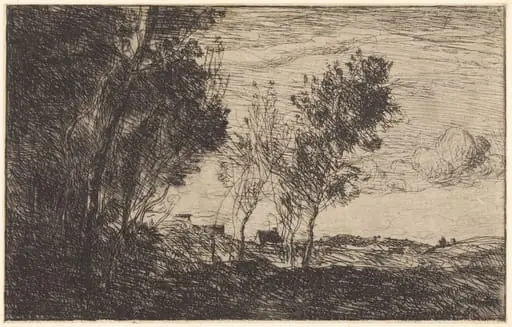 In the Dunes: Souvenir of The Hague (Dans les dunes: Souvenir du bois de La Haye)
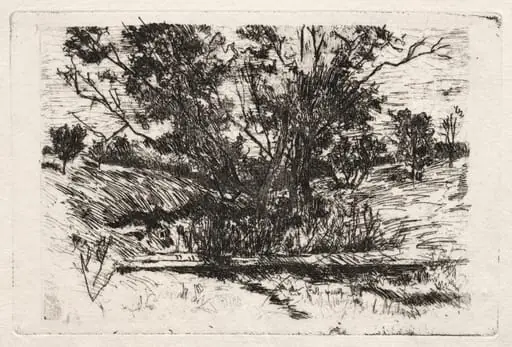 Landscape near Cincinnati
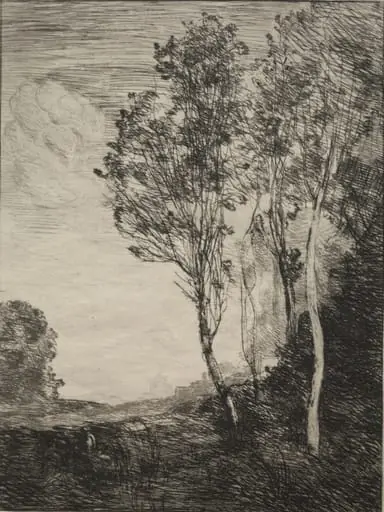 Souvenir of Italy
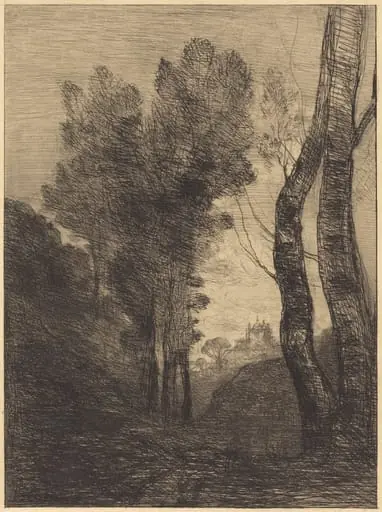 Environs of Rome (Environs de Rome)
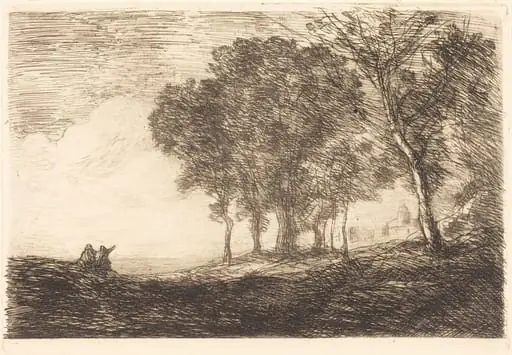 Italian Landscape
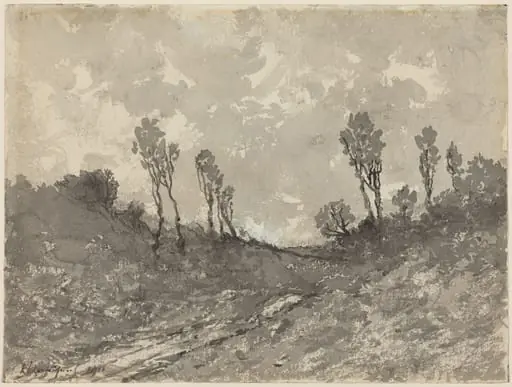 Road at Hérisson
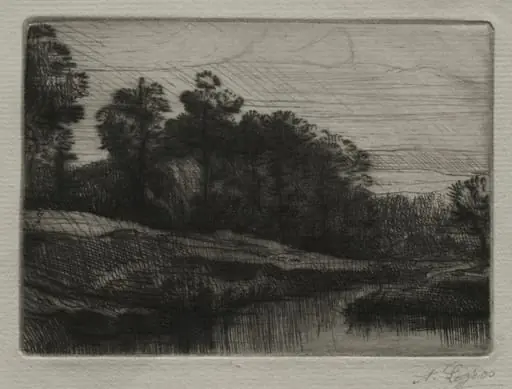 Evening
 View of Reeds (Coin de roseau)
 Environs of Rome
 Souvenir of Italy (Souvenir d'Italie)
 Landscape
 La Route de la Houssoye