Artwork
Stradă
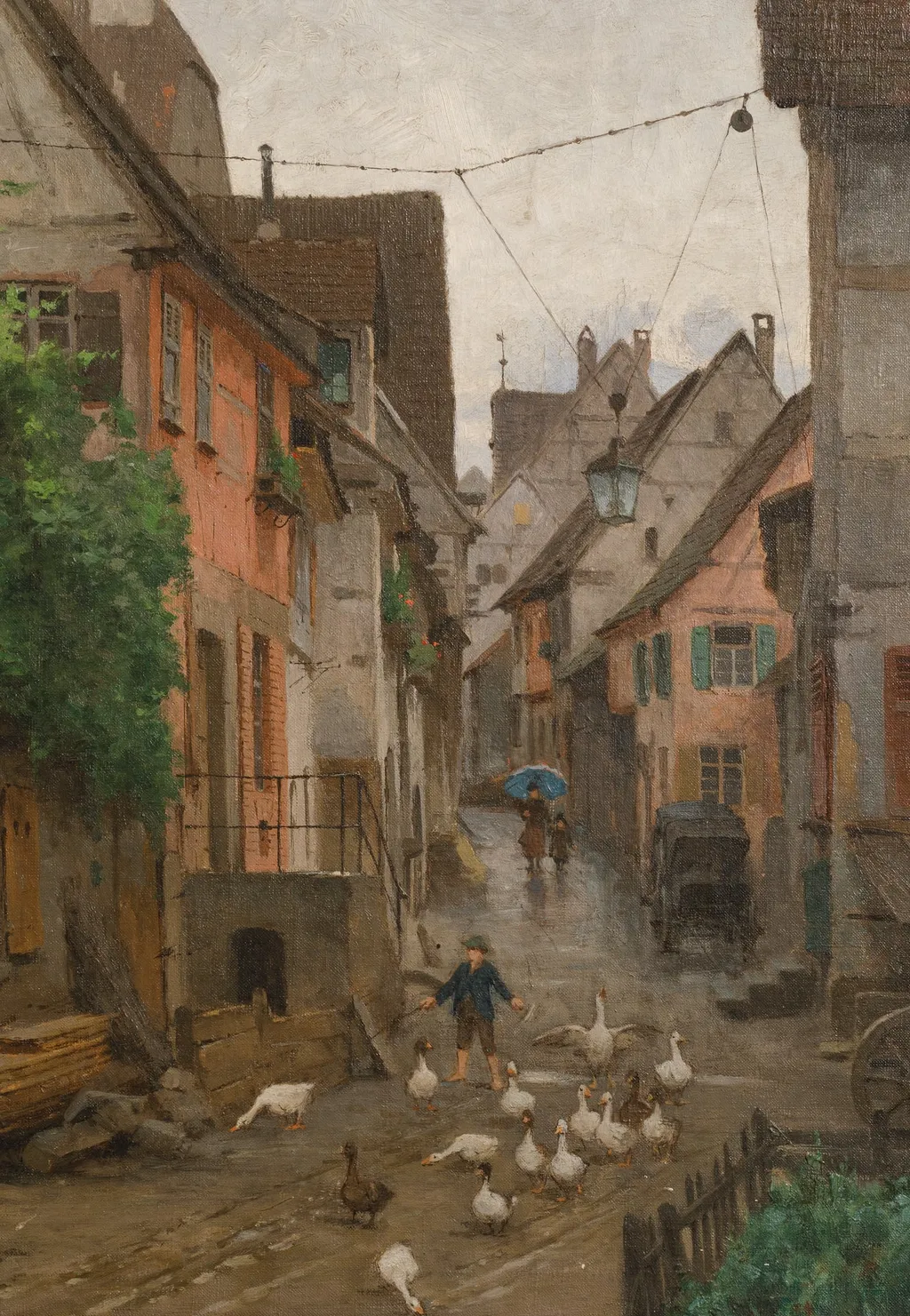
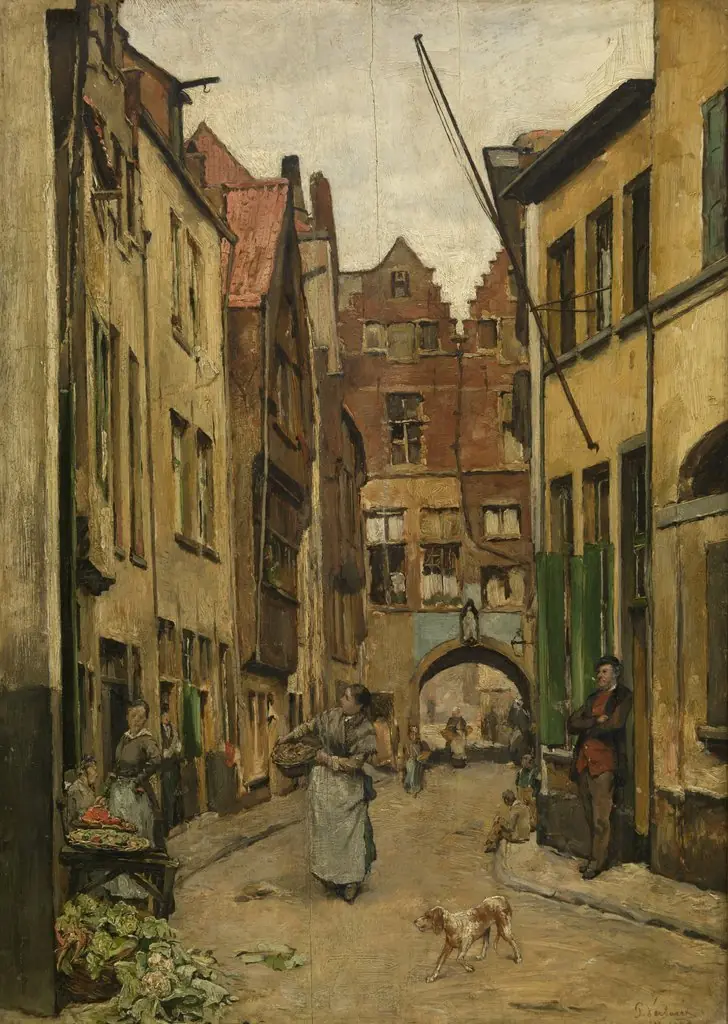
Stradă is an unspecified painting by Georg Dehn. It dates from 1873 and is held in the collection of the National Museum of Art of Romania.
About this work
Overview
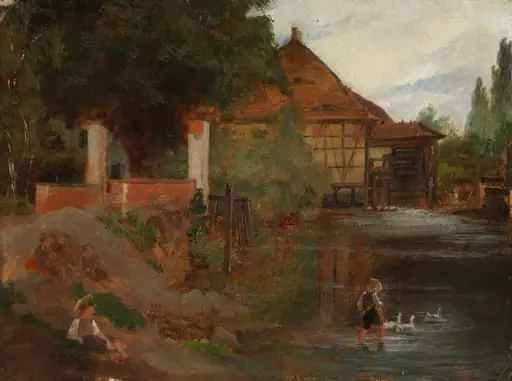
Figures move through the damp environment with quiet purpose, while ducks wander independently, introducing an unexpected rhythm to the composition.
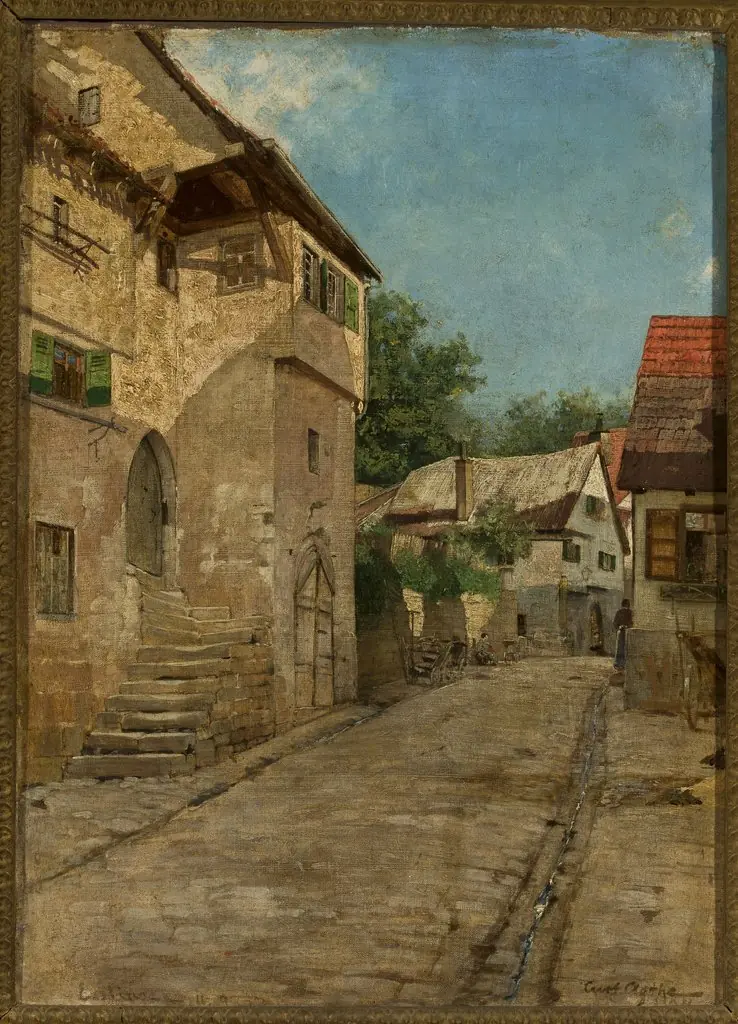
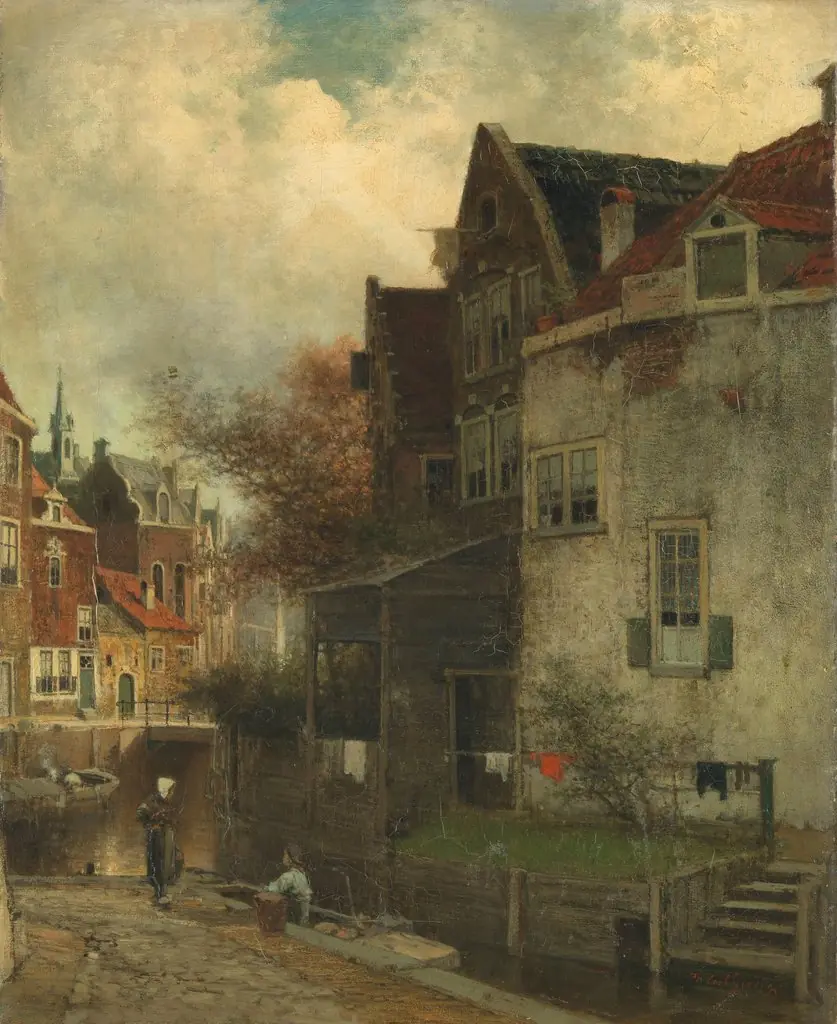
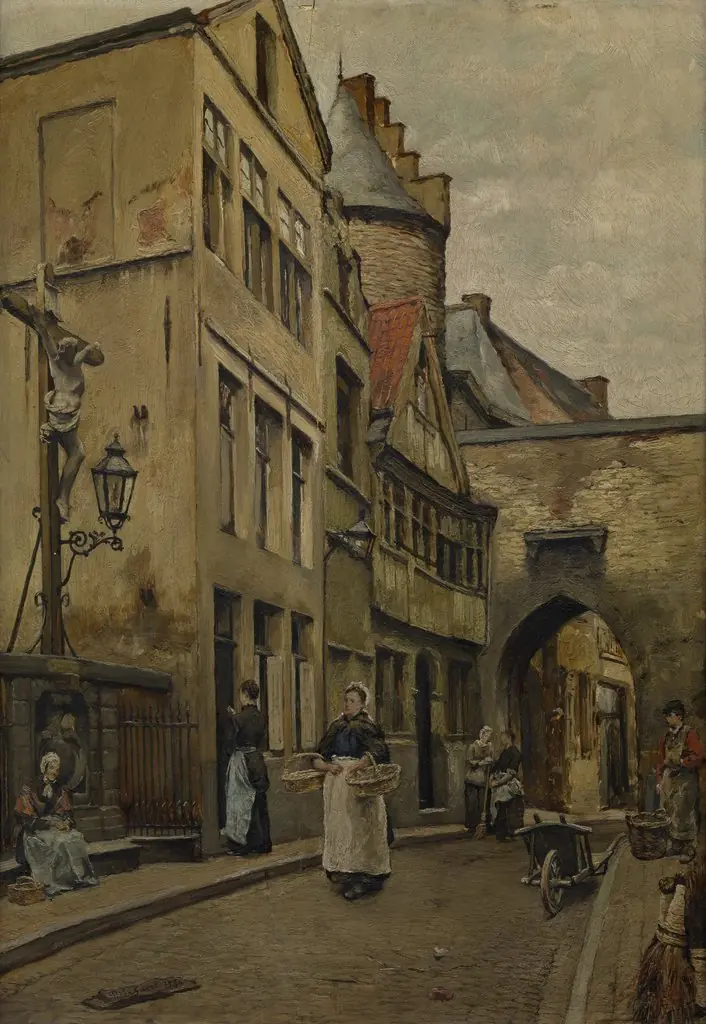
Stradă, painted around 1873 by Georg Dehn, captures a quiet urban alley in the rain. The scene is modest and unidealized, focusing on a narrow street between aging buildings. Figures move through the damp environment with quiet purpose, while ducks wander independently, introducing an unexpected rhythm to the composition. The work avoids grandeur, instead emphasizing the ordinary rhythms of daily life in a European town.
Subject & Meaning
The painting presents a fleeting moment in a working-class neighborhood. A man walks ahead of a group of ducks, while another figure, sheltered by an umbrella, moves deeper into the alley. The ducks, neither domesticated nor wild, suggest a blurred boundary between human habitation and nature. The scene conveys solitude and routine, with no clear narrative—only the quiet persistence of everyday motion.
Technique & Style
Dehn employed loose, rapid brushwork to suggest moisture and movement. The wet pavement reflects the overcast sky through thin, blended strokes, while thicker applications of paint create texture on building surfaces and clothing. The palette is muted—grays, browns, and muted greens—reinforcing the damp, overcast atmosphere. The technique prioritizes atmospheric effect over fine detail, aligning with emerging realist and impressionist tendencies of the period.
History & Provenance
Stradă was created in the early 1870s, during a period when European artists increasingly turned to everyday urban and rural scenes. Dehn, less documented than his contemporaries, produced works that reflect regional influences rather than major artistic centers. The painting’s early provenance is unrecorded in major collections, suggesting it remained in private hands or local circulation, possibly within the artist’s native region.
Context
In the 1870s, artists across Europe began shifting focus from historical or mythological subjects to scenes of ordinary life. Stradă aligns with this trend, echoing the quiet realism of French and German painters who depicted alleyways, markets, and weather-worn streets. The presence of ducks, a common sight in European towns, grounds the scene in local observation rather than idealized composition.
Legacy
Stradă does not appear in major art historical narratives, but it exemplifies a quiet, widespread practice among lesser-known 19th-century painters who documented daily life with sensitivity. Its preservation offers insight into regional aesthetics and the informal, non-monumental ways artists engaged with urban environments outside the spotlight of academic institutions.
Own this work as a print
Artist & collection
Artist
Georg Dehn’s paintings feel like a stranger’s postcards from somewhere you’ve never been—bright colors and quick brushstrokes that stop just short of explaining where “somewhere” is.