Artwork
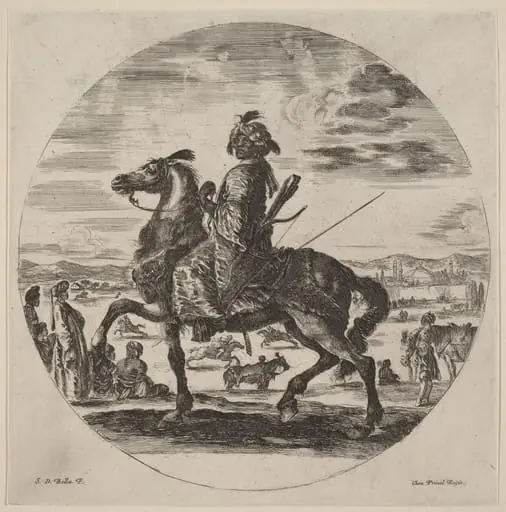
Polish Cavalier
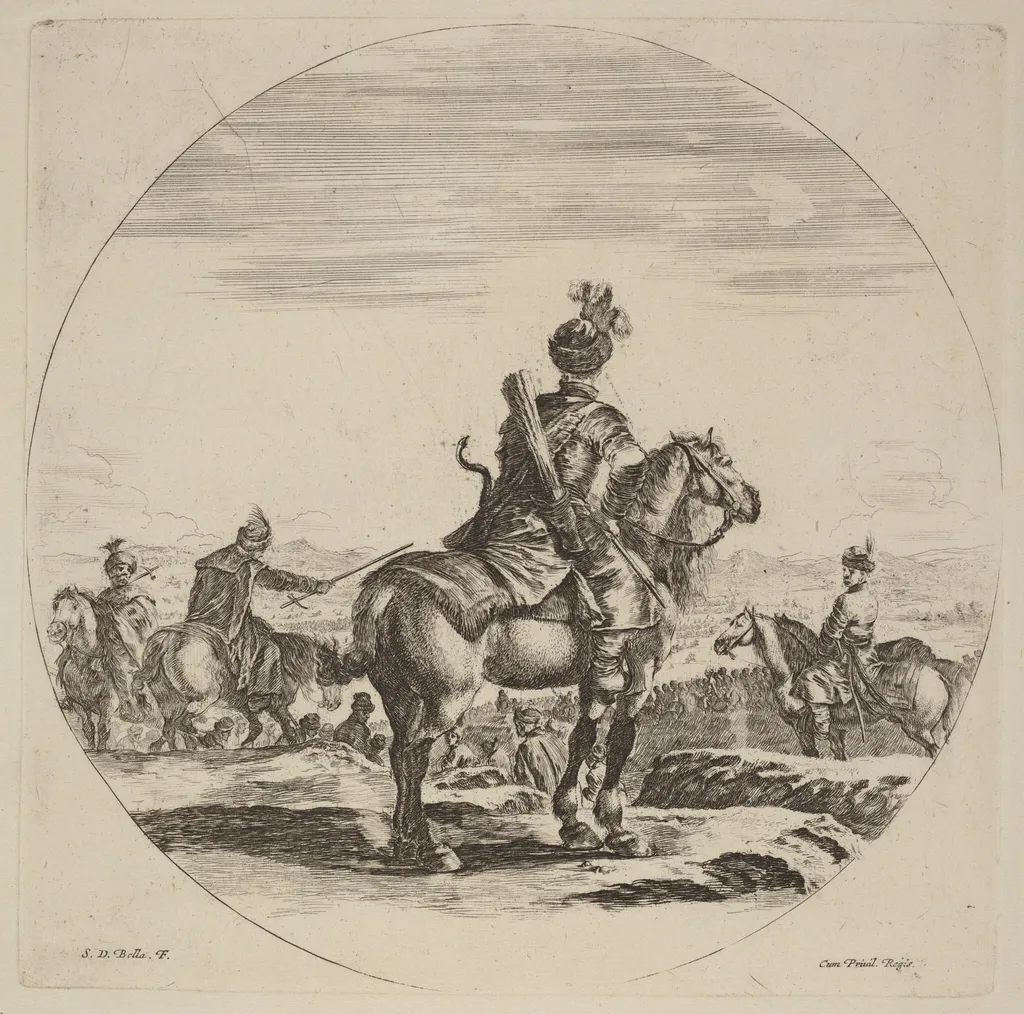
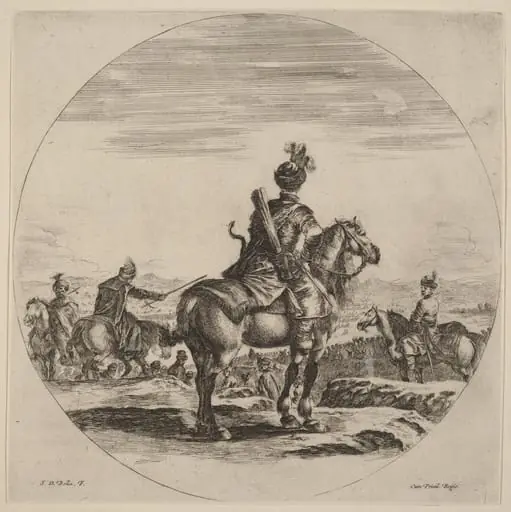
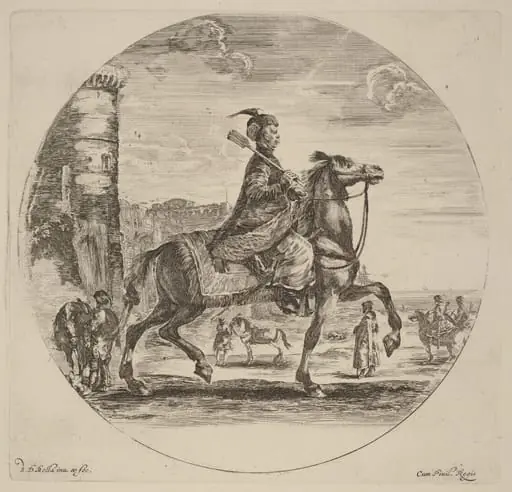
Polish Cavalier is an ink print by the Baroque artist Stefano Della Bella. It dates from 1637 and is held in the collection of the National Gallery of Art.
About this work
Overview
Though originally produced in the 17th century, this impression is a later restrike, reflecting continued interest in della Bella’s work.
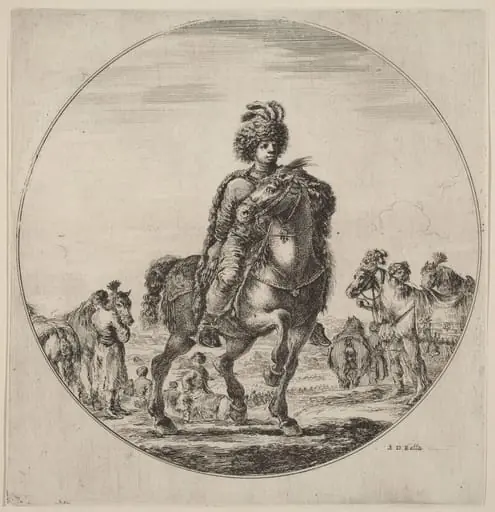
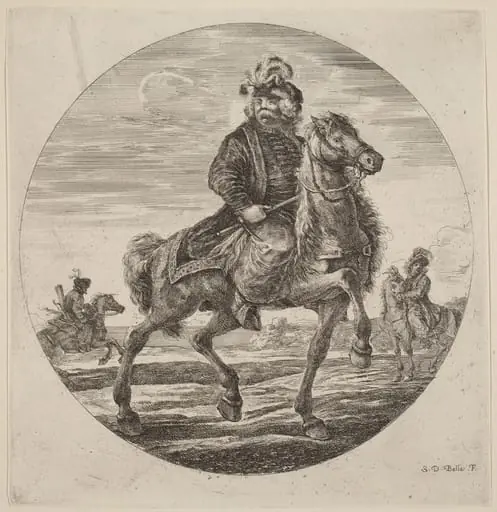
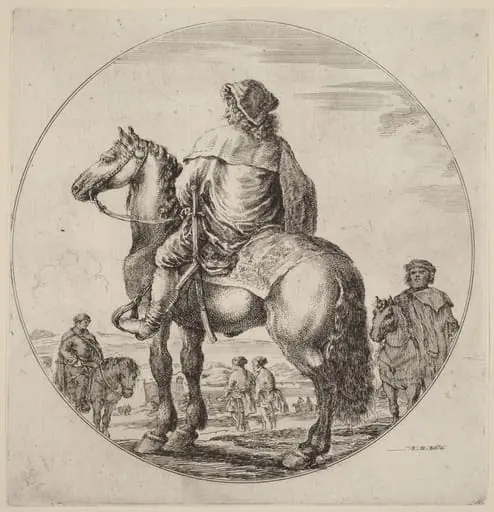
Created in 1637 by Italian artist Stefano della Bella, this etching on laid paper portrays a Polish cavalryman on horseback. Though originally produced in the 17th century, this impression is a later restrike, reflecting continued interest in della Bella’s work. The print belongs to a broader series of military and equestrian studies that document European cavalry traditions during a period of shifting alliances and warfare.
Subject & Meaning
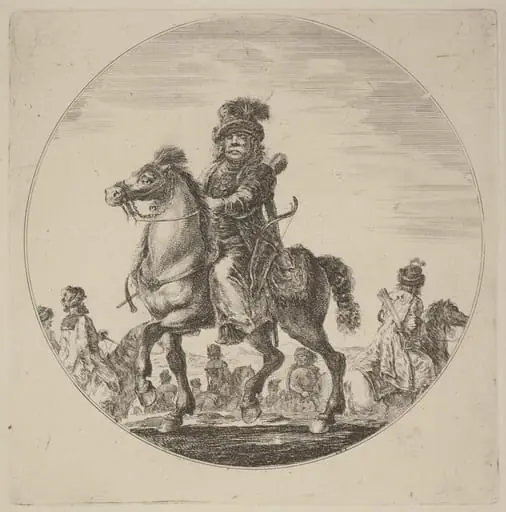
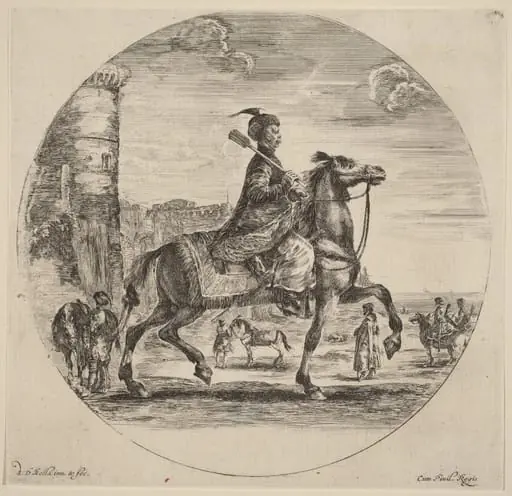
The figure is a mounted nobleman, clad in a long coat and wide-brimmed hat, carrying a bow and quiver across his back and a sword at his hip. His horse faces right, its rear turned toward the viewer, suggesting movement through a landscape. Behind him, distant figures and additional horses imply a larger troop or procession. The image evokes the martial prestige of Polish cavalry, known for their mobility and distinctive attire, without overt narrative or symbolism.
Technique & Style
Della Bella employed fine, varied etching lines to render texture and depth: the horse’s mane and tail are meticulously detailed, while background elements are rendered with looser, sketch-like strokes. Shading and line weight create a sense of atmospheric perspective, with the hills and distant figures fading into soft tonal gradations. The composition balances precision in the foreground with suggestive brevity in the distance, characteristic of Baroque draftsmanship.
History & Provenance
The original etching was made in Florence during della Bella’s early career, when he was documenting military figures for aristocratic patrons. This impression is a restrike, likely produced after his death using the original plate, which remained in circulation among printmakers and collectors. Such restrikes were common in the 18th and 19th centuries as demand grew for his detailed studies of dress and movement.
Context
Polish cavalry, particularly the winged hussars, were renowned across Europe for their effectiveness and distinctive appearance. Della Bella, though Italian, traveled widely and recorded foreign military types with ethnographic interest. His prints served as visual records for diplomats, soldiers, and collectors fascinated by the diversity of European armed forces during the Thirty Years’ War and its aftermath.
Legacy
Della Bella’s etchings, including this one, influenced later generations of printmakers through their observational clarity and technical finesse. Though not intended as propaganda or grand historical scenes, these works preserved the visual language of 17th-century cavalry, offering insight into the material culture of war and the mobility of military fashion across borders.
Artist & collection
Artist
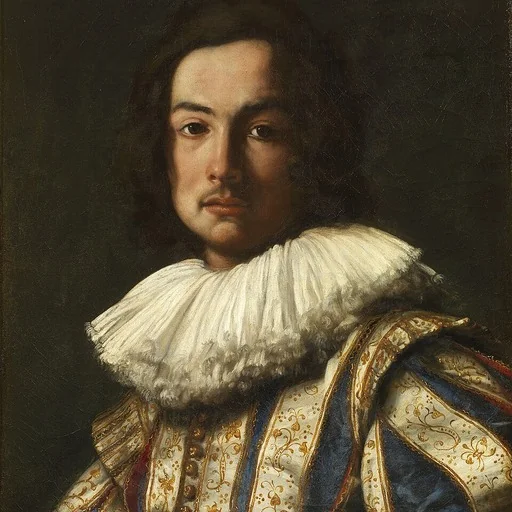
Stefano della Bella (18 May 1610 – 12 July 1664) was an Italian draughtsman and printmaker known for etchings of a great variety of subjects, including military and court scenes, landscapes, and lively genre scenes.

![The Flight into Egypt [verso], by Stefano Della Bella](https://artifactworldgallery.com/img/stefano-della-bella--the-flight-into-egypt-verso--3a100db72e6d25e3-w320.webp)