Artwork
Suicide of Dido
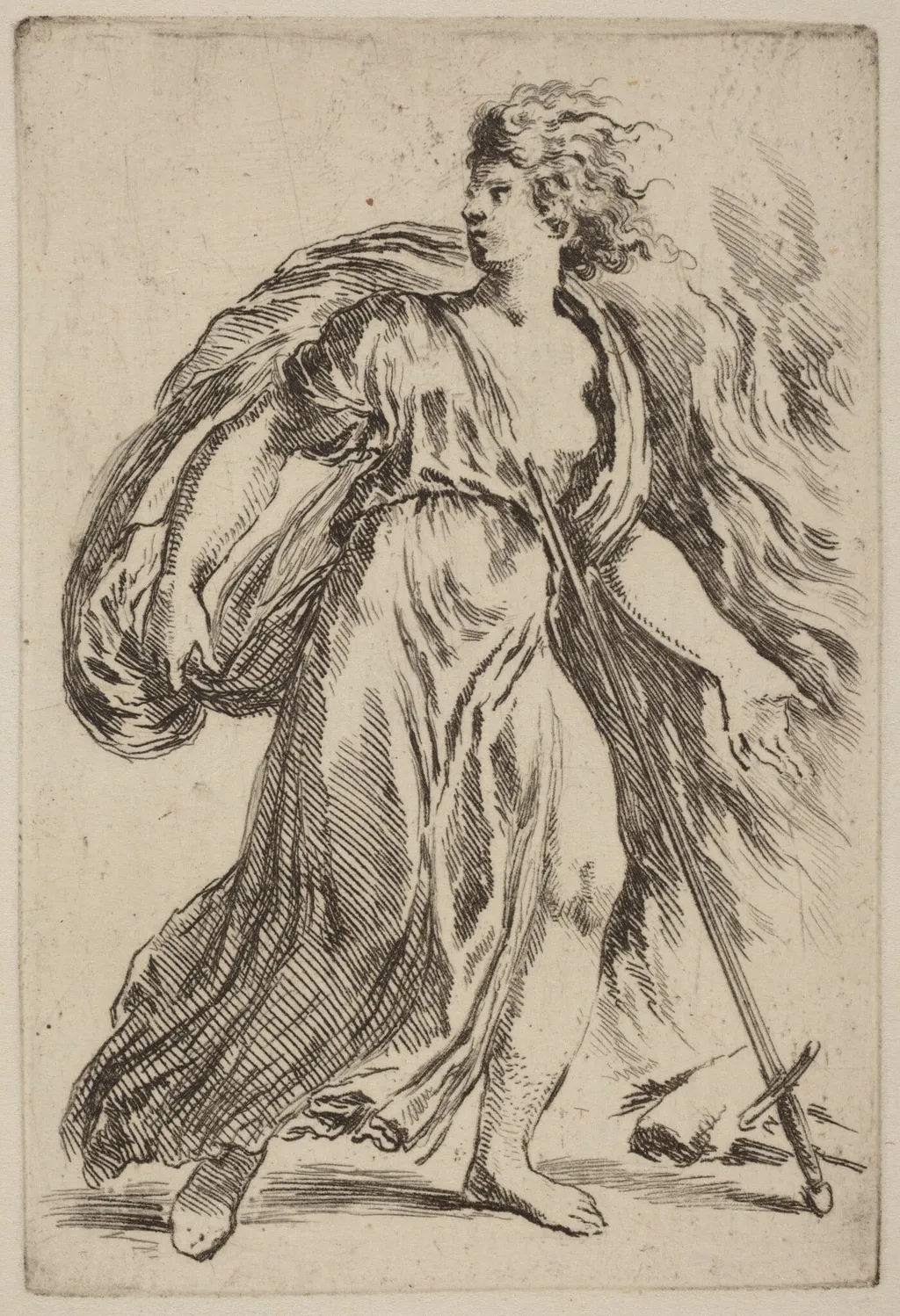
Suicide of Dido is an ink print by the Baroque artist Stefano Della Bella. It dates from 1637 and is held in the collection of the National Gallery of Art.
About this work
Overview
Created in 1637 by Stefano della Bella, this etching on laid paper is a restrike of an original print made during the artist’s early career.
Created in 1637 by Stefano della Bella, this etching on laid paper is a restrike of an original print made during the artist’s early career. Della Bella, a Florentine printmaker known for his prolific output, captured a moment from Virgil’s Aeneid with swift, expressive lines. The work reflects his interest in dramatic narratives and his technical command of etching, producing a dynamic image through controlled abrasion of the copper plate.
Subject & Meaning
The scene portrays Dido, Queen of Carthage, at the moment of her suicide after being abandoned by Aeneas. She stands in anguish, one arm clasping her torso, the other gripping her chest as if to contain her agony. The fallen sword at her feet signals her final act. The composition conveys inner turmoil through posture and gesture, transforming myth into a visceral human moment of despair and resolve.
Technique & Style
Della Bella employed etching to achieve rapid, energetic lines that mimic the urgency of the moment. The scratchy, uneven strokes define the flowing fabric, wind-swept hair, and billowing cloak, suggesting motion rather than stillness. The rough texture of the laid paper enhances the emotional rawness, while the sparse use of tone focuses attention on the figure’s isolation and the starkness of her act.
History & Provenance
The original plate was cut in 1637, and this impression is a later restrike, likely made from the same plate in the decades following della Bella’s death. Such restrikes were common among printmakers’ estates and collectors seeking to preserve popular compositions. Though not the earliest impression, it retains the integrity of the artist’s hand, reflecting continued interest in his work throughout the 17th and 18th centuries.
Context
In mid-17th-century Florence, classical mythology remained a favored subject for artists engaged with human emotion and moral complexity. Della Bella’s engagement with Virgil’s tale aligns with broader European trends in Baroque printmaking, where dramatic narratives were rendered with psychological depth. His work bridged the precision of Italian draftsmanship with the expressive potential of print media.
Legacy
Della Bella’s etchings, including this one, influenced later generations of printmakers through their emotional immediacy and technical fluency. His ability to convey narrative tension with minimal lines set a precedent for expressive etching in the Baroque and beyond. Though not widely exhibited in his lifetime, his prints circulated widely, securing his reputation as a key figure in the history of printmaking.
Own this work as a print
Artist & collection
Artist
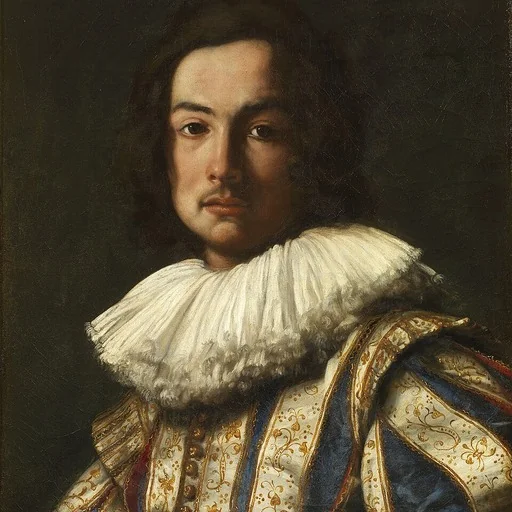
Stefano della Bella (18 May 1610 – 12 July 1664) was an Italian draughtsman and printmaker known for etchings of a great variety of subjects, including military and court scenes, landscapes, and lively genre scenes.

![The Flight into Egypt [verso], by Stefano Della Bella](https://artifactworldgallery.com/img/stefano-della-bella--the-flight-into-egypt-verso--3a100db72e6d25e3-w320.webp)
![Tobias and the Angel [verso], by Hermann Weyer](https://artifactworldgallery.com/img/hermann-weyer--tobias-and-the-angel-verso--e00682edf3b74b17-w320.webp)