Artwork
Two Polish Cavaliers
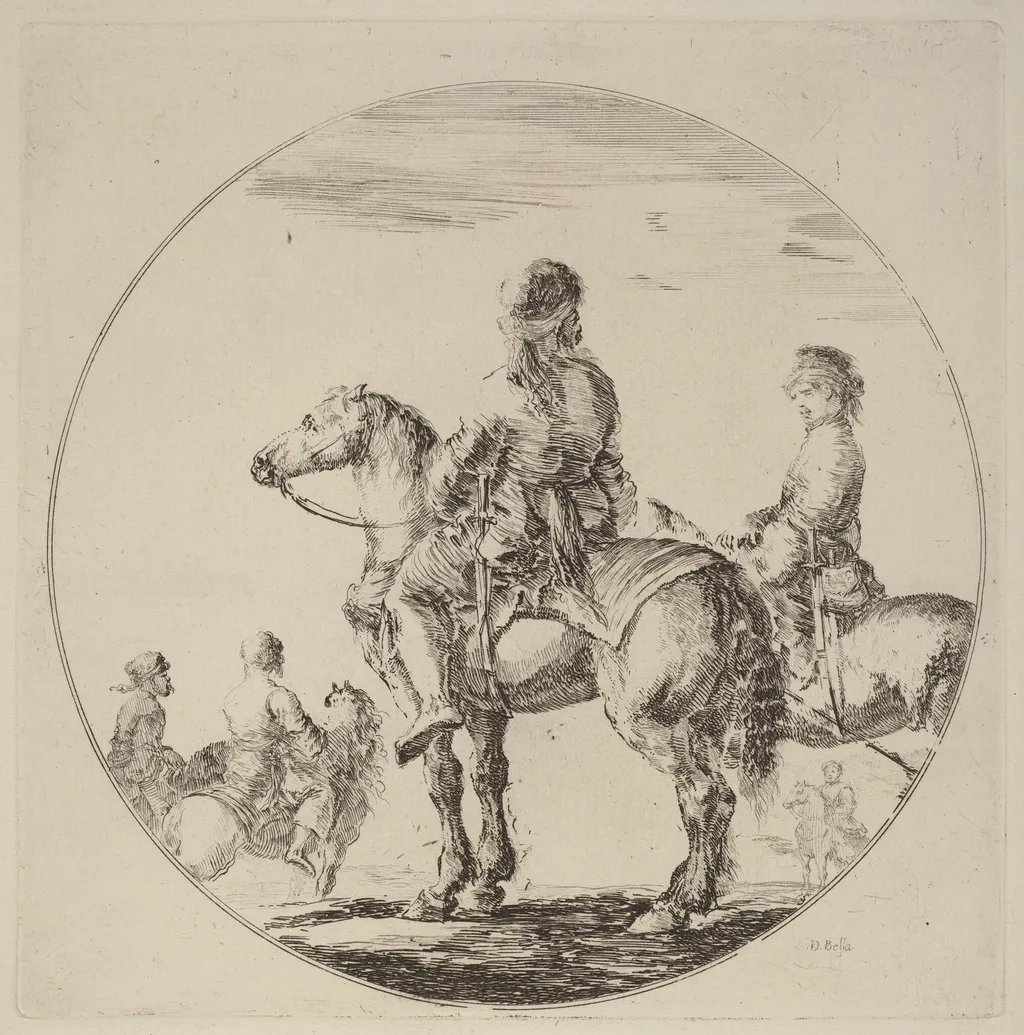
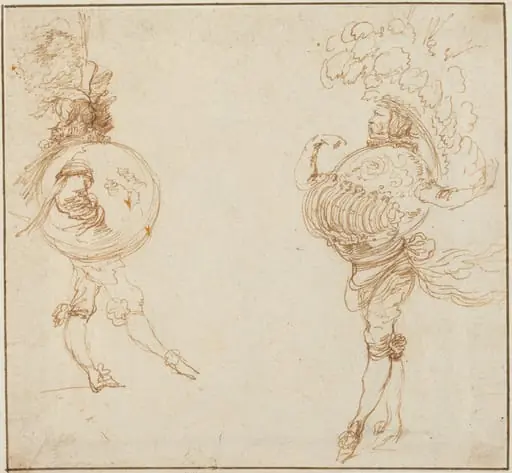
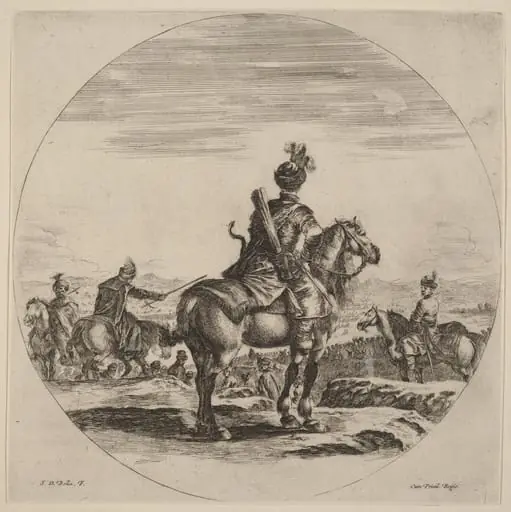
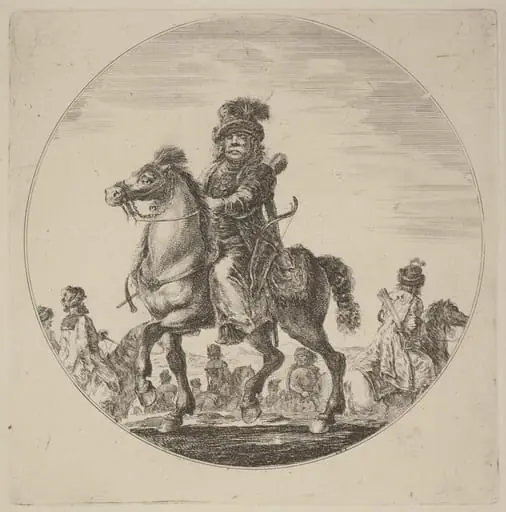
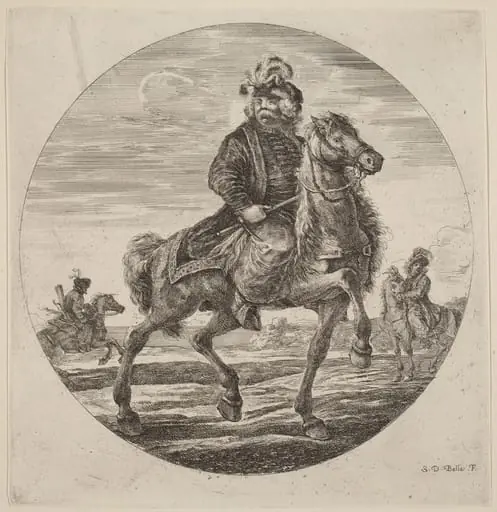
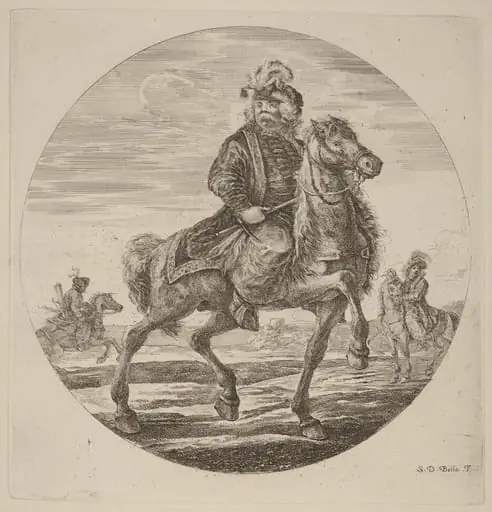
Two Polish Cavaliers is an ink print by the Baroque artist Stefano Della Bella. It dates from 1637 and is held in the collection of the National Gallery of Art.
About this work
Overview
Della Bella, a Florentine artist active in the mid-17th century, was prolific in printmaking, producing over a thousand etchings and countless drawings.
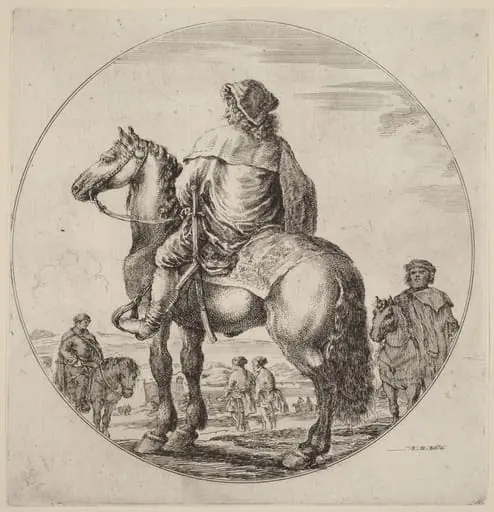
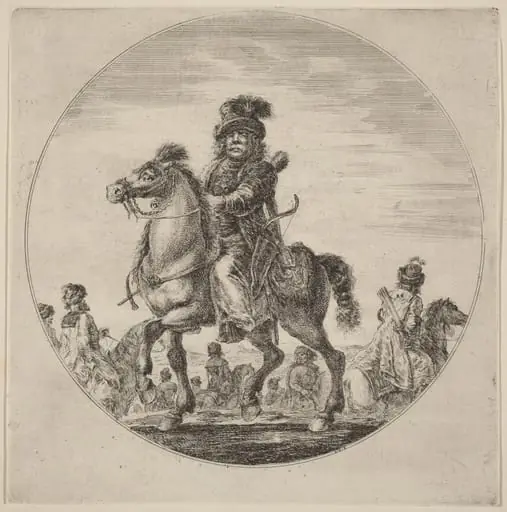
This etching, created in 1637 by Stefano della Bella, is a restrike on laid paper of an original work from his early career. Della Bella, a Florentine artist active in the mid-17th century, was prolific in printmaking, producing over a thousand etchings and countless drawings. His work often captured military and equestrian subjects with precision. This piece exemplifies his skill in rendering dynamic figures through fine line work and careful tonal variation.
Subject & Meaning
The print portrays two Polish cavalrymen, likely representing the famed Winged Hussars, depicted in full armor and elaborate attire. Their poised posture and richly detailed gear suggest a ceremonial or martial context, possibly reflecting contemporary European fascination with Eastern European military units. The figures exude quiet authority, their presence framed by the quiet tension of readiness rather than action, emphasizing dignity over drama.
Technique & Style
Della Bella employed etching to achieve fine, controlled lines that define the textures of armor, fabric, and horsehide. The intricate rendering of muscle structure beneath the horses’ coats and the layered folds of the men’s garments demonstrate his mastery of linear detail. His use of cross-hatching and subtle shading adds depth without heavy ink, preserving the clarity and lightness characteristic of his graphic style.
History & Provenance
The original etching was made in 1637 during della Bella’s formative years in Florence, a period when he was influenced by his travels and the courtly culture of Tuscany. This impression is a later restrike, produced after his death, likely from the original plate. Such restrikes were common in the 17th and 18th centuries to meet continued demand for his work among collectors and print enthusiasts.
Context
In the 1630s, Polish cavalry gained European attention for their distinctive armor and battlefield effectiveness during the Polish-Swedish wars. Italian artists like della Bella, though not directly involved in military affairs, absorbed these images through prints, reports, and travelers’ accounts. His depiction reflects an outsider’s fascination with foreign military aesthetics, blending observation with artistic convention.
Legacy
Della Bella’s etchings, including this one, influenced generations of printmakers through their technical precision and observational clarity. While not overtly political, his images of soldiers and horses contributed to the visual lexicon of early modern European military culture. His work remains studied for its ability to convey character and movement through the disciplined economy of line.
Artist & collection
Artist
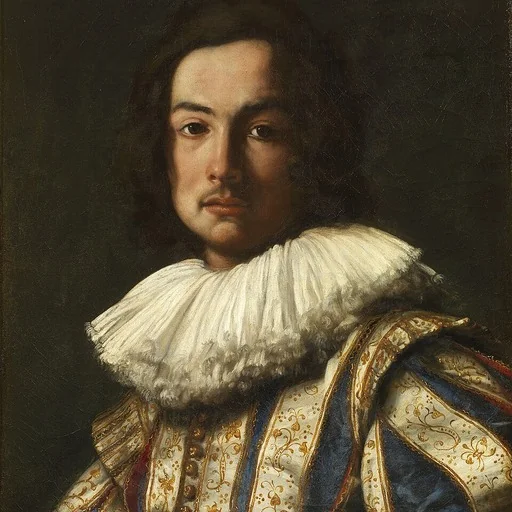
Stefano della Bella (18 May 1610 – 12 July 1664) was an Italian draughtsman and printmaker known for etchings of a great variety of subjects, including military and court scenes, landscapes, and lively genre scenes.

![The Flight into Egypt [verso], by Stefano Della Bella](https://artifactworldgallery.com/img/stefano-della-bella--the-flight-into-egypt-verso--3a100db72e6d25e3-w320.webp)