Artwork
Vulcan and Thetis
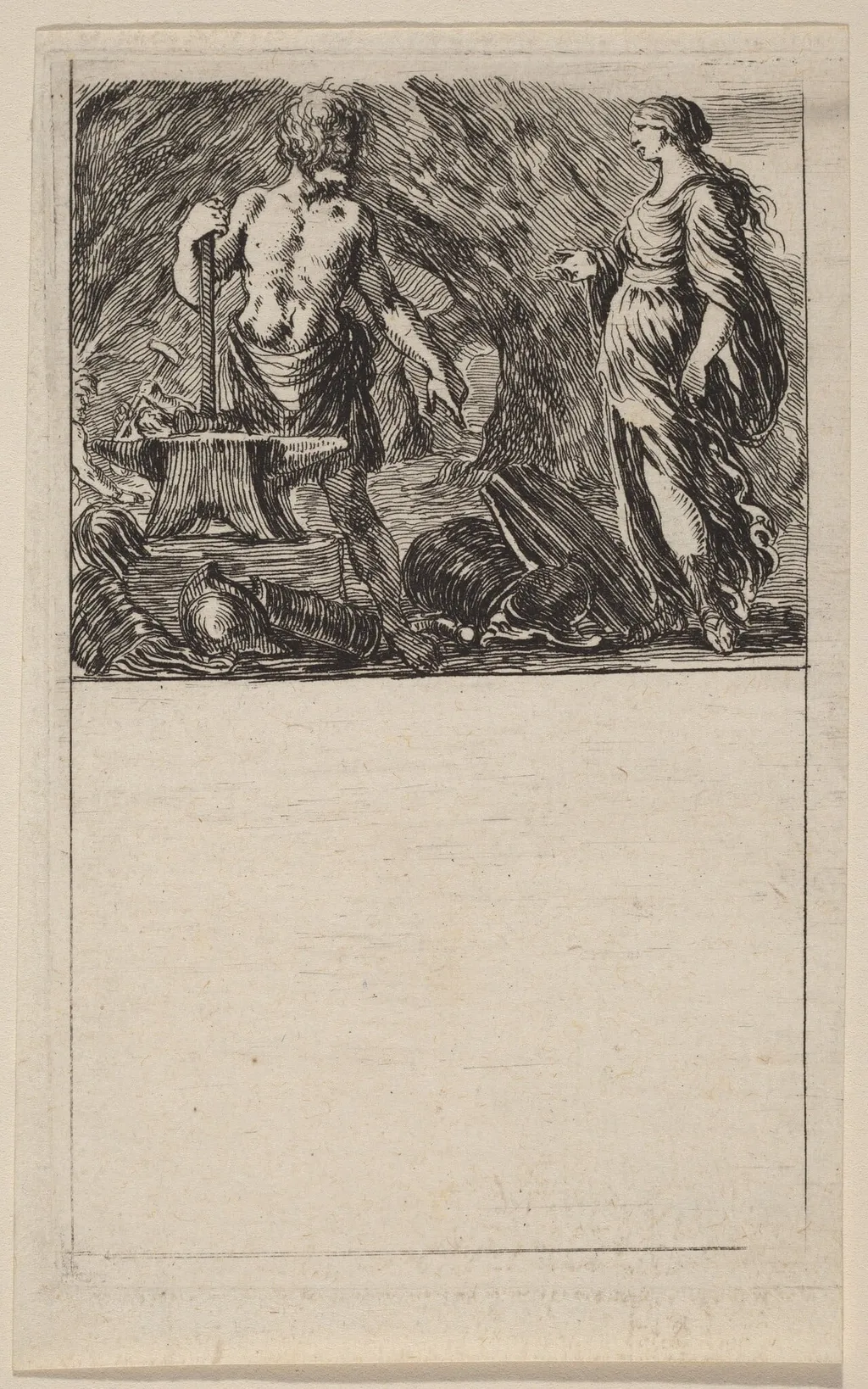
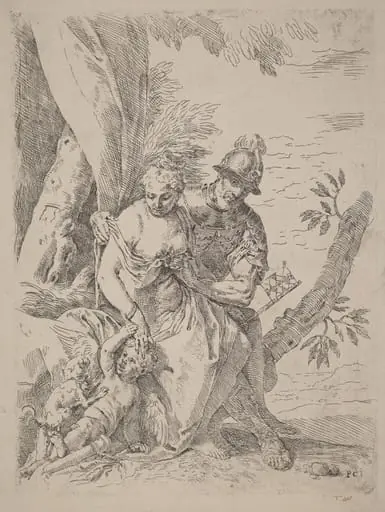
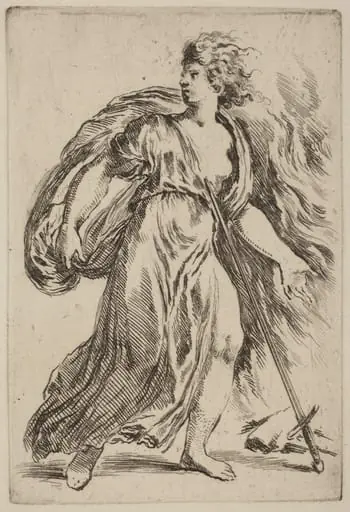
Vulcan and Thetis is an ink print by the Baroque artist Stefano Della Bella. It dates from 1644 and is held in the collection of the National Gallery of Art.
About this work
Overview
Known for his precise line work and diverse subject matter, he often drew from classical mythology, military life, and everyday scenes.
Stefano della Bella, an Italian artist born in Florence in 1610, produced this etching in 1644 as part of a prolific printmaking career spanning over a thousand works. Known for his precise line work and diverse subject matter, he often drew from classical mythology, military life, and everyday scenes. This piece exemplifies his skill in translating narrative into the delicate, controlled medium of etching, using fine incised lines to convey movement and emotion.
Subject & Meaning
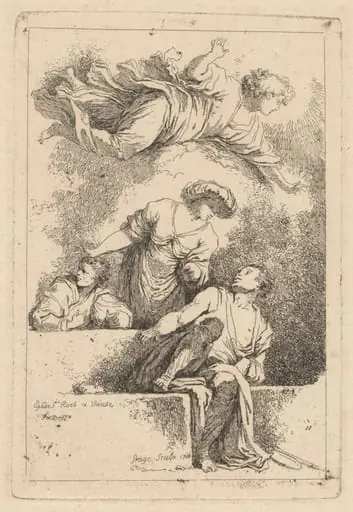
The scene illustrates a moment from myth in which Thetis, the sea nymph, seeks the aid of Vulcan, the god of fire and metalworking, to forge armor for her son Achilles. One figure gestures toward the ground, perhaps indicating the weapon being crafted, while another kneels near Vulcan’s leg, suggesting supplication or urgency. The interaction conveys a quiet tension between divine power and mortal need, capturing a pivotal moment before the epic events of the Trojan War.
Technique & Style
Della Bella employed sharp, fluid etching lines to define the muscular forms and drapery of the figures, emphasizing their physicality and emotional states. The background is rendered with swirling, atmospheric strokes that suggest smoke or mist, grounding the scene without detailing a specific location. The contrast between the solid, weary posture of Vulcan and the dynamic gestures of the women heightens the narrative tension, showcasing the artist’s mastery of expressive line and compositional balance.
History & Provenance
Created during della Bella’s time in Paris, where he worked under the patronage of Cardinal Mazarin, the print reflects his engagement with French artistic circles and classical themes favored by the court. Though no specific early ownership records are widely documented, the work circulated among collectors of prints in the 17th and 18th centuries, contributing to his reputation as a leading printmaker of his era.
Context
In mid-17th-century Europe, mythological subjects remained popular in printmaking, serving both intellectual and decorative purposes. Della Bella’s etchings responded to a growing market for finely detailed images that could be reproduced and collected. His ability to blend classical narrative with naturalistic observation aligned with broader trends in Baroque art, where emotion and movement were prioritized over idealized stillness.
Legacy
Della Bella’s prints, including this one, influenced later generations of draftsmen and printmakers through their clarity of line and narrative economy. His works were studied for their technical precision and expressive potential, helping to elevate etching from a reproductive medium to a respected form of artistic expression. Though less known today than painters of his time, his prints remain important documents of Baroque visual culture.
Artist & collection
Artist
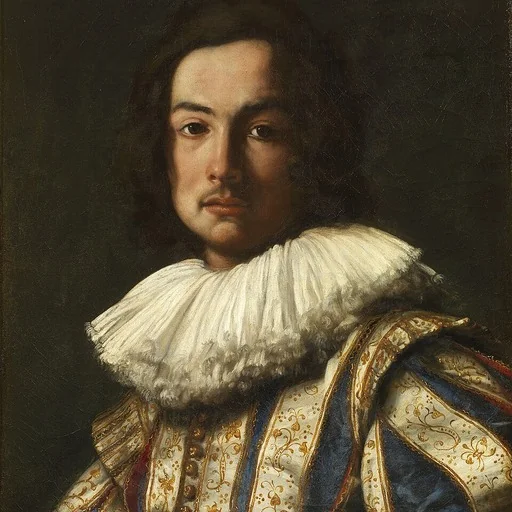
Stefano della Bella (18 May 1610 – 12 July 1664) was an Italian draughtsman and printmaker known for etchings of a great variety of subjects, including military and court scenes, landscapes, and lively genre scenes.

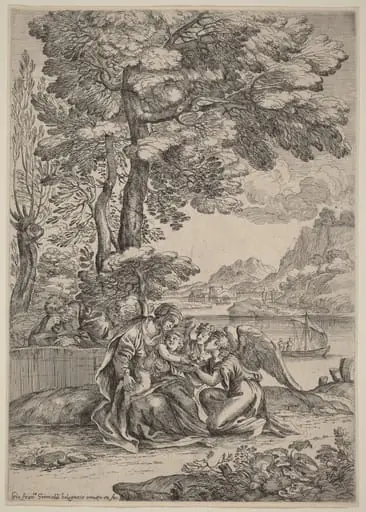
![The Flight into Egypt [verso], by Stefano Della Bella](https://artifactworldgallery.com/img/stefano-della-bella--the-flight-into-egypt-verso--3a100db72e6d25e3-w320.webp)