Artwork
Rooftops and Trees
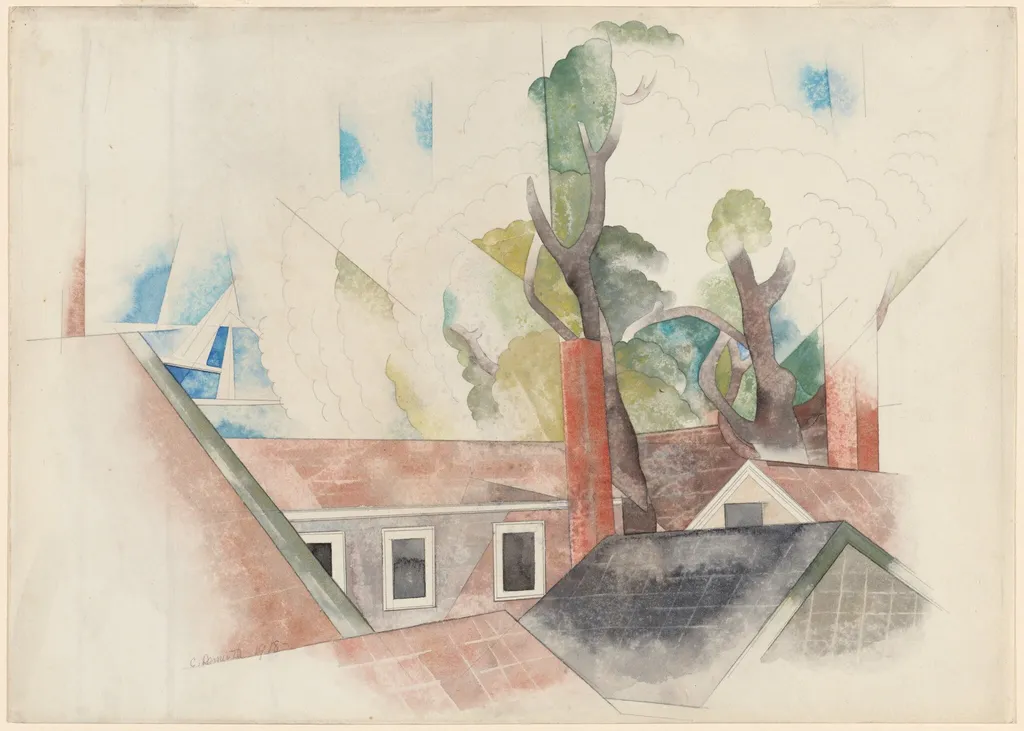
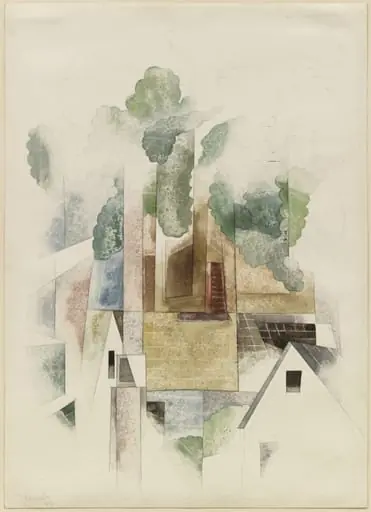
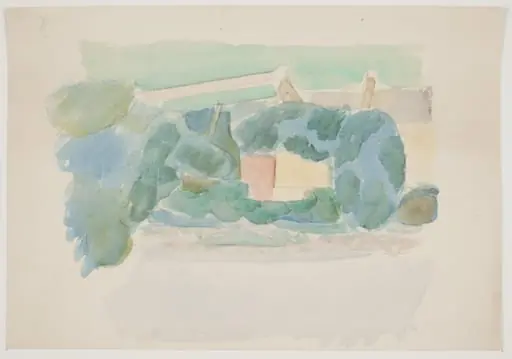
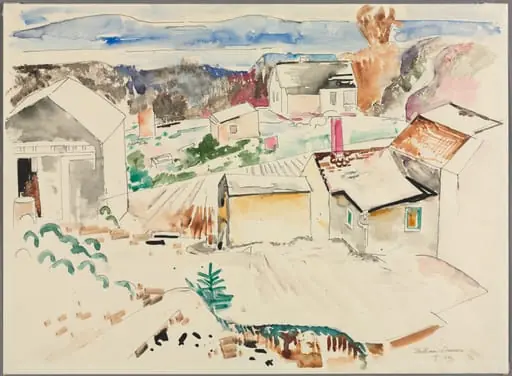
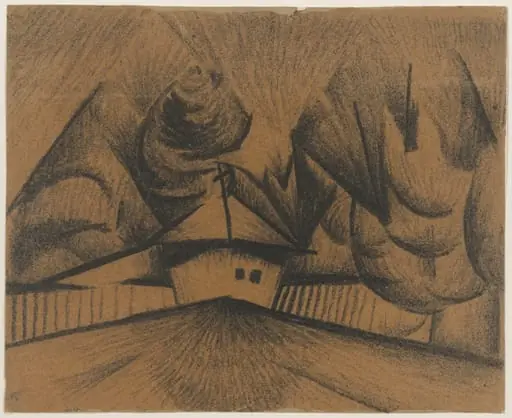
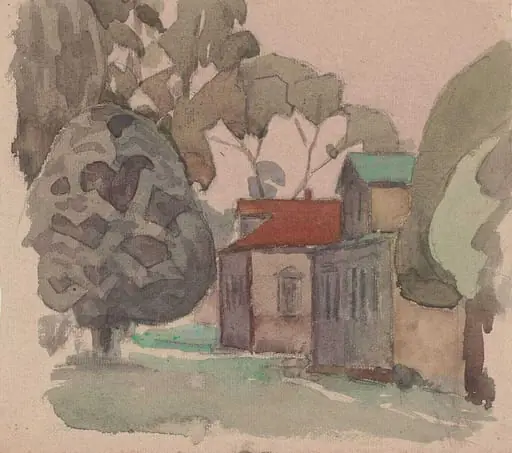
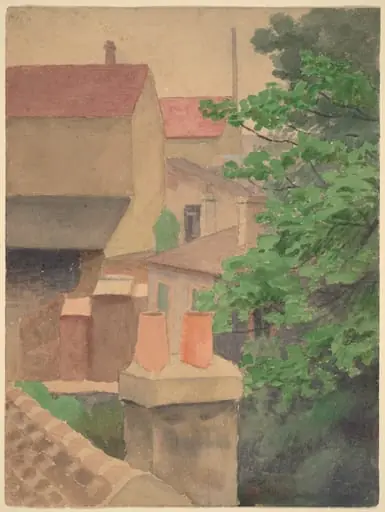
Rooftops and Trees is a graphite drawing by Charles Demuth. It dates from 1918 and is held in the collection of the National Gallery of Art.
About this work
Overview
The work balances architectural elements with organic growth, suggesting a quiet tension between structure and nature.
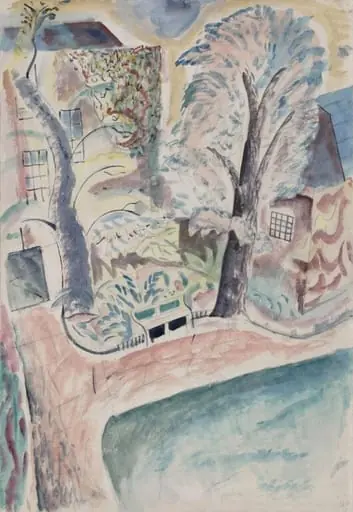
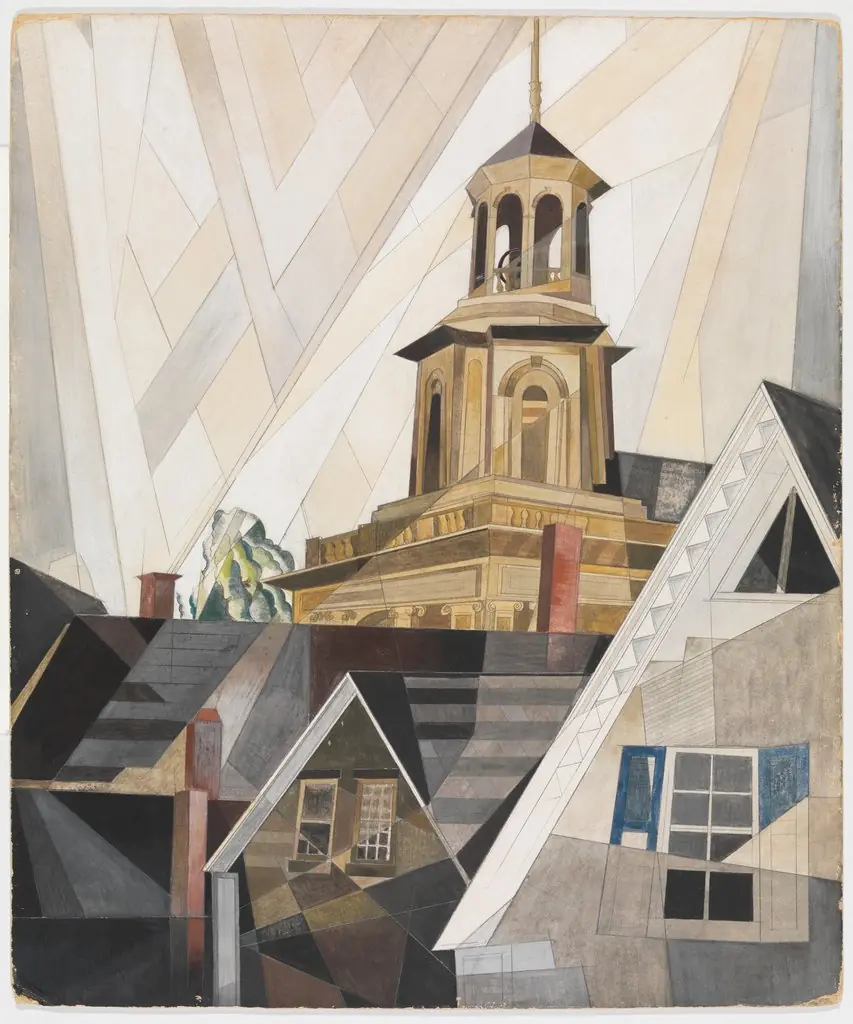
Created in 1918, Rooftops and Trees is a watercolor and graphite drawing on wove paper by Charles Demuth. It depicts an urban rooftop scene with a tree whose branches extend unnaturally into the sky. The composition avoids rigid perspective, instead favoring a fluid, almost dreamlike arrangement of forms. The work balances architectural elements with organic growth, suggesting a quiet tension between structure and nature.
Subject & Meaning
The painting presents a modest urban landscape—rooflines, a chimney, and a single tree—yet the tree’s roots appear suspended in midair, and its foliage drapes over the building as if growing from the sky. This inversion challenges conventional spatial logic, hinting at a psychological or emotional layer beneath the scene. The distant sailboat may suggest escape or longing, contrasting the grounded, tilted architecture below.
Technique & Style
Demuth employed loose watercolor washes over a light graphite underdrawing, allowing pigments to bleed and blend organically. He used glazing to build subtle tonal shifts, particularly in the sky and foliage. The brushwork is fluid and unrefined, avoiding sharp outlines. This technique enhances the sense of instability, as if the scene is dissolving or in motion, reinforcing the painting’s surreal spatial dynamics.
History & Provenance
Rooftops and Trees was made during Demuth’s early mature period, following his return from Europe and amid his engagement with American modernism. It remained in private hands for much of the 20th century before entering a public collection. Its date aligns with his experiments in abstraction and his interest in capturing the emotional resonance of everyday scenes rather than their literal appearance.
Context
Created in the wake of World War I, the work reflects a broader cultural shift toward introspection and formal experimentation in American art. Demuth, influenced by European modernists yet rooted in American subjects, used this piece to explore how perception could be distorted by emotion or memory. The tilted forms echo contemporaneous interests in Cubism and psychological realism, though filtered through a distinctly personal lens.
Legacy
Rooftops and Trees exemplifies Demuth’s ability to merge precision with poetic ambiguity. While not widely exhibited during his lifetime, it has since become a touchstone for understanding his transition from realism to abstraction. The work’s quiet unease and lyrical instability influenced later American artists interested in emotional landscapes, cementing its role in the evolution of early 20th-century American drawing.
Own this work as a print
Artist & collection