Artwork
After Sir Christopher Wren
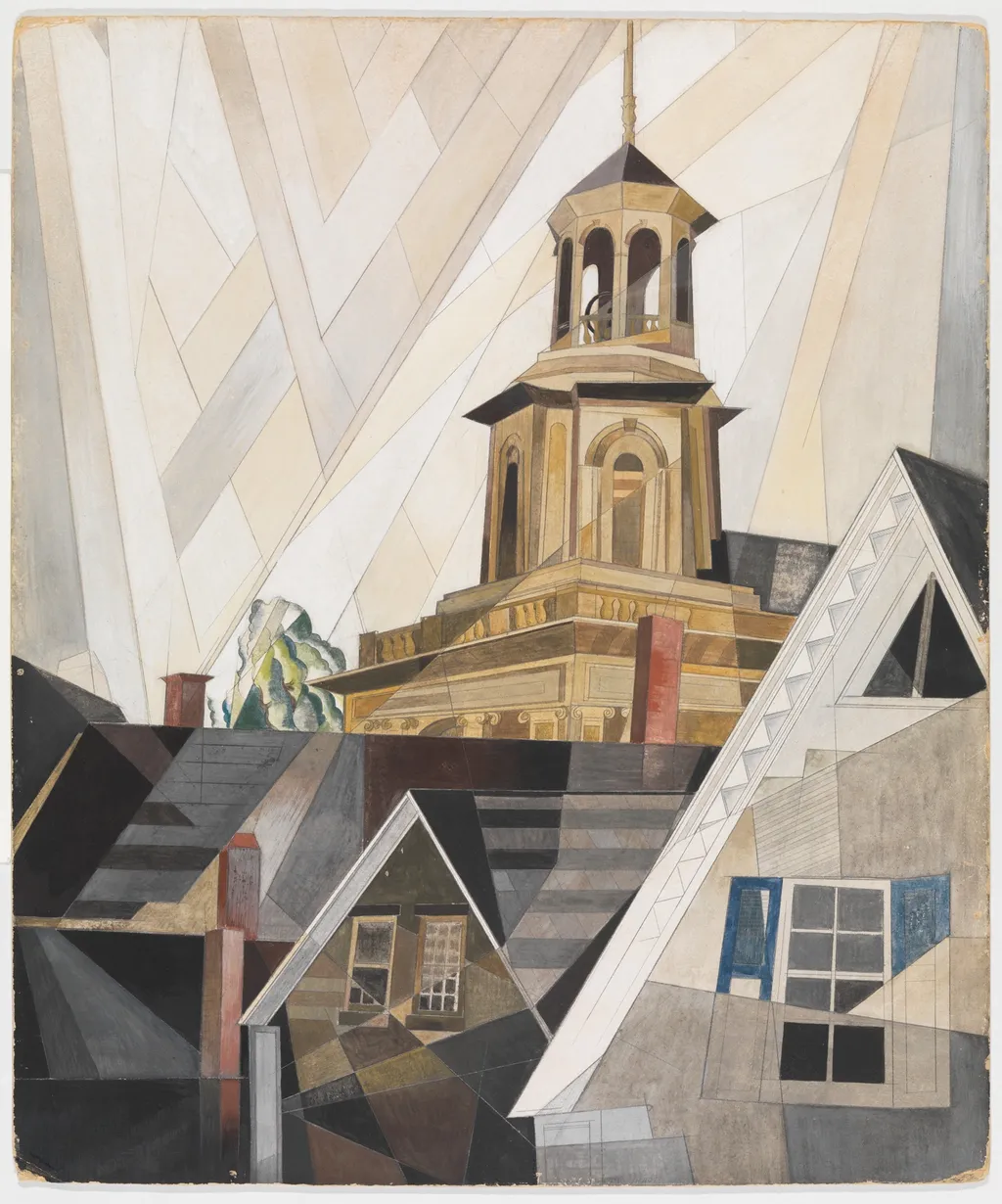
After Sir Christopher Wren is an unspecified painting by Charles Demuth. It dates from 1920 and is held in the collection of the Metropolitan Museum of Art.
About this work
Overview
Charles Demuth’s 1920 painting After Sir Christopher Wren presents an architectural composition centered on a towering church spire, its bell chamber rendered as a small, capped element. The work is part of the Metropolitan Museum of Art’s collection and reflects Demuth’s interest in urban forms and their abstracted representation.
Subject & Meaning
The canvas juxtaposes a dominant ecclesiastical tower with a cluster of modest dwellings, each roof angled irregularly. While the structures are recognizable as a church and surrounding houses, the arrangement suggests a study of spatial hierarchy, emphasizing the prominence of the sacred edifice within a bustling streetscape.
Technique & Style
Demuth reduces the scene to geometric planes, employing flat blocks of brown, gray, and black. Sharp lines delineate the forms, and the perspective is deliberately skewed, giving the buildings a slightly tilted, puzzle‑like quality. The absence of gradated shading underscores a modernist departure from realistic rendering.
History & Provenance
Created in the early post‑World War I period, After Sir Christopher Wren entered the public domain through acquisition by the Metropolitan Museum of Art. The painting has remained in the museum’s holdings, where it is displayed as an example of Demuth’s transition toward abstraction.
Own this work as a print
Artist & collection
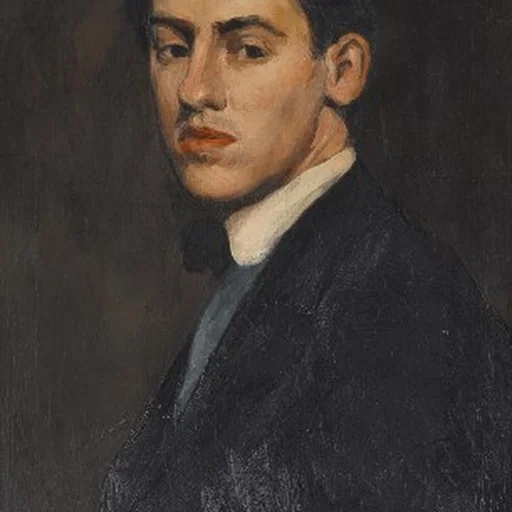
Artist
Charles Henry Buckius Demuth (November 8, 1883 – October 23, 1935) was an American painter who specialized in watercolors and turned to oils late in his career, developing a style of painting known as Precisionism.