Artwork
Odysseus ja Kalypso
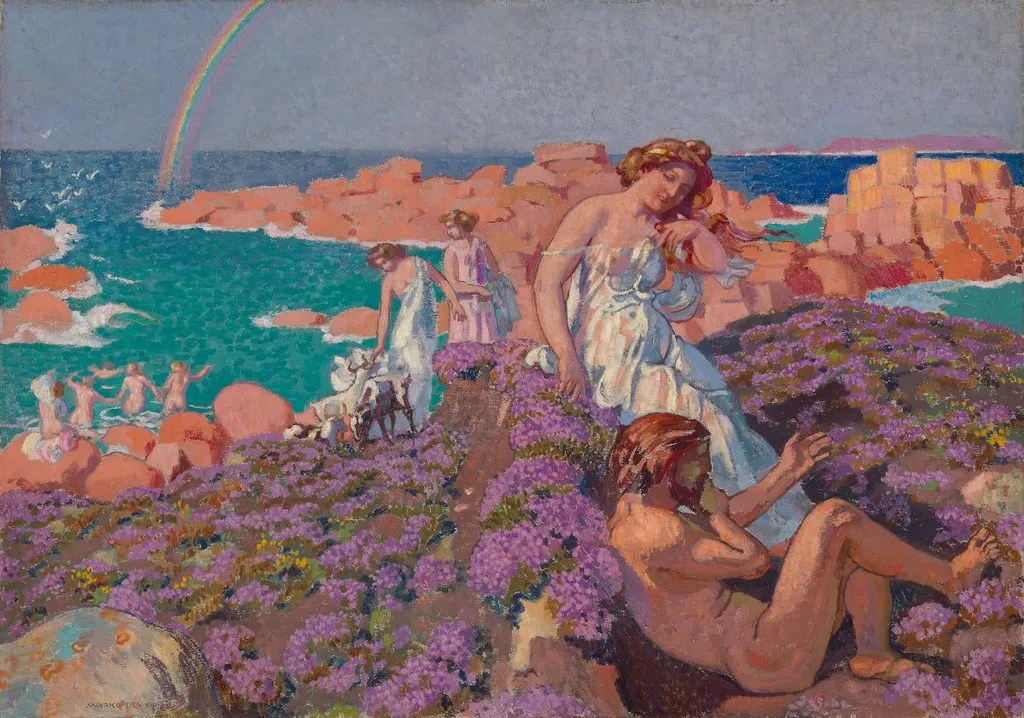
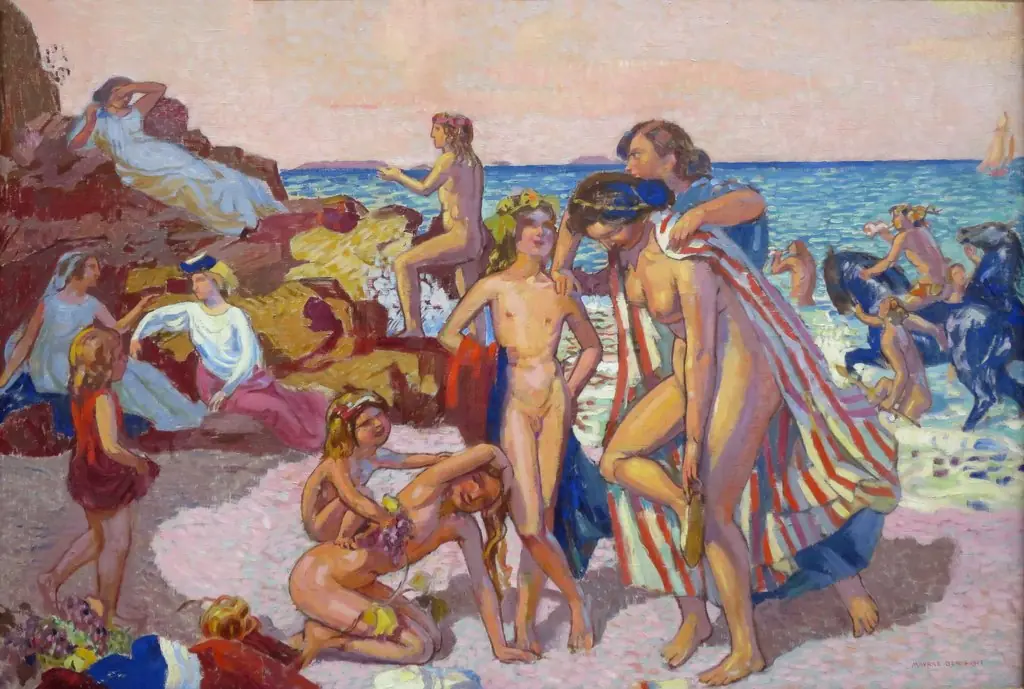
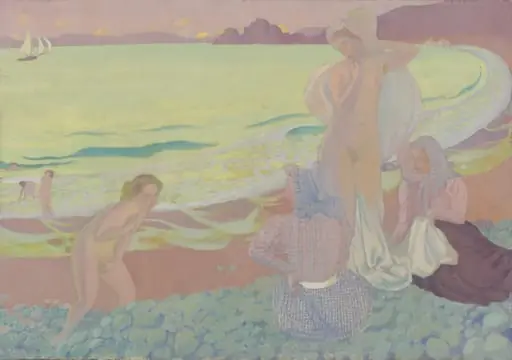
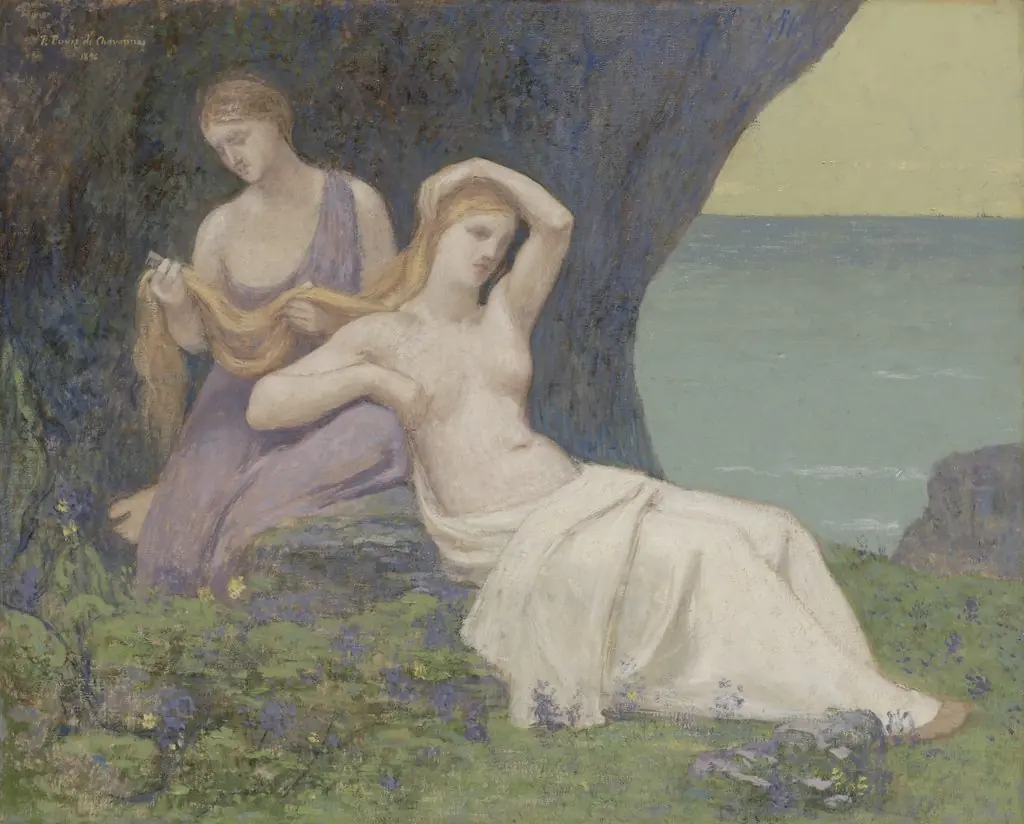
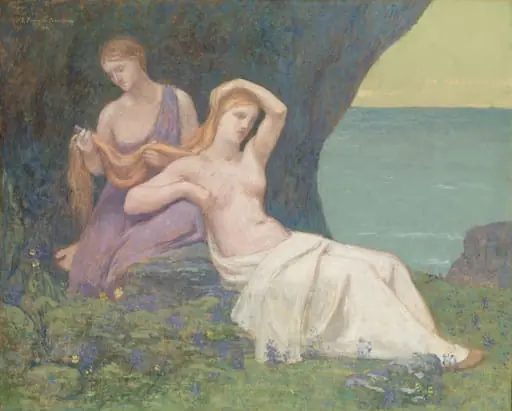
Odysseus ja Kalypso is an unspecified painting by Maurice Denis. It dates from 1905 and is held in the collection of the Finnish National Gallery.
About this work
Overview
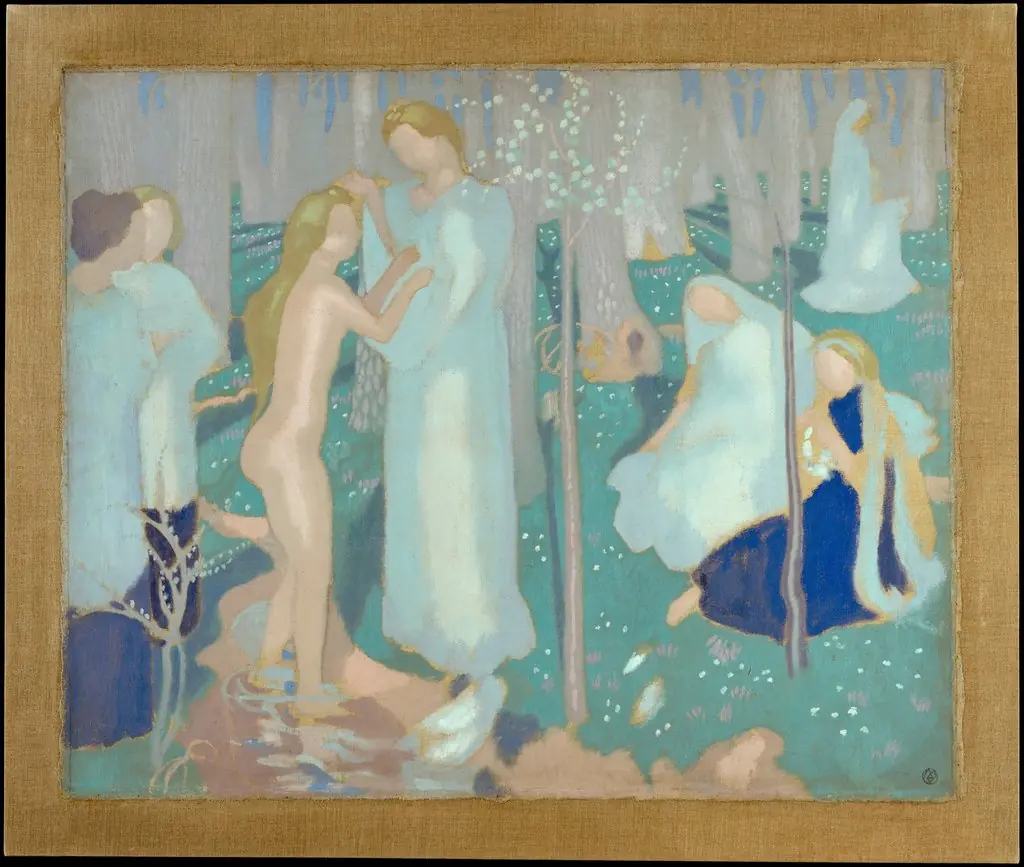
Painted around 1905 by French artist Maurice Denis, this work interprets a moment from Homer’s Odyssey, though it diverges from traditional narrative depiction.
Painted around 1905 by French artist Maurice Denis, this work interprets a moment from Homer’s Odyssey, though it diverges from traditional narrative depiction. Denis, known for his role in the Symbolist movement and Les Nabis, here favors mood over literal storytelling. The composition centers on two figures beside the sea, surrounded by vivid natural elements, reflecting his interest in harmonizing myth with decorative form and emotional atmosphere.
Subject & Meaning
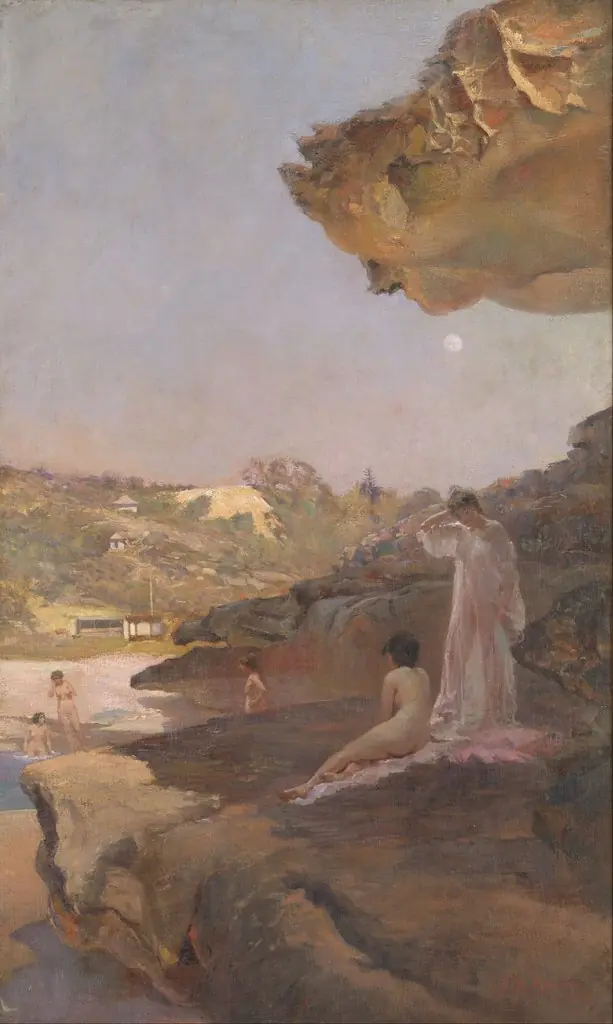
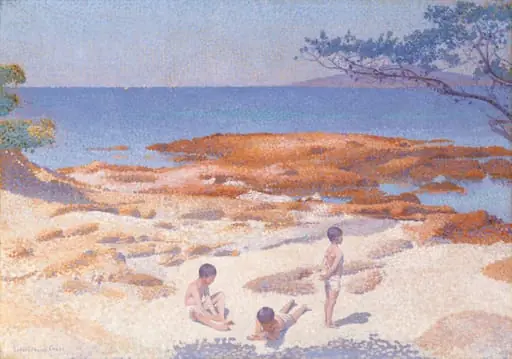
Though titled after Odysseus and Calypso, the painting omits the male hero entirely, focusing instead on the nymph and a companion figure. The absence of Odysseus shifts emphasis to solitude and quiet contemplation. The presence of a small animal and a dog suggests domesticity amid myth, while the rainbow and swimmers imply a timeless, serene world—perhaps symbolizing the allure of escape from duty and the passage of time.
Technique & Style
Denis employs thick, expressive brushwork to build color and texture, particularly in the purple flowers and the pale skin of the figures. The impasto technique gives the surface a tactile quality, enhancing the decorative rhythm of the scene. Bold, flat areas of color and simplified forms reflect Symbolist ideals, while the luminous palette and flowing lines anticipate later Fauvist tendencies, though without their emotional intensity.
History & Provenance
Created during Denis’s mature Symbolist phase, the painting emerged from a period when he was exploring mythological themes through a personal, intimate lens. It predates his later turn toward religious subjects and theoretical writings that influenced Cubism and Fauvism. The work remained in private hands for much of the 20th century, with no public exhibition history widely documented until recent scholarly reassessments of his non-religious output.
Context
In early 20th-century France, artists like Denis sought to renew painting by blending literary themes with aesthetic harmony. Rejecting naturalism, they favored symbolic composition and emotional resonance. This work aligns with Les Nabis’ belief in art as a spiritual expression, where nature and myth merge into a flattened, rhythmic space—offering an alternative to the rapid modernization of urban life.
Legacy
Though less known than Denis’s religious murals, this painting illustrates his early experimentation with myth and form. Its emphasis on decorative structure and emotional stillness influenced younger artists exploring Symbolist aesthetics. The work remains a quiet example of how classical narratives were reimagined in modern terms—not as grand drama, but as introspective, lyrical moments suspended in color and light.
Artist & collection
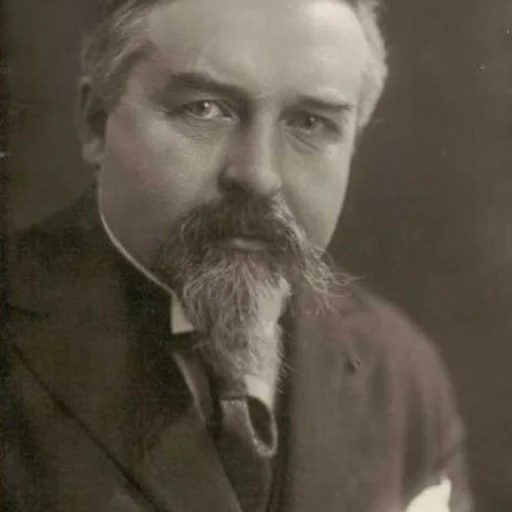
Artist
Maurice Denis (French: ; 25 November 1870 – 13 November 1943) was a French painter, decorative artist, and writer.