Artwork
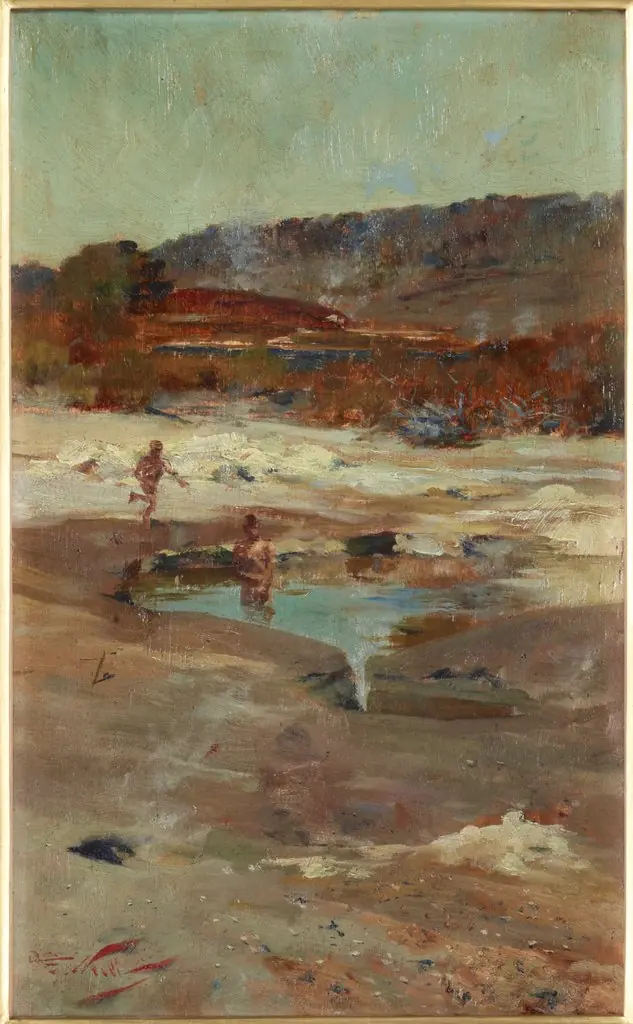
Tamarama Beach, forty years ago, a summer morning
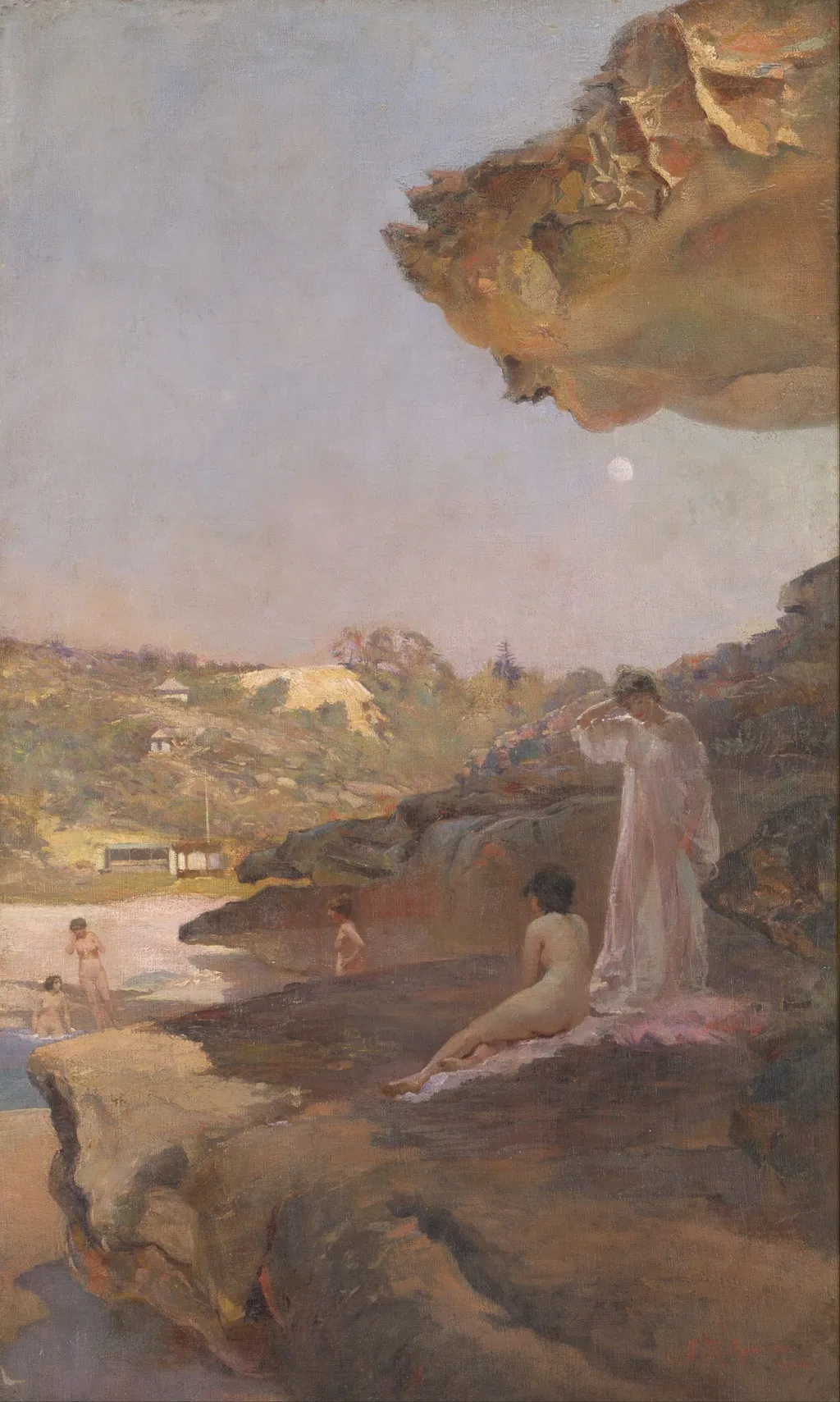
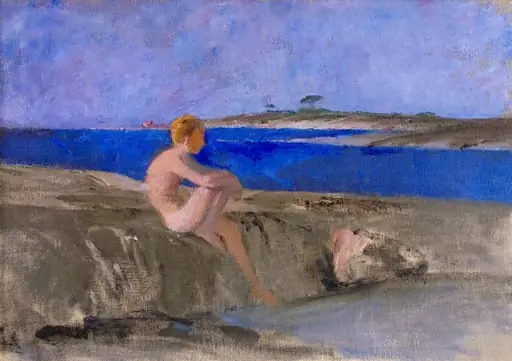
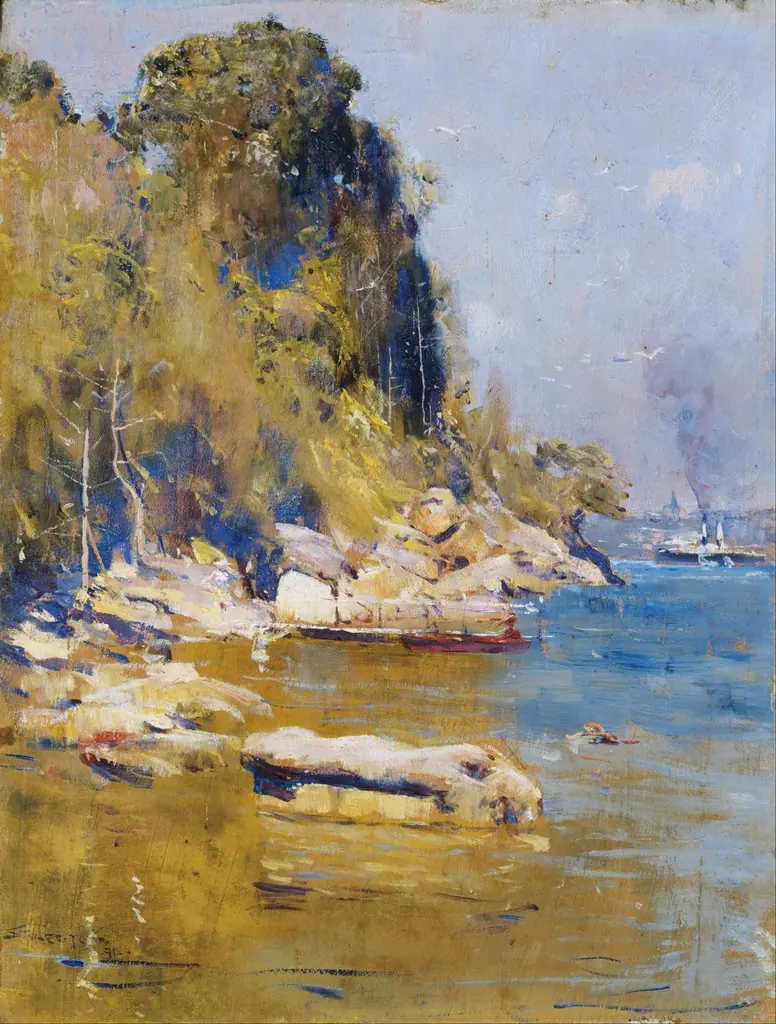
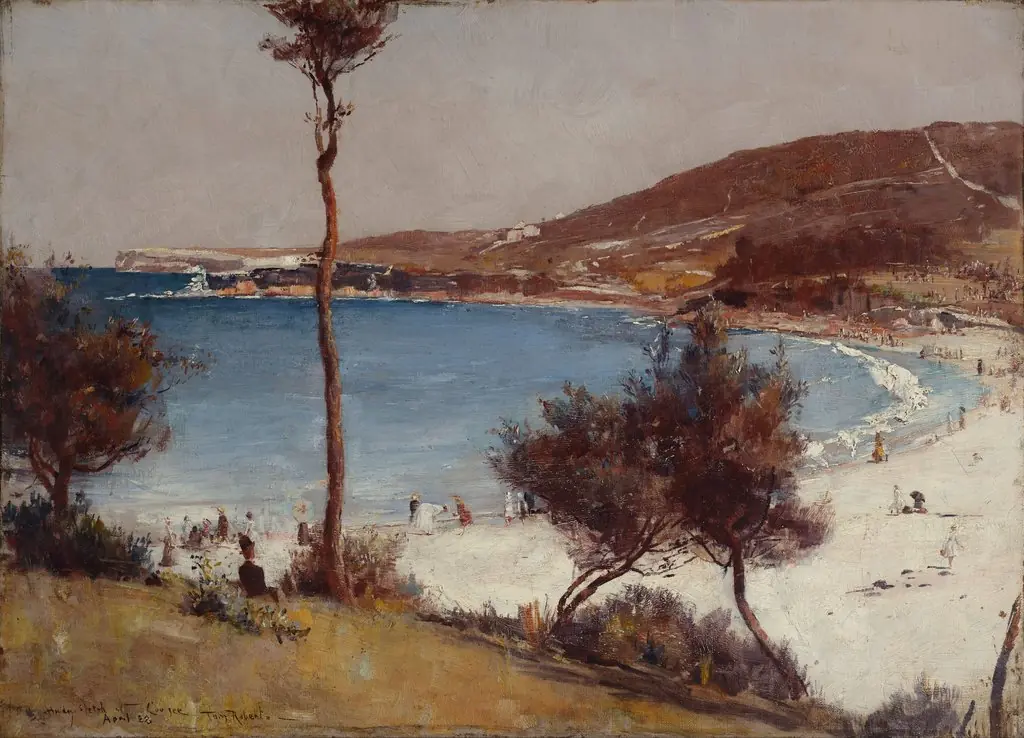
Tamarama Beach, forty years ago, a summer morning is an oil painting by Julian Ashton. It dates from 1900 and is held in the collection of the Art Gallery of New South Wales. Painted in 1900 by Julian Rossi Ashton, this oil on canvas depicts Tamarama Beach in Sydney during a quiet summer morning.
About this work
Overview
Ashton, an English-born artist who settled in Australia, was instrumental in promoting plein air painting through his founding of the Julian Ashton Art School.
Painted in 1900 by Julian Rossi Ashton, this oil on canvas depicts Tamarama Beach in Sydney during a quiet summer morning. Ashton, an English-born artist who settled in Australia, was instrumental in promoting plein air painting through his founding of the Julian Ashton Art School. The work reflects his commitment to observing and recording the Australian landscape with direct, observational methods.
Subject & Meaning
The scene presents a tranquil coastal moment: a lone woman in white stands on a rocky ledge, gazing toward the sea, while a few distant figures relax on the shore, some partially nude. The composition avoids narrative drama, instead emphasizing stillness and solitude. The figures are incidental to the broader atmosphere, suggesting a quiet communion between people and the natural environment.
Technique & Style
Ashton employed soft, blended brushwork and a muted palette of blues, creams, and earth tones to evoke the hazy light of early morning. The sky is lightly textured with wisps of cloud, and the rocks are rendered with subtle tonal shifts rather than sharp definition. This approach aligns with Australian impressionism, prioritizing mood over detail and capturing transient atmospheric effects.
History & Provenance
The painting entered the collection of the Art Gallery of New South Wales shortly after its creation and has remained there since. It was produced during a period when Australian artists were increasingly turning to local landscapes as subjects, moving away from European traditions. Ashton’s role as an educator helped embed such works into the cultural fabric of Sydney’s art community.
Context
In 1900, Tamarama was a relatively undeveloped beach, accessible to a small number of Sydney residents seeking respite from the city. Ashton’s depiction reflects a growing national interest in portraying everyday Australian life and scenery. His work contributed to a broader shift in visual culture, where the coast became a symbol of national identity and leisure.
Legacy
Though not widely exhibited today, the painting remains a representative example of early 20th-century Australian impressionism. It illustrates the influence of Ashton’s teaching philosophy, which emphasized direct observation and sensitivity to light. Its quiet composition continues to reflect a moment when Australian artists were defining their own visual language.
Own this work as a print
Artist & collection
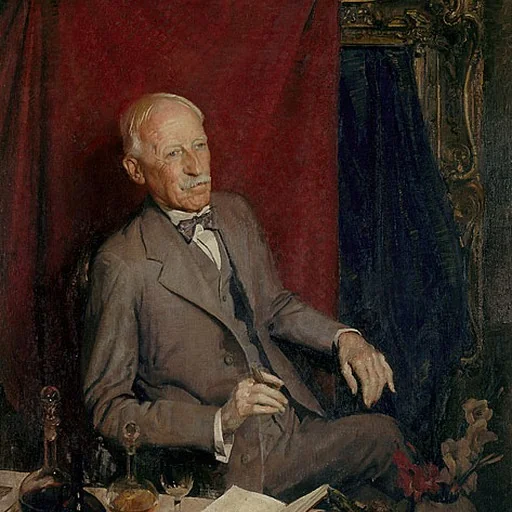
Artist
Julian Rossi Ashton (27 January 1851 – 27 April 1942) was an English-born Australian artist and teacher.