Artwork
Wild Asters
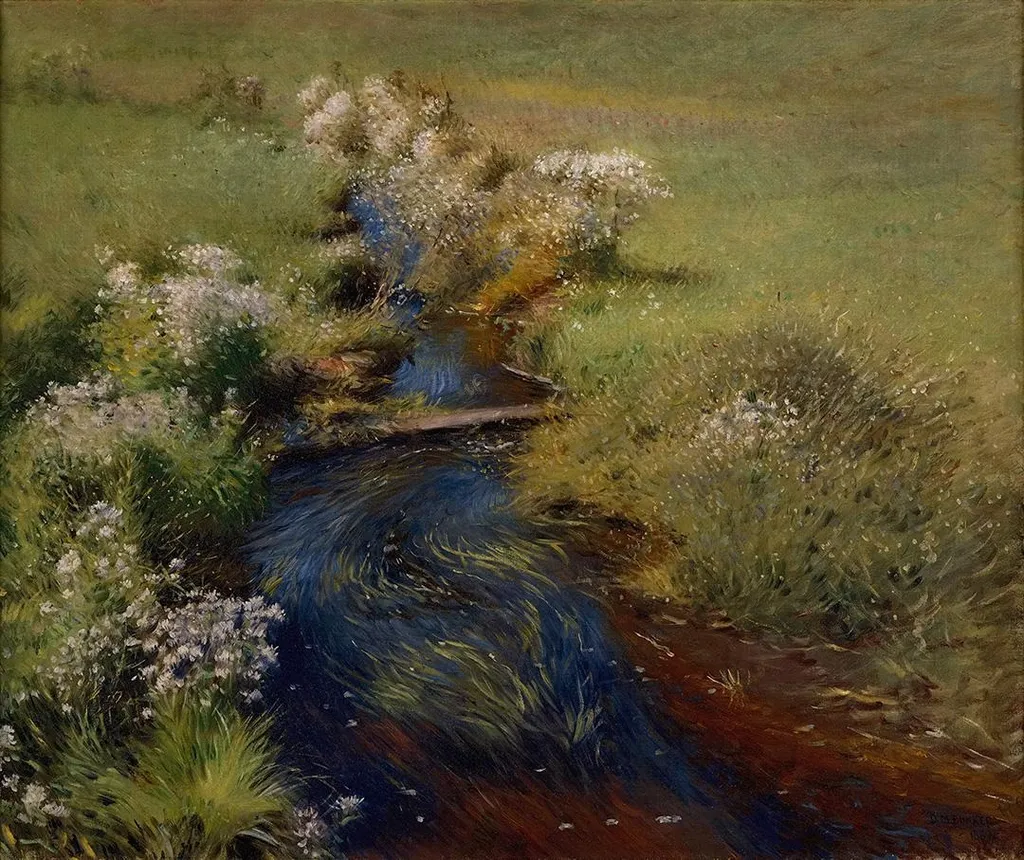
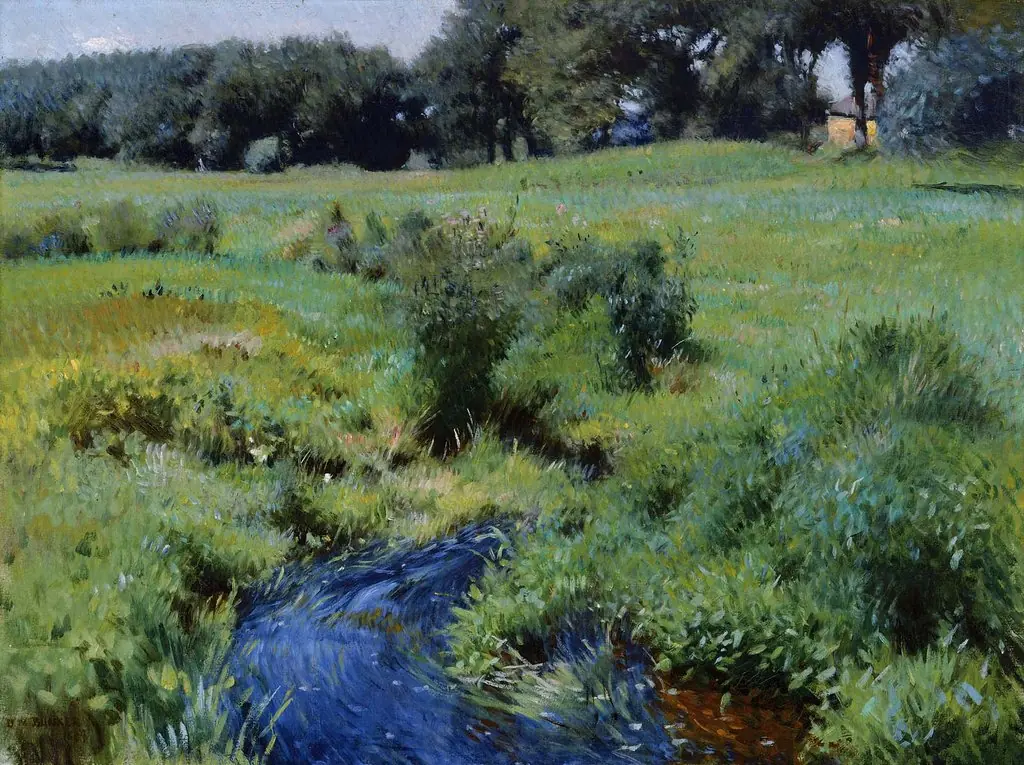
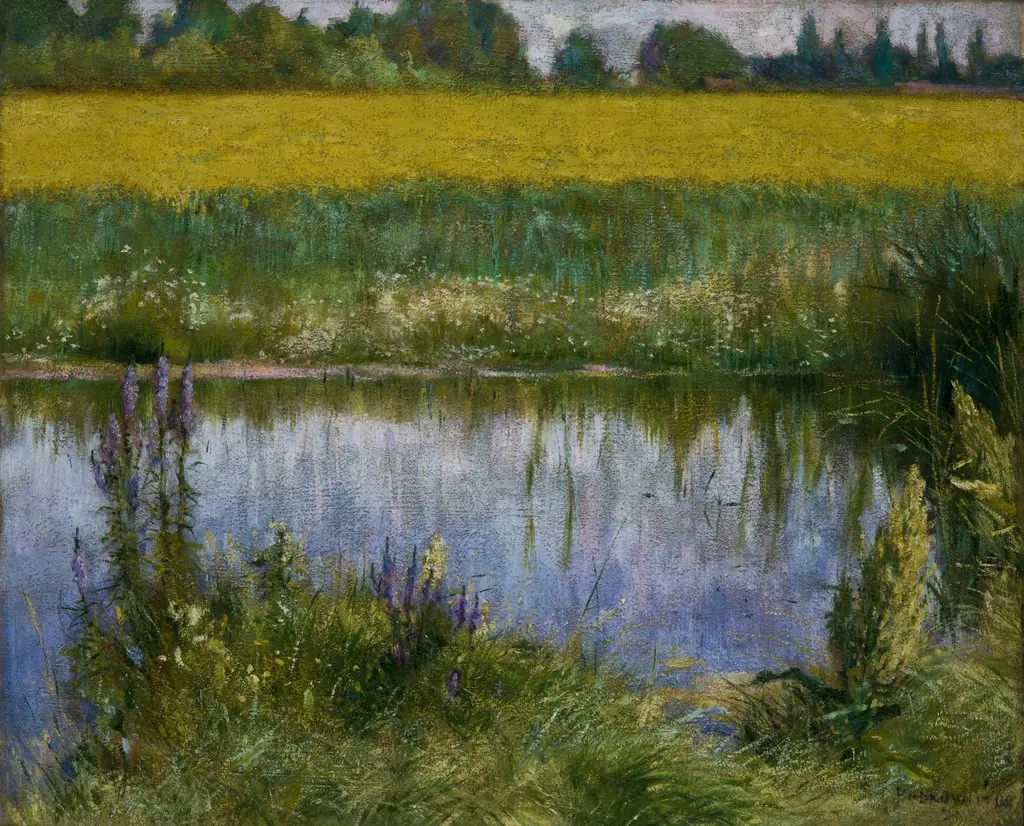
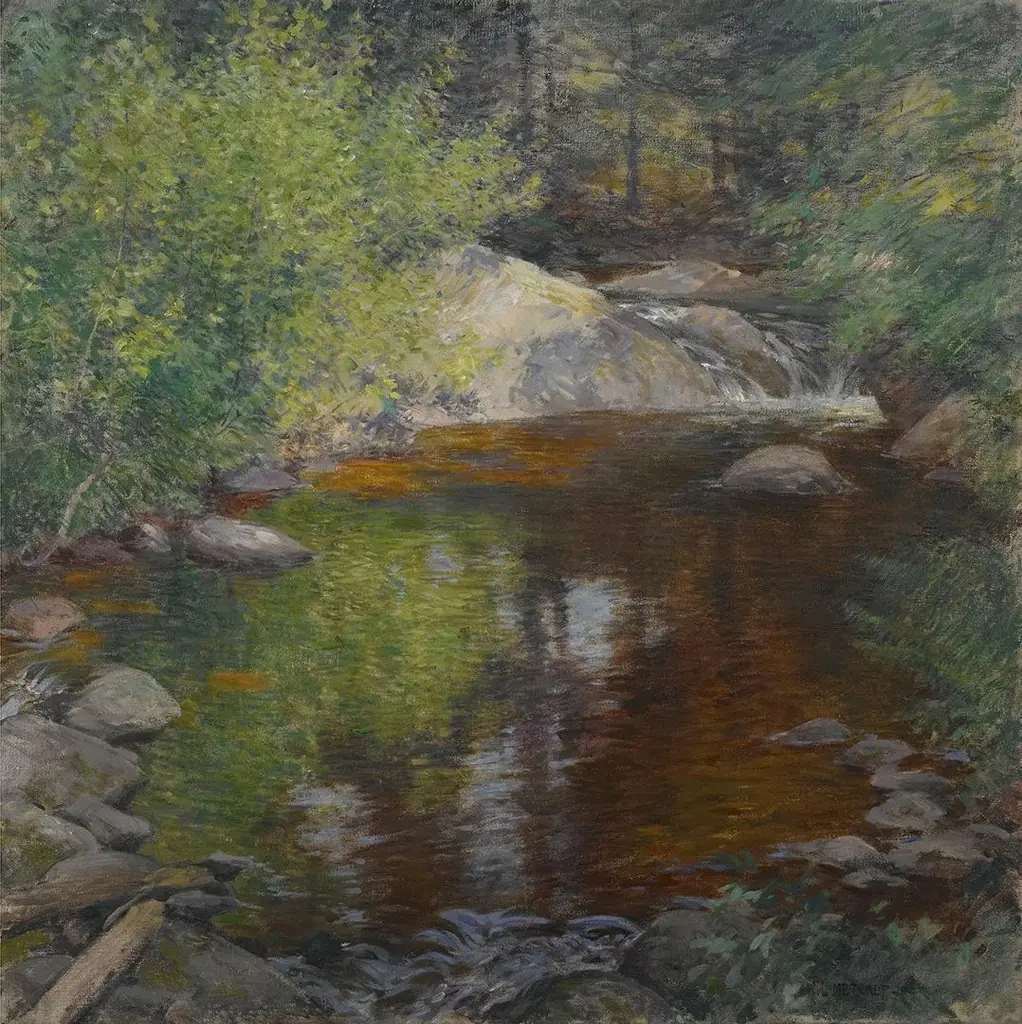
Wild Asters is an oil painting by the Impressionist artist Dennis Miller Bunker. It is held in the collection of the Crystal Bridges Museum of American Art.
About this work
Overview
It captures a quiet rural scene with a meandering stream, dense vegetation, and clusters of white wildflowers.
Painted in 1895, *Wild Asters* is an oil-on-canvas landscape by American artist Dennis Miller Bunker. It captures a quiet rural scene with a meandering stream, dense vegetation, and clusters of white wildflowers. Bunker, who died young in 1890, was among the first American painters to adopt Impressionist methods, blending light-sensitive brushwork with careful compositional structure. The work is now held in the collection of Crystal Bridges Museum of American Art.
Subject & Meaning
The painting depicts a modest, unidealized stretch of countryside, centered on a narrow stream flanked by tall grasses and blooming asters. There is no human presence, emphasizing nature’s quiet autonomy. The title draws attention to the wildflowers, suggesting an appreciation for transient, unassuming beauty. Bunker’s choice of subject reflects a shift from grand narratives toward intimate, everyday landscapes common in late 19th-century American Impressionism.
Technique & Style
Bunker employed loose, visible brushstrokes to convey texture and movement, particularly in the grasses and water’s surface. He used glazing techniques to build luminous layers of color, enhancing the play of light across the foliage. The palette is restrained yet nuanced, with greens and whites dominating, softened by subtle shifts in tone. The composition guides the eye along the stream’s curve, creating depth without overt perspective lines.
History & Provenance
Created shortly before Bunker’s death from meningitis at age 29, *Wild Asters* belongs to his final period of artistic development. It remained in private hands for decades before entering the Crystal Bridges Museum collection. The painting’s survival and recognition reflect renewed scholarly interest in underappreciated American Impressionists who bridged European techniques with domestic subjects.
Context
Bunker worked alongside figures like John Singer Sargent and Mary Cassatt during a time when American artists were increasingly drawn to French Impressionism. While European peers often painted urban or social scenes, Bunker focused on rural tranquility, aligning with a broader American trend toward naturalism. His work contributed to a distinctly local interpretation of Impressionism, rooted in New England’s landscapes.
Legacy
Though his career was cut short, Bunker’s influence endured through his students and the quiet evolution of American landscape painting. *Wild Asters* exemplifies his ability to merge technical precision with atmospheric immediacy. Today, it stands as a representative work of a generation that redefined American art by embracing light, color, and observation over academic convention.
Artist & collection


Museum
Crystal Bridges Museum of American Art
Continue through works from the same source collection.