Artwork
Foire de Village
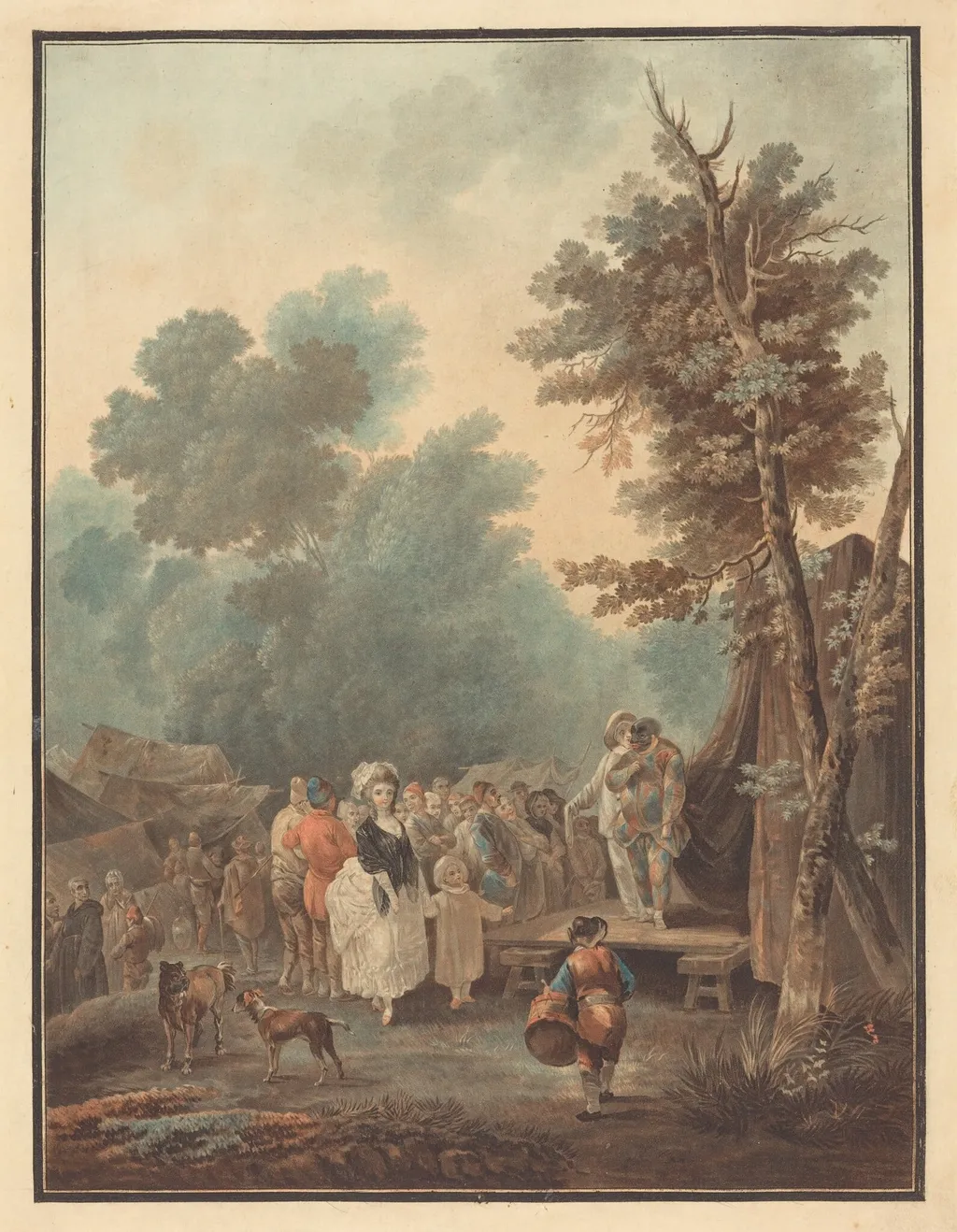
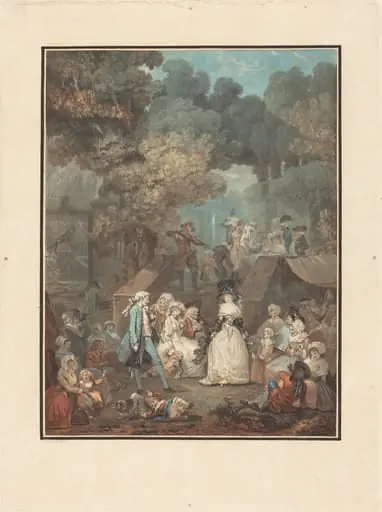
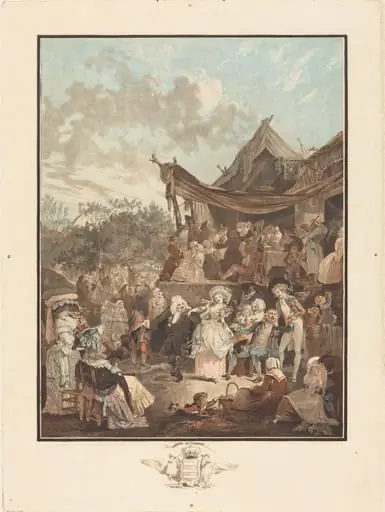
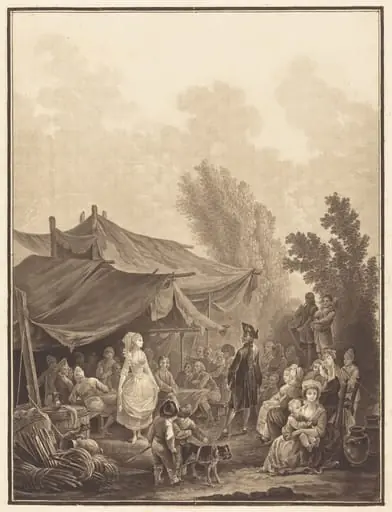
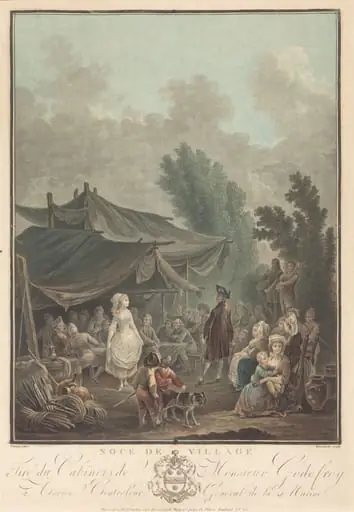
Foire de Village is an ink print by the Romanticist artist Charles-Melchior Descourtis. It dates from 1788 and is held in the collection of the National Gallery of Art.
About this work
Overview
It captures a rural fair set beneath a canopy of trees, with figures in period dress moving through a loosely organized scene of commerce and entertainment.
Foire de Village is a colored etching and engraving produced in 1788 by Charles-Melchior Descourtis. It captures a rural fair set beneath a canopy of trees, with figures in period dress moving through a loosely organized scene of commerce and entertainment. The print’s delicate lines and muted tones convey a quiet energy, avoiding theatricality in favor of observed daily life. Its composition balances movement and stillness, suggesting a moment suspended in time.
Subject & Meaning
The scene depicts a village fair as an ordinary social gathering rather than a grand spectacle. Attendees of varying social standing—some in fine garments, others in simple attire—interact casually around a small stage where performers entertain. Dogs, baskets, and idle strollers populate the margins, reinforcing the impression of routine festivity. The work presents community life without idealization, emphasizing shared, unremarkable moments over spectacle.
Technique & Style
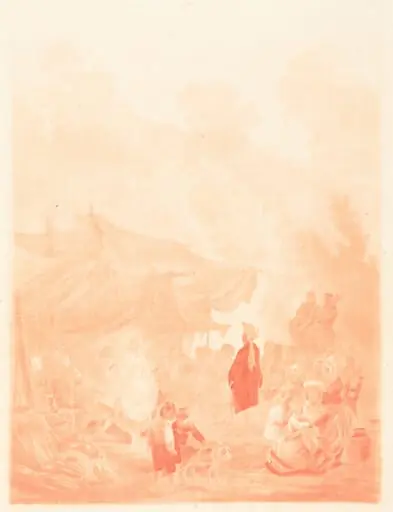
Descourtis employed etching and engraving to achieve fine, fluid lines that suggest motion and texture. Soft, layered colors—applied by hand or through multiple plates—enhance the atmospheric quality of the woodland setting. Delicate hatching defines foliage and clothing, while subtle gradations in tone guide the eye through the crowd. The technique avoids bold contrasts, favoring a quiet harmony that mirrors the scene’s unassuming character.
History & Provenance
Created in 1788, the print emerged during a period when French artists increasingly turned to everyday subjects rather than historical or mythological themes. Descourtis, known for his genre scenes, likely produced this work for a broad audience interested in domestic and rural life. Its survival in multiple institutional collections suggests it was widely circulated, possibly as part of a series documenting French village customs.
Context
In late 18th-century France, urbanization and social change prompted renewed interest in rural traditions. Artists like Descourtis documented these scenes as both record and quiet commentary. The fair’s inclusion of mixed social classes reflects broader cultural curiosity about communal life beyond aristocratic circles. Such prints offered middle-class viewers a glimpse into worlds they might encounter during seasonal outings or travel.
Legacy
Foire de Village stands as an example of pre-Revolutionary French genre printmaking that prioritized observation over narrative drama. While not widely celebrated in its time, it contributes to a growing body of work that valued the ordinary. Its preservation in public collections underscores its role as a visual document of 18th-century French social texture, appreciated more for its quiet authenticity than its technical innovation.
Artist & collection

Artist
Charles-Melchior Descourtis (1753–1820) was a French artist, born in Paris.

 Noce de Village (Village Wedding)
 La Lutschinen sortant du Glacier inférieur du Grindelwald
 Chute de la Tritt dans la vallée de Muhlethal
 Noce de Village (Village Wedding)
 Noce de Village (Village Wedding)
 Noce de Village (Village Wedding)
 Noce de Village (Village Wedding)
 Noce de Village (Village Wedding)