Artwork
Noce de Village (Village Wedding)
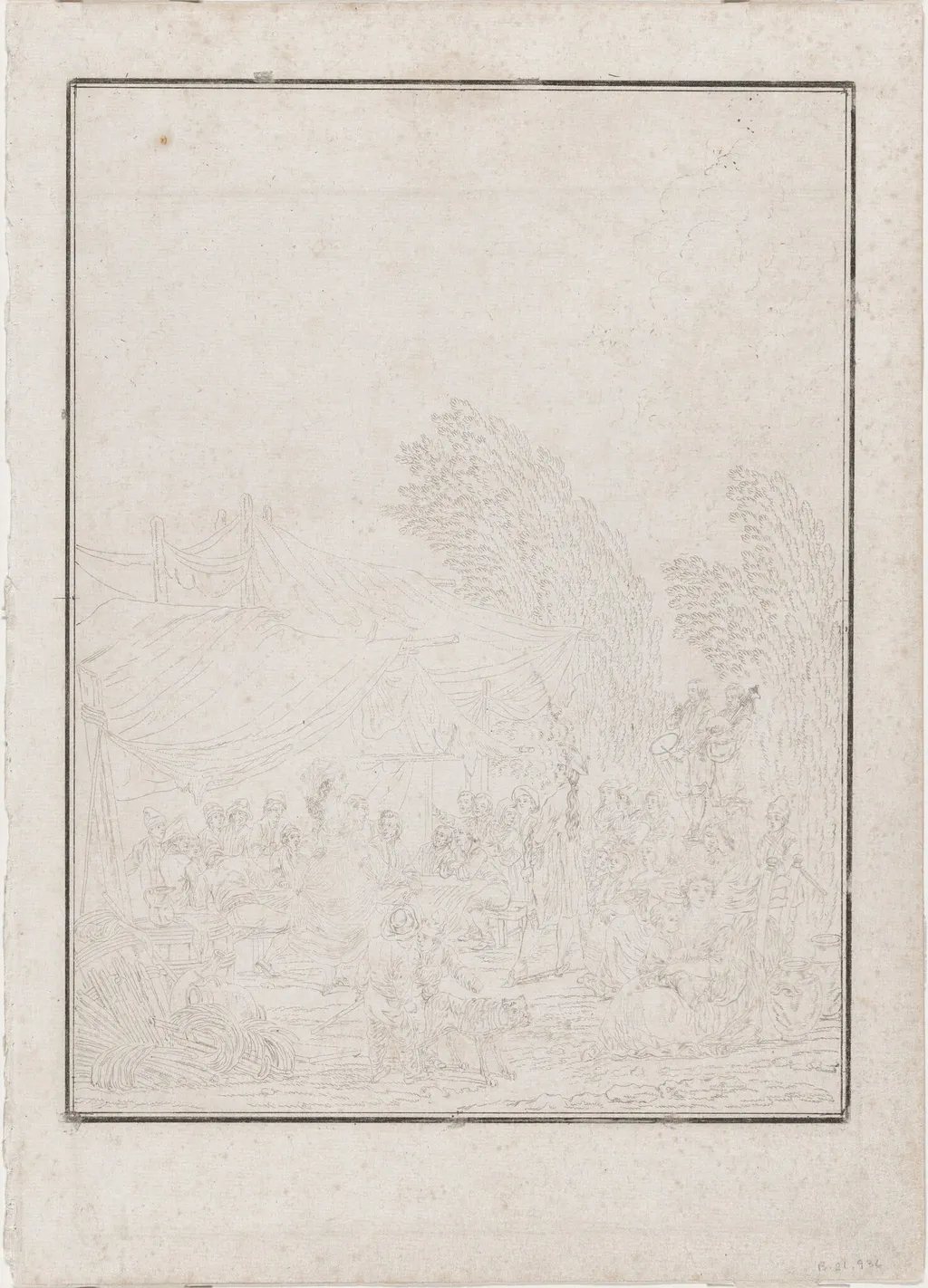
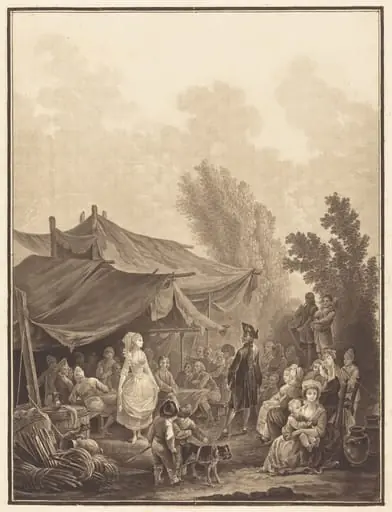
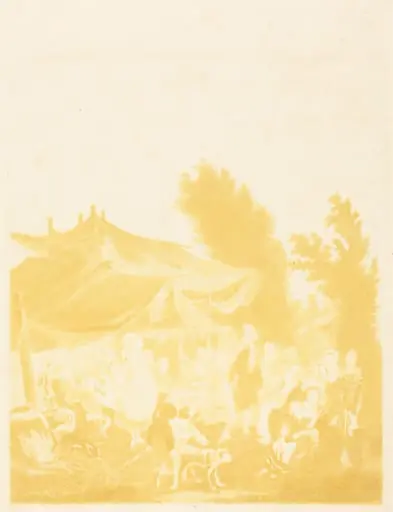
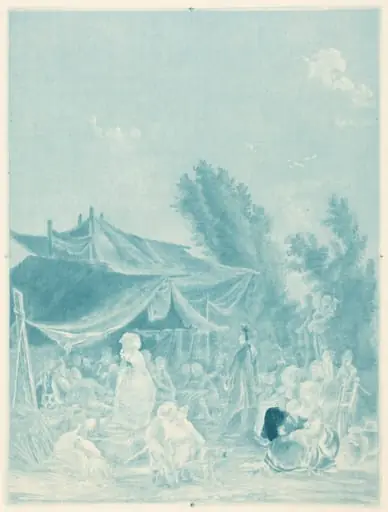
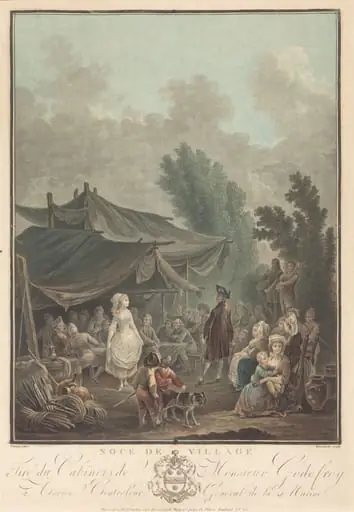
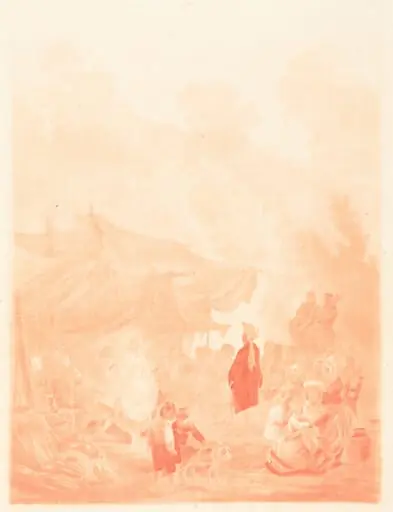
Noce de Village (Village Wedding) is an ink print by the Romanticist artist Charles-Melchior Descourtis. It dates from 1785 and is held in the collection of the National Gallery of Art.
About this work
Overview
Charles-Melchior Descourtis’s print *Noce de Village* (Village Wedding) is an 1785 etching executed in black ink. The work presents a bustling rural celebration, arranged on a single plane of line without any color. Its composition centers on a communal feast beneath a canopy, while the newlyweds and a small ensemble of musicians occupy the background, all rendered in delicate monochrome.
Subject & Meaning
Guests are shown seated at long tables, sharing food and conversation, suggesting the social importance of communal feasting.
The image captures a typical French village wedding, emphasizing collective participation rather than individual romance. Guests are shown seated at long tables, sharing food and conversation, suggesting the social importance of communal feasting. The bride and groom, positioned near a tree, are framed by musicians, underscoring the role of music and ritual in marking the transition from single life to marriage within the community.
Technique & Style
Descourtis employed traditional copper-plate etching, incising fine lines into metal with acid to achieve varied tonal depth. The artist’s control of line weight creates a soft, layered effect, allowing textures such as fabric folds and foliage to emerge subtly. The monochrome palette focuses attention on composition and detail, while the interplay of light and shadow is conveyed through the density of the etched lines.
History & Provenance
Created in 1785, the print belongs to the late‑eighteenth‑century French printmaking tradition that documented everyday life. While specific ownership records are scarce, the work has been cited in catalogues of Descourtis’s oeuvre and appears in collections that specialize in French genre prints of the period, reflecting its relevance to studies of rural customs before the Revolution.
Context
The image was produced during a time when French artists increasingly turned to genre scenes to document social practices. Village weddings offered a vivid subject for exploring communal bonds, and etching provided an affordable means of reproducing such scenes for a broader audience, aligning with the Enlightenment’s interest in folk culture and the everyday.
Artist & collection

Artist
Charles-Melchior Descourtis (1753–1820) was a French artist, born in Paris.

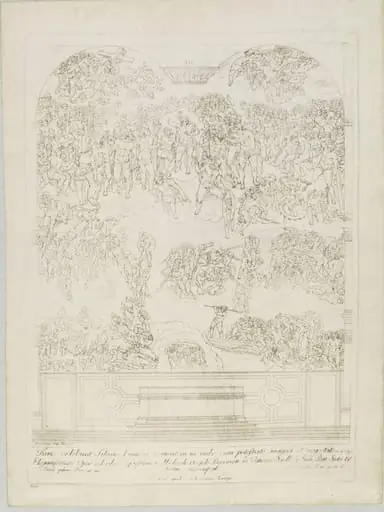 Last Judgment
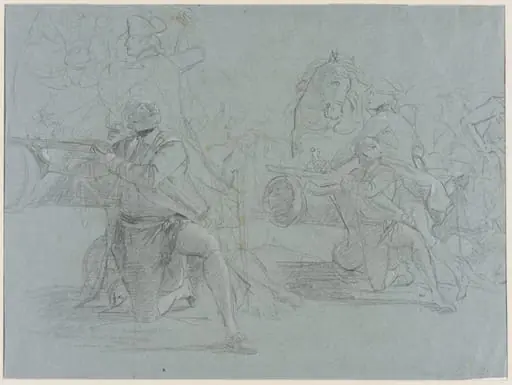 Study for 'The Siege of Gibraltar'
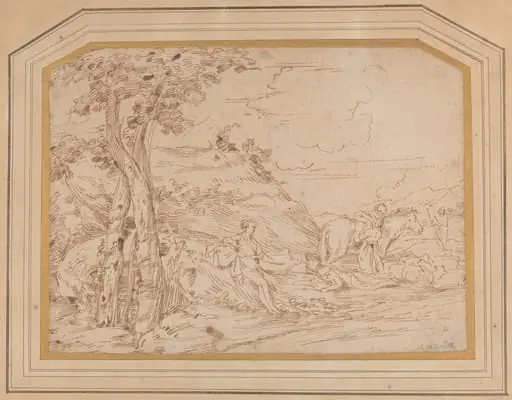 A Wooded Landscape with a Shepherd and His Family
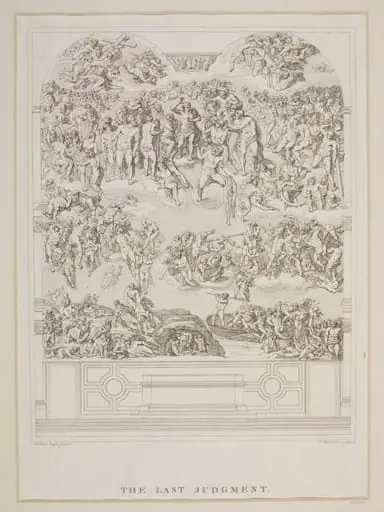 The Last Judgment
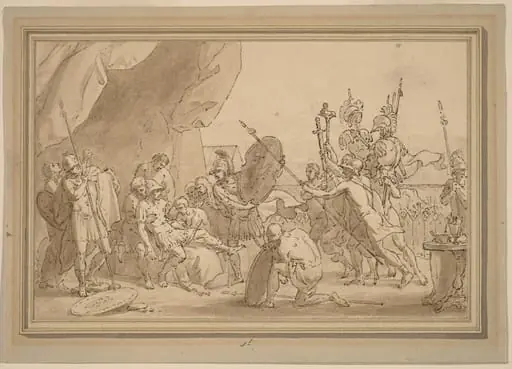 Death of a General
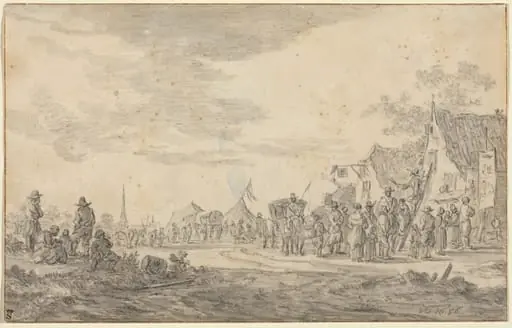 Village Fair
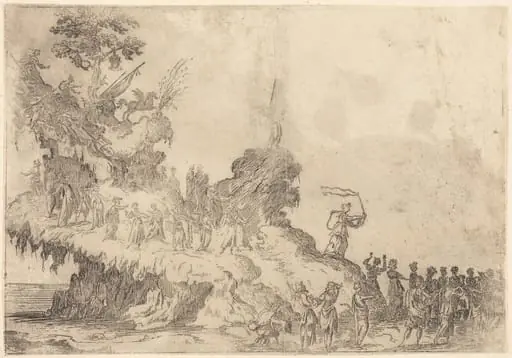 The Float of Mount Parnassus
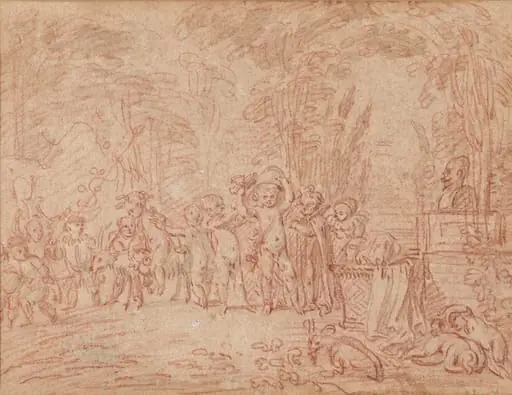 Children Parodying a Triumph of Bacchus
 Studies of Seated and Reclining Figures
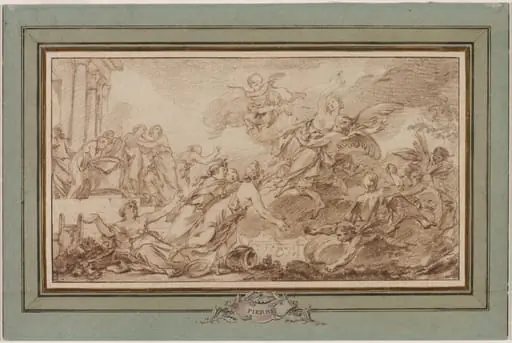 Boreas Abducting Oreithyia
 Panthea before Cyrus? (verso)