Artwork
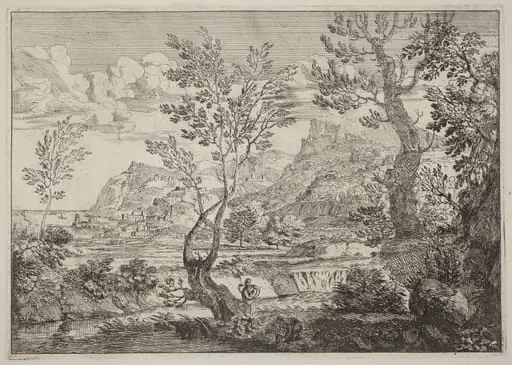
Riverscape with a Waterfall
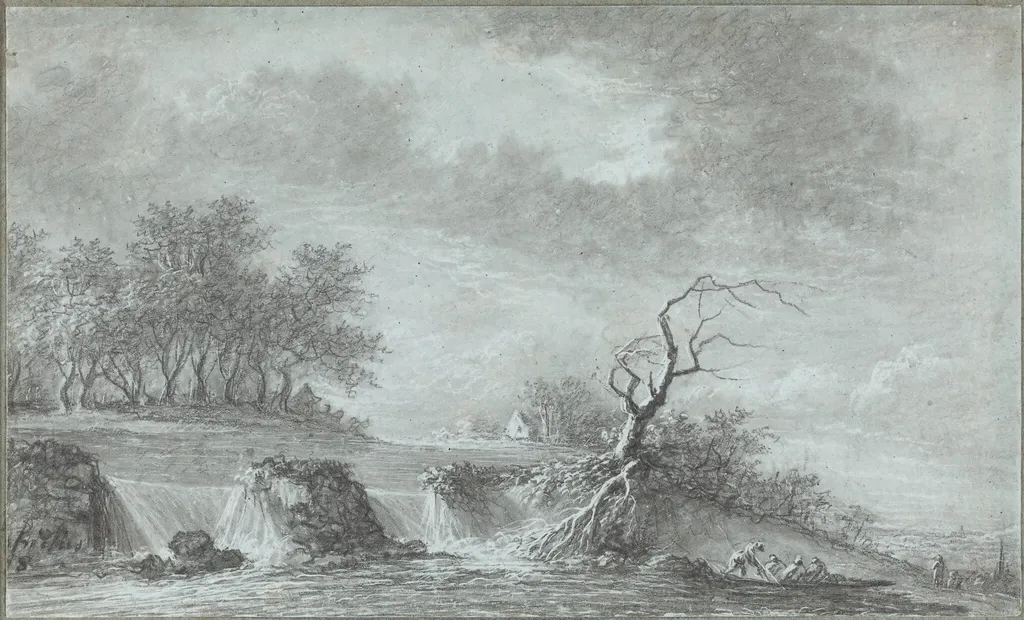
Riverscape with a Waterfall is a graphite drawing by the Romanticist artist Aignan-Thomas Desfriches. It dates from 1768 and is held in the collection of the National Gallery of Art.
About this work
The painting is called Riverscape with a Waterfall.
It was made in 1768.
The artist used graphite and scratching-out on paper, which is an interesting technique.
The fact that it's from 1768 makes it notable, as this was a time when artists were starting to experiment with new styles.
You can learn more about this style by looking into the movement: Romanticism.
Overview
Created in 1768 by Aignan-Thomas Desfriches, this drawing depicts a natural landscape centered on a cascading waterfall. Executed in graphite on white prepared paper, the work employs stumping for tonal gradation and scratching-out to highlight light areas, demonstrating a refined approach to monochrome landscape representation.
Subject & Meaning
The scene presents a tranquil riverscape, where water flows over rocky ledges into a calm pool below. There is no human presence, emphasizing the quiet grandeur of nature. The composition invites contemplation, aligning with emerging 18th-century sensibilities that valued solitude and the sublime in natural settings.
Technique & Style
Desfriches used graphite with stumping to achieve soft transitions in shadow and tone, while scratching-out the paper’s surface revealed highlights, mimicking reflected light on water and rock. This method, uncommon in landscape drawing at the time, shows a deliberate manipulation of material to evoke texture and luminosity without color.
History & Provenance
The drawing was completed in 1768 and later mounted on a support, suggesting it was preserved as a finished work rather than a sketch. Its survival in good condition indicates early recognition of its technical merit, though its early ownership remains undocumented.
Context
In the late 1760s, French artists were shifting from formalized classical landscapes toward more intimate, naturalistic views. Though Romanticism would fully emerge later, Desfriches’ focus on unidealized nature and atmospheric effect anticipates its themes, reflecting broader cultural interest in the emotional resonance of the wild.
Legacy
The work stands as an early example of graphite drawing elevated to a refined artistic statement. Its technique influenced later landscape draftsmen who explored monochrome effects, though Desfriches himself remained relatively obscure, leaving this piece as a quiet testament to his skill.
Own this work as a print
Artist & collection


 Landscape with a Winding Road
 The Isar with Boulders on the Isarhohe
 Landscape with high bank and railings
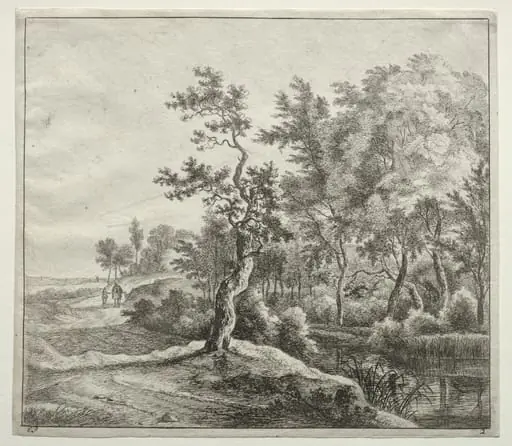 The Serpentine Road
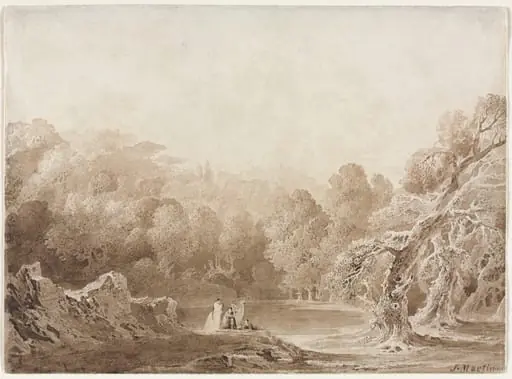 A Man Playing a Harp with other Figures beside a Lake
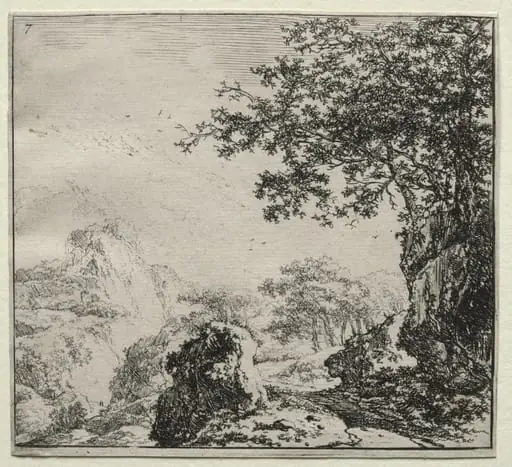 The Road near the Rocks
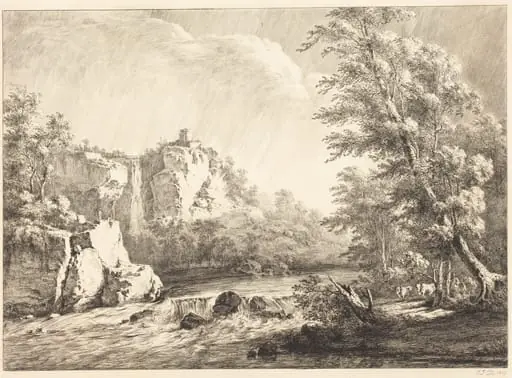 River Landscape with a Passing Storm
 Landscape, after Français
 Travelers in a Rocky Wood
 Landscape with a Waterfall and a Resting Family
 The Waterfall: pl.6
 A Waterfall