Artwork
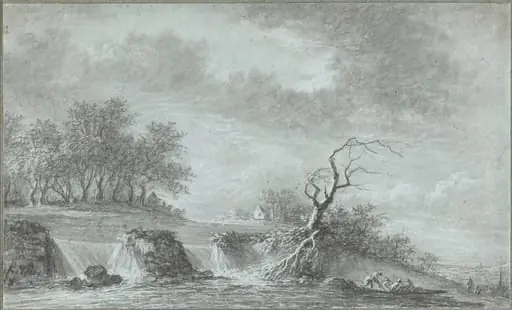
River Landscape with a Passing Storm
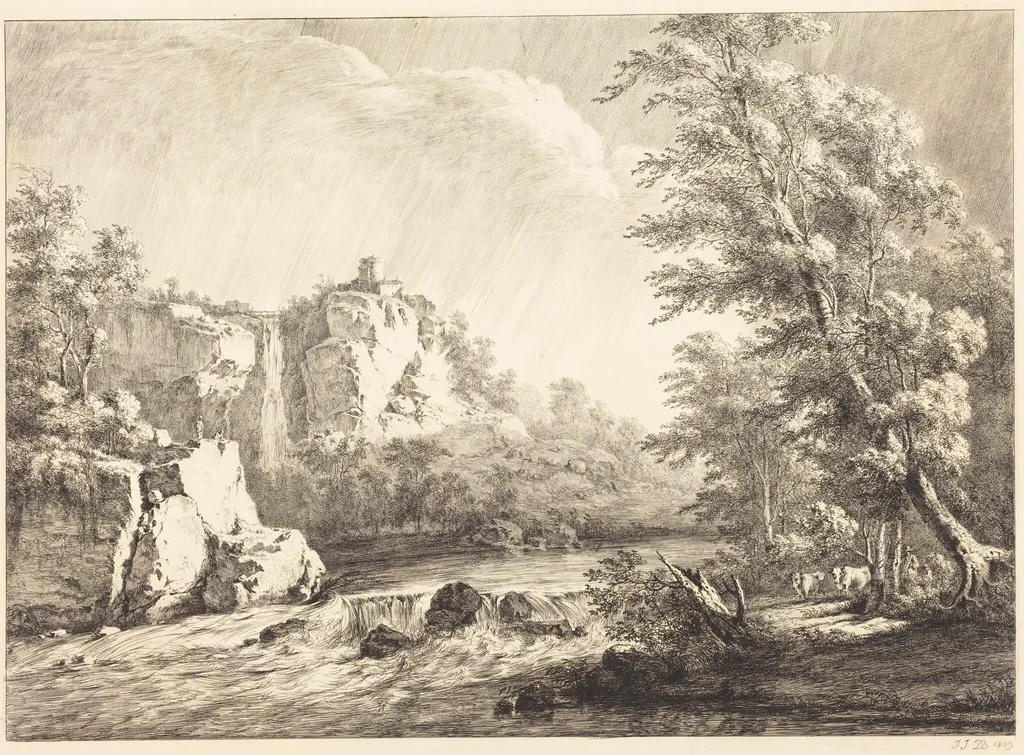
River Landscape with a Passing Storm is an ink print by the Romanticist artist Jean-Jacques de Boissieu. It dates from 1809 and is held in the collection of the National Gallery of Art.
About this work
Overview
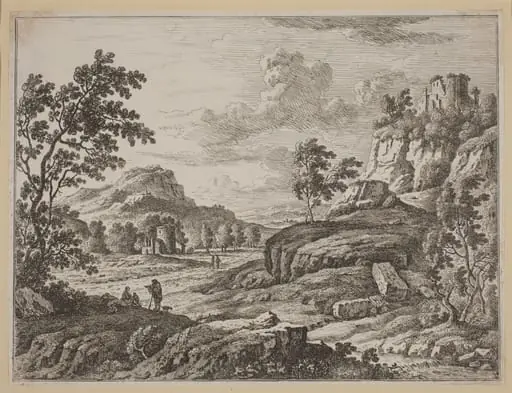
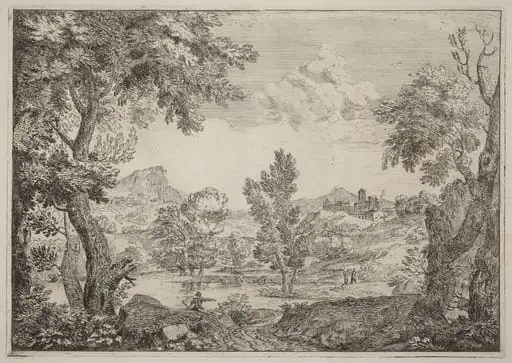
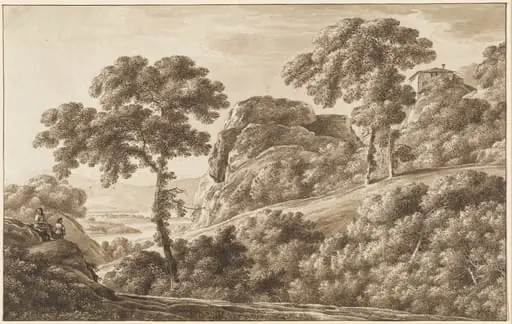
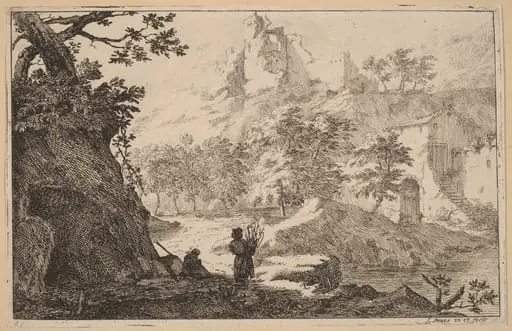
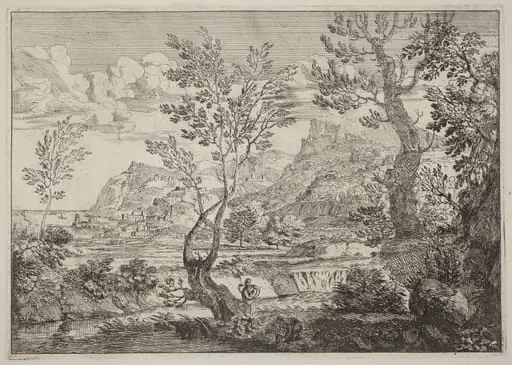
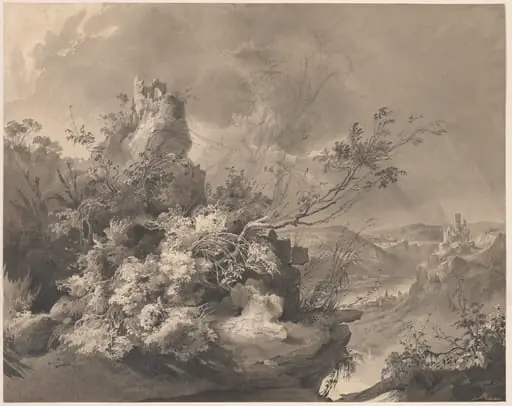
Jean‑Jacques de Boissieu’s 1809 print, titled River Landscape with a Passing Storm, presents a broad river scene framed by steep cliffs and dense woodland.
Jean‑Jacques de Boissieu’s 1809 print, titled River Landscape with a Passing Storm, presents a broad river scene framed by steep cliffs and dense woodland. The composition captures a moment when a storm moves across the sky, its clouds darkening the horizon while a waterfall pours into the water’s flow. In the lower foreground, a small group of cattle grazes near the riverbank, grounding the dramatic natural setting.
Subject & Meaning
The work juxtaposes the transient power of weather with the steady presence of rural life. By placing the storm’s turbulence against the placid activity of the cows, de Boissieu suggests a balance between nature’s forces and human‑tended landscapes, a theme common in early nineteenth‑century depictions of the countryside.
Technique & Style
Executed through etching and engraving, with occasional roulette work on laid paper, the print achieves fine gradations of tone. The artist’s manipulation of light and shadow creates depth, while the textural marks from the roulette add a subtle grain that evokes the roughness of rock and foliage, lending the scene a tactile quality.
History & Provenance
Created in 1809, the print reflects de Boissieu’s interest in Romantic landscape subjects. While specific ownership records are scarce, the work has circulated among collections focusing on early nineteenth‑century French prints, illustrating the period’s fascination with atmospheric natural scenes.
Artist & collection
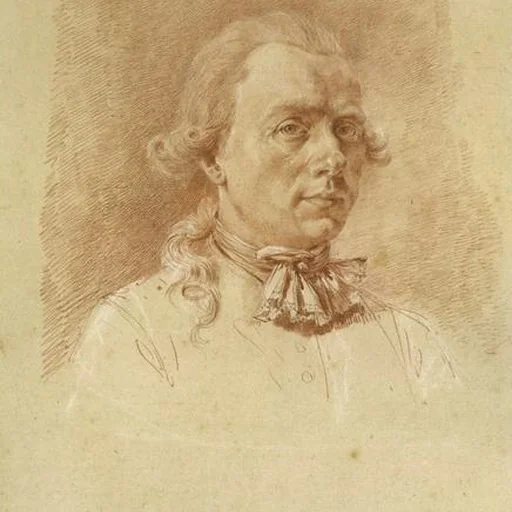
Artist
Jean-Jacques de Boissieu (1736–1810) was a French artist, born in Lyon.