Artwork
Untitled
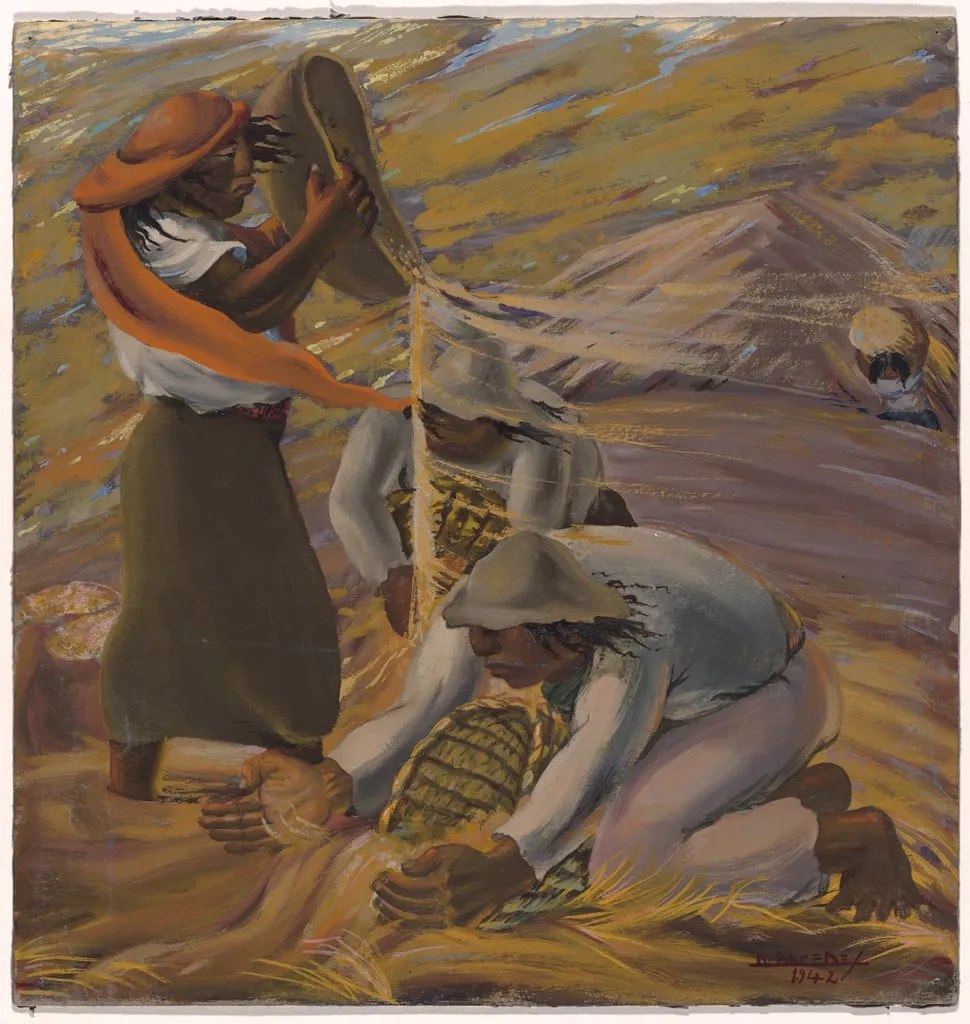
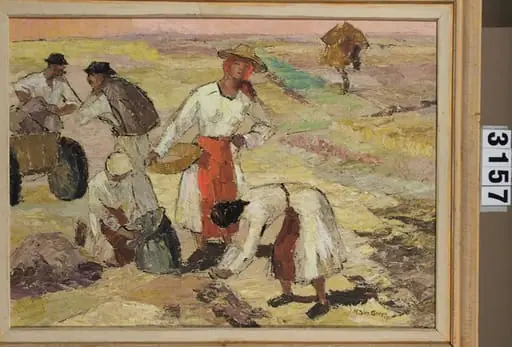
Untitled is a tempera drawing by Diógenes Paredes. It dates from 1942 and is held in the collection of the Museum of Modern Art.
About this work
You see two farm workers bent over, cutting grain with sickles in a sunlit field.
Paredes painted this in 1942, when Ecuador was still mostly rural. The tempera—pigment mixed with egg yolk—lets him build up tiny brushstrokes that look like straw and sweat. The faces are blurred, so the focus stays on the work itself.
Look up more tempera paintings in The Museum of Modern Art.
Overview
Untitled, a tempera work on board by Ecuadorian artist Diógenes Paredes, dates to 1942 and is part of the collection of the Museum of Modern Art. The piece depicts a sun‑lit agricultural scene in which two laborers are bent over a field, harvesting grain with sickles. Though modest in size, the drawing conveys a vivid snapshot of rural life in mid‑twentieth‑century Ecuador.
Subject & Meaning
The composition centers on two anonymous farm workers engaged in the act of cutting wheat, their bodies low to the ground and their faces indistinct. By rendering the figures without individual features, Paredes emphasizes the collective nature of agrarian labor and the rhythm of the harvest, inviting viewers to contemplate the dignity of everyday toil rather than personal narratives.
Technique & Style
Executed in tempera, the artist mixed pigments with egg yolk to achieve a fast‑drying medium that supports fine, layered brushstrokes. These strokes mimic the texture of straw and the sheen of sweat, creating a tactile surface that suggests both the physicality of the field and the heat of the sun. The muted palette and blurred visages further draw attention to the materiality of the work itself.
History & Provenance
Created during a period when Ecuador remained predominantly agrarian, the drawing reflects contemporary social conditions. It entered the Museum of Modern Art’s holdings in the latter half of the twentieth century, where it has been displayed as part of the institution’s representation of Latin American modernism.
Context
In the early 1940s, Ecuador’s economy was largely based on agriculture, and many artists turned to rural subjects to document a way of life that was rapidly changing. Paredes’s choice of tempera—a medium with historic ties to early Renaissance painting—links his modern scene to a longstanding artistic tradition of detailed, labor‑focused representation.
Artist & collection