Artwork
A House by a Stream
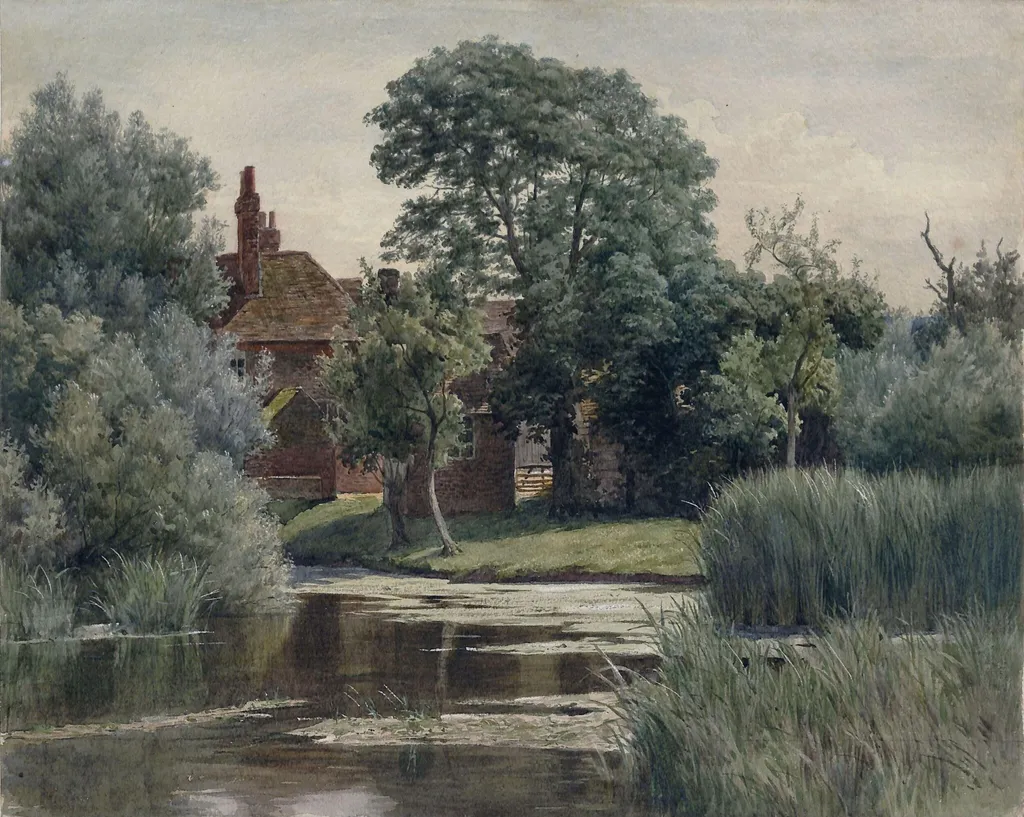
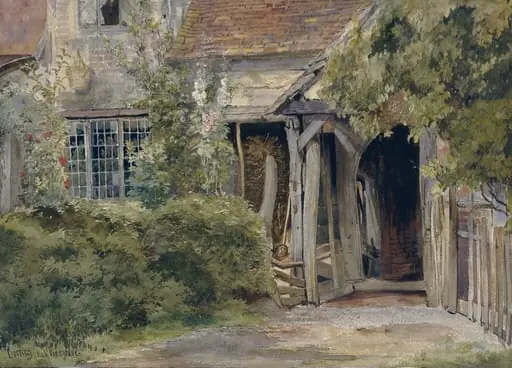
A House by a Stream is a watercolor work on paper by the British Romanticist artist Francis Bernard Dicksee. It dates from 1870 and is held in the collection of the Victoria and Albert Museum.
About this work
Overview
A watercolour titled *A House by a Stream* presents a modest rural dwelling nestled beside a gentle waterway. Rendered in soft, restrained tones, the scene captures a moment of stillness without embellishment. The composition emphasizes quiet harmony between structure and landscape, avoiding dramatic effects in favor of observed detail and subtle atmospheric balance.
Subject & Meaning
The subject is an unadorned domestic structure, likely a working farmhouse, positioned near a stream that mirrors the sky. Steps lead toward the entrance, suggesting daily use, while surrounding vegetation—tall grass and trees—frames the scene naturally. There is no narrative or symbolism; the meaning lies in the quiet dignity of ordinary rural life as seen through attentive observation.
Technique & Style
The artist employed watercolour with a restrained palette of muted greens, browns, and soft greys. Washes blend gently to suggest light and texture, with no sharp outlines or exaggerated contrasts. Brushwork is deliberate but unobtrusive, capturing the reflective surface of water and the roughness of brick and wood through careful layering rather than detail.
History & Provenance
The painting’s origin and early ownership are undocumented. It appears to have been created as a personal study rather than a commissioned work, consistent with 19th-century amateur or regional artists who recorded local scenes. Its survival suggests it was preserved within a family or local collection, not exhibited publicly.
Context
This work aligns with the broader 19th-century interest in everyday landscapes, particularly in regions where industrialization had not yet transformed the countryside. It reflects a shift toward direct observation over idealized scenery, anticipating the principles of Realism in art, though it lacks the social commentary often found in that movement.
Legacy
Though not widely known, the painting contributes to a quiet tradition of unpretentious landscape watercolours that valued truth of appearance over spectacle. It remains a quiet example of how ordinary places were recorded with care, offering insight into the visual culture of its time without seeking recognition.
Own this work as a print
Artist & collection
Artist
Francis Dicksee painted quiet, detailed watercolors of buildings and landscapes in the late 1800s.

 A Cottage Near Bedford
 Trees and Cattle
 The Thames at Wargrave: Midday
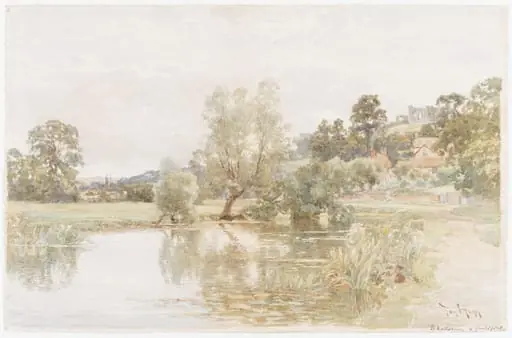 St. Catherine's Chapel, above Artington and the River Wey
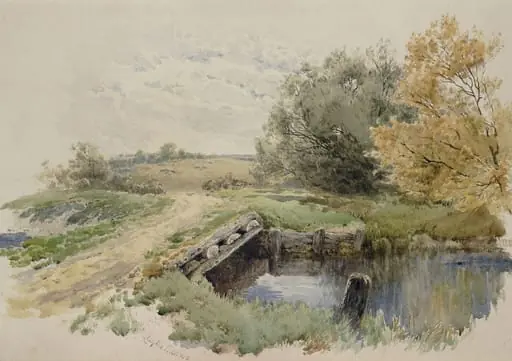 Landscape with bridge over stream
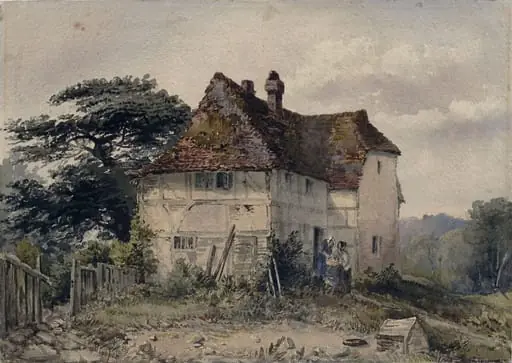 Landscape with cottage
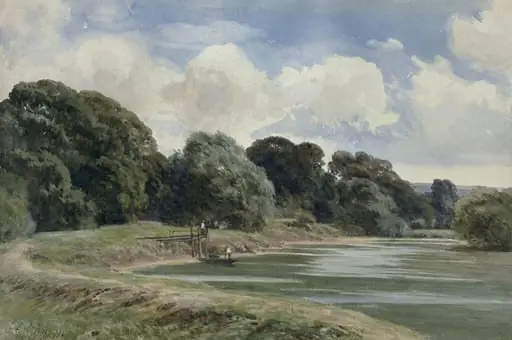 A Peaceful River
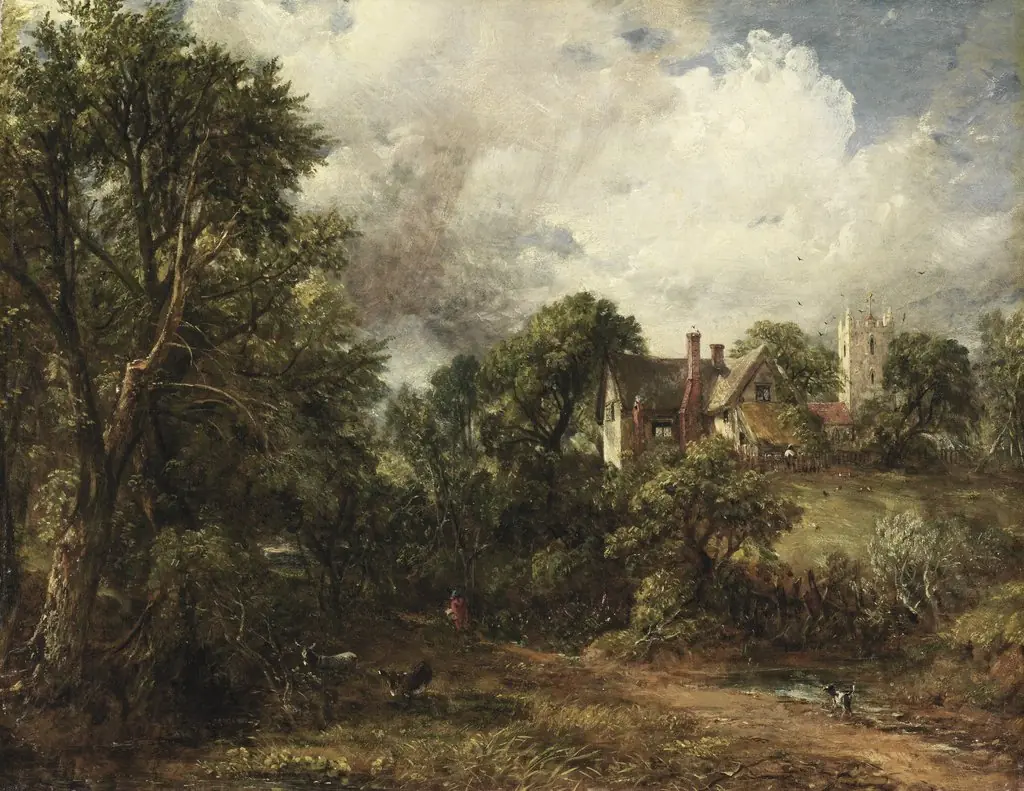 The Glebe Farm
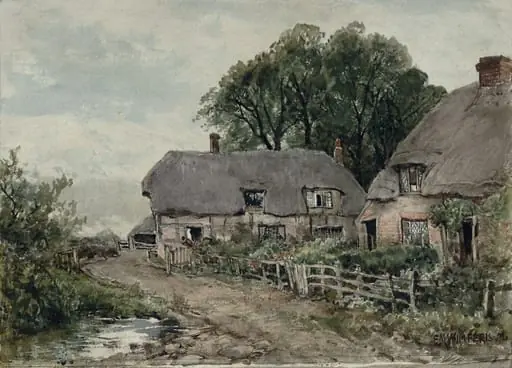 Cottages Near Ringwood, Hants
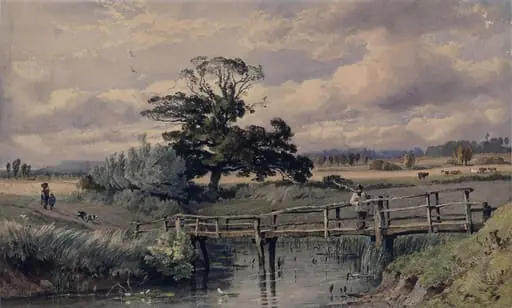 Landscape
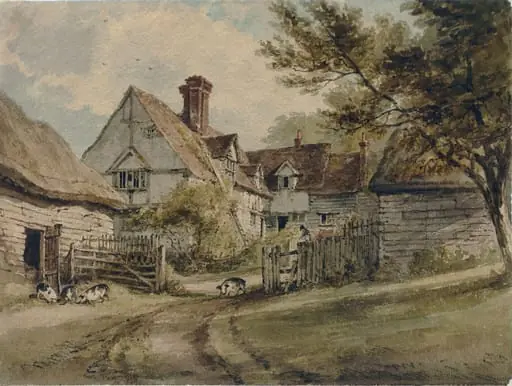 Farmhouse with Pigs
 Cottage with porch, Dorney, near Windsor