Artwork
Farmhouse with Pigs
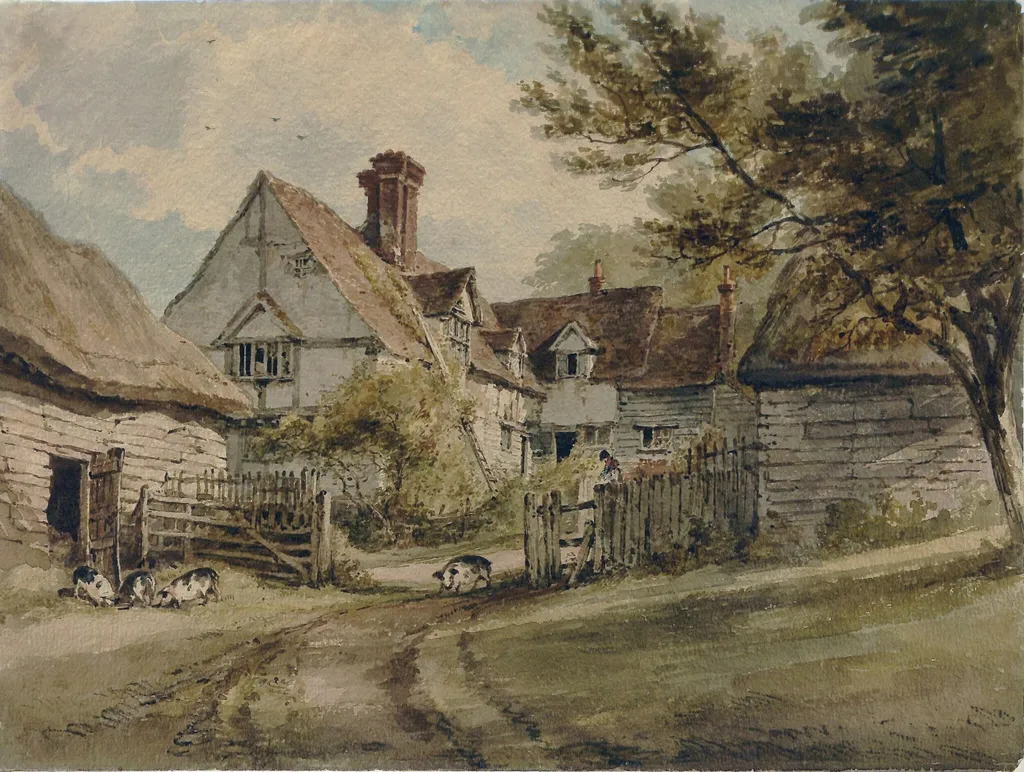
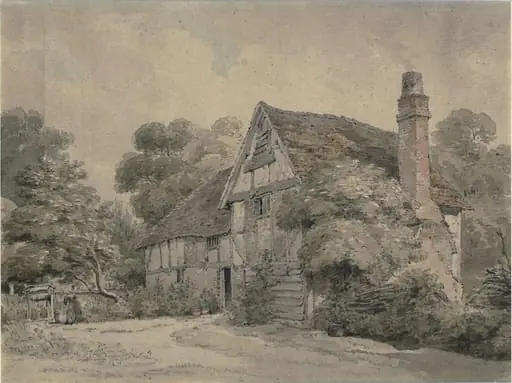
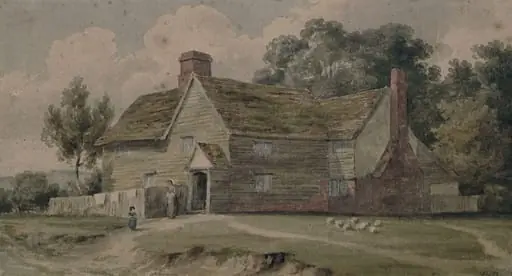
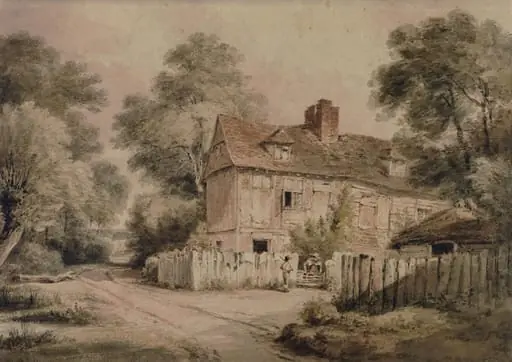
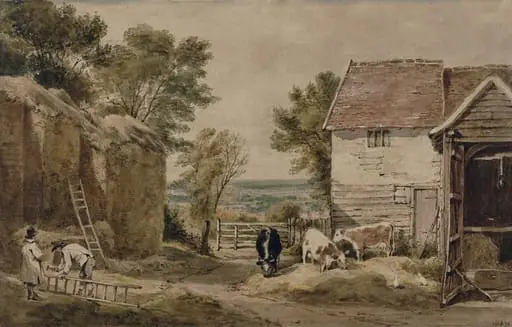
Farmhouse with Pigs is a watercolor work on paper by the British Romanticist artist Henry RA Edridge. It dates from 1811 and is held in the collection of the Victoria and Albert Museum.
About this work
Overview
Painted in 1811 by Henry RA Edridge, this watercolour depicts a modest rural dwelling surrounded by simple outbuildings.
Painted in 1811 by Henry RA Edridge, this watercolour depicts a modest rural dwelling surrounded by simple outbuildings. The scene is rendered in delicate washes, emphasizing quiet daily life rather than grandeur. Held in the Victoria and Albert Museum’s collection, the work reflects the artist’s interest in unidealized landscapes and domestic moments, typical of early 19th-century British watercolour practice.
Subject & Meaning
A woman stands in the doorway of a stone-and-timber farmhouse, observing two pigs foraging near a weathered fence. The composition avoids narrative drama, instead focusing on stillness and routine. The muddy ground and leaning tree suggest the dampness of the countryside, while the faint smoke from a chimney implies quiet habitation. The scene conveys dignity in ordinary rural existence, without sentimentality or idealization.
Technique & Style
Edridge employed transparent watercolour washes to build subtle tonal variations, capturing the texture of rough stone, bark, and wet earth with minimal brushwork. Shadows are softly layered to suggest depth without heavy outlines. The muted palette—soft greys, browns, and greens—enhances the atmosphere of a damp, overcast day. The technique prioritizes atmospheric effect over detail, aligning with the watercolour tradition of capturing transient light and mood.
History & Provenance
Created in 1811, the work entered the Victoria and Albert Museum’s collection as part of its broader acquisition of British watercolours from the 18th and 19th centuries. It was not exhibited widely during Edridge’s lifetime, and its survival reflects the museum’s commitment to preserving lesser-known works of domestic realism. No significant alterations or restorations are recorded.
Context
In the early 1800s, British artists increasingly turned to rural subjects as industrialization reshaped the landscape. Edridge’s painting aligns with this trend, presenting farm life without romantic embellishment. Unlike grand Romantic landscapes, it favors intimacy and observation, reflecting a growing interest in the everyday as worthy of artistic attention, particularly within the watercolour medium.
Legacy
Though not widely known today, the painting exemplifies the quiet realism that characterized many British watercolourists of the period. It contributes to an understudied strand of art history that valued modest scenes and technical restraint. Its preservation in a major museum ensures its continued role as a reference for the evolution of domestic and landscape watercolour in early 19th-century Britain.
Own this work as a print
Artist & collection
Artist
A prolific watercolour artist working at the turn of the 19th century, Henry Edridge captured daily life in soft, detailed strokes.