Artwork
The Assumption and Coronation of the Virgin
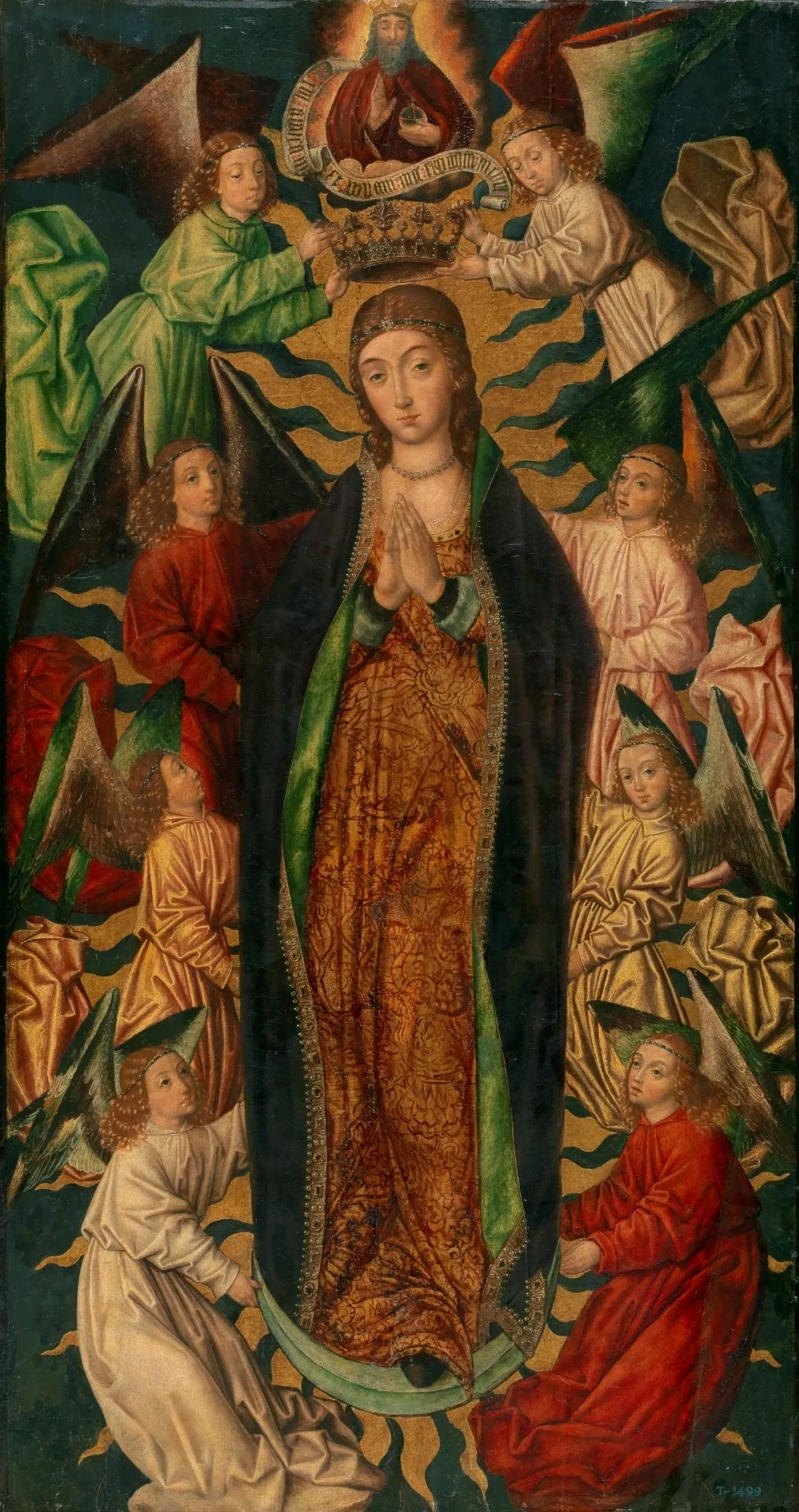
The Assumption and Coronation of the Virgin is an oil painting by the Early Renaissance artist Diego de la Cruz. It dates from 1499 and is held in the collection of the Museo del Prado.
About this work
Overview
Created in 1499, *The Assumption and Coronation of the Virgin* is an oil painting attributed to Diego de la Cruz, a painter active in the Burgos region at the turn of the 16th century. Executed in an early Renaissance idiom, the work combines two biblical episodes—Mary’s ascent to heaven and her subsequent coronation—as a single visual narrative. The canvas now belongs to the Museo del Prado in Madrid.
Subject & Meaning
The composition conveys both the theological triumph of the Assumption and the regal affirmation of her celestial status.
The central figure is the Virgin Mary, shown in a flowing gold‑and‑green mantle with her hands clasped in prayer. Encircling her are seven angels, each rendered in vivid garments; some hold a crown, others gesture or kneel, emphasizing the moment of her elevation to Queen of Heaven. The composition conveys both the theological triumph of the Assumption and the regal affirmation of her celestial status.
Technique & Style
Diego de la Cruz employed oil glazing to achieve a luminous atmosphere, layering transparent pigments that give the sky a soft, radiant glow. The figures are modeled with delicate modeling and a restrained use of chiaroscuro, characteristic of early Renaissance art in northern Spain. Gold accents on the robes and crown catch the light, creating a subtle contrast against the darker background.
History & Provenance
The painting was likely completed near the end of de la Cruz’s documented activity in Burgos (1482‑1500). It entered the Spanish royal collection before being transferred to the national museum system, ultimately arriving at the Prado where it has been on display since the early 20th century. No major restorations are recorded, preserving its original surface qualities.
Context
The work reflects the devotional climate of late‑medieval Castile, where Marian veneration was central to both liturgical practice and private piety. Its dual narrative format mirrors similar compositions found in Flemish workshops, suggesting the artist’s exposure to northern visual conventions while remaining rooted in Spanish iconographic traditions.
Artist & collection
Artist
Diego de la Cruz (fl. 1482 – 1500) was a Spanish painter who may have been of Flemish origin. He was active in Burgos and the neighboring region.
