Artwork
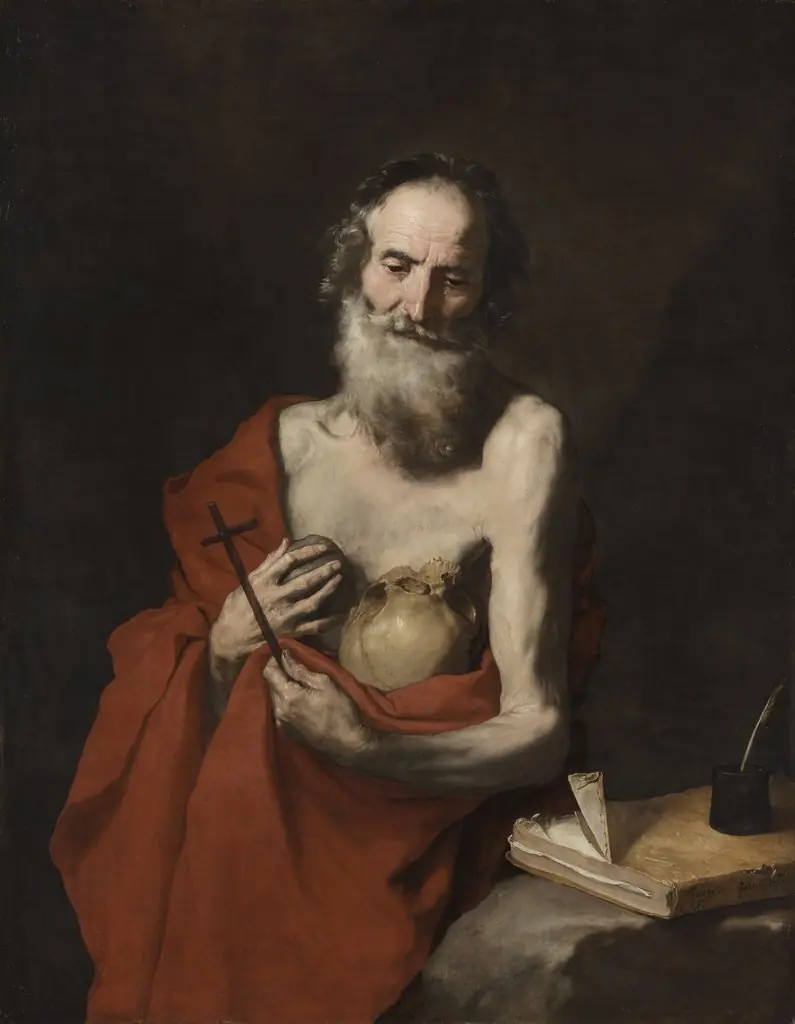
San Jerónimo penitente
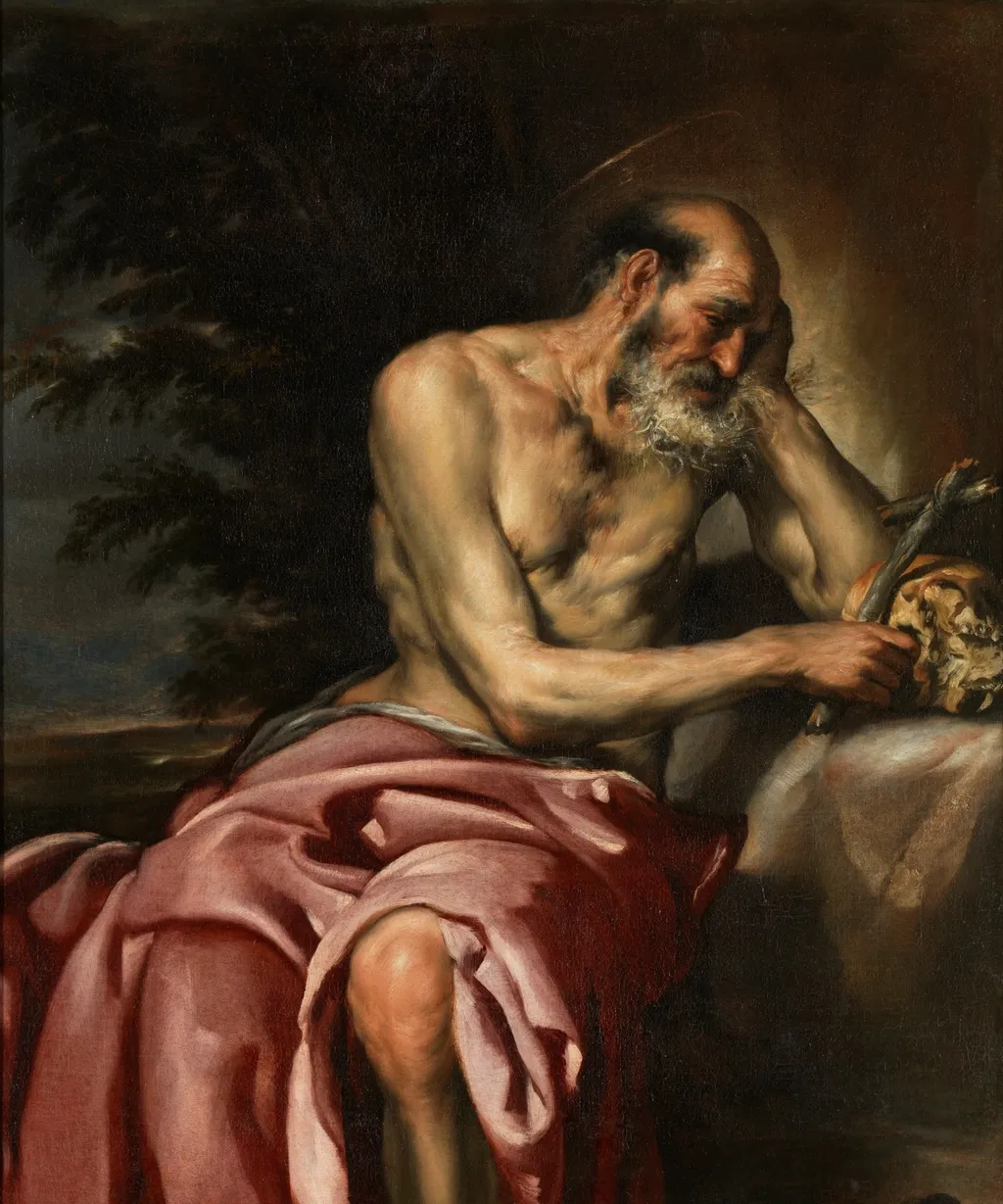
San Jerónimo penitente is an oil painting by the Early Baroque Italian artist Diego Polo the Younger. It dates from 1626 and is held in the collection of the Museo del Prado.
About this work
Overview
Created in 1626 by the Spanish Baroque artist Diego Polo the Younger, this oil painting portrays a solitary figure in a contemplative pose. The work is part of the Museo del Prado’s collection and exemplifies the religious genre prevalent in early 17th‑century Spanish art.
Subject & Meaning
The central figure is Saint Jerome, identifiable by his long white beard, the red cloth cinched at his waist, and the traditional symbols of a skull and a cross. These attributes underscore themes of penitence, mortality, and spiritual reflection, inviting viewers to consider the saint’s ascetic devotion.
Technique & Style
Polo employs a pronounced chiaroscuro, using stark contrasts of light and shadow to model the saint’s form and to give the composition a three‑dimensional presence. The illumination falls on the face and hands, while the surrounding darkness deepens the mood of introspection, a hallmark of early Baroque visual language.
History & Provenance
Diego Polo the Younger, born in Burgos, was active during the Spanish Baroque period and was influenced by Italian artistic currents of the time. The painting entered the Museo del Prado’s holdings in the 19th century, where it remains on display as part of the museum’s representation of religious works from the era.
Own this work as a print
Artist & collection
Artist
Diego Polo the Younger (1620–1655) was a Spanish painter of the Baroque period. He was the nephew of the elder Diego Polo. He was born in Burgos. He was a scholar of Antonio Lanchares. He painted several pictures for…