Artwork
The Jester Named Don John of Austria
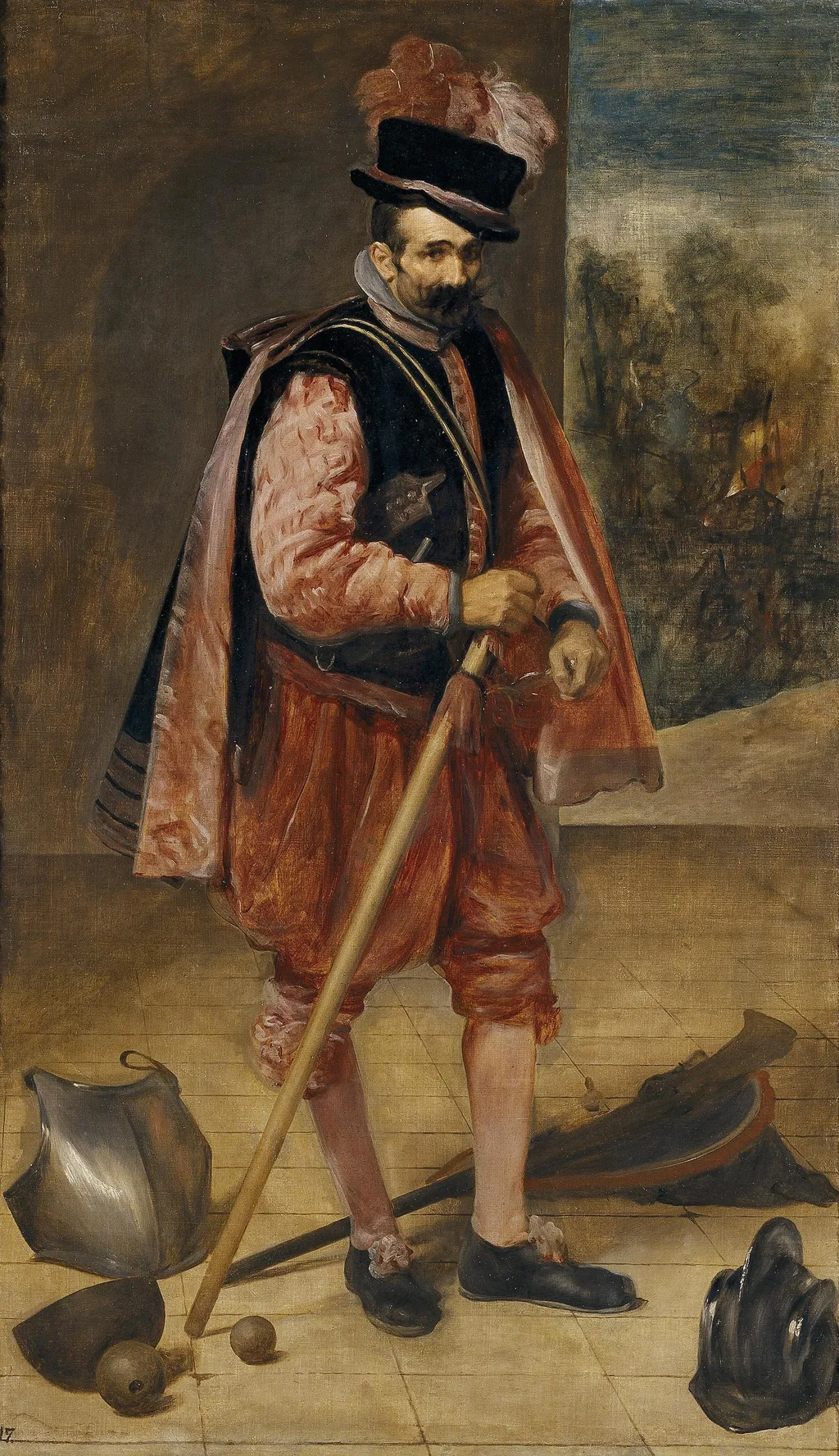
The Jester Named Don John of Austria is an oil painting by the Early Baroque Italian artist Diego Velázquez. It dates from 1632 and is held in the collection of the Museo del Prado.
About this work
Overview
Diego Velázquez’s oil painting, titled *The Jester Don John of Austria*, belongs to the Spanish Baroque period and dates from roughly the middle of the 17th century, around 1630‑1650. The work portrays a court jester attired in a richly detailed military costume, reflecting Velázquez’s ongoing interest in the varied personalities of the royal household.
Subject & Meaning
The figure is a professional entertainer, a jester, who is presented in the guise of the celebrated commander Don John of Austria. By dressing the clown in martial regalia, Velázquez juxtaposes humor with the gravitas of military heroism, inviting viewers to consider the fluid boundaries between performance, status, and identity within the Spanish court.
Technique & Style
Executed in oil on canvas, the painting demonstrates Velázquez’s characteristic handling of light and texture. The fabric of the costume is rendered with meticulous brushwork that captures the sheen of silk and metal, while the sitter’s face remains subtly modeled, revealing the artist’s skill in balancing realism with the theatricality of the subject.
History & Provenance
After its creation, the portrait entered the royal collection, first appearing in the Palacio del Buen Retiro between 1701 and 1716. It later moved to the Royal Palace of Madrid (1772‑1816) and then to the Real Academia de Bellas Artes de San Fernando (1816‑1827). Since 1827 the painting has been part of the Museo del Prado’s holdings in Madrid, where it remains on display.
Own this work as a print
Artist & collection
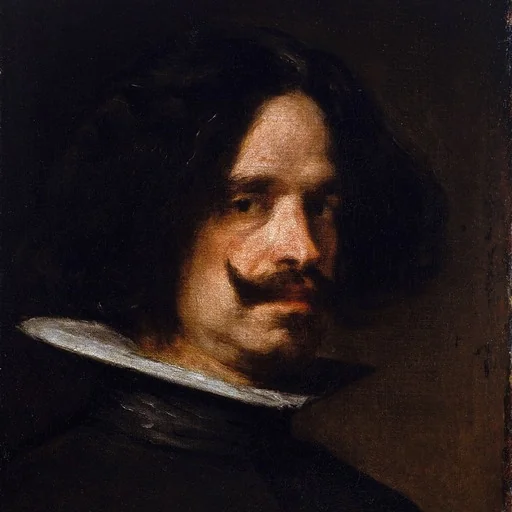
Artist
Diego Rodríguez de Silva y Velázquez was a Spanish Baroque painter, the leading artist in the court of King Philip IV of Spain and Portugal, and of the Spanish Golden Age.