Artwork
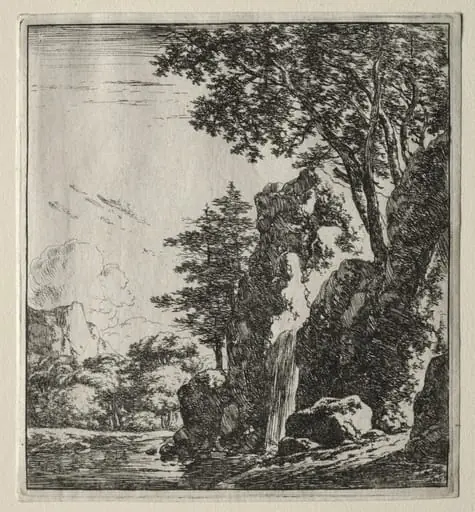
A Waterfall by Rock Cliffs
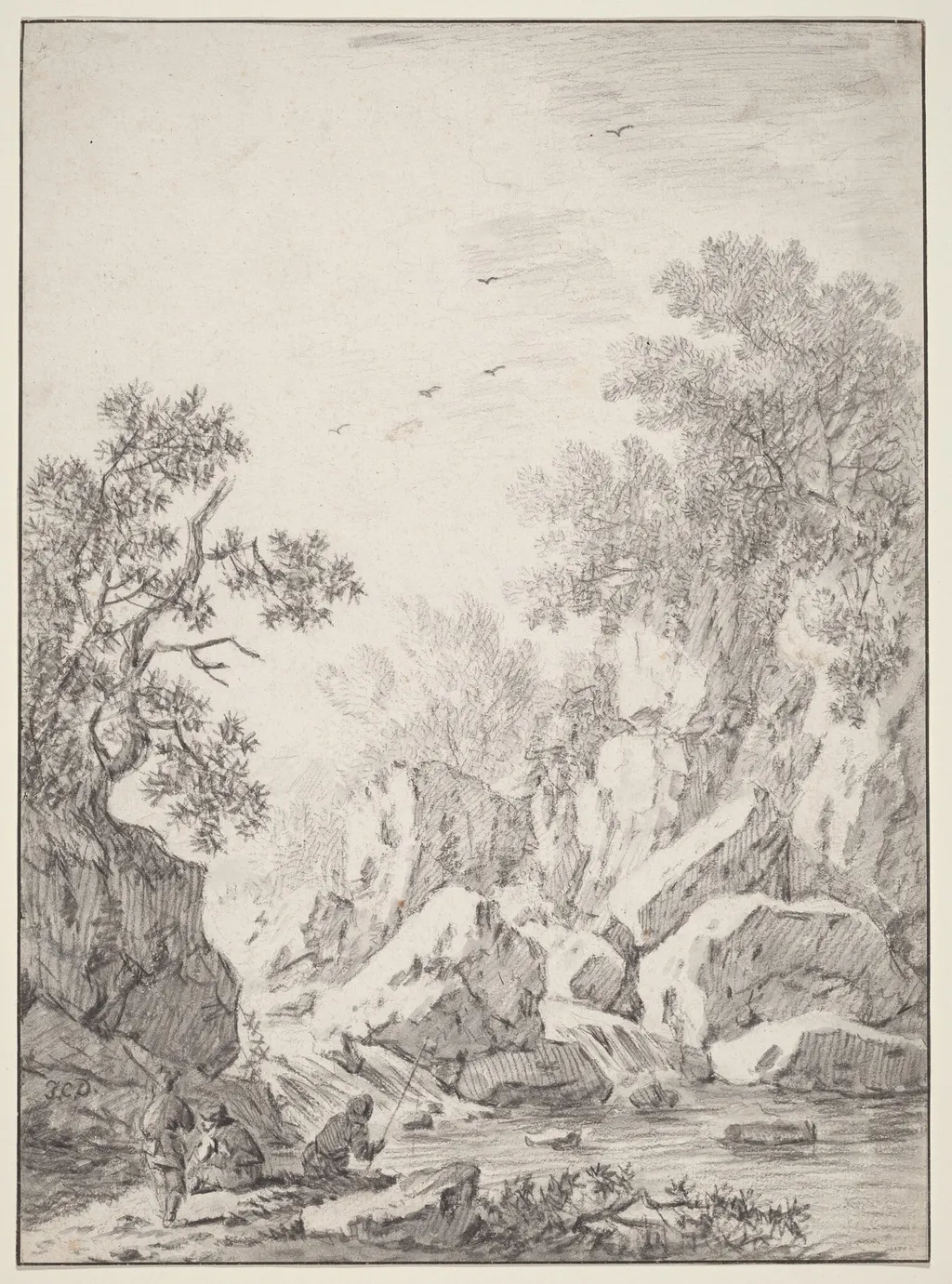
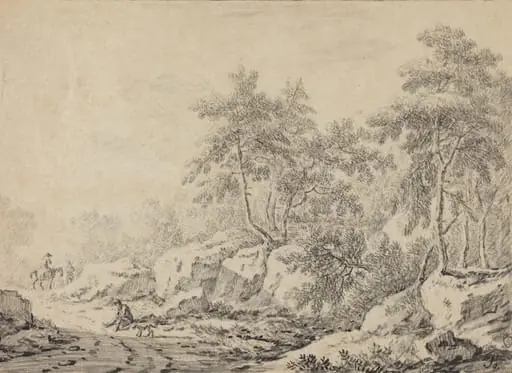
A Waterfall by Rock Cliffs is a chalk drawing by the Romanticist artist Johann Christoph Dietzsch. It dates from 1754 and is held in the collection of the National Gallery of Art.
About this work
Overview
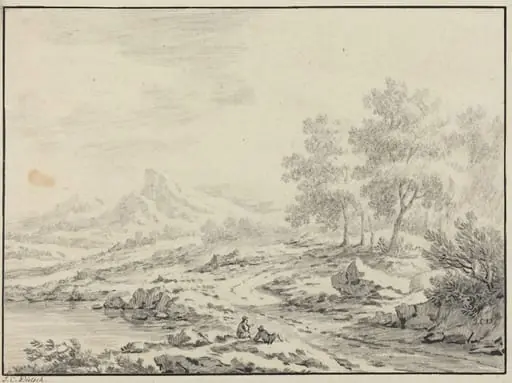
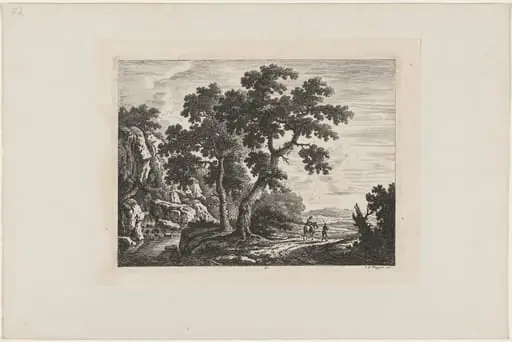
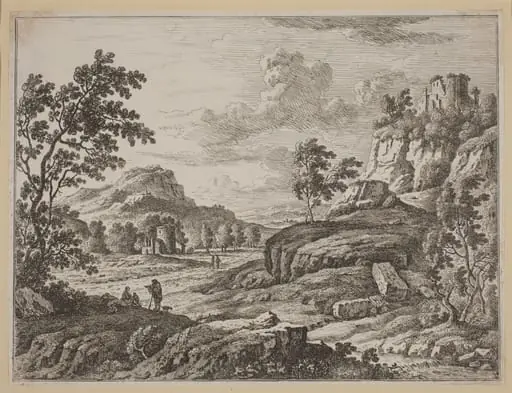
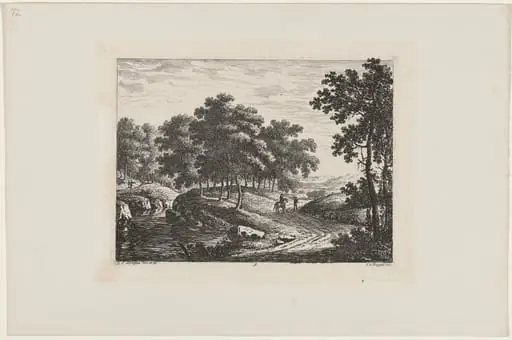
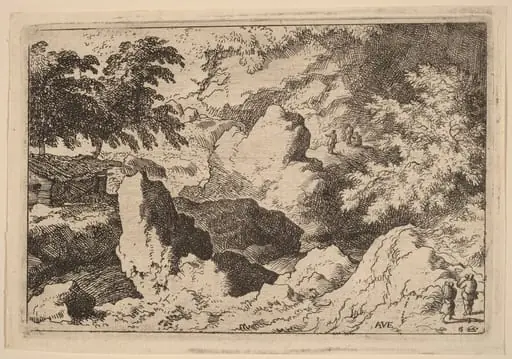
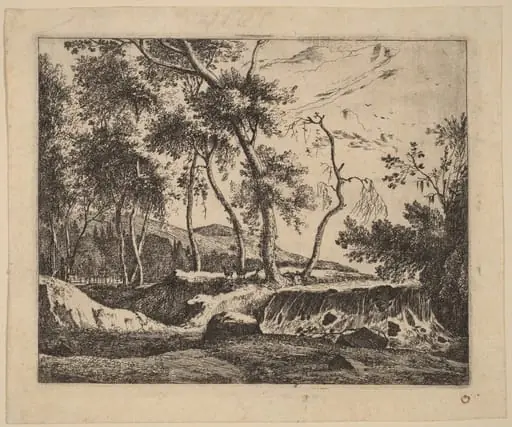
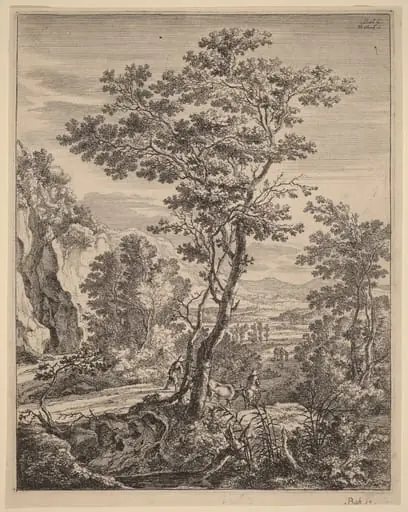
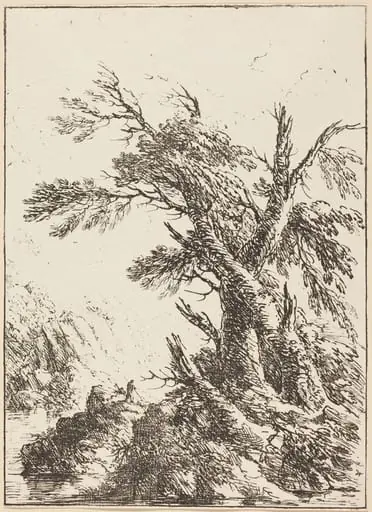
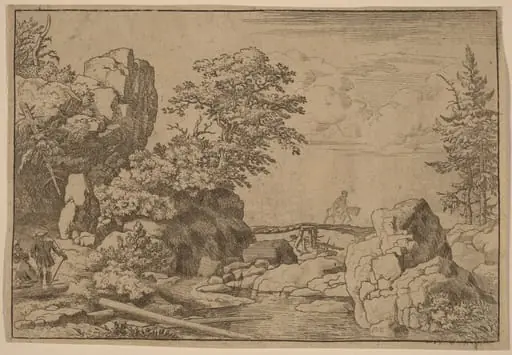
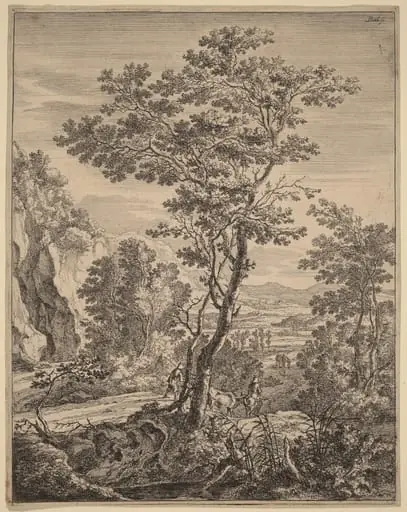
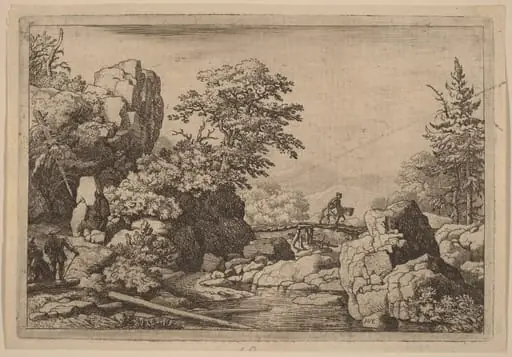
This drawing, attributed to Johann Christoph Dietzsch and dated around 1754, depicts a waterfall descending rugged rock formations. Executed in black chalk and gray wash on laid paper, the composition is framed by a precise black ink border. The medium’s tonal range allows for subtle gradations of light and shadow, lending the scene a sense of naturalism and immediacy.
Subject & Meaning
The scene centers on a waterfall cascading between steep cliffs, a motif often associated with the sublime in eighteenth-century landscape art.
The scene centers on a waterfall cascading between steep cliffs, a motif often associated with the sublime in eighteenth-century landscape art. A lone figure, possibly a traveler, appears in the foreground, suggesting human scale against nature’s grandeur. The presence of mist and the play of light on water evoke transience, while the figure’s contemplative posture may imply reflection on nature’s power and beauty.
Technique & Style
Dietzsch employs black chalk to define the rocky textures and foliage, using cross-hatching to model form and create depth. Gray wash softens transitions between light and dark, particularly in the mist rising from the falls, enhancing atmospheric effects. The restrained palette and meticulous detailing align with the Romantic emphasis on nature’s emotional resonance, while the ink border provides structural clarity.
History & Provenance
Created mid-eighteenth century, the drawing reflects the period’s growing interest in landscape as an independent subject. Little is documented about its early ownership, though its survival in good condition suggests careful preservation. The work’s attribution to Dietzsch places it within the output of a Nuremberg artist known for detailed natural scenes, though further research may clarify its exact origins and subsequent collectors.
Context
The drawing emerges from a cultural moment when artists increasingly turned to nature as a source of inspiration, moving away from classical idealism. Waterfalls, in particular, symbolized the untamed force of the natural world, a theme central to Romanticism. Dietzsch’s work participates in this shift, capturing the interplay of light, water, and rock with observational precision while evoking a mood of quiet awe.
Artist & collection